Ants are tiny, organized, and annoyingly good at finding food. The good news is you do not need a shelf full of chemicals to get control. Most ant problems can be handled with a mix of three things: (1) use a bait that reaches the colony, (2) disrupt the trail and remove competing food sources, and (3) seal up the easy entry points.
This guide focuses on quick home remedies that are practical for real homes and backyards. I will also point out what actually works long-term, because killing a line of ants on the counter does not always solve the problem.
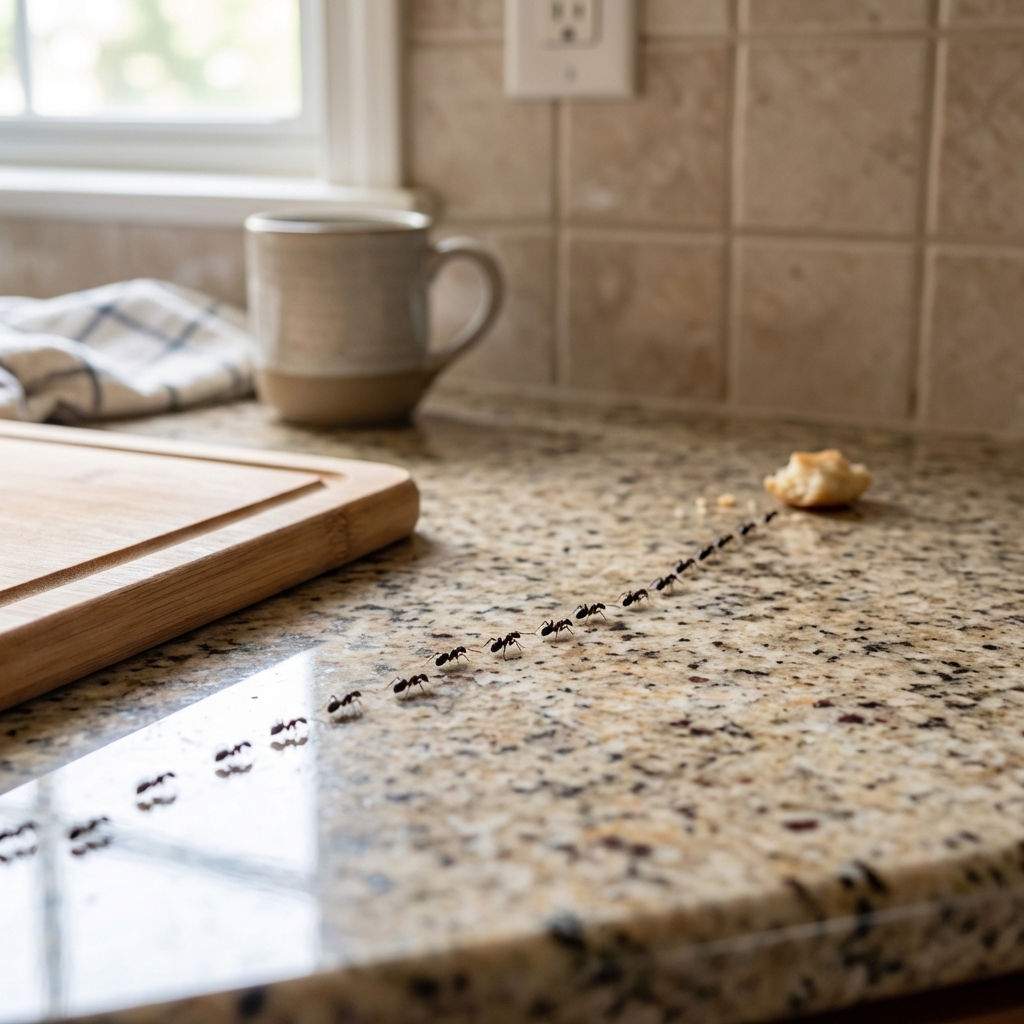
Know what you are dealing with
Different ants respond better to different baits. You do not need to identify the species perfectly, but it helps to notice what they are after.
- Sugar seekers: They crowd around syrup, fruit, soda spills, and honey. These usually respond best to sweet liquid baits.
- Grease and protein seekers: They show up around pet food, bacon grease, and trash. These often respond better to protein or grease-based baits.
- Outdoor trail ants: They march along baseboards, door thresholds, patio edges, and foundation lines. Usually this is a nest outside, sometimes under pavers or mulch.
Quick check: Put a tiny dab of honey on a disposable cap and a tiny smear of peanut butter on another. Place both near the trail (out of reach of kids and pets), but not so far away that you accidentally lure ants into a new area. Check in 20 to 30 minutes, then remove and toss the test lures promptly. Do not leave them out overnight. Whichever one they mob tells you what to bait with.
First move: set bait, then clean
Ants navigate with chemical trails. If you scrub away the active trail first, you can accidentally make it harder for them to find your bait. A better order is:
- Place bait on or right next to the active trail (where you see them walking).
- Then clean up competing food and stray trails around it so the bait is the best option.
If you already wiped the trail: Put bait near the likely entry point (where they come from, like a crack at the baseboard, a window corner, or under-sink plumbing gaps). They will usually re-establish a trail within a few hours.
Important: If ants are actively visiting the bait, try not to kill those particular ants. Seeing more ants at the station at first is often part of the process.
Break the scent trail (without sabotaging bait)
Once the bait is down, clean everywhere else so the ants are not eating crumbs instead of taking your bait home.
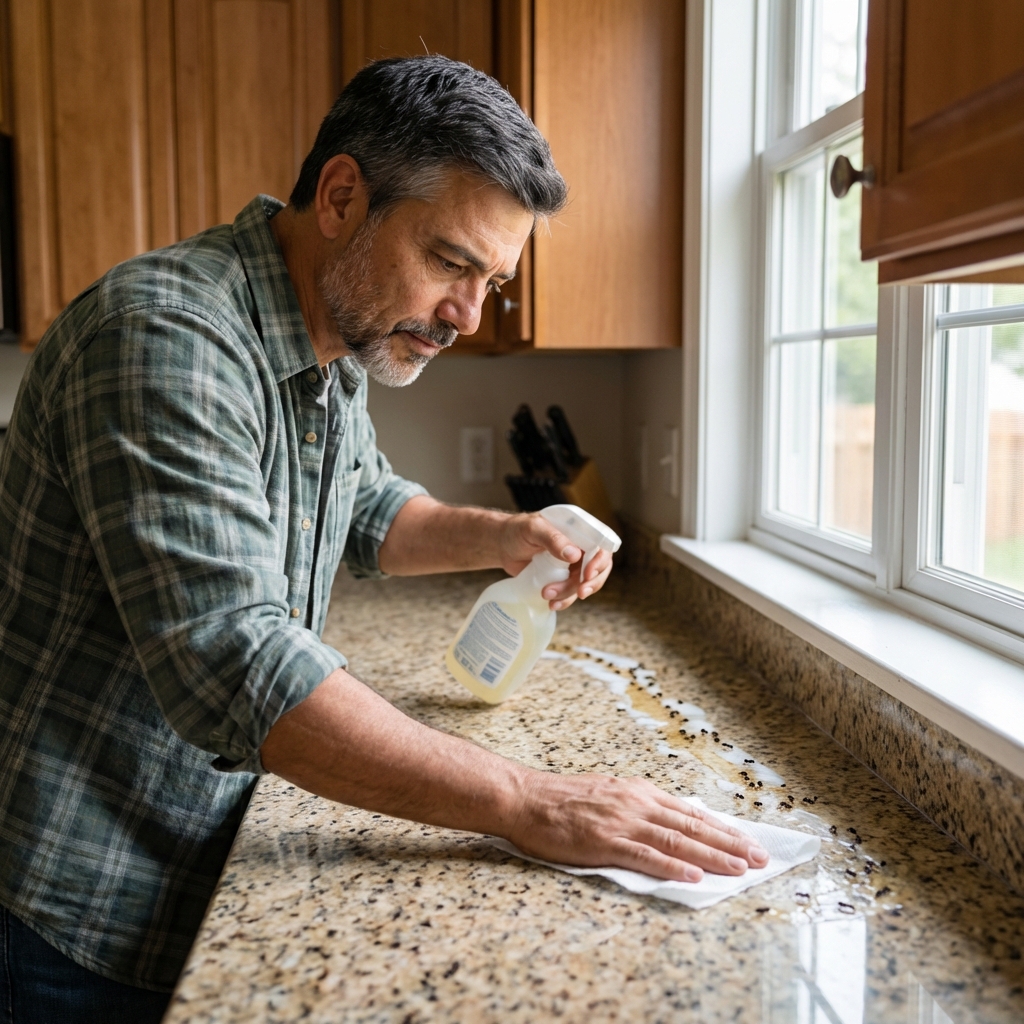
Vinegar wipe (fast, trail disruption)
- Mix equal parts white vinegar and water in a spray bottle.
- Spray the trail areas you want to erase, wait 1 minute, then wipe with a paper towel.
- Focus on baseboards, countertop edges, and around the sink, but avoid spraying directly onto the bait station.
Vinegar may knock down a few ants if you hit them directly, but its main value is cleaning and trail disruption.
Soapy water wipe (gentler on stone)
Some natural stone surfaces can etch with vinegar. If you have marble or similar, use:
- 1 quart warm water
- 1 to 2 teaspoons dish soap
Wipe thoroughly and dry. The goal is to remove the trail and any food residue, without turning your bait area into a no-ant zone.
Home remedies that actually kill ants
There are two categories: contact killers (quick but temporary) and baits (slower, but they can eliminate the nest).
1) Borax or boric acid sugar bait (best all-around)
This is one of the most effective DIY approaches because workers carry it back to the colony.
Important clarification (so the recipe matches reality): Most successful DIY borate baits are very low concentration. Many homeowner recipes land around about 0.5 to 1.5 percent borax or boric acid in the liquid portion, and that can still work well because ants need time to share it through the colony. Going too strong is a common way to fail, because ants can die before they deliver enough back home.
Borax vs. boric acid: They are related but not identical. Use one or the other, do not combine them, and do not assume they are a perfect 1:1 swap by strength. If you are using a commercial boric acid product, follow the label for safe handling. The recipes below are intentionally conservative to keep the bait slow-acting.
Simple sweet bait recipe (start low):
- 1 cup warm water
- 1/2 cup sugar
- 1/2 to 1 teaspoon borax or boric acid, dissolved
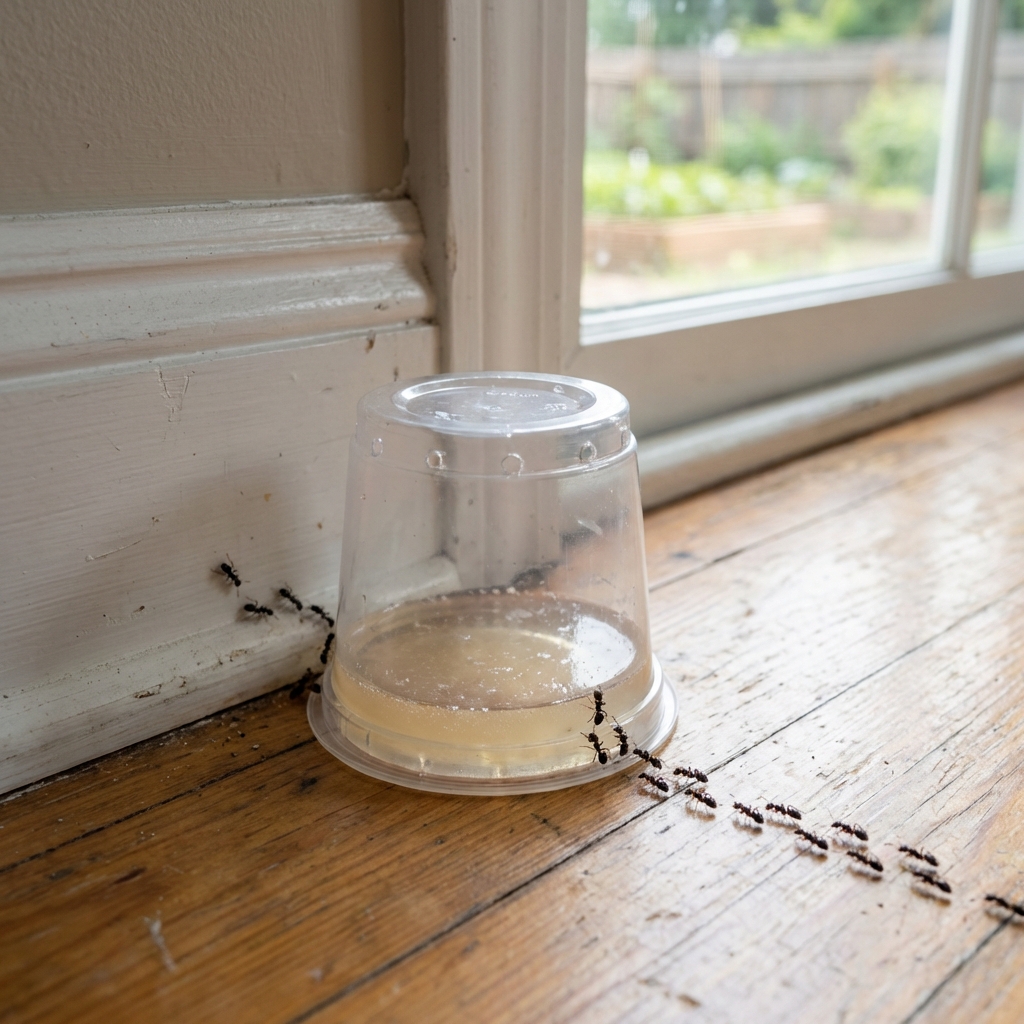
Stir until fully dissolved. Soak cotton balls and place them in shallow lids near trails, under the sink, behind the trash can, or along baseboards. Refresh if it dries out.
If they ignore it: Try a slightly stronger mix (up to about 1.5 teaspoons per cup of water) or switch to a protein bait below. Do not jump straight to super concentrated bait. That often backfires.
Do not pair bait with repellents: Avoid spraying strong cleaners, essential oils, or insecticide sprays near the bait station. Repellents can push ants off the trail and away from the one thing you want them to visit.
Safety: Borax and boric acid are harmful if swallowed. Place baits where kids and pets cannot access them. A covered bait station helps (small plastic container with tiny holes). Label it and toss it when you are done.
2) Boric acid peanut butter bait (for grease or protein ants)
If ants ignore sweet bait, try this.
- 2 tablespoons peanut butter
- 1/8 to 1/4 teaspoon boric acid or borax (start low)
Mix into a paste and place pea-sized amounts on wax paper near trails. Replace every 2 to 3 days. Keep it off porous surfaces and away from heat sources that can melt it.
3) Baking soda and sugar (low-tox option, unreliable)
This is popular online. Results are inconsistent and not well-supported, so treat it as a backup, not your main plan.
- Mix equal parts powdered sugar and baking soda.
- Place in a dry lid near the trail and keep it dry.
4) Dish soap spray (instant knockdown)
For ants you see right now, soap works as a contact killer.
- 2 cups water
- 1 teaspoon dish soap
Spray directly on ants and along the active trail. This is great for quick relief, but it does not solve the nest by itself, and you should avoid spraying near your bait.
5) Diatomaceous earth (DE) for dry cracks and outdoor edges
Food-grade diatomaceous earth is a dry powder that damages insects as they cross it.
- Use food-grade only.
- Apply a thin dusting in dry areas: under appliances, along thresholds, in wall voids if accessible.
- Reapply after moisture or cleaning.
Safety: The main risk is irritation from dust. Keep kids and pets away during application, avoid applying where it will puff into the air, and avoid breathing it. Consider a simple dust mask and eye protection if you are applying more than a tiny amount.
6) Boiling water for outdoor nests (direct hit)
If you can clearly see a nest opening outdoors (like a mound in a lawn edge or a crack by the driveway), boiling water can reduce it fast.
- Boil a large pot of water.
- Carry it carefully and pour slowly into the nest opening.
- Repeat the next day if activity continues.
This works best on shallow nests. Deep nests, multiple entrances, and protected queens can make it a temporary hit instead of a true wipeout. It can also scorch turf and damage nearby roots. Burn risk is real, so use sturdy shoes, gloves, and a steady pour. Keep kids and pets away.
Remedies to be careful with
Some common suggestions can cause problems or disappoint you.
- Essential oils (peppermint, tea tree, clove): They can repel ants temporarily, but usually do not eliminate the colony. They can also irritate pets, especially cats, and damage some surfaces.
- Bleach: It can kill on contact and remove trails, but it is harsh on surfaces and unsafe to mix with other cleaners. Not a good everyday solution.
- Cinnamon, coffee grounds, black pepper: Sometimes disrupts trails, rarely solves a real infestation.
- Heavy spraying when you cannot identify the ant: Some ants, including pharaoh ants, can respond poorly to repellents and sprays (they can split into more colonies). If the problem is persistent, lean on baiting and sealing instead of blasting the trail with repellent products. If you suspect pharaoh ants (tiny, pale yellow to light brown, and stubborn), consider professional help sooner rather than later.
Quick safety notes
- Borax and boric acid: Harmful if swallowed. Use covered stations and place out of reach. Wash hands after handling. Dispose of leftovers in a sealed bag.
- DE: Avoid breathing dust and getting it in eyes. Keep kids and pets away while applying.
- Boiling water: Serious burn risk and can damage plants and turf.
- Bleach: Never mix with other cleaners.
- Electrical outlets: Do not pour liquids or dust into outlets or wall voids around wiring. Use bait stations nearby and get help if needed.
Step-by-step plan
If you want a simple game plan, do this in order.
Day 1: Get them on the bait
- Find the active trail and place bait on or right next to it, ideally near the entry point (crack, trim gap, plumbing hole). Use a covered station if kids or pets are around.
- Clean crumbs and spills everywhere else, especially under toaster, coffee maker, pet bowls, and around the trash.
- Wipe surrounding trails with vinegar and water (or soapy water for sensitive stone), but do not spray directly on the bait station.
- Avoid placing baits directly on porous counters or wood. Use lids, wax paper, or a disposable tray.
Days 2 to 5: Let the bait work
- Expect to see more ants at first. That is often a good sign. They are feeding and carrying bait back.
- Leave bait stations undisturbed for several days. Moving them can reset the trail.
- Do not use strong cleaners, essential oils, or insect sprays near the bait. You want ants visiting it.
- Refresh bait if it dries out or gets dusty.
After activity drops: seal and prevent
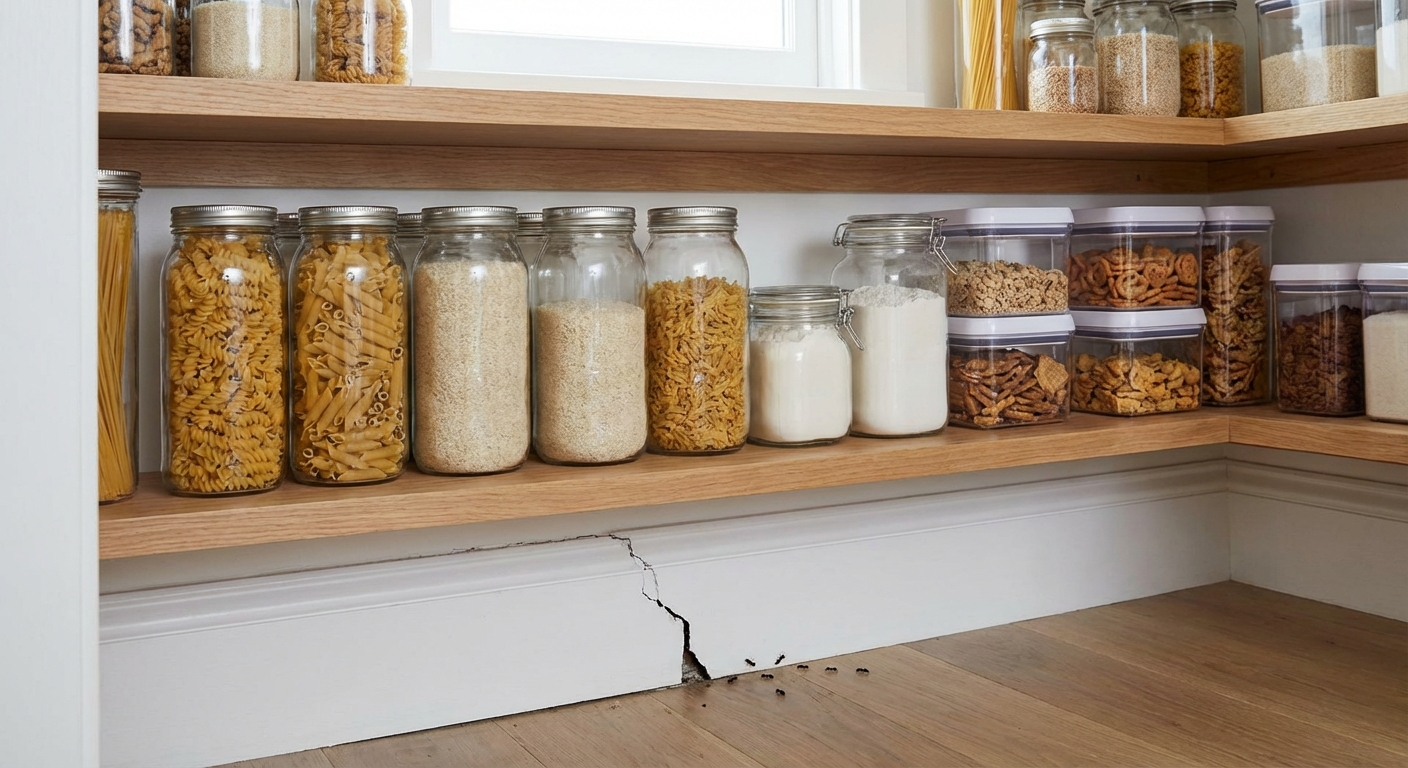
- Caulk cracks around baseboards, sink plumbing holes, and gaps at window trim.
- Add door sweeps or weather stripping where you see entry trails.
- Store sugar, cereal, and pet food in sealed containers.
- Once you are done, remove bait stations, seal them in a bag, and dispose of them.
Kitchen and pantry hotspots
Ants usually pick the easiest food and water sources first. Check these areas even if the trail is somewhere else.
- Under and behind the fridge (drip pan area and crumbs)
- Trash and recycling bins
- Pet feeding area
- Under the sink (leaks and dampness)
- Pantry shelves where flour, sugar, or snacks spill
Outdoor and garden fixes
If your ants are coming from outdoors, you can reduce pressure around the house without nuking your whole yard.
Trim the easy bridges
- Keep mulch a few inches back from the foundation if possible.
- Trim branches that touch the house.
- Move firewood stacks away from exterior walls.
Dry up the welcome mat
Ants love moisture.
- Fix leaky spigots and dripping AC lines.
- Do not overwater beds right against the house.
- Improve drainage where puddles sit near the foundation.
Use DE as a perimeter barrier (when dry)
A light dusting along cracks in a dry patio edge can reduce traffic. Reapply after rain.
How long does it take?
- Contact sprays (soap, vinegar): Minutes, but ants can return within hours.
- Good baiting: Often 2 to 7 days for noticeable improvement, sometimes up to 2 weeks for stubborn colonies.
- If you have multiple colonies: You may see waves. Keep bait available and seal entry points once the trail slows.
When home remedies are not enough
Consider calling a pro if:
- Ants are nesting in walls and you see sawdust-like debris (frass) or find soft, damaged wood (possible carpenter ants). You may also notice faint rustling in quiet walls, but do not rely on sound alone.
- You have constant activity despite 2 weeks of baiting.
- Ants are swarming indoors repeatedly after rains (may indicate multiple nests close to the structure).
- Ants are coming out of electrical outlets or deep wall voids. Do not pour liquids into these areas. Use bait stations and get help if needed.
If you suspect carpenter ants, look for moisture issues. They prefer damp, softened wood and fixing the water problem is usually part of the solution.
Quick FAQ
Why do ants keep coming back after I clean?
Because the colony is still alive and scouts keep searching. Cleaning removes trails, but baiting is what reduces the colony.
Is vinegar enough to kill ants?
It may kill or immobilize a few if you spray them directly, but it rarely eliminates the nest. Think of vinegar as a trail and residue remover.
Where should I place bait?
On or right next to the travel path, preferably near where the trail disappears into a crack. Keep it out of the way, and avoid placing bait directly on porous surfaces.
Should I kill the ants I see while baiting?
If they are actively taking bait, let them work. If you must clean up, do it away from the bait station so you do not stop the delivery to the colony.
Bottom line
If you want the quickest path to fewer ants, do two things: put bait on or right next to the active trail so workers carry it back home, then clean up competing food and wipe surrounding trails without soaking the bait area. After traffic drops, seal entry points and tighten up food storage. That combination solves most ant problems without turning your house into a chemistry lab.

Jose Brito
I’m Jose Britto, the writer behind The Country Store Farm Website. I share practical, down-to-earth gardening advice for home growers—whether you’re starting your first raised bed, troubleshooting pests, improving soil, or figuring out what to plant next. My focus is simple: clear tips you can actually use, realistic expectations, and methods that work in real backyards (not just in perfect conditions). If you like straightforward guidance and learning as you go, you’re in the right place.