That stump in the yard is more than an eyesore. It can trip people, dull mower blades, sprout new shoots, attract pests, and get in the way of planting. The “quick” part depends on your tools, the stump diameter, and how much mess you can tolerate.
Below are the fastest realistic options first, then slower low-effort methods. This guide will also help you decide when it is worth calling a pro.
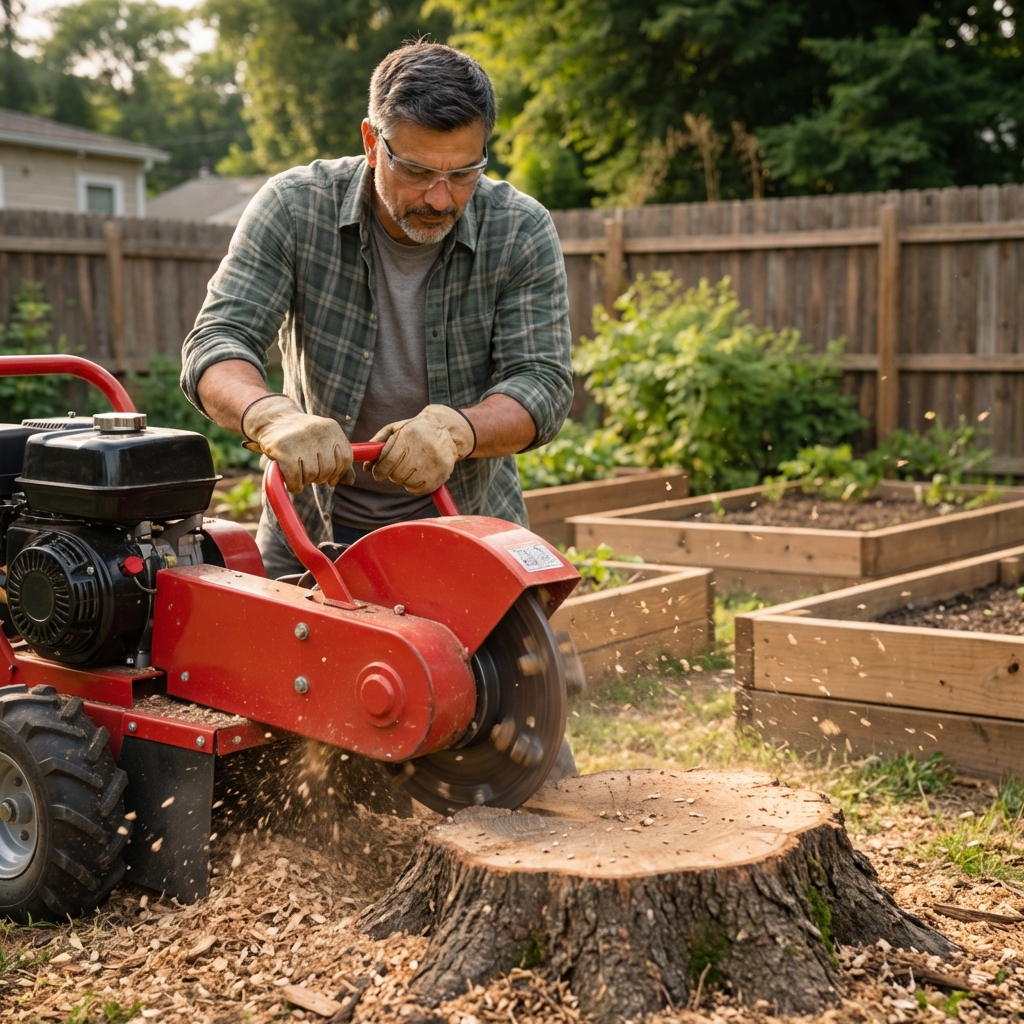
Quick answer: fastest methods compared
If you just want the stump gone soon, use this as your shortcut:
- Fastest overall: Stump grinding (often done the same day, minimal digging)
- Fast without rental equipment: Digging and cutting roots (best for small stumps)
- Fastest for regrowth control: Cut flush and treat the fresh surface to stop sprouts (does not remove the stump, but ends the problem)
- Least labor (not quick): Chemical rotting (weeks to months)
Rule of thumb: If the stump is bigger than about 10 to 12 inches in diameter, grinding is usually the quickest and often the most cost-effective option when you factor in time. Pricing varies a lot by region, access, and stump type.
Before you start: safety checks
1) Confirm it is safe to remove
- Call utility location services before digging. In the US, call 811 a few days ahead. Even shallow roots can be close to buried lines.
- Know your property lines. Stumps near fences or shared boundaries can get messy fast if the tree was shared.
- Check local rules. Many areas restrict open burning and some restrict certain stump chemicals.
2) Gather basic protective gear
- Eye protection (a face shield is even better for grinding)
- Hearing protection (especially for grinders and chainsaws)
- Gloves with good grip
- Sturdy pants and boots (steel-toe is ideal if you are handling heavy chunks)
- Close-fitting clothing (no loose strings around rotating equipment)
3) Decide how “gone” it needs to be
There is a big difference between:
- Below-grade removal for lawn and mowing
- Deep removal for replanting in the same spot
- Functional removal where you just stop sprouts and cover it with mulch or a raised bed
Method 1: Stump grinding
Grinding turns the stump into chips. It is typically the quickest way to make the stump disappear below ground without digging out the whole root system.
Best for
- Medium to large stumps
- Stumps near patios, driveways, or lawns where you want a clean finish
- People who want speed and predictability
What you will need
- Stump grinder (rental or hire)
- Shovel and rake
- Chainsaw or pruning saw (optional, to cut the stump lower)
- Tarp (optional, helps control chips)
Rental reality check
- Some rentals require a truck and trailer, and the machines can be heavy.
- Operation on slopes or tight access can be tricky. When in doubt, hire it out.
Steps
- Cut the stump as low as you safely can. Lower stump equals less grinding time.
- Clear rocks and debris from around the base. Rocks will chew up grinder teeth.
- Grind in shallow passes. Sweep the cutter head side to side and lower gradually.
- Grind below grade. For a lawn, you can often grind about 4 to 8 inches below soil level. For shrubs or a garden bed, many people go 10 to 12 inches. If you plan to replant a tree in the same spot, you may need to grind deeper, remove more wood, and still consider planting slightly offset. Grinder capability and access also matter.
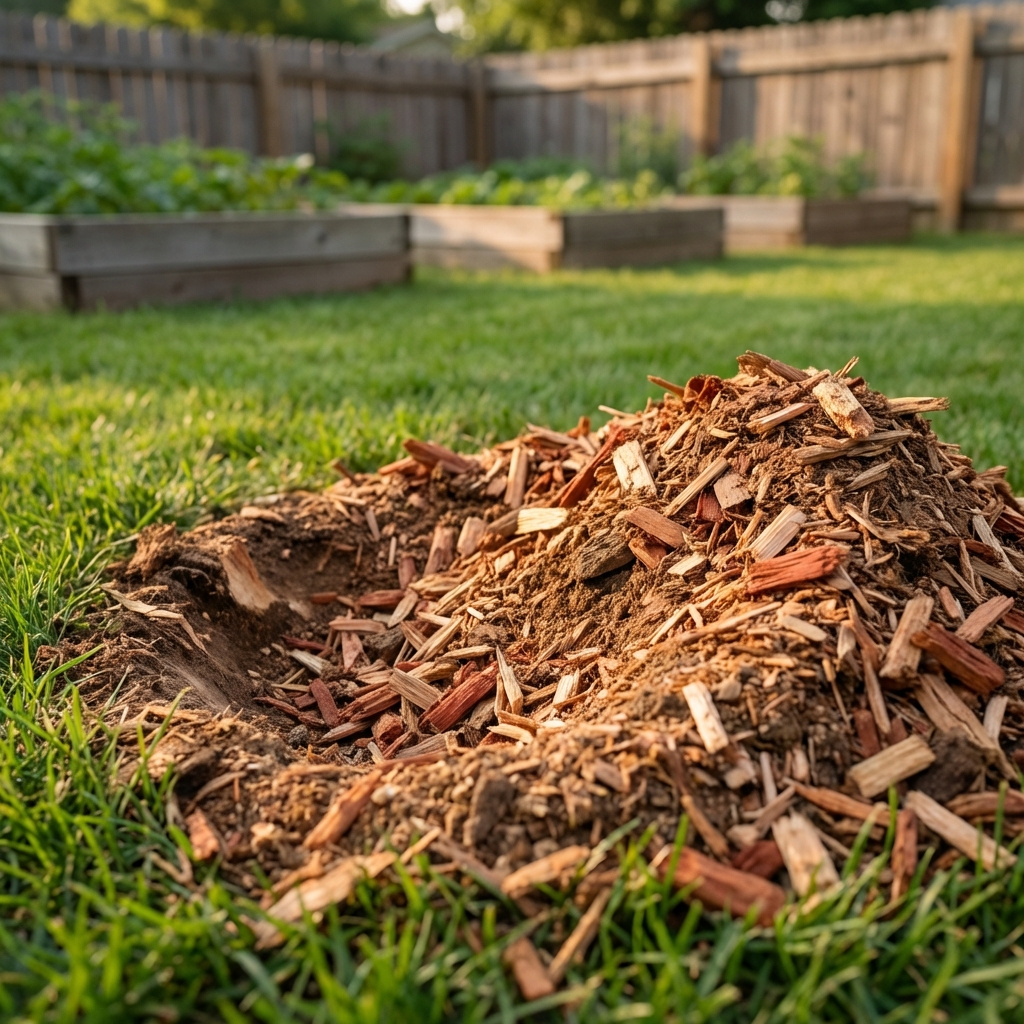
- Rake back the chips. Mix some chips with soil, but do not refill the entire hole with chips alone.
Time and cost expectations
A typical homeowner-sized stump can take 30 minutes to a couple hours to grind, plus cleanup. Rental costs vary by region and machine size, and hiring a pro can be competitive for one stump when you factor in transport and the learning curve.
Cleanup tip that prevents settling
Wood chips break down and shrink. If you backfill with mostly chips, the area will sink. A practical approach is remove some chips (save for mulch elsewhere) and backfill with topsoil, then seed or sod.
Method 2: Dig it out
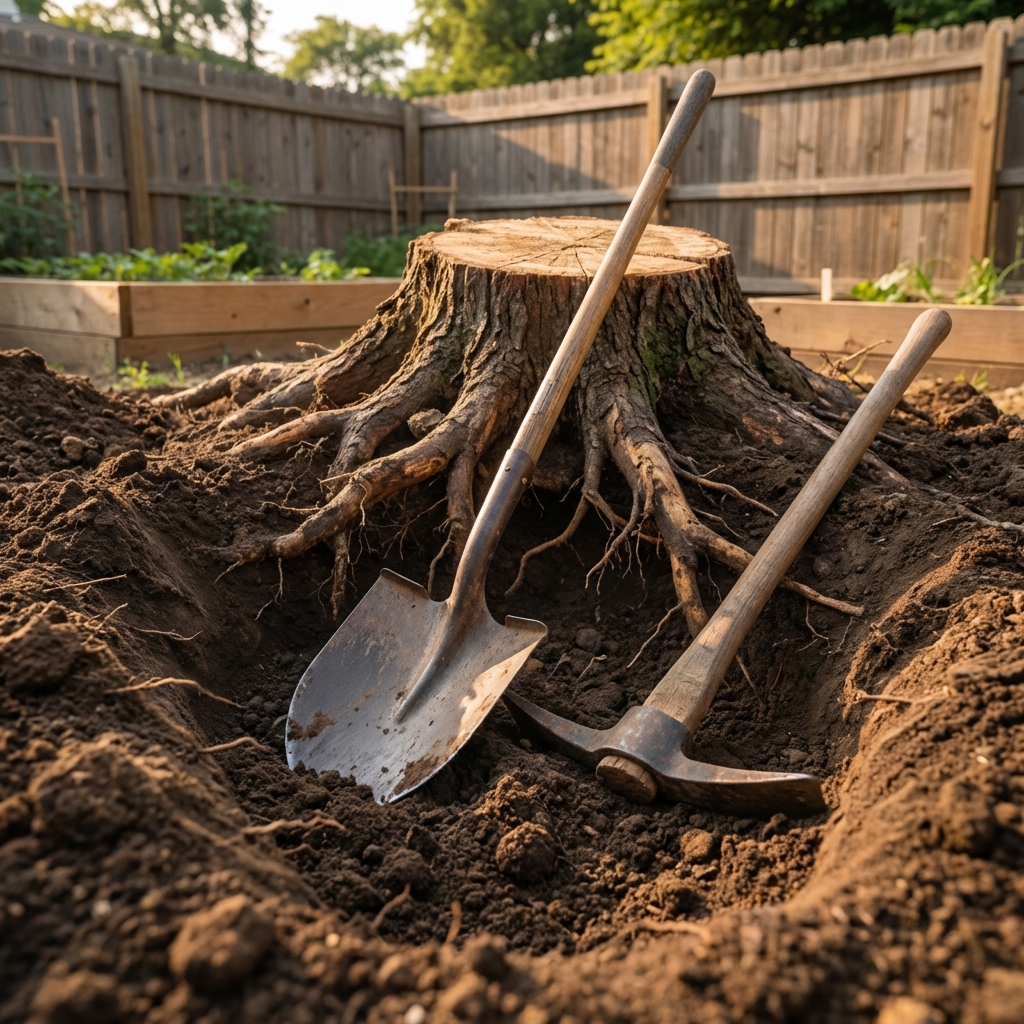
If the stump is small, digging it out can be faster than arranging a grinder rental. The key is exposing roots, cutting them cleanly, and rocking the stump out with leverage instead of brute force.
Best for
- Stumps under about 6 to 10 inches in diameter
- Shallow-rooted trees or recently cut trees
- Areas where heavy equipment cannot access
What you will need
- Shovel or spade
- Mattock or digging bar (very helpful in compacted soil)
- Loppers and a pruning saw
- Reciprocating saw with a pruning blade (optional but speeds up root cutting)
- Garden hose or buckets of water (to wash soil off roots)
Steps
- Water the area the day before if the soil is hard. Moist soil is easier to dig.
- Dig a trench around the stump, about 8 to 12 inches out from the trunk, exposing the main roots.
- Cut roots as you find them. Cut clean and close to the stump. If a root is too thick, dig along it to find a spot you can cut.
- Rock the stump back and forth to identify which roots are still holding.
- Cut the taproot if present. Some species have a strong central root that anchors the stump.
- Lift or roll the stump out. Use a digging bar for leverage rather than straining your back.
Make this method faster
- Expose first, cut second. People waste time hacking blindly underground.
- Use a pruning blade in a reciprocating saw once roots are exposed and mostly soil-free.
- Do not fight roots under hardscape. If roots run under a sidewalk or driveway, stop and consider grinding or professional help.
What to do with the stump
- Cut it into manageable pieces and let it dry.
- Use green waste pickup if your area offers it, or haul it to a yard waste site.
- If you have a firewood setup and the wood is appropriate, you can save chunks to burn later (where allowed).
Method 3: Burn it out
Burning can be quicker than chemical rotting, but it is not always safe, legal, or effective, especially in green wood or wet climates. If you have any doubt, skip this method.
Best for
- Rural areas with permitted burning
- Stumps far from buildings, fences, roots of desirable trees, and dry vegetation
High-priority safety notes
- Check local burn rules and current fire conditions.
- Never use gasoline, diesel, or other accelerants. They are dangerous and unpredictable.
- Keep water and a shovel nearby and never leave it unattended.
- Watch for underground smoldering. Roots can carry fire where you cannot see it.
How it is typically done
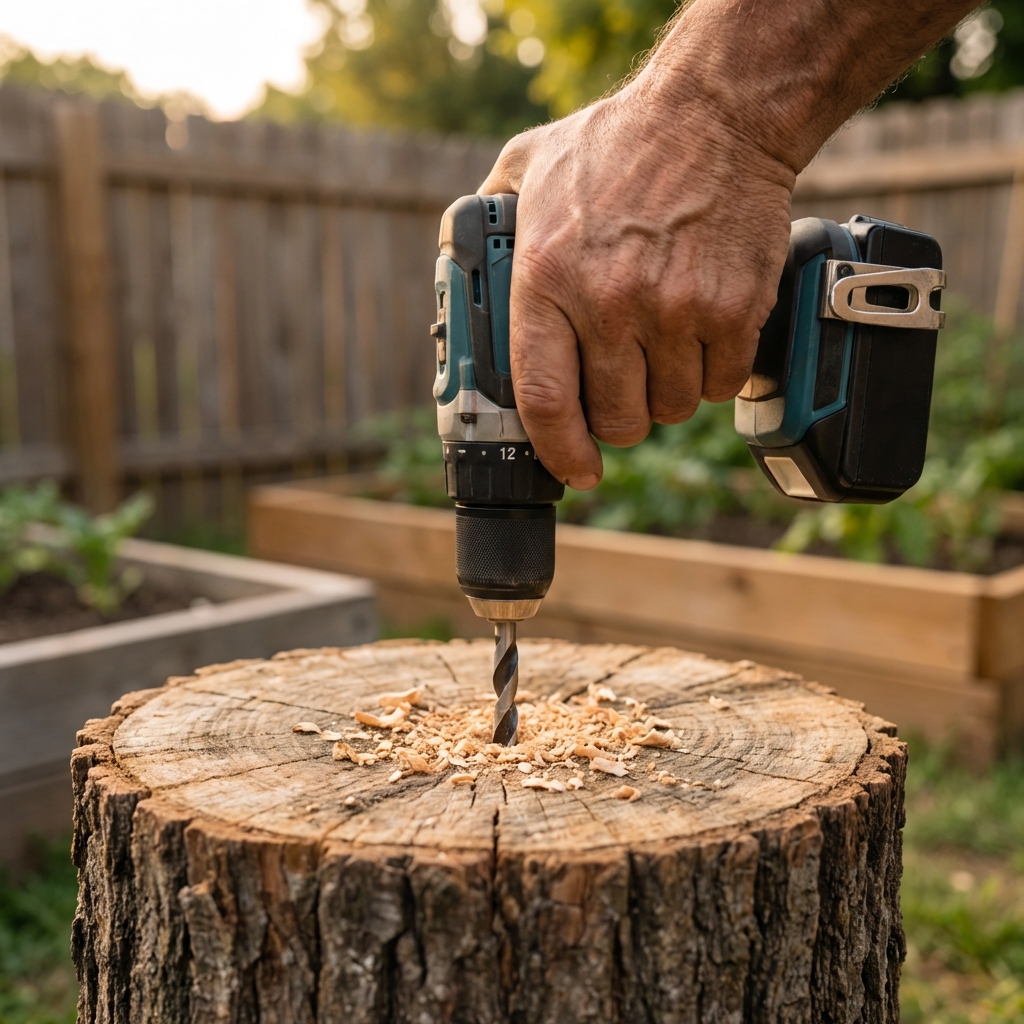
- Drill holes down into the stump to improve airflow and help it dry.
- Let it dry if it is freshly cut. Dry wood burns better.
- Build a small, controlled fire on top and around the stump using dry hardwood and kindling.
- Manage the burn until the stump is charred and breaks apart.
- Extinguish completely, then remove ash and remaining chunks.
Plan for a long burn. Fully consuming a stump can take many hours and sometimes multiple sessions, and it may still leave substantial roots underground.
If you are near structures or in a neighborhood, this method is rarely worth the risk or hassle.
Method 4: Chemical stump products
Chemical options vary, and the label matters. Some products are designed to kill the stump and stop sprouting (often herbicides marketed for stumps and brush). Others are sold as “stump removers” that can help the wood break down over time (many are potassium nitrate based and are sometimes used to speed decay or make the stump easier to burn later). Use only products allowed in your area and follow the specific label directions.
Best for
- Homeowners who can wait several weeks or months
- Stumps tucked away where they are not a tripping hazard
What you will need
- Stump product (follow label directions)
- Drill and large drill bit
- Water
- Plastic sheet or tarp (optional, helps keep moisture in)
Steps
- Drill several deep holes into the top of the stump and angled holes into the sides if possible.
- Add the product exactly as directed.
- Keep it damp if the label calls for moisture. Rot needs moisture. In dry weather, re-wet occasionally.
- Wait, then break up softened wood with an axe or digging bar and remove it over time.
Realistic timeline
Small stumps can soften in a month or two. Large hardwood stumps can take a season or longer, depending on moisture and temperature.
Method 5: Stop regrowth
If your main issue is sprouts popping up, you can handle that quickly even if you cannot remove the stump right away.
Steps
- Cut the stump fresh as close to ground level as you safely can.
- Treat the cut surface right away if you use a labeled stump and brush product. For many stump killers, the goal is to wet the outer cambium ring just inside the bark while the cut is still fresh. Product availability and rules vary, so follow local guidance and label directions.
- Cover to block light if you are not using chemicals. A heavy tarp or thick mulch layer can help reduce sprouting, though some trees are persistent.
This does not remove the stump, but it often solves the ongoing annoyance while you plan the real removal.
How to choose the right method
Ask these five questions
- How big is the stump? Big stumps favor grinding.
- How close is it to utilities or hardscape? Tight spaces favor grinding or pro help.
- Do you need to replant in the same spot? You may need deeper grinding, more cleanup, or an offset planting spot.
- How fast is “fast”? Today: grinding or digging. This season: chemical methods.
- How much mess can you tolerate? Digging is messy, grinding makes chips, both need cleanup.
Quick decision guide
- Under 6 inches: dig it out
- 6 to 12 inches: dig or grind depending on soil and access
- Over 12 inches: grind or hire a pro
- Near a fence, walkway, or roots of a prized tree: lean toward a pro
What to do with the hole and chips
For lawn
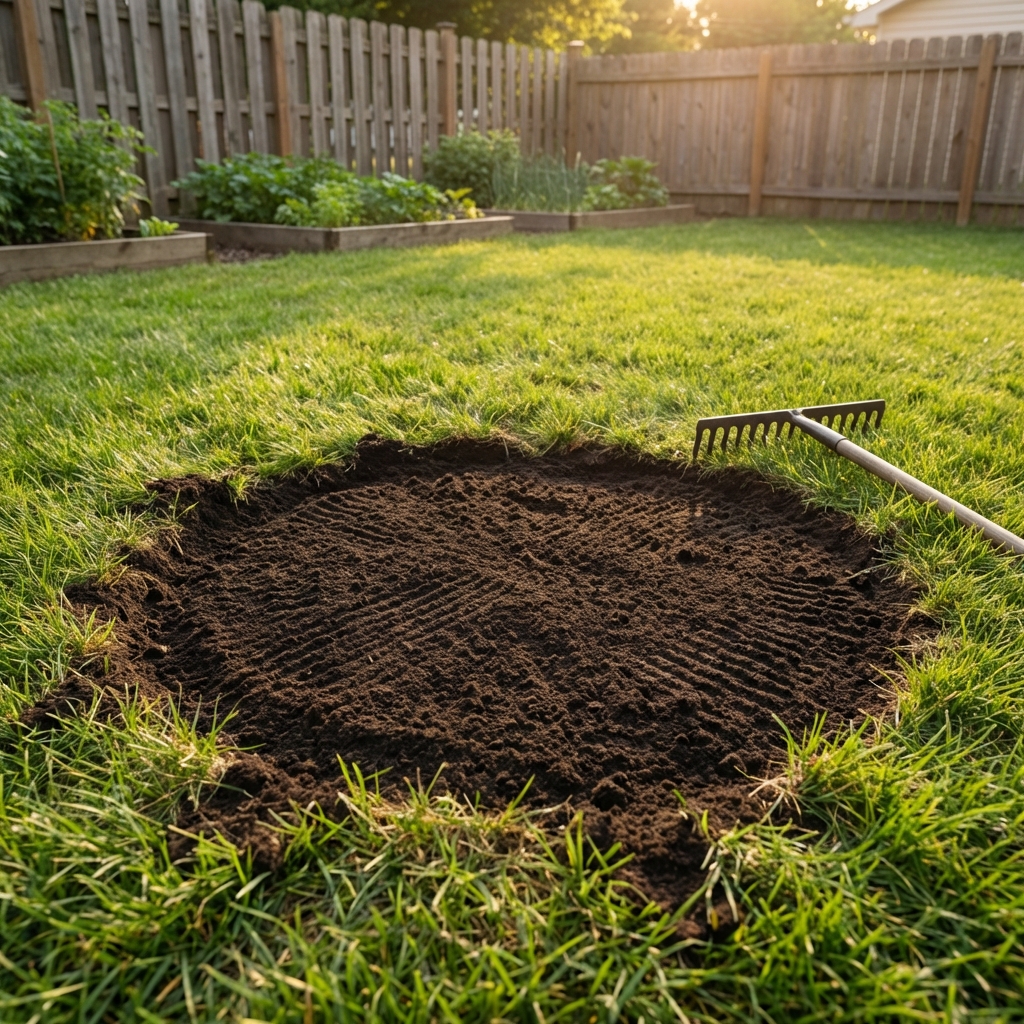
- Remove excess chips.
- Backfill with topsoil.
- Tamp lightly and water.
- Seed or patch with sod.
For a garden bed
Chips are great as mulch on top, but do not bury a thick layer of fresh chips where you want immediate planting. As they break down, they can temporarily tie up nitrogen. If you want to build a bed right away, use soil and compost for the planting layer and keep chips as the surface mulch.
Using chips elsewhere
Stump grindings can be used as mulch around trees and shrubs or in paths. Keep mulch a few inches away from trunks and stems to avoid moisture and rot problems.
Mistakes to avoid
- Skipping utility marking: Always locate lines before digging or grinding.
- Grinding into rocks: Clear the base first to avoid damaging teeth.
- Backfilling with only wood chips: It will sink as chips decompose.
- Underestimating root spread: Roots can extend well beyond the canopy edge in many trees, and they do not always go where you expect.
- Using the wrong tool for thick roots: Expose first, then use a saw made for wood.
Methods not recommended
- Epsom salt “stump removal” hacks: You may see this online. Results are unreliable, and it is not a dependable way to remove a stump quickly.
- Fuel as a shortcut: Do not pour gasoline, diesel, or other accelerants on a stump. It is unsafe and can contaminate soil.
When to call a professional
Hire it out if any of these are true:
- The stump is large and you need it gone quickly.
- It is close to utilities, foundations, retaining walls, irrigation, or septic components.
- Access is steep or awkward.
- You plan to remove multiple stumps and want the job done in one visit.
A good stump grinding company will also advise how deep to grind based on what you want to do next with the space.
FAQ
How long does it take for a stump to rot naturally?
Often several years, depending on species, size, and moisture. Hardwoods and large stumps take the longest.
Will a stump grinder remove roots?
It removes the stump and some nearby surface roots, but it does not pull out the entire root system. Most roots are left to decay underground.
Can I plant a new tree where the stump was?
You can, but expect challenges. Old roots and decomposing wood can create settling and uneven moisture. If you must replant in the same spot, plan on deeper grinding, removing as much wood as practical, and replacing with quality soil. Planting slightly offset is often easier.
What if the stump is sprouting like crazy?
Some trees are vigorous sprouters. Grinding removes the stump quickly. If removal must wait, cut sprouts repeatedly and consider treating the freshly cut stump surface with a labeled stump and brush product, following directions carefully.
Bottom line
If you want the stump gone fast, grinding is usually the quickest and most predictable route. For small stumps, digging can be done in an afternoon with the right approach. If time matters less than effort, chemical methods are the slow-and-steady option.
Once you decide what you are planting or building next, you will know how deep you need to go. That one detail saves a lot of redo work later.

Jose Brito
I’m Jose Britto, the writer behind The Country Store Farm Website. I share practical, down-to-earth gardening advice for home growers—whether you’re starting your first raised bed, troubleshooting pests, improving soil, or figuring out what to plant next. My focus is simple: clear tips you can actually use, realistic expectations, and methods that work in real backyards (not just in perfect conditions). If you like straightforward guidance and learning as you go, you’re in the right place.