Bananas are one of those foods that feel like they go from green to perfect to brown overnight. If you garden, you probably also hate waste. You might be eyeing those speckled bananas thinking, can I save these for later and can I put the scraps to work outside?
You can refrigerate bananas, but there is a best window to do it. Below is the straightforward, backyard-tested way to store bananas for eating, freezing, and garden use.
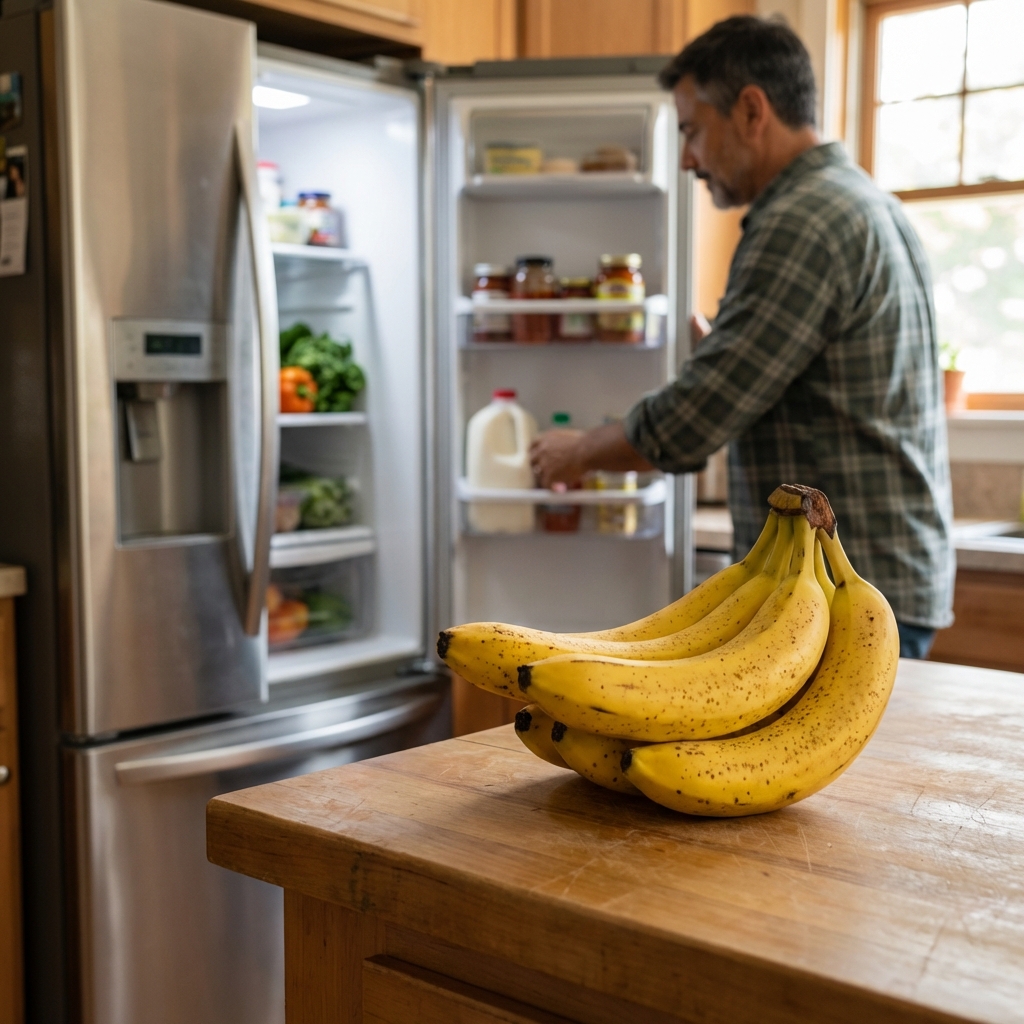
Should you refrigerate bananas?
Yes, but only after they are as ripe as you want them to be. Refrigeration slows ripening by slowing the fruit’s metabolism, including respiration, ethylene production, and the enzyme activity that softens and sweetens the fruit.
What refrigeration does well:
- Buys you a few extra days once bananas are ripe.
- Helps keep ripe bananas from turning to complete mush on the counter.
- Makes it easier to keep “baking bananas” around without fruit flies taking over.
What refrigeration does not do:
- It will not reliably ripen green bananas faster. Cold usually slows or stalls ripening.
- It will not keep the peel pretty. The peel almost always turns brown or black in the fridge.
That dark peel scares people off, but the inside is often totally fine for several days.
Quick safety note: The fridge slows spoilage, but it does not “rescue” a banana that is already going off. Trust your eyes and nose.
The best time to put bananas in the fridge
The sweet spot is when they are fully yellow or yellow with a few brown speckles, depending on how you like them.
Use this quick guide
- Mostly green: Keep on the counter. Fridge can stall ripening and leave you with a dull-tasting banana.
- Yellow with green tips: Counter is best if you want them sweeter in the next day or two.
- All yellow: Fridge is great if you need to hold them.
- Speckled: Fridge if you will eat within 2 to 5 days, or freeze if you are heading toward baking or smoothie territory.
- Very soft or leaking: Skip the fridge. Peel and freeze or bake immediately.
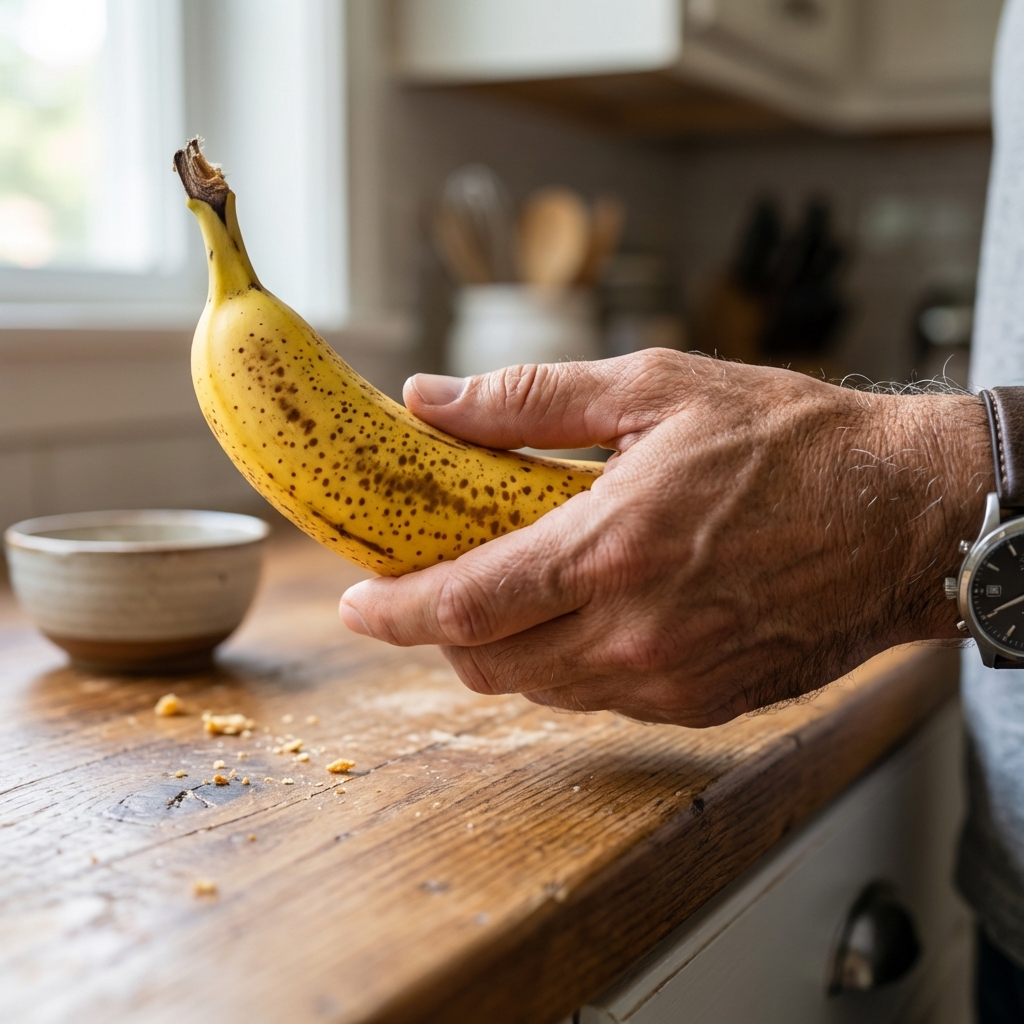
How to refrigerate bananas so they stay useful
The goal is simple: slow things down without trapping moisture or bruising the fruit.
Step-by-step
- Leave bananas unbagged in the fridge. Plastic bags can trap moisture and speed up slimy peel breakdown.
- Keep the bunch intact if you can. Detached bananas can bruise more easily, especially if they get jostled around.
- Pick a protected spot where they will not get knocked around. A corner shelf works well. A crisper drawer can work too, just avoid extra-humid settings and keep bananas unbagged.
- Expect the peel to darken. That is a normal cold reaction in the peel, not automatic spoilage.
Reality check: the fridge is a “pause button,” not a long-term solution. If you need more than a few days, freezing is the better move.
Why banana peels turn black in the fridge
Cold temperatures trigger browning reactions in the peel, especially once the banana is already producing ethylene. The peel is basically taking the hit while the inside slows down.
If your banana peel is black but the banana smells normal and the flesh is not fermented, the inside is usually still fine. If it smells boozy, has visible mold, or the flesh is gray and watery, toss it.
How long do refrigerated bananas last?
It depends on how ripe they were when they went in, and how cold your fridge runs. Most home fridges sit around 37 to 40°F (3 to 4°C).
- All-yellow: often 3 to 7 days of good eating quality.
- Speckled: often 2 to 5 days before they are better for baking than snacking.
- Very ripe: sometimes only 1 to 2 days before the texture goes too soft.
Your fridge temperature matters too. A colder fridge can darken peels faster and may affect texture sooner.
Freezing bananas (the option gardeners love)
If you are already at “banana bread week,” freezing is the cleanest way to stop the clock.
Best freezing method
- Peel first. Frozen peels are a pain to remove cleanly.
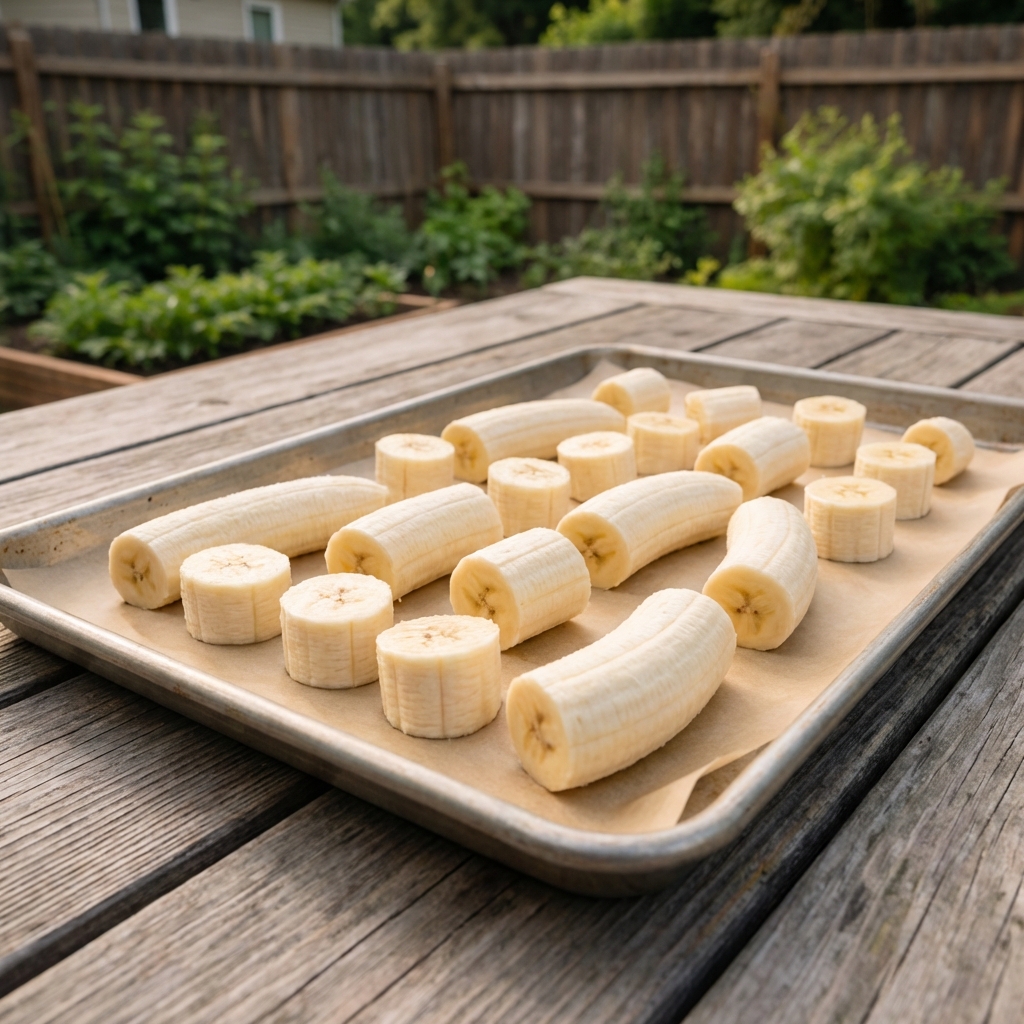
- Slice into coins for smoothies, or freeze whole for baking.
- Freeze on a tray for 1 to 2 hours, then move to a bag or container to prevent a big frozen clump.
- Press out extra air before sealing to reduce freezer burn.
- Label with the date. Use within 2 to 3 months for best flavor.
Thawing tip: thaw in a bowl in the fridge, or use straight from frozen for smoothies. Thawed bananas get watery and soft, which is perfect for baking and blending.
Garden advice: using bananas and peels without causing problems
Bananas come up in gardening conversations all the time, usually around potassium and composting. Here is the practical version.
Do banana peels help plants?
Banana peels contain nutrients, but they are not a quick fertilizer. They need to break down first. The best benefit is long-term, through compost and soil biology, not as an instant plant tonic.
Best ways to use peels in the garden
- Compost them: Chop peels into smaller pieces so they break down faster. Bury them in the center of the pile to discourage pests.
- Bury small amounts deeply: If you bury peels directly in a bed, go at least 6 to 8 inches deep and use small pieces. Shallow peels attract critters.
- Freeze scraps for later composting: If fruit flies are an issue in the kitchen, keep a “compost scraps” bag in the freezer, then dump into the compost on your schedule.
What I avoid
- Leaving peels on the soil surface: This is an open invitation for rodents, raccoons, and flies.
- Banana peel tea as a cure-all: It is inconsistent and can get stinky fast. If it sits too long it can go anaerobic and grow microbes you do not want. If you do it at all, use it promptly, dilute it, and avoid splashing it on edible leaves right before harvest. Compost is more reliable.
Simple rule: if it smells like food, animals will treat it like food. Keep banana scraps covered, buried, or composted properly.
Common banana storage mistakes
- Putting green bananas in the fridge and wondering why they never get sweet.
- Sealing bananas in plastic and creating a wet, slimy peel situation.
- Storing bananas next to sensitive produce like lettuce. Even in the fridge, bananas can still produce some ethylene, especially in a closed drawer, and it can shorten shelf life for certain items.
- Waiting too long to freeze. If you want good smoothie texture, freeze when ripe, not when fully collapsing.
Quick answers
Is it safe to eat bananas with black peels from the fridge?
Usually yes. Check the flesh and smell. If the inside looks normal and smells like banana, you are good.
Should I wrap the banana stems?
Stem-wrapping can slow ripening a bit on the counter. In the fridge it is optional. Timing matters more than wrapping.
Can I refrigerate peeled bananas?
You can, but they brown fast and can get slippery. If they are peeled, freezing is usually the better option.
Bottom line
Refrigerate bananas after they reach the ripeness you like. Expect dark peels, but decent fruit inside for a few more days. If you need longer storage, freeze them. And if you are a gardener, treat banana scraps like any other kitchen scrap: compost them well or keep them buried and covered so you feed your soil, not the neighborhood pests.

Jose Brito
I’m Jose Britto, the writer behind The Country Store Farm Website. I share practical, down-to-earth gardening advice for home growers—whether you’re starting your first raised bed, troubleshooting pests, improving soil, or figuring out what to plant next. My focus is simple: clear tips you can actually use, realistic expectations, and methods that work in real backyards (not just in perfect conditions). If you like straightforward guidance and learning as you go, you’re in the right place.