Water rings happen to the best of us. A cold glass sweats, the coaster goes missing, and suddenly you have that cloudy white circle on your favorite wood table. The good news is many water rings are fixable with gentle, common household methods you probably already have at home.
Below are the easiest approaches first, plus a few stronger options if the mark has been sitting awhile. For most white rings, you do not need harsh solvents.
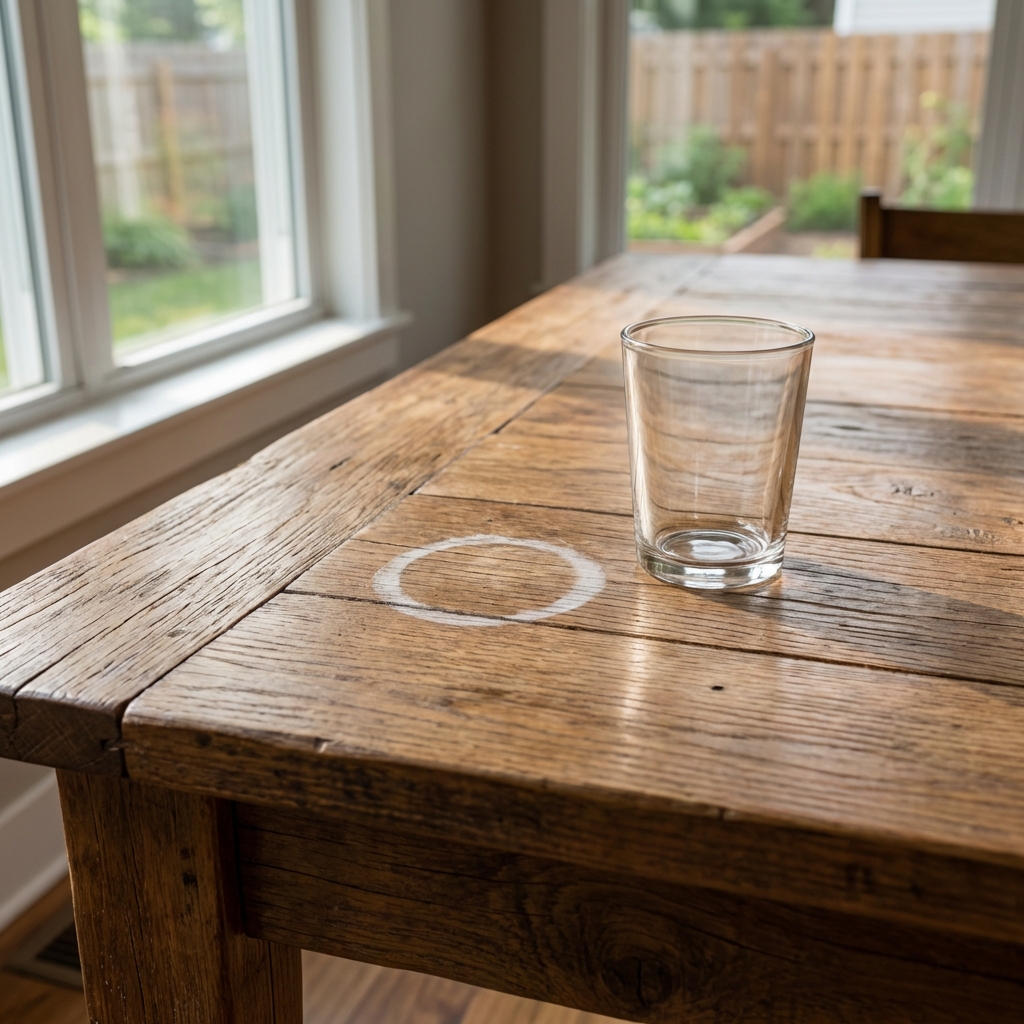
First: identify the ring
This matters because the fix is different.
- White or cloudy ring: moisture is trapped in the finish (very common). These often respond well to gentle heat, oil, and mild abrasives.
- Dark ring: water got past the finish into the wood fibers and caused discoloration (often involving tannins, metal, or prolonged moisture). These usually need deeper treatment like oxalic acid or refinishing.
If you are unsure, start with the gentlest method below. You can always step up.
Before you start: quick prep
- Wipe the area with a soft, slightly damp cloth to remove any grit, then dry completely. No standing water.
- Test any method in an inconspicuous spot first, especially on antique or sentimental furniture.
- Work with the grain when rubbing and keep pressure light.
Extra caution: If your piece is veneer, avoid excess moisture and aggressive rubbing. Veneer can swell, bubble, or lift if liquid seeps into seams.
Avoid: soaking the surface, abrasive scrub pads, and anything labeled “paint thinner” or “stripper” unless you are committed to refinishing.
Quick note: finish matters
Heat and rubbing are common fixes, but some finishes are more sensitive than others. If you suspect shellac, lacquer, or a delicate older finish, use extra caution with heat and abrasives and do shorter rounds. When in doubt, stop early and consider a pro for valuable pieces.
Method 1: gentle heat
White rings are often moisture trapped in the finish. Gentle heat helps it evaporate out.
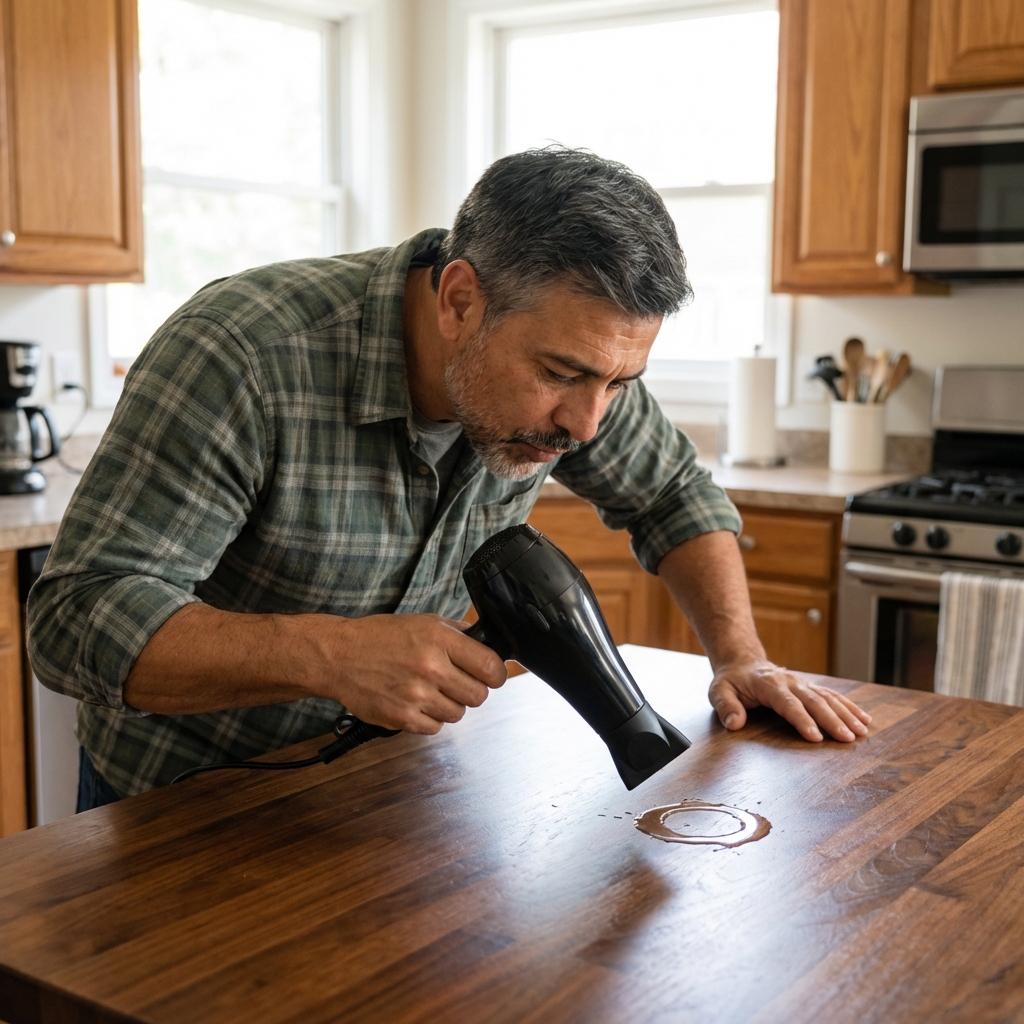
Option A: hair dryer
- Set a hair dryer to low or medium heat.
- Hold it 6 to 8 inches from the ring.
- Keep it moving in small circles for 30 to 60 seconds.
- Stop and check. Repeat in short rounds until the cloudiness fades.
- When the ring improves, buff lightly with a tiny amount of food-grade mineral oil (or a dab of olive oil if that is what you have).
Option B: iron with a cloth barrier
This works well, but you need to be careful.
- Set an iron to low with no steam.
- Place a clean cotton cloth (like a t-shirt) over the ring.
- Tap the iron on the cloth for 2 to 5 seconds, lift, and check.
- Repeat as needed, never leaving the iron in one spot.
Stop if: the finish looks soft, tacky, or shinier in one spot. Too much heat can haze, soften, or blister some finishes (especially shellac, lacquer, and some modern water-based finishes).
Method 2: oil + vinegar
This is a classic because it is gentle and it can improve both the mark and the overall sheen. The oil helps condition the surface while the vinegar can cut some of the cloudy look. Results vary by finish, so go slow.
- Mix equal parts oil and white vinegar (1 teaspoon each is plenty). For oil, mineral oil is the most stable option. Olive oil works in a pinch, just use very little and buff well.
- Dip a soft cloth into the mix and wring until it is just damp, not drippy.
- Rub the ring with the grain for 30 to 60 seconds. Keep liquid away from seams and edges (important for veneer).
- Let it sit 5 minutes.
- Buff with a clean dry cloth until the surface feels dry and looks even.
If you have a waxed table: use less vinegar and buff well. Vinegar can dull wax if overused. If you have a delicate finish, do a smaller test area first.
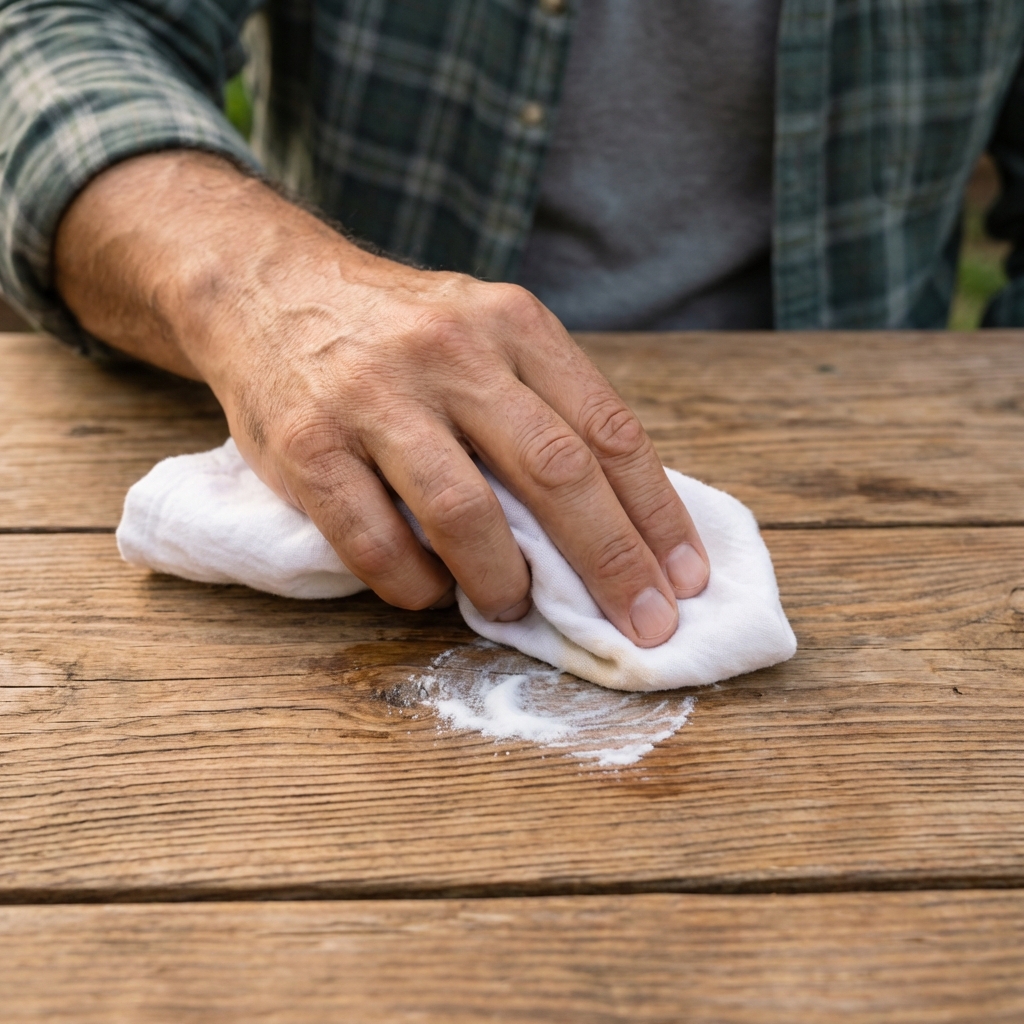
Method 3: baking soda paste
Baking soda is a mild abrasive. It can lift the cloudy layer, but you want a light touch to avoid changing the sheen in one spot. Use this only if you are comfortable with the idea that you might slightly polish that area.
- Mix 1 tablespoon baking soda with just enough water to make a thick paste.
- Put a small dab on a soft cloth (not directly on the table if you can help it).
- Rub very gently with the grain for 10 to 20 seconds.
- Wipe clean with a slightly damp cloth, then dry immediately.
- Buff lightly with a tiny amount of mineral oil to blend the shine.
Best for: rings that did not respond to heat or oil alone.
Method 4: toothpaste
Plain white toothpaste is another mild abrasive. It is often a bit smoother than baking soda paste, which can make it a good “in between” option.
- Use non-gel white toothpaste (no whitening crystals).
- Apply a pea-sized amount to a soft cloth.
- Rub lightly with the grain for 20 to 40 seconds.
- Wipe clean and dry.
- Buff lightly with a little mineral oil to even the finish.
Note: Avoid heavy pressure. On satin or high-gloss finishes, aggressive rubbing can create a dull or shiny spot.
Method 5: mayonnaise
This one is popular and surprisingly helpful for some finishes, but it is also the most “your mileage may vary” method. Mayo is mostly oil and emulsifiers, and it can sometimes soften the hazy look by slowly displacing moisture.
- Spread a thin layer of mayonnaise over the ring.
- Cover with a soft cloth so it stays put.
- Let it sit for 2 to 8 hours (overnight is fine).
- Wipe off and buff until the surface is not greasy.
Keep it thin: you are not marinating the table, just giving the finish time to relax. Make sure you buff well afterward so residue does not attract dirt.
If the ring is dark
Dark stains usually mean the water got into the wood itself. Heat and oil might improve the look slightly, but they rarely remove it completely.
- Try first: the oil + vinegar method to see if the darkness is partly finish-related.
- If it stays dark: you are typically looking at sanding and spot-treating with oxalic acid (wood bleach) or refinishing the top.
Oxalic acid safety notes
Oxalic acid can be effective, but treat it like a real chemical.
- Wear gloves and eye protection, and work with ventilation.
- Follow the product directions exactly.
- It can lighten surrounding wood, so spot work may still require blending and re-coating.
If the table is valuable, antique, or veneered, this is the point where it can be worth calling a furniture restorer. “Effortless” ends here because the goal becomes repairing the wood fibers, not just clearing haze from a finish.
When to stop and call a pro
- The piece is antique, high-value, or has a very thin or delicate finish.
- You suspect shellac or lacquer and heat makes the finish feel tacky fast.
- The top is veneer and the ring sits near seams, edges, or joints.
- The ring is large, very dark, or keeps coming back.
How to prevent rings
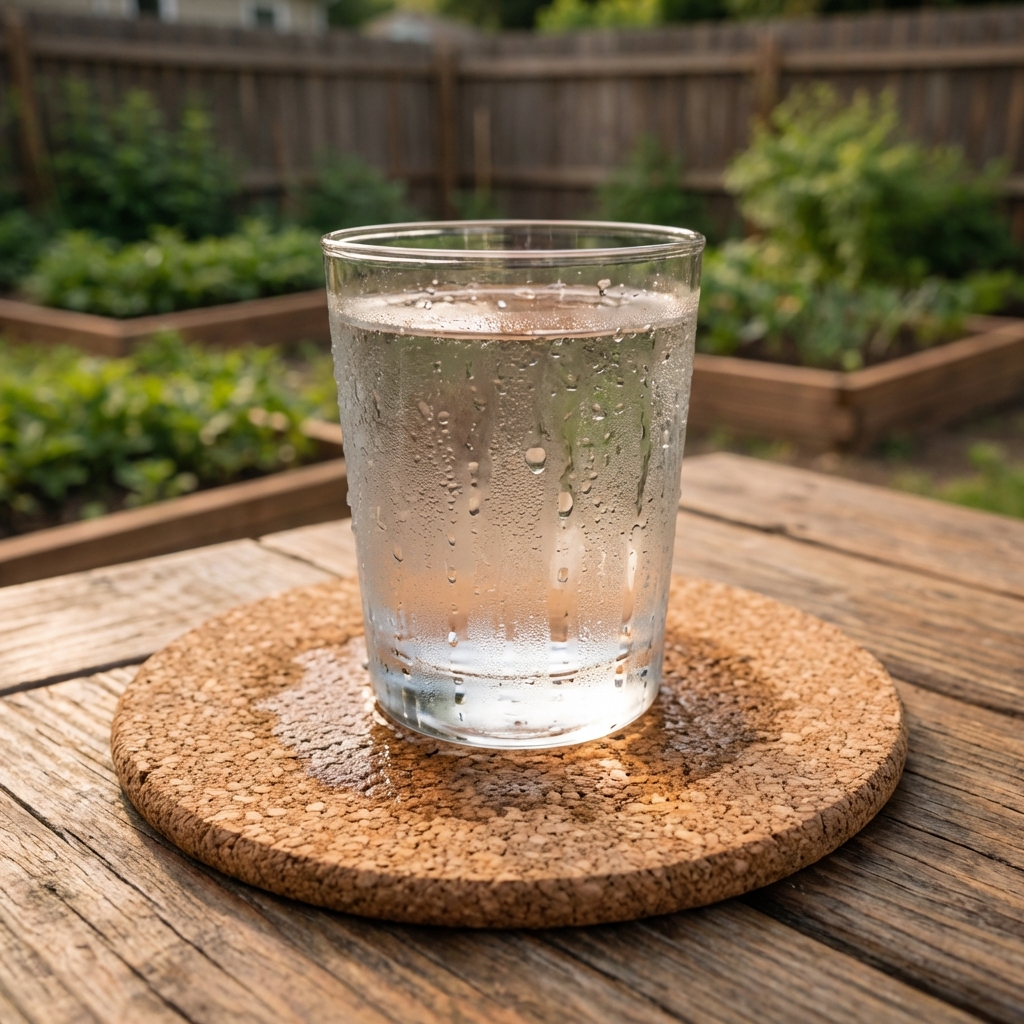
- Use coasters that actually absorb: cork, felt, or fabric-backed coasters beat hard plastic ones for sweaty drinks.
- Add a washable runner in high-use spots if your household is busy.
- Refresh protection: a thin coat of furniture wax (if appropriate for your finish) or a finish-friendly polish helps water bead up instead of soaking in.
- Wipe condensation promptly: even a few minutes can make a difference on some finishes.
Quick troubleshooting
The ring got worse after rubbing
You may have changed the sheen in a small area. Stop using abrasives, buff the whole section with a little mineral oil, and let it rest. If needed, use a furniture wax that matches your finish to blend the sheen.
The finish feels sticky after heat
Too much heat softened the finish. Let it cool completely, then buff lightly. Avoid more heat for a day or two.
It is not changing at all
Step up one level: heat, then oil + vinegar, then toothpaste or baking soda. If it is dark, you are likely beyond surface fixes.
My go-to simple combo
If you want the simplest plan that works for most white rings:
- Use a hair dryer on low for 30 to 60 seconds, check, repeat once.
- Buff with a small amount of mineral oil (or a tiny dab of olive oil), then wipe dry.
- If there is still haze, do a quick pass with toothpaste, then buff again.
That sequence is gentle, quick, and usually enough to make the ring disappear or fade to the point you stop noticing it.

Jose Brito
I’m Jose Britto, the writer behind The Country Store Farm Website. I share practical, down-to-earth gardening advice for home growers—whether you’re starting your first raised bed, troubleshooting pests, improving soil, or figuring out what to plant next. My focus is simple: clear tips you can actually use, realistic expectations, and methods that work in real backyards (not just in perfect conditions). If you like straightforward guidance and learning as you go, you’re in the right place.