Rosemary is one of those herbs that pulls double duty. It is great in the kitchen, tough in the garden, and when you use it the right way, it may help make your outdoor space a little less inviting to mosquitoes. The key is keeping expectations realistic: rosemary is not a magic force field. Results vary, and research on rosemary specifically as a mosquito repellent is limited. Still, it can be a helpful part of an organic mosquito routine, especially for patios, porches, and small backyard hangouts.

Does rosemary actually repel mosquitoes?
Rosemary contains aromatic oils (including compounds like camphor and 1,8-cineole) that many insects dislike. You will get the most benefit when those oils are actively released, like when you crush the leaves, heat them, or use a more concentrated form. A rosemary plant sitting quietly in the corner looks nice, but it is not doing as much work as people think.
Worth knowing: Botanical approaches outdoors tend to be short-acting and hit-or-miss depending on wind, heat, mosquito pressure, and how concentrated the scent is.
What rosemary can do
- May help deter mosquitoes at close range when the scent is strong and fresh.
- Support an overall mosquito strategy alongside airflow, removing standing water, and using barriers like screens.
- Add a pleasant herbal smell compared to harsher options.
What rosemary cannot do
- Replace proven repellents when mosquito pressure is heavy or disease risk is a concern.
- Fix the root problem if you have standing water nearby or thick, shady breeding areas.
If you need dependable, longer-lasting protection, especially during peak mosquito season, consider an EPA-registered repellent (for example DEET, picaridin, IR3535, or oil of lemon eucalyptus/PMD) and follow the label.
Fastest option: crush-and-rub
If you are already outside and getting bit, the fastest rosemary trick is to crush a few sprigs in your hands to release the oils, then lightly rub it on clothing cuffs, socks, and exposed skin in small test areas first.
- Pick a sprig of fresh rosemary.
- Crush it between your palms until you smell it strongly.
- Rub on clothes or do a small patch test on skin.
Heads up: Strong herbs and essential oils can irritate sensitive skin. Avoid eyes and broken skin. Discontinue if you get redness, burning, or itching. Do not use on pets.
Easy rosemary spray (no essential oils)
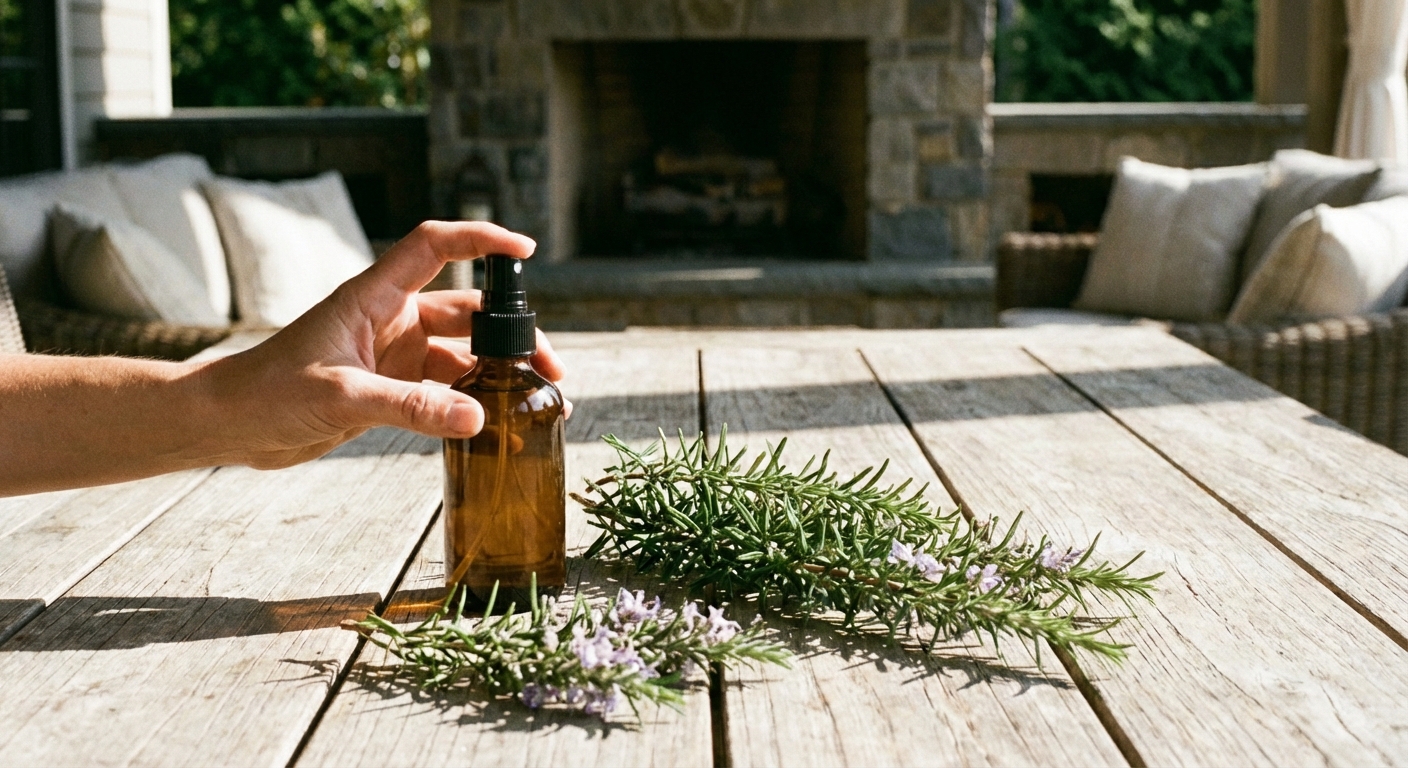
This is a convenient option to try for short-term use. You are basically making a strong rosemary tea, then using it as a light, temporary spray for clothing or skin. Because water does not pull out as many of the volatile compounds as an essential oil, the effect can be modest and short-lived. Plan to reapply often.
Rosemary spray recipe
- 2 packed cups fresh rosemary sprigs (or 1 cup dried)
- 4 cups water
- 1 to 2 teaspoons witch hazel or vodka (optional, helps it dry faster and may help it keep a bit longer)
- Spray bottle
How to make it
- Bring water to a boil, then turn off the heat.
- Add rosemary, cover, and steep 30 to 60 minutes. The longer you steep, the stronger the scent.
- Strain and cool completely.
- Add optional witch hazel or vodka.
- Pour into a clean spray bottle and refrigerate what you are not using that day.
How to use: Mist clothing first if you have sensitive skin. If using on skin, do a patch test and avoid the face. Reapply frequently as needed (for example every 30 to 60 minutes), and after sweating.
Storage: Use a clean bottle and make small batches. Keep refrigerated and use within up to about 5 to 7 days. If it smells off, looks cloudy, or you see any growth, toss it and make a fresh batch.
Extra skin-safety notes: Avoid using on infants. If you are pregnant or breastfeeding, or if you have allergies or asthma, check with a healthcare professional before using any DIY skin spray.
Rosemary smoke for evenings
Mosquitoes tend to show up hardest at dusk, which is also when people want to be outside. Smoke in general can reduce mosquito activity nearby, and rosemary smoke may help create a less mosquito-friendly zone around a small seating area. This works because heat releases aromatic compounds quickly.
Option 1: Toss rosemary on a fire pit
- Use a small handful of fresh rosemary sprigs.
- Toss them on hot coals for a short burst of fragrant smoke.
- Repeat as needed.
Option 2: Rosemary bundle on a tray
- Tie a small bundle of rosemary with cotton string.
- Set it in a heat-safe tray near, not on, open flame.
- Let it smolder gently for a steady aroma.
Safety note: Only use outdoors, keep away from kids and pets, and never leave smoldering herbs unattended. Avoid smoke exposure if you have asthma or respiratory sensitivity, and move it farther away if it is irritating.

Plant rosemary where it helps most
If you want rosemary to do more than look pretty, placement matters. Put it where you brush against it, where you sit, and where you get airflow that carries the scent. Pots make this easier because you can move them based on where you actually hang out.
Best spots
- By patio chairs and outdoor dining areas
- Near doorways and porch steps
- Along walkways where you will bump the plant and release scent
- In containers on sunny decks and balconies
Quick growing tips
- Sun: Full sun is ideal, at least 6 hours.
- Soil: Well-draining soil is non-negotiable. Soggy roots kill rosemary fast.
- Water: Water deeply, then let the top few inches dry before watering again.
- Harvest: Trim often to encourage bushy growth. That also gives you more sprigs for sprays and bundles.

Boost rosemary with simple moves
Rosemary works best as part of a small system that makes your yard less mosquito-friendly overall. These are the steps that usually make the biggest difference in real backyards.
Do these first
- Dump standing water weekly: saucers, buckets, toys, tarps, clogged gutters.
- Add airflow: a box fan on the patio can reduce bites because mosquitoes are weak fliers.
- Use physical barriers: screens, long sleeves, socks, and closed shoes at dusk.
Herb partners that pair well
If you like growing herbs anyway, these can complement rosemary around seating areas:
- Mint (best in pots so it does not take over)
- Lemon balm (also best in pots)
- Basil
- Lavender
Common mistakes (easy fixes)
- Mistake: Relying on one rosemary plant across the yard.
Fix: Use multiple pots near where you sit, and actively release scent by brushing or trimming. - Mistake: Making a weak spray that smells like barely-there tea.
Fix: Use more rosemary and a longer steep time. - Mistake: Forgetting reapplication.
Fix: Treat rosemary spray like a short-term helper, not an all-night repellent. - Mistake: Overwatering rosemary.
Fix: Improve drainage, use a gritty potting mix, and water less often.
Quick FAQ
Can I use rosemary essential oil directly on skin?
Do not apply undiluted essential oils to skin. If you use essential oils, follow safe dilution guidelines and consider sticking with the steeped-herb spray for a gentler option.
Is rosemary safe around pets?
The plant is generally considered low risk in small amounts, but concentrated oils can be a problem, especially for cats. Keep sprays and essential oils away from pets, and do not apply to their fur. If you are unsure, check with your veterinarian.
What is the most effective rosemary method?
For most people, the strongest results tend to come from smoke (for outdoor seating areas) and a strong, freshly made spray for short-term personal protection. Planting rosemary helps, but it is more supportive than standalone.
Takeaway
If you want an effortless organic mosquito helper, rosemary is a good pick because it is easy to grow and easy to use. Trim it, crush it, steep it, or let it smolder safely outdoors. Combine that with removing standing water and adding airflow, and you will usually notice a difference in smaller hangout areas. When mosquitoes are intense, or when you need reliable protection, reach for an EPA-registered repellent and use rosemary as your nice-smelling backup.

Jose Brito
I’m Jose Britto, the writer behind The Country Store Farm Website. I share practical, down-to-earth gardening advice for home growers—whether you’re starting your first raised bed, troubleshooting pests, improving soil, or figuring out what to plant next. My focus is simple: clear tips you can actually use, realistic expectations, and methods that work in real backyards (not just in perfect conditions). If you like straightforward guidance and learning as you go, you’re in the right place.