Gardenias can feel “fussy,” but most issues come from a few repeat offenders: inconsistent moisture, not enough light, and soil that is not acidic enough. The good news is you do not need harsh chemicals or perfect conditions to grow them well. You just need a safe routine you can actually stick with.
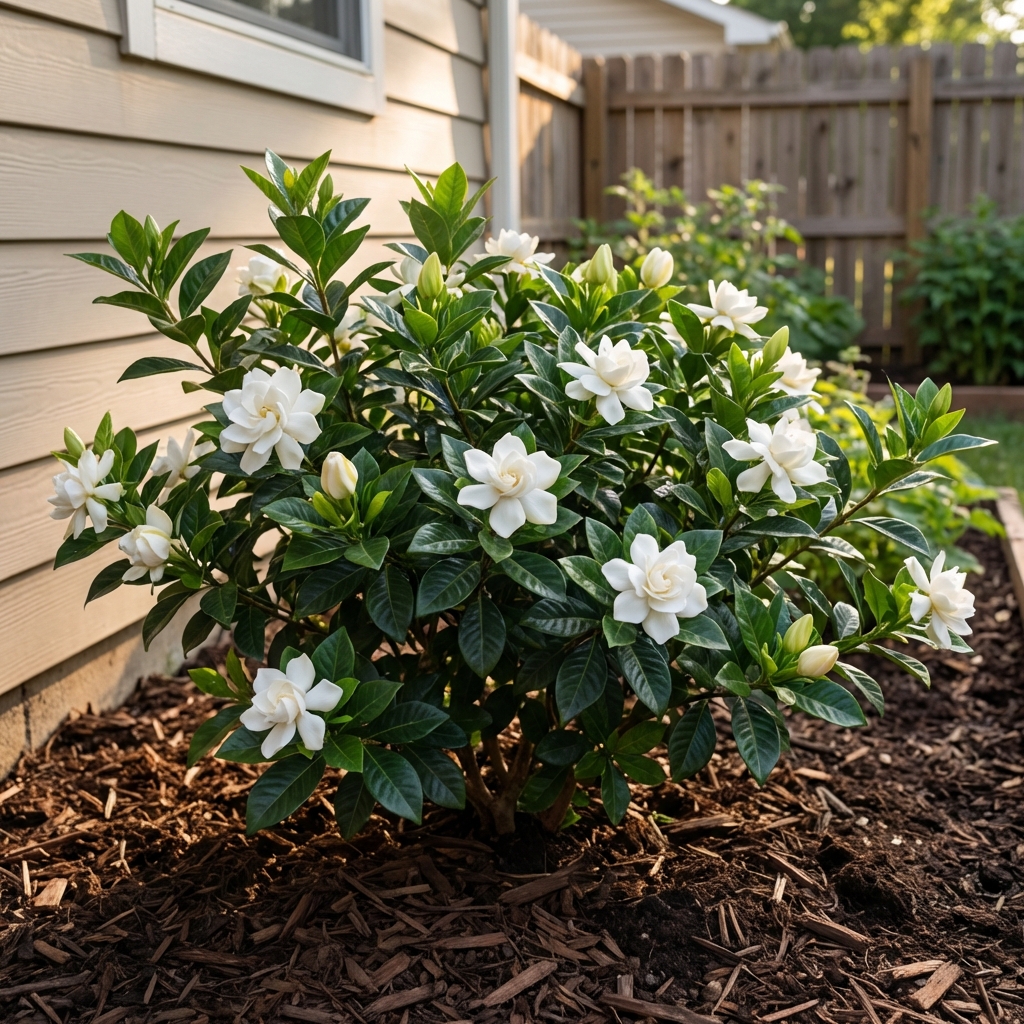
Quick facts for safe gardenia success
- Best light: Bright light with morning sun and afternoon shade outdoors (adjust by climate). Indoors, right in front of your brightest window, or add a grow light if your home is dim.
- Ideal soil: Moist but well-draining, rich in organic matter, and acidic.
- Target pH: About 5.0 to 6.5.
- Water needs: Even moisture. Drought stress and soggy soil both cause trouble.
- Most common problems: Yellow leaves (often pH or watering), bud drop (stress), and pests like aphids, whiteflies, scale, spider mites, and occasional thrips.
- Safer pest approach: Start with water spray, pruning, insecticidal soap, and horticultural oil before anything stronger.
Where to plant: outdoor vs. container
Outdoors (in the ground)
If your winters are mild, in-ground gardenias are usually the easiest long-term. For most Gardenia jasminoides types, that typically means USDA Zones 8 to 11 (variety-dependent). If you are in a borderline area (often Zones 6 to 7), plan on container growing or winter protection so you do not lose the plant in a hard freeze.
Pick a spot protected from harsh wind and strong afternoon sun. Good air flow helps prevent sooty mold and leaf spot, but you do not want the plant in a wind tunnel.
Containers (patios and colder zones)
Containers are a great “safe” choice if your climate gets cold because you can move the plant to shelter. Use a pot with drainage holes, and avoid saucers that keep the roots sitting in water. Bring it in before the first frost. For best performance, try to avoid prolonged temps below about 45 to 50°F, even if the plant survives colder dips.
Easy container mix: Look for an “acid-loving” potting mix, or build a similar blend with peat or coir + pine bark fines + perlite for drainage.
Repotting: Refresh soil and step up one pot size every 2 to 3 years, or sooner if it is rootbound and drying out fast.
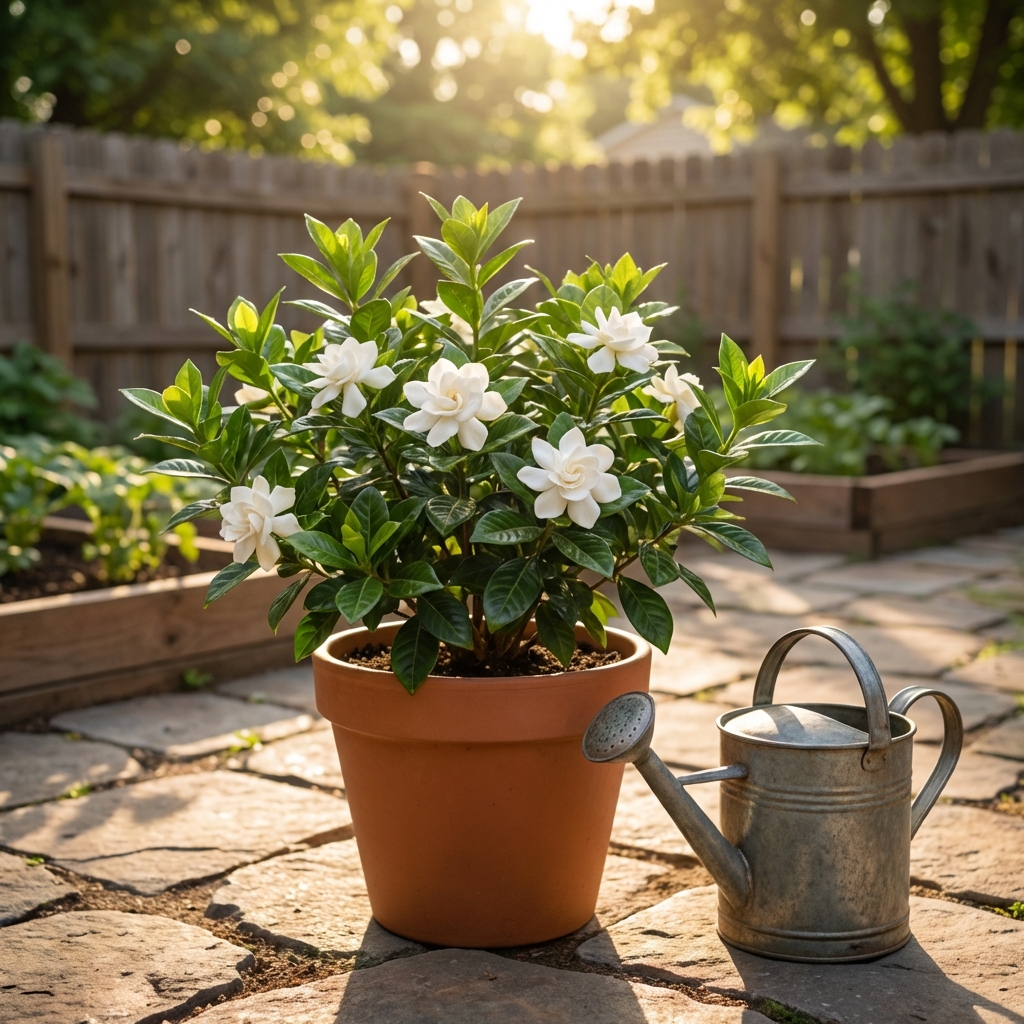
Light and temperature: avoid the stress triggers
Gardenias set buds and open flowers best with bright light and steady conditions.
- Outdoor light: Aim for 4 to 6 hours of sun, preferably morning sun. In cooler or coastal climates, they can often take more sun. In hot inland heat, they may do better with bright shade after midday.
- Indoor light: A south or west window is often best. Place the plant close enough that it gets strong light, but keep leaves from pressing against cold glass in winter. If your best window is still dim, a simple grow light can prevent bud drop and sparse growth.
- Temperature sweet spot: Roughly 65 to 75°F during the day and a little cooler at night.
- Big safety tip: Sudden changes cause bud drop. That includes moving the plant, blasting it with heat, or letting it dry out then soaking it.
Watering safely: the simplest routine that works
The goal is even moisture. Not bone dry, not swampy. Here is a reliable method:
Check the top inch of soil. If it is dry, it is time to water.
Water slowly until it drains. Then let it finish dripping. Do not leave the pot sitting in runoff.
Mulch outdoors. A 2 to 3 inch layer helps keep moisture stable and protects shallow roots.
Water quality note: If your tap water is hard (lots of minerals), it can push pH up over time. If you keep battling yellow leaves and your soil pH keeps rising, try mixing in rainwater when you can.
If you are seeing yellow leaves, also jump to Soil and pH. It is often the missing piece.
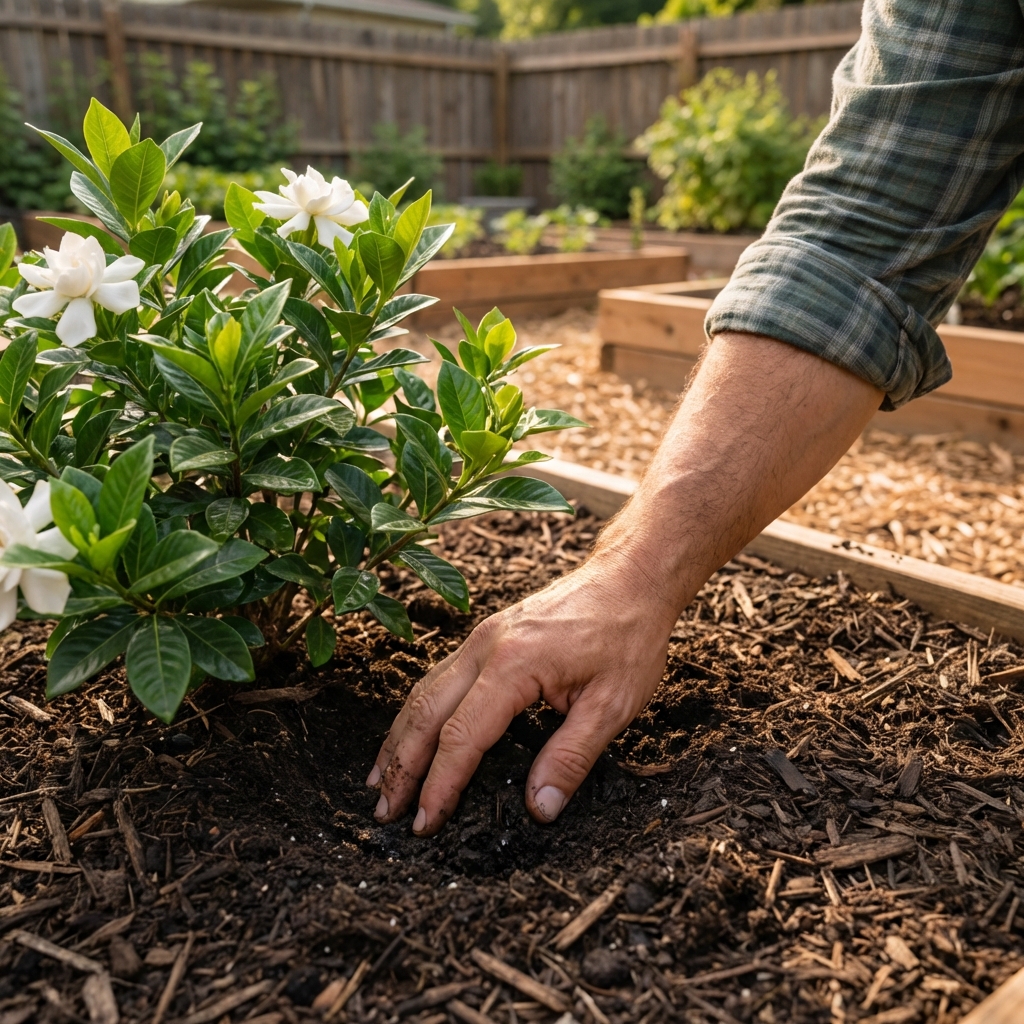
Soil and pH: the “hidden” cause of yellow leaves
Gardenias are acid-loving plants. When pH creeps too high, they cannot access iron and certain nutrients even if the nutrients are present. This is why people fertilize and still see yellow leaves.
How to keep soil safely acidic
- Use an acid-loving plant mix for containers (often labeled for azaleas or camellias).
- Add organic matter like pine bark fines or compost to improve drainage and moisture balance.
- Test pH if problems repeat. A simple soil test kit is better than guessing.
Safe acidifying options
- Elemental sulfur (slow, steady adjustment). Follow label rates and re-test later.
- Iron chelate for quicker correction when leaves are yellowing from iron lockout.
- Acid-forming fertilizers made for azaleas and gardenias.
Avoid: Overdoing quick-fix acids. Big, fast pH swings stress roots and can make things worse.
Feeding gardenias without burning them
Gardenias respond well to regular, moderate feeding. The safest approach is smaller doses on a schedule instead of one heavy application.
- When to fertilize: Start in spring as new growth begins. Continue through early to mid-summer. Pause as the plant slows down.
- What to use: A fertilizer for acid-loving plants that includes micronutrients like iron, magnesium, and manganese.
- How to apply safely: Water first if soil is dry. Then fertilize. Dry roots plus fertilizer is a common burn scenario.
If your gardenia is in a container, consider a slow-release fertilizer plus occasional liquid feed. Just do not stack products without counting total frequency.
Indoor humidity: the quiet game changer
Indoors, low humidity is a common trigger for bud drop, crispy leaf edges, and spider mites.
- Good target: Aim for about 50% humidity or higher if you can.
- Simple options: Run a small humidifier nearby, or use a pebble tray with water under the pot (pot not sitting in water).
- Airflow note: Humidity is helpful, but stale, wet air is not. Give the plant gentle airflow and avoid crowding leaves against other plants.
Pruning and deadheading: keep it simple
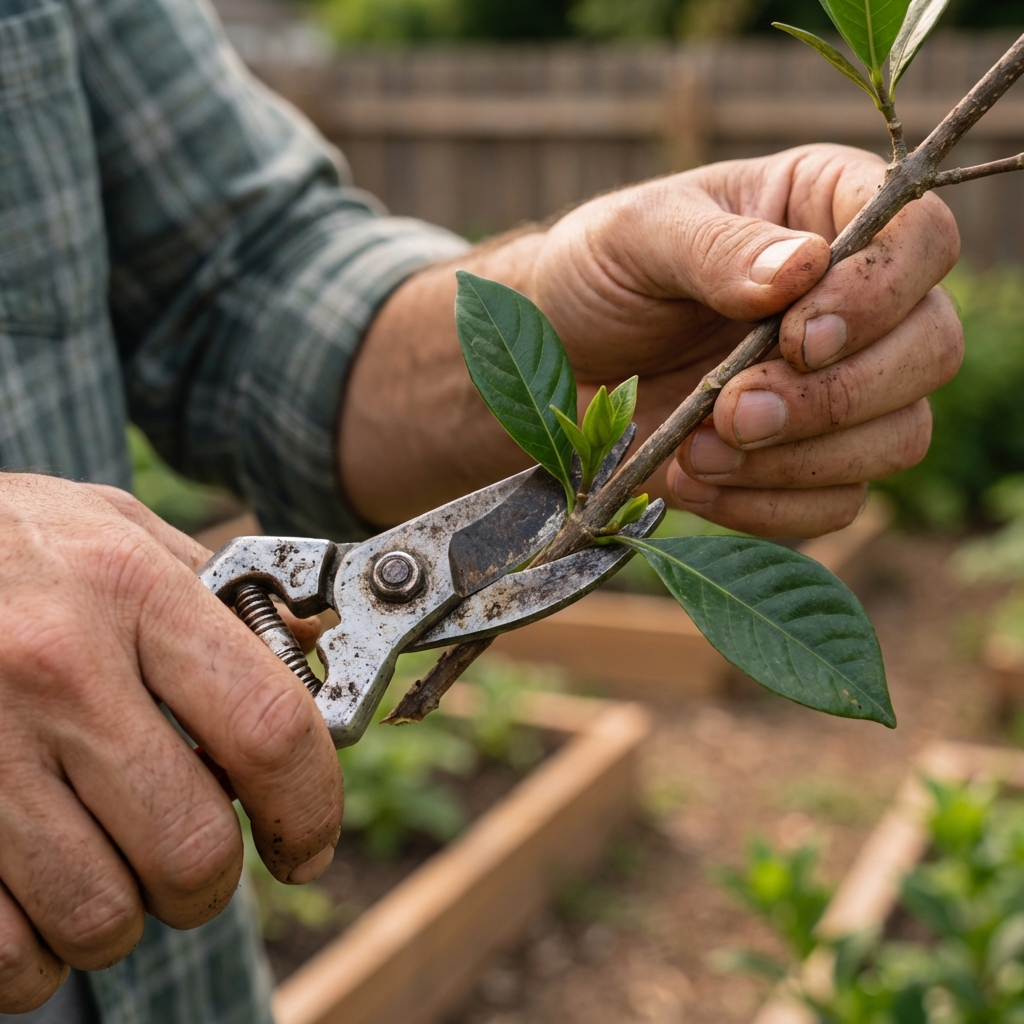
Gardenias do not need aggressive pruning. Heavy cutting can remove next season’s flowering wood.
- Best time to prune: Right after the main bloom flush finishes.
- What to remove: Dead, damaged, crossing branches, and any weak growth.
- Deadheading: Pinch off spent blooms to keep the plant tidy and reduce rot issues in humid weather.
Gardenia safety: kids, pets, and common products
Many home gardeners want to keep care routines safer around kids and pets.
- Pet safety: Gardenia (Gardenia jasminoides) is often listed as mildly toxic to dogs and cats and may cause stomach upset if eaten (sources vary by authority). If your pet chews plants, place gardenias out of reach and contact your veterinarian if ingestion happens.
- Safer pest sprays: Insecticidal soap and horticultural oil are commonly used as lower-toxicity options when applied correctly.
- Storage: Keep all garden products locked up and labeled, even “natural” ones.
Important: Always follow the product label. “More” is not better, especially with oils and soaps, which can burn leaves if applied in hot sun.
Also: Follow local regulations, avoid spraying when pollinators are active, and apply in the evening when possible.
Common gardenia problems and safe solutions
1) Yellow leaves (chlorosis)
Most likely causes: Soil pH too high, overwatering, underwatering, or poor drainage.
- Step 1: Check moisture habits and drainage first.
- Step 2: Test soil pH. If pH is high, correct gradually.
- Step 3: Use chelated iron if new leaves are yellow with greener veins, especially when pH is high.
2) Bud drop (buds fall off before opening)
Most likely causes: Temperature swings, moving the plant, dry spells followed by heavy watering, low humidity indoors, or pests (including thrips).
- Stabilize watering: Keep soil evenly moist.
- Stop moving the plant: Pick a good spot and leave it.
- Boost humidity indoors: Aim for 50%+ if possible, with gentle airflow.
- Check for pests: Look closely at buds and new growth.
3) Brown leaf tips or crispy edges
Most likely causes: Dry air, inconsistent watering, salt buildup from fertilizer, or hot afternoon sun.
- Flush container soil periodically: If you see salt crusting, tip burn, or you fertilize often, water thoroughly to flush excess salts about every 6 to 8 weeks as needed. If you feel like you need to do it more than that, reduce fertilizing and reassess water quality.
- Adjust light: Provide afternoon shade outdoors in hot climates.
- Water consistently: Do not let the root ball swing from dry to soaked.
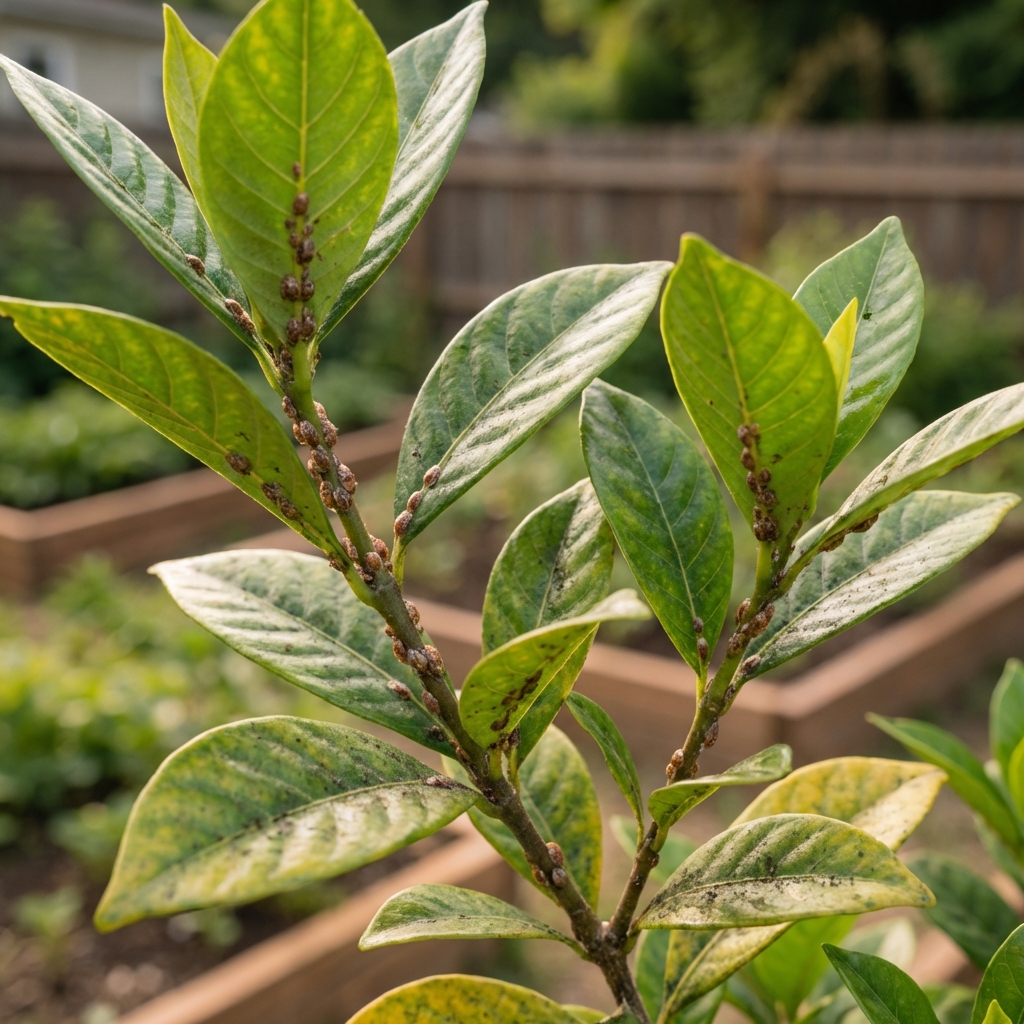
4) Sticky leaves or black soot on leaves
What it usually means: Sap-sucking insects (aphids, scale, whiteflies) are producing honeydew, and sooty mold is growing on it.
- Rinse first: Spray leaves with water to remove honeydew and knock pests back.
- Prune heavy infestations: Remove the worst stems.
- Treat safely: Apply insecticidal soap or horticultural oil, covering leaf undersides. Repeat as directed.
5) No blooms
Most likely causes: Not enough light, pruning at the wrong time, too much nitrogen, or cold stress.
- Increase light: More morning sun outdoors, brighter window indoors, or a grow light if needed.
- Review pruning timing: Prune right after flowering, not late in the season.
- Use the right fertilizer: Avoid high-nitrogen lawn fertilizers near gardenias.
- Watch cold exposure: Protect from frost and cold drafts, especially for containers.
Seasonal care checklist
Spring
- Refresh mulch and check soil pH.
- Start feeding as growth begins.
- Inspect for aphids and whiteflies on new growth.
Summer
- Water deeply and consistently, especially in heat.
- Protect from harsh afternoon sun (especially inland).
- Deadhead spent flowers and watch for scale and sooty mold.
Fall
- Ease off fertilizer so growth can slow naturally.
- In colder areas, plan for moving containers indoors before frost.
Winter
- Keep indoor plants near bright light and away from heater vents.
- Water less often, but do not let the root ball dry completely.
- Watch for spider mites in dry indoor air.
Fast troubleshooting: what to do first
If your gardenia looks unhappy and you do not know where to start, do these three checks in order:
- Moisture: Is the soil staying soggy or going bone dry between waterings?
- Light: Is the plant getting enough bright light to support buds and blooms?
- pH: If yellowing keeps returning, test pH and correct slowly.
Once those are dialed in, pests and minor nutrient tweaks are much easier to handle safely.
FAQ
Do gardenias like coffee grounds?
A small amount mixed into compost can be fine, but coffee grounds alone are not a reliable way to control pH. For predictable results, use a soil test and an acid-lover fertilizer or elemental sulfur as needed.
How often should I water a potted gardenia?
There is no perfect calendar schedule because heat, pot size, and light change everything. A good rule is to water when the top inch of soil is dry, then water thoroughly until it drains.
Can I use neem oil on gardenias?
Neem-based products can work for soft-bodied pests, but oils can also cause leaf burn if applied in hot sun or at too strong a concentration. Test on a small area first and follow the label exactly.
Why are the leaves yellow but the veins look green?
That pattern often points to iron chlorosis, commonly caused by soil pH being too high. Confirm with a pH test, then correct pH gradually and consider chelated iron for quicker improvement.

Jose Brito
I’m Jose Britto, the writer behind The Country Store Farm Website. I share practical, down-to-earth gardening advice for home growers—whether you’re starting your first raised bed, troubleshooting pests, improving soil, or figuring out what to plant next. My focus is simple: clear tips you can actually use, realistic expectations, and methods that work in real backyards (not just in perfect conditions). If you like straightforward guidance and learning as you go, you’re in the right place.