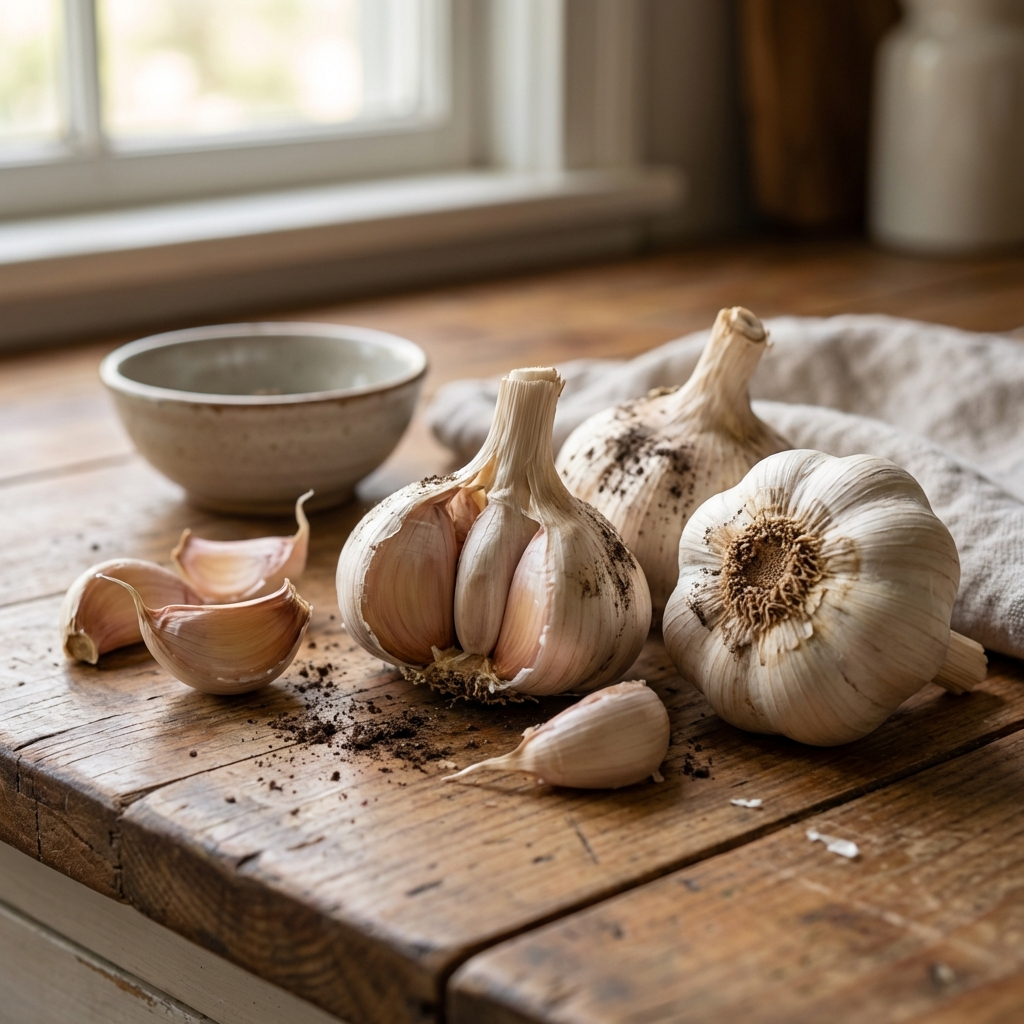
Garlic is one of those kitchen staples that you use a clove at a time, which means the way you store it matters. Done right, garlic stays firm, flavorful, and safe to eat. Done wrong, it can sprout, mold, dry out, or start tasting bitter.
Below are the safest, most practical ways to store garlic cloves at home, plus quick fixes for common problems.
What safe storage means
Most garlic problems at home are quality issues you can see, like mold, drying, or rot. The bigger safety risk usually comes from how garlic is stored, not from a whole dry bulb sitting in a pantry.
- Do not store garlic in oil at room temperature. Garlic in oil can create low-oxygen conditions that allow Clostridium botulinum to grow. If you make garlic in oil, refrigerate it immediately and use within 3 to 4 days, unless you are following a tested, acidified preservation recipe.
- Avoid sealed, damp storage. Trapped moisture encourages mold and soft rot.
- Cool, dry, and breathable is the goal for most whole garlic and unpeeled cloves.
If you remember one rule: keep garlic dry and able to breathe, unless you are freezing it.
Note: For tested preservation guidance (especially garlic in oil), see USDA and the National Center for Home Food Preservation (NCHFP).
Best way to store whole bulbs
If you still have the garlic bulb mostly intact, store it whole. Whole bulbs keep longer than loose cloves because the wrapper layers protect them.
Ideal conditions
- Temperature: cool is best, roughly 50 to 70°F (10 to 21°C). A typical pantry is fine.
- Humidity: dry. High humidity is when mold starts showing up.
- Airflow: good ventilation is more important than people think.
- Light: dark or shaded, not in direct sun.
What to use
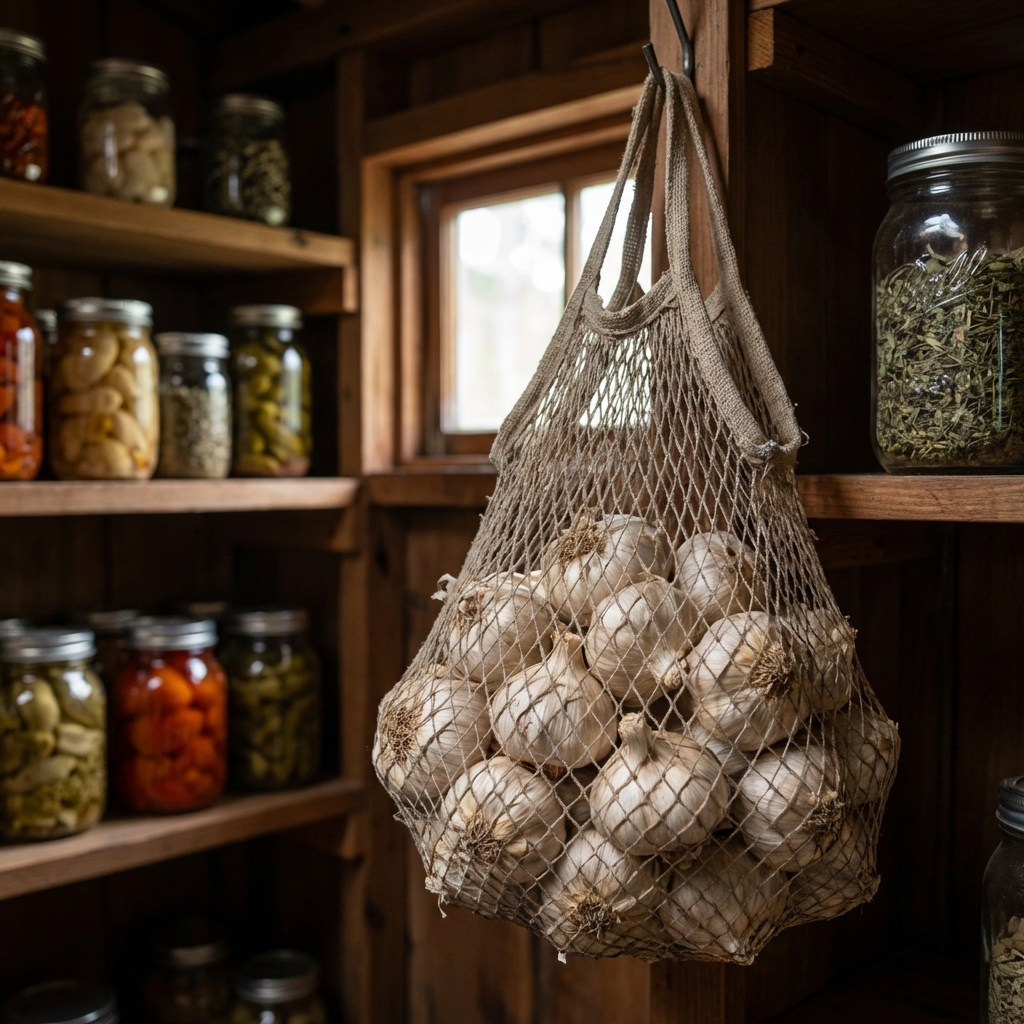
- Mesh bag
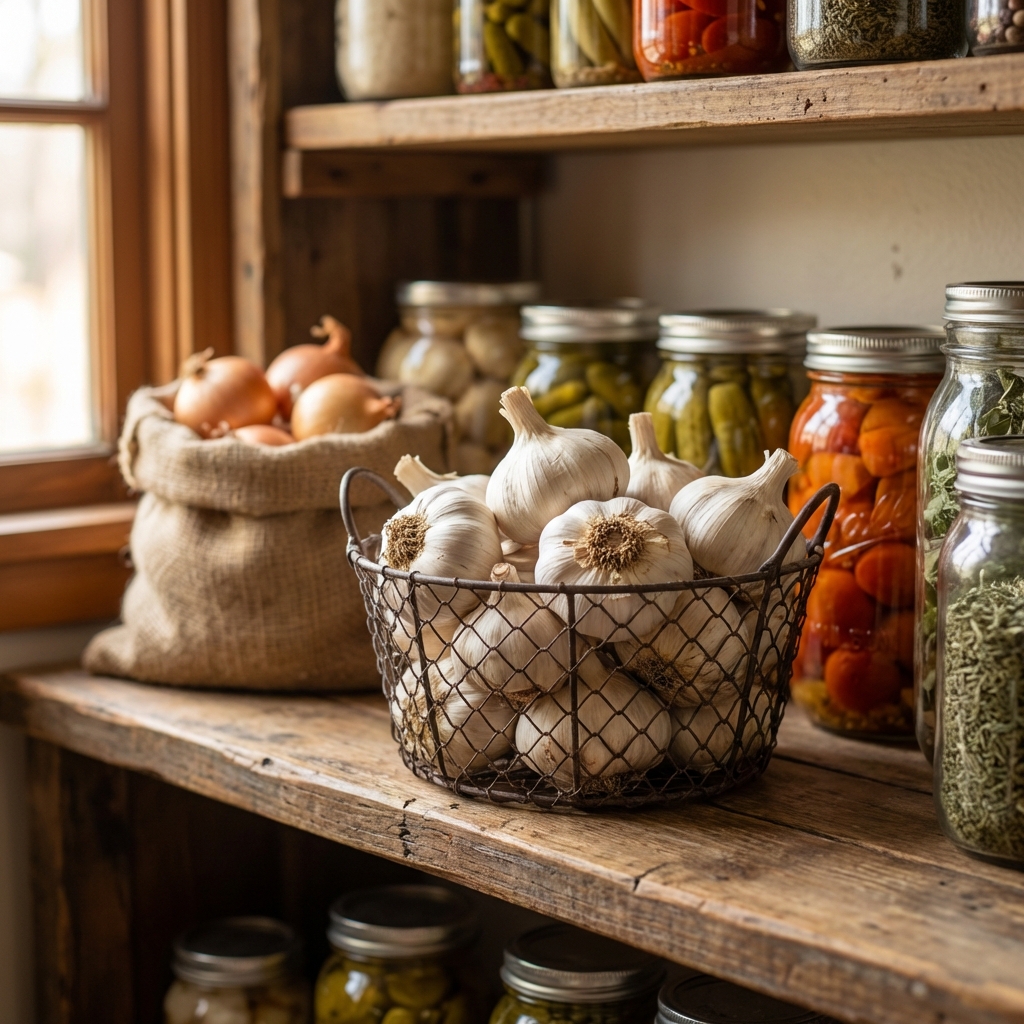
- Wire basket
- Paper bag left slightly open
- Garlic keeper with ventilation holes
Typical shelf life: about 1 to 3 months (sometimes longer), depending on variety, freshness, and your house conditions.
Refrigerator note: In most homes, whole heads do best in a cool, dry pantry. If your kitchen is very warm or humid and bulbs are molding quickly, you can refrigerate whole garlic as a backup, but it may sprout sooner and the cloves can turn a bit rubbery over time.
Separated, unpeeled cloves
Once you break a bulb apart, the cloves still store well as long as the skins are on and they are not wet.
- Keep unpeeled cloves in a breathable container (mesh bag or open bowl) in a cool, dry spot.
- Do not wash cloves before storage. Moisture trapped under the papery skin speeds up spoilage.
- Check weekly and pull any soft or damaged cloves so they do not spread rot.
Typical shelf life: about 2 to 4 weeks, often longer in a cool, dry pantry.
Peeled cloves
Peeled garlic is convenient, but it is also where people get into trouble. Once peeled, garlic dries out faster and can pick up odors or moisture in the refrigerator.
Option 1: Refrigerate (short-term)
- Place peeled cloves in a clean, dry, airtight container.
- Add a dry paper towel to absorb condensation, and replace it if it gets damp.
- Store in the refrigerator, not on the counter.
How long: use within 5 to 7 days for best quality. If you see slime, mold, or strong sour odors, toss them.
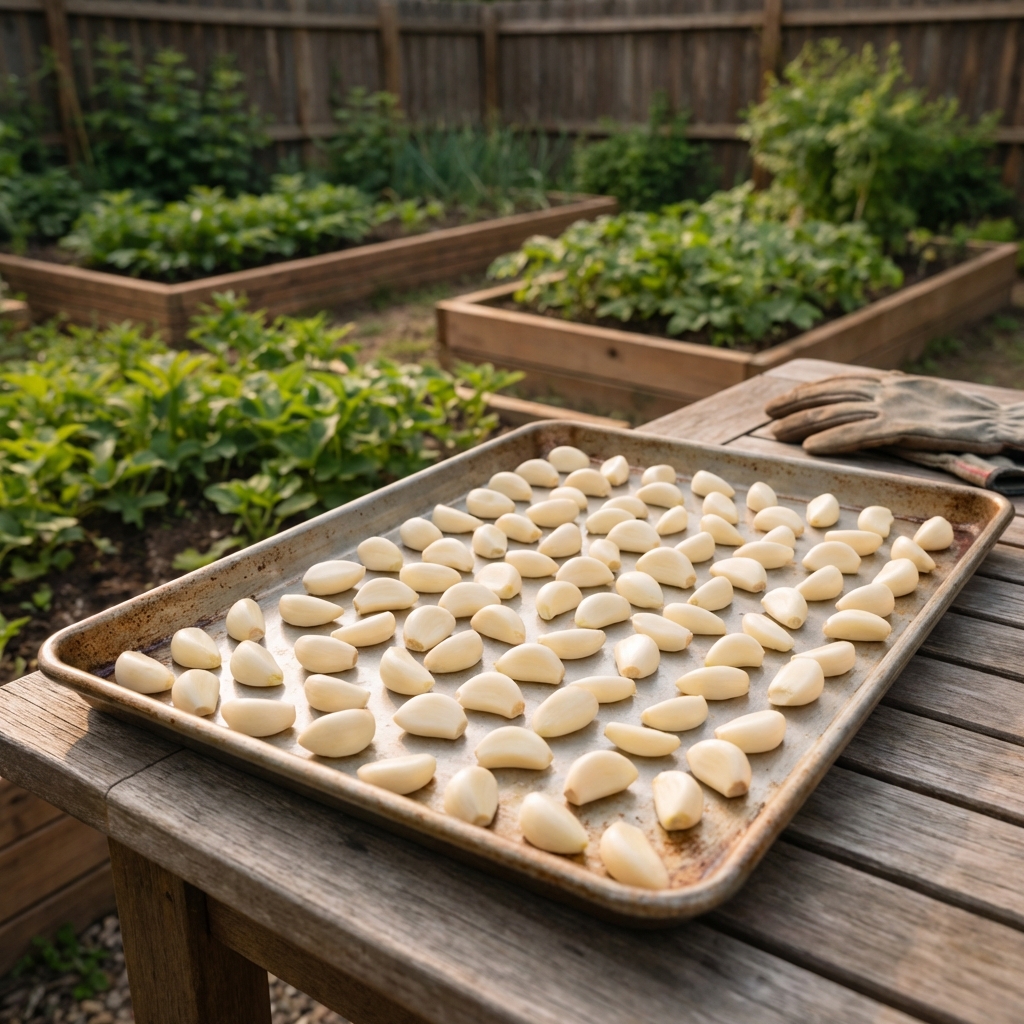
Option 2: Freeze peeled cloves
- Spread peeled cloves on a baking sheet so they freeze individually.
- Once frozen, move them to a freezer bag or airtight container.
- Use straight from frozen. You can grate, mince, or slice them as needed.
How long: 6 to 12 months for good flavor.
Option 3: Freeze minced garlic
If you cook with minced garlic often, freezing it in small portions saves time.
- Mince garlic in a food processor or by hand.
- Press into small mounds on parchment paper, or pack into an ice cube tray.
- Freeze, then transfer portions to a freezer bag.
Note: Minced garlic loses some punch compared to fresh, but it is still great for soups, sauces, and roasted veggies.
What not to do
- Do not store garlic in oil at room temperature. Refrigerate immediately and use within 3 to 4 days, unless made with a tested acidified recipe.
- Do not store whole garlic in sealed plastic on the counter. Trapped humidity is mold’s best friend.
- Do not store garlic in an airtight jar at room temperature. Without airflow, moisture builds up and spoilage speeds up.
- Do not leave garlic near the stove or in a sunny window. Heat and light speed up drying and sprouting.
- Do not store garlic with high-moisture produce. Onions are fine if it is dry and ventilated, but avoid storing garlic beside damp potatoes or in a humid produce drawer.
Sprouting, soft cloves, and mold
If your garlic is sprouting
Sprouting garlic is usually still safe. Quality is the issue.
- Remove the green sprout if it tastes bitter to you, especially in raw uses.
- Use sprouting cloves in cooked dishes where the flavor mellows.
- Fix for next time: store whole bulbs in a cooler, darker, better-ventilated spot.
If cloves are soft or rubbery
- Soft cloves often mean they are dehydrating or starting to rot.
- If they are only slightly soft but not smelly, use them soon in cooking.
- If they are very soft, leaking, or smell off, discard them.
- Fix for next time: avoid humidity and avoid sealed containers for unpeeled cloves.
If you see mold
Mold can spread invisibly. When in doubt, toss it.
- Discard moldy cloves and any cloves that were directly touching them.
- Clean the storage container before refilling.
- Fix for next time: increase airflow, keep garlic dry, and do not store it in plastic without ventilation.
Best containers for garlic
You do not need anything fancy. You just need airflow and dryness.
- Mesh bags: inexpensive, breathable, and easy to hang.
- Wire baskets: great airflow and easy to see what you have.
- Paper bags: work well if kept open and stored in a dry pantry.
- Glass container (refrigerator only): good for peeled cloves short-term. Add a paper towel to manage condensation and keep odors out.
How to tell if garlic is good
- Good garlic: firm cloves, dry papery skin, clean garlic smell.
- Questionable: slightly soft cloves or early sprouts. Usually okay to cook soon.
- Bad: mold, slimy texture, wet spots, strong sour or rotten smell, or cloves that are brown and collapsing.
When it comes to food safety, trust your senses. If it smells wrong or feels slimy, it is not worth saving.
Quick storage cheat sheet
- Whole bulb: cool, dark, ventilated pantry. Best overall.
- Separated unpeeled cloves: same pantry setup, use within a few weeks.
- Peeled cloves: refrigerator 5 to 7 days, or freeze for months.
- Minced garlic: freeze in small portions.
- Garlic in oil: refrigerate immediately and use within 3 to 4 days, unless made using tested acidification guidance.
FAQ
Can I store garlic cloves in water?
It is not a good long-term method. Water encourages spoilage and can create unsafe conditions. If you want convenience, freeze cloves or refrigerate peeled cloves briefly.
Is it safe to eat garlic with a green sprout?
Generally yes. The sprout can taste bitter, so many people remove it, especially for raw dishes.
Why did my garlic turn brown?
Browning can happen from age, bruising, or early spoilage. If the clove is firm and smells normal, it is usually fine to cook. If it is soft, wet, or smells off, discard it.
What about store-bought pre-peeled garlic?
Follow the package instructions and use-by date. Once opened, keep it refrigerated and keep the container closed to reduce odors and drying.

Jose Brito
I’m Jose Britto, the writer behind The Country Store Farm Website. I share practical, down-to-earth gardening advice for home growers—whether you’re starting your first raised bed, troubleshooting pests, improving soil, or figuring out what to plant next. My focus is simple: clear tips you can actually use, realistic expectations, and methods that work in real backyards (not just in perfect conditions). If you like straightforward guidance and learning as you go, you’re in the right place.