Christmas cactus (the holiday cacti in the Schlumbergera group) is one of the easiest seasonal plants to keep for years, but it has a few habits that surprise new growers. It is not a desert cactus, it dislikes soggy soil, and it can drop buds if you change its routine at the wrong time. The good news is that starting one safely is mostly about gentle light, careful watering, and the right pot and mix.
Quick ID note: Many plants sold as “Christmas cactus” are actually Thanksgiving cactus (Schlumbergera truncata) or hybrids. Thanksgiving cactus typically has more pointed, claw-like segment edges, while true Christmas cactus tends to have smoother, scalloped edges. Care is the same, but bloom timing may differ.
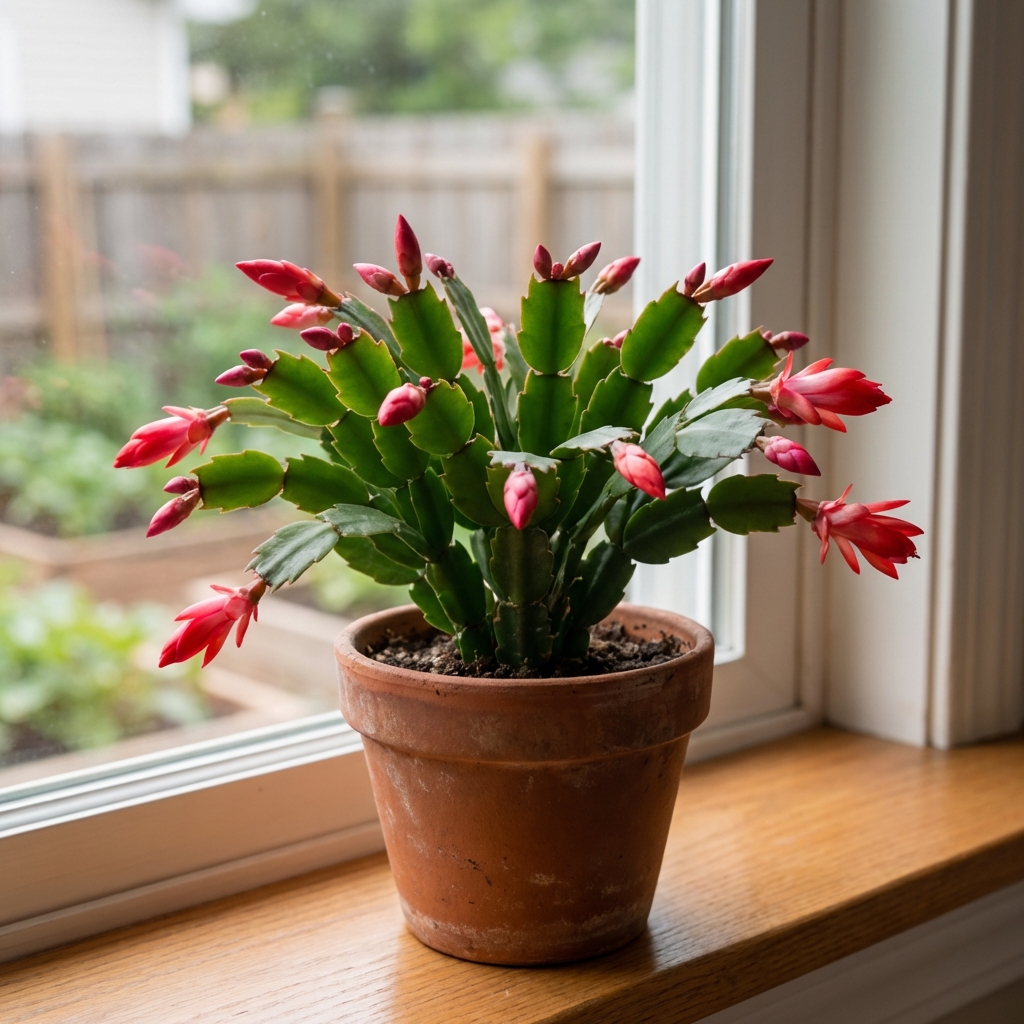
Quick facts before you start
- Not a desert cactus: Christmas cactus is an epiphytic forest cactus. It naturally grows in tree crevices with airy, fast-draining debris.
- Likes bright, indirect light: Morning sun is usually fine, harsh afternoon sun can scorch segments.
- Roots are fine and shallow: It prefers a snug pot and hates sitting in water.
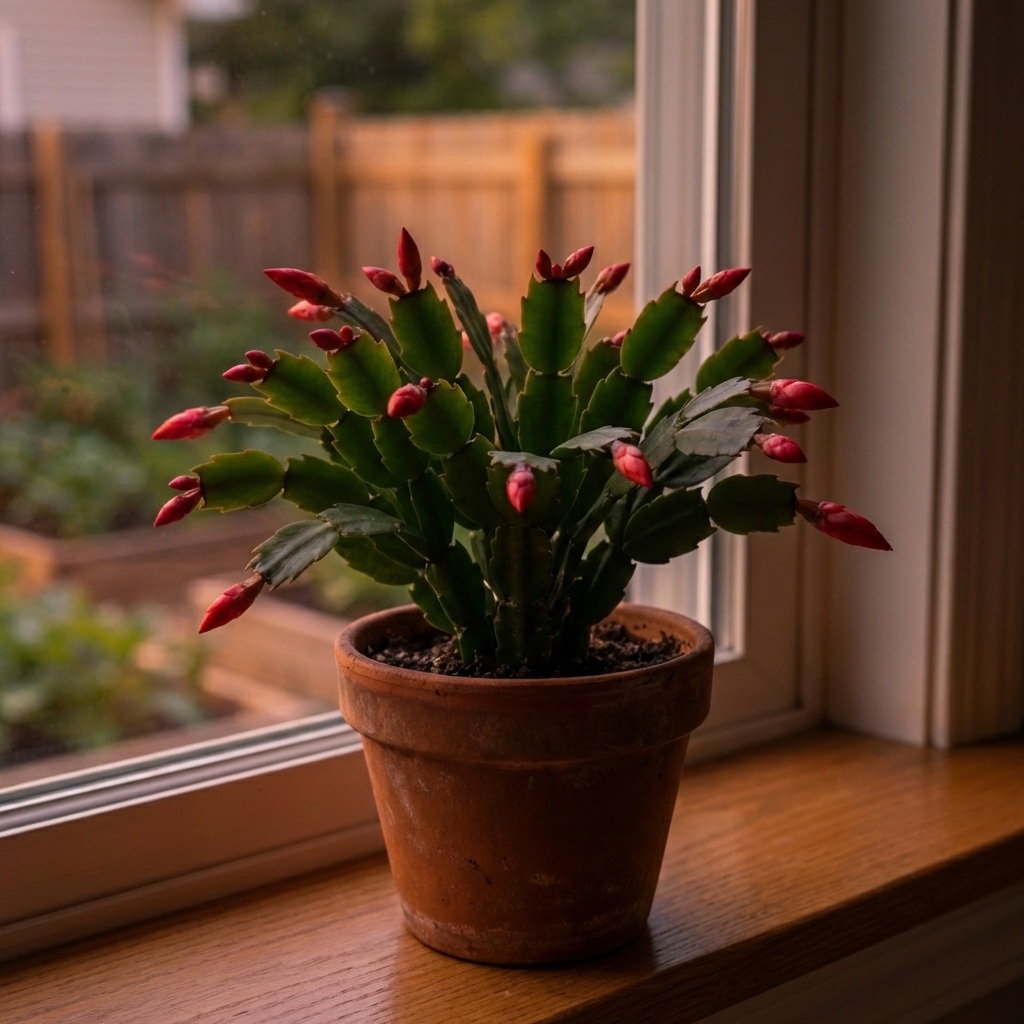
- Bloom trigger: Buds typically form after several weeks of long nights (about 12 to 14 hours of darkness) and cooler temperatures. Indoor lamps can interrupt darkness, so keep nights truly dark.
- Longevity: With steady care, it can live for decades and become a true family hand-me-down plant.
Safe starting checklist
1) Pick the right pot (this prevents rot)
Choose a pot with a drainage hole. That is non-negotiable for a Christmas cactus. Size-wise, go only 1 to 2 inches wider than the root ball. Oversized pots hold extra wet mix, which is the fastest path to root problems.
Best pot types: terracotta (for heavy-handed waterers), plastic (if your home is very dry), or glazed ceramic (balanced). The key is drainage.
2) Use a fast-draining mix
A standard houseplant mix often stays wet too long for Christmas cactus. You want something that drains quickly but still holds a little moisture.
- Easy DIY mix: 2 parts potting mix + 1 part perlite or pumice + 1 part orchid bark (small to medium).
- Store-bought shortcut: cactus mix improved with extra perlite and a handful of orchid bark.
Skip garden soil. It compacts and smothers roots indoors.
3) Light that is safe and strong
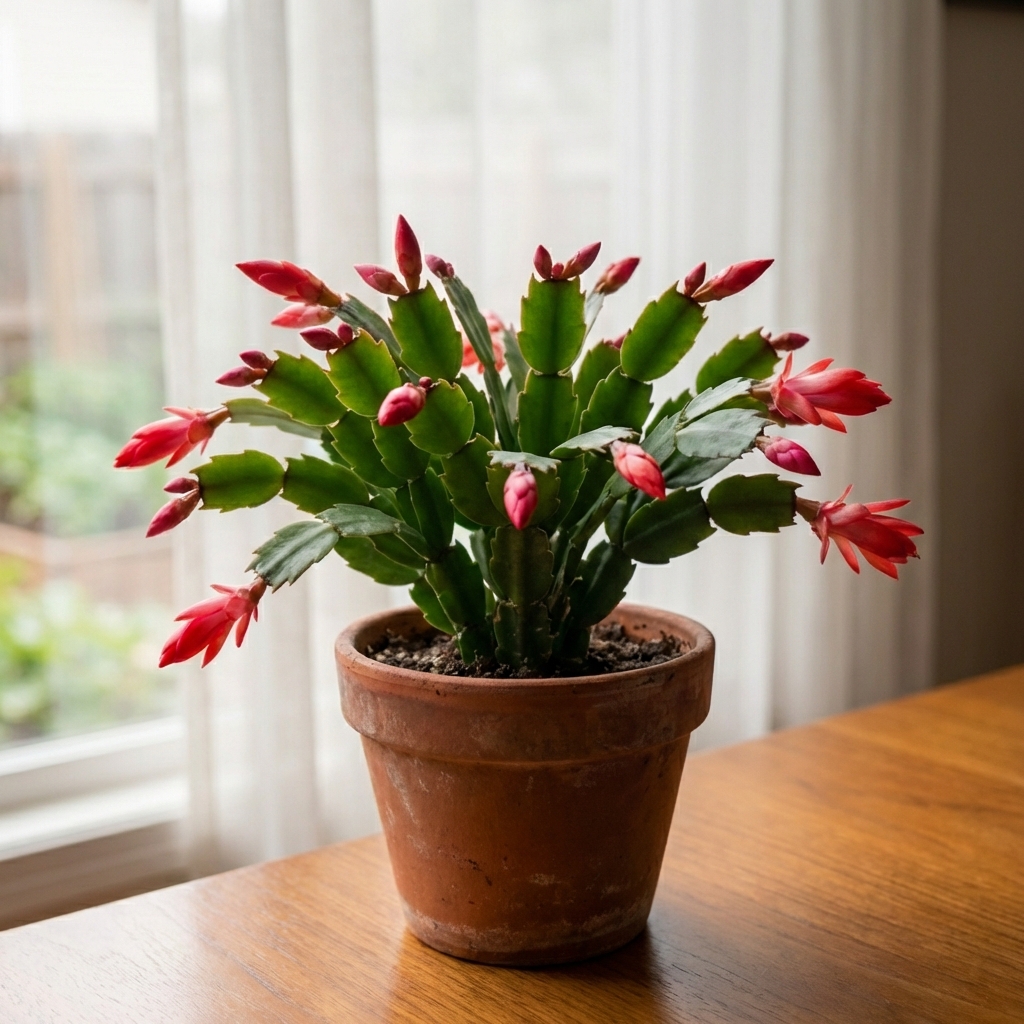
Place it near an east window or a few feet back from a bright south or west window. If it is your first one, aim for bright shade rather than direct sun.
- Too much light: segments look bleached, yellowed, or reddish and thin.
- Too little light: weak growth, sparse segments, fewer blooms.
4) Water safely (the simplest rule)
Water only when the top 1 to 2 inches of the mix feel dry. Then water thoroughly until it drains, and empty the saucer. Never let the pot sit in water.
If you are unsure, wait one more day. Christmas cactus handles slight dryness better than constant wetness.
5) Temperature and humidity basics
Average indoor temperatures work well. Keep it away from heating vents, fireplaces, and cold drafts from doors or leaky windows.
- Comfort zone: roughly 60 to 75°F (16 to 24°C) for general growth.
- For buds: slightly cooler nights often help (think 55 to 65°F, 13 to 18°C), plus long darkness.
Normal household humidity is usually fine, but if your air is very dry, a pebble tray or humidifier can reduce shriveling.
Starting from cuttings (safe propagation)
Propagating a Christmas cactus is beginner-friendly, as long as you do not rush the watering.
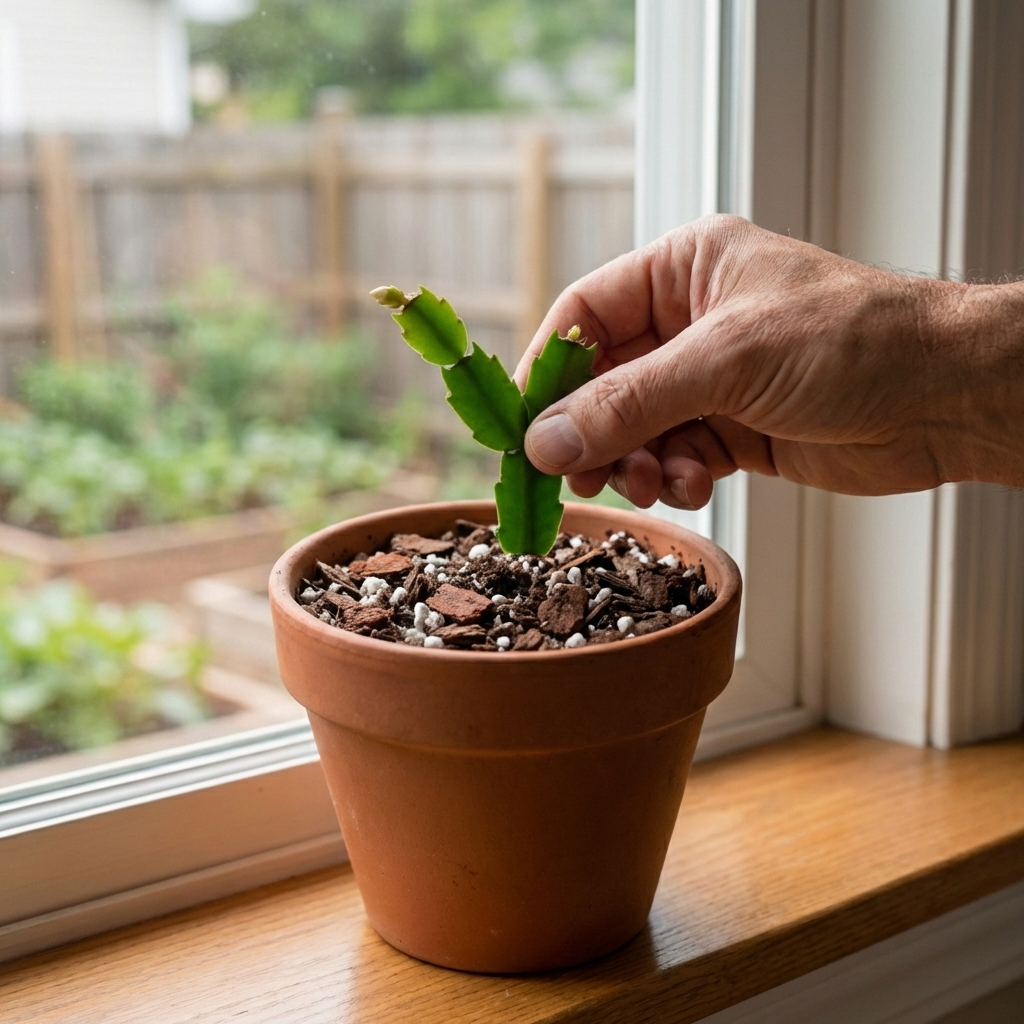
Take a cutting: twist off a healthy piece with 2 to 4 segments. Twisting is cleaner than cutting, but both work.
Let it callus: leave it out in a dry, shaded spot for 24 to 48 hours. This helps prevent rot.
Plant shallow: set the bottom segment just barely into a lightly moist, fast-draining mix.
Water sparingly: keep the mix barely moist, not damp or wet. Give small sips only when the surface approaches dry. Rot is the main risk while it roots.
Move to normal watering: once rooted (you feel resistance when you gently tug), let the top layer dry between waterings.
Safety notes: pets, kids, and placement
Christmas cactus is generally considered non-toxic to cats and dogs, unlike many holiday plants. Still, chewing any plant can cause mild stomach upset or vomiting, so keep it out of reach if your pet is a known leaf-snacker.
- Hanging baskets: great for safety and light exposure, but watch that the plant does not bake near hot glass.
- Stability: heavy, top-loaded baskets can tip. Use a rated hook and avoid high-traffic spots.
Common problems and quick solutions
When something looks off, start with the basics: check soil moisture, look for drafts or heat, then inspect closely for pests. A quick check usually points to the fix.
Wrinkled or limp segments
Most common causes: underwatering, root damage, or sudden heat and dry air.
- If the mix is bone dry, water thoroughly and let it drain. It should plump up within a day or two.
- If the mix is damp yet the plant is limp, suspect root rot. Unpot, trim mushy roots, repot into fresh airy mix, then water lightly.
Bud drop (buds form, then fall off)
Usually caused by: changes. Moving the plant, temperature swings, drafts, inconsistent watering, or low light.
- Once buds appear, keep conditions steady. Do not rotate or relocate the pot.
- Water consistently. Do not let it swing from dry to soaked.
- Keep away from exterior doors and heat vents.
Soft, black, or mushy spots
Likely rot from overwatering or a heavy mix.
- Cut away damaged segments with clean scissors.
- Repot into a smaller pot if needed, with a fast-draining mix.
- Water less often and always empty the saucer.
Red or purple tinged segments
This can happen from too much sun, cold stress, or sometimes low nutrients. A slight blush under bright light can be normal, but thin, stressed-looking segments are a sign to adjust conditions.
- Move it back from harsh sun or add a sheer curtain.
- Keep it away from cold windows at night.
- If it has been in the same pot for years, consider a light feeding in spring and summer.
Pests (mealybugs, spider mites, scale)
Holiday cacti can get the usual houseplant pests, especially in dry air or crowded plant shelves.
- Mealybugs: look for white, cottony clusters in joints. Dab with 70% isopropyl alcohol on a cotton swab, then rinse or wipe after.
- Spider mites: fine webbing and speckled, dull segments. Rinse the plant thoroughly and raise humidity slightly; repeat every few days.
- Scale: small brown bumps that scrape off with a fingernail. Remove manually and follow with insecticidal soap.
Isolate the plant during treatment and recheck weekly for a month.
Not blooming
Most non-blooming issues come down to light timing and night darkness.
- Give about 6 to 8 weeks of long nights (12 to 14 hours of uninterrupted darkness), depending on cultivar.
- Keep nights a bit cooler if possible.
- Do not fertilize heavily late in the season. Focus on stable care.
Feeding and repotting without stressing the plant
Fertilizer schedule that is safe
Feed lightly during active growth (spring through summer). A balanced houseplant fertilizer at half strength every 4 to 6 weeks is plenty for most home setups. Stop feeding in late summer to early fall when you want it to shift toward bud set.
When to repot
Christmas cactus likes being slightly root-bound. Repot every 2 to 3 years, or when the mix breaks down and drains poorly. The best time is usually after blooming or in spring.
- Go up only one pot size.
- Do not bury the plant deeper than it was before.
- After repotting, wait a few days before watering if the mix was already moist.
After-bloom pruning (more branching, more buds)
After flowering, you can encourage a fuller plant by pinching or twisting off 1 to 2 segments from the ends of a few stems. This prompts branching. Do it in late winter to spring, and avoid heavy pruning in early fall when buds are forming.
Fast “do this now” guide
- New plant from the store: isolate for 1 to 2 weeks, check for pests (especially mealybugs), then settle it into bright indirect light.
- Watering: top 1 to 2 inches dry, then soak and drain.
- Soil: airy mix with perlite and bark.
- Pot: drainage hole, not oversized.
- For blooms: long dark nights plus cooler temperatures, and do not move it once buds show.
FAQ
Is a Christmas cactus safe for beginners?
Yes. The main beginner mistake is overwatering. If you nail drainage and let the mix partially dry between waterings, you are most of the way there.
Should I mist my Christmas cactus?
Usually no. Misting gives short-lived humidity and can leave water sitting in crevices. If your air is very dry, a small humidifier nearby is more reliable.
Can I put it outside?
In mild weather, yes, in bright shade and protected from heavy rain. Bring it back in before nights get cold, and avoid sudden changes in light.
Why are the segments dropping?
Sudden segment drop can happen from root stress, temperature shock, severe underwatering, or pests. Check the mix moisture, inspect the joints and undersides for insects, then stabilize the plant in a consistent spot.

Jose Brito
I’m Jose Britto, the writer behind The Country Store Farm Website. I share practical, down-to-earth gardening advice for home growers—whether you’re starting your first raised bed, troubleshooting pests, improving soil, or figuring out what to plant next. My focus is simple: clear tips you can actually use, realistic expectations, and methods that work in real backyards (not just in perfect conditions). If you like straightforward guidance and learning as you go, you’re in the right place.