Fungus gnats are one of those houseplant problems that feel bigger than they are. The tiny black flies are not usually the main threat. It is their larvae in damp potting mix that keep the whole cycle going. The good news: you can get rid of them safely without frying your plants or fogging your home with harsh chemicals.
This page walks you through what fungus gnats are, why they show up, and a realistic plan to eliminate them and prevent a repeat.
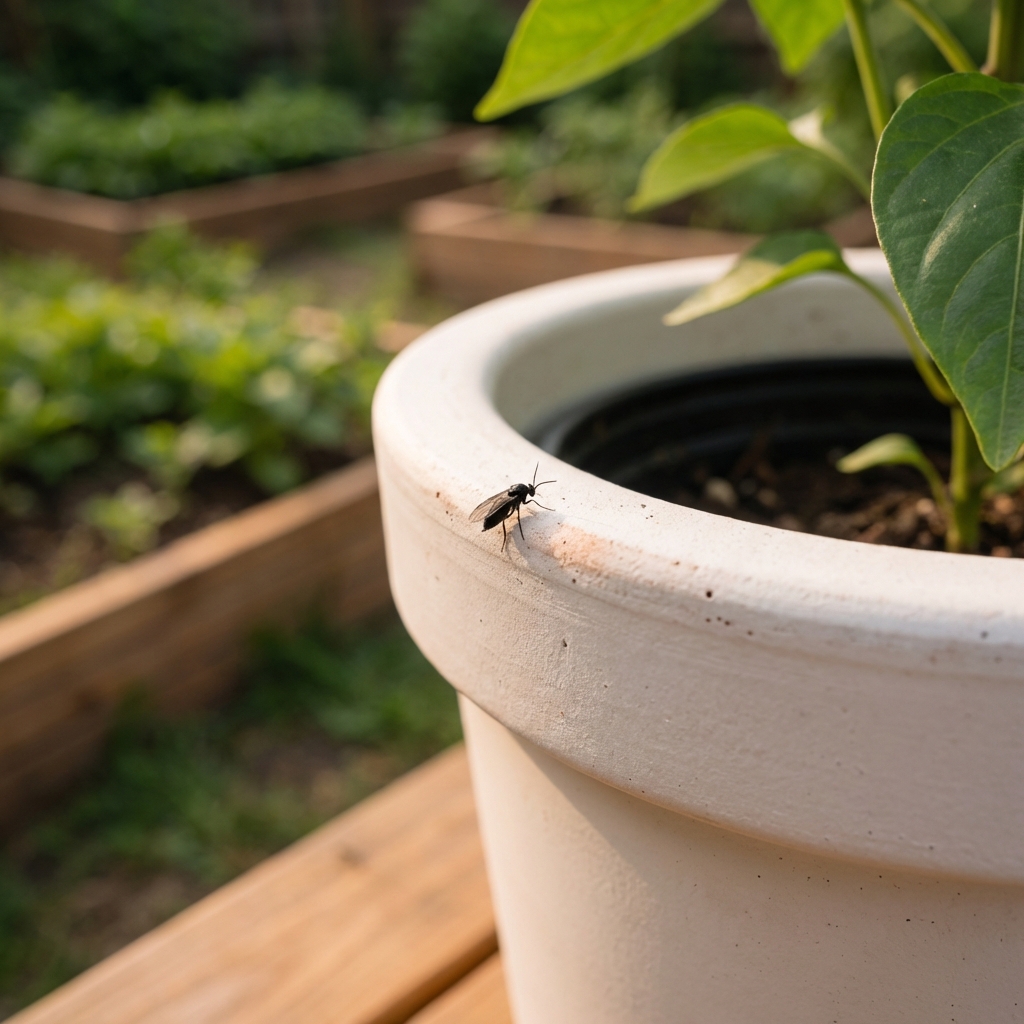
Fungus gnat facts (what you are dealing with)
They are not fruit flies
Fungus gnats are small, dark, mosquito-like flies that hover around pots and run across soil surfaces. Fruit flies tend to hang around kitchens and fermenting food. Fungus gnats stick to plants, especially damp potting mix.
The larvae live in the soil
Adult gnats are mostly a nuisance. Larvae live in the top 1 to 2 inches of potting mix and feed on fungi and decaying organic matter. In heavier infestations, larvae can also chew on fine roots, which can stress seedlings and sensitive plants.
They multiply quickly in consistently moist soil
Fungus gnats thrive when the top of the potting mix stays wet. Most of the solutions that work focus on drying that top layer and treating the larval stage.
How to tell it’s fungus gnats
- Adults: Tiny black flies that hover near pots, especially after watering.
- Soil activity: If you tap the pot or disturb the soil surface, a few may fly up.
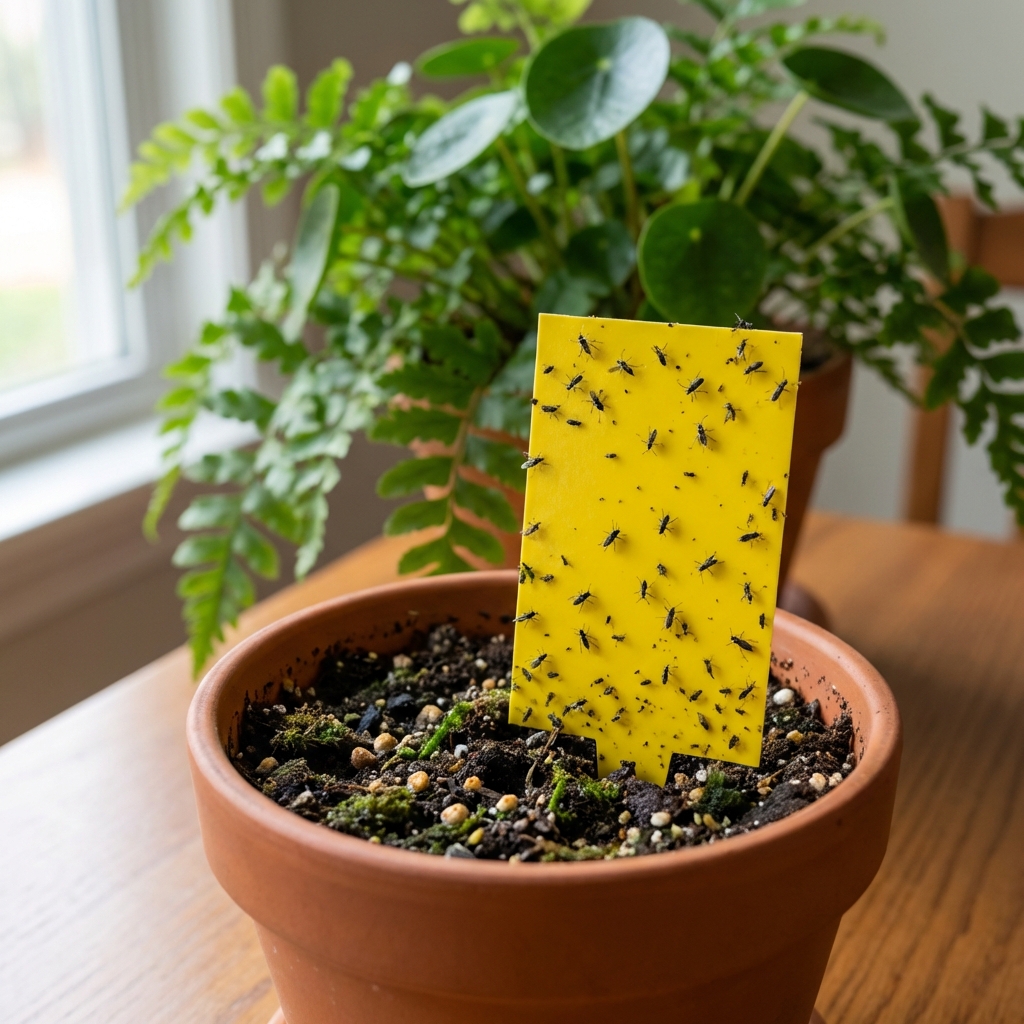
- Yellow sticky traps catch them: Adults get stuck quickly if you place traps near the soil line.
- Plant symptoms (usually mild): Slow growth, drooping despite wet soil, or seedlings that collapse can happen with larger larval populations.
If you are unsure, set a yellow sticky card next to the pot for 24 to 48 hours. Fungus gnats are strongly attracted to yellow and you will know fast.
The safe, effective plan (do these in order)
For most homes, the fastest results come from combining two things:
- Stop the larvae: Dry the surface and treat the soil.
- Reduce the adults: Trap them so fewer eggs are laid.
Step 1: Let the top of the soil dry
This is the simplest fix and it is free. Fungus gnat eggs and larvae struggle when the top layer dries out.
- Let the top 1 to 2 inches of potting mix dry before watering again, or at least until the surface feels dry to the touch.
- Water thoroughly, then let excess drain. Do not leave pots sitting in water.
- If you use a decorative cache pot, empty it after watering.
Important: Some plants cannot handle much dry-out (ferns, some calatheas). For those, lean harder on BTI and other options below instead of pushing the plant into stress.
Step 2: Use yellow sticky traps for adults
Sticky traps do not cure the problem alone, but they make a big difference because they reduce the number of egg-laying adults and help you find which pot is the main source.
- Place traps as close to the soil surface as possible without touching wet soil (so the adhesive stays effective).
- Use 1 trap per small pot, or 2 to 4 traps for large planters. If you have many plants clustered together, add a few extra traps in the group to catch roamers.
- Replace when the surface is covered with insects or dust.
Step 3: Treat the soil with BTI (the safest heavy hitter)
If you want a safe solution that works with normal plant care, BTI is my go-to. BTI (Bacillus thuringiensis israelensis) is a naturally occurring soil bacterium. It produces proteins that target certain fly larvae (including fungus gnats and mosquitoes). It works when larvae ingest it while feeding in the potting mix. Used as directed, it is widely considered low-risk for people and pets.
- Look for mosquito dunks or mosquito bits (BTI products).
- Soak bits in water, then use that water to irrigate your plants (follow label directions).
- Repeat on schedule for at least 2 to 3 weeks to catch new hatchlings.
BTI works best when you keep using it through a full life cycle. One treatment rarely finishes the job.
Step 4: Add a dry surface barrier (optional)
A surface layer can make it harder for adults to reach moist soil to lay eggs and helps the top layer dry faster. Results vary in real homes, and the wrong material (or too thick a layer) can trap moisture and make things worse.
- Horticultural sand or coarse sand: A thin layer can discourage egg-laying, but gnats may still find gaps.
- Fine gravel: Works similarly if it dries quickly.
- Diatomaceous earth (food grade): Can help when dry, but it stops working once wet. Use lightly and avoid breathing the dust.
Skip thick layers that hold moisture. The goal is a surface that dries fast, not a sponge. If your plant needs consistently moist soil, consider skipping barriers and focusing on BTI plus traps.
Step 5: Try beneficial nematodes (for stubborn cases)
If you have a persistent infestation, beneficial nematodes (Steinernema feltiae) can be an effective add-on. They are microscopic soil-dwelling predators that hunt gnat larvae. Apply per label directions (they are living organisms and need the right handling), and use them alongside sticky traps and smarter watering for best results.
Fast fixes people ask about (what works, what to avoid)
Hydrogen peroxide drench
A diluted hydrogen peroxide drench is commonly suggested to kill larvae on contact. It can work, but it is not my first pick because results vary and repeated use can be harsh on soil biology. If you try it, a common mix is 1 part 3% hydrogen peroxide to 4 parts water. Drench the soil once, and consider a spot test first if you have a sensitive plant.
Neem oil
Neem can help with some pests, but it is not a reliable fungus gnat solution in soil. It may reduce adults if applied correctly, but it does not consistently solve the larval issue on its own.
Cinnamon on soil
Cinnamon is often shared as a home remedy. It may have mild antifungal properties, but it does not reliably stop a full fungus gnat infestation. If you like it, treat it as a small add-on, not the main plan.
Bleach, harsh sprays, and bug bombs
Skip them. You do not need aggressive chemicals indoors for fungus gnats, and many sprays do nothing for larvae in the soil anyway.
When repotting actually makes sense
Repotting is not required for most infestations. It can help if the potting mix is old, stays soggy, or is full of decomposing material that keeps feeding the larvae.
Consider repotting if:
- The soil stays wet for many days after watering.
- You smell sour or swampy soil.
- The plant is declining and you suspect root issues.
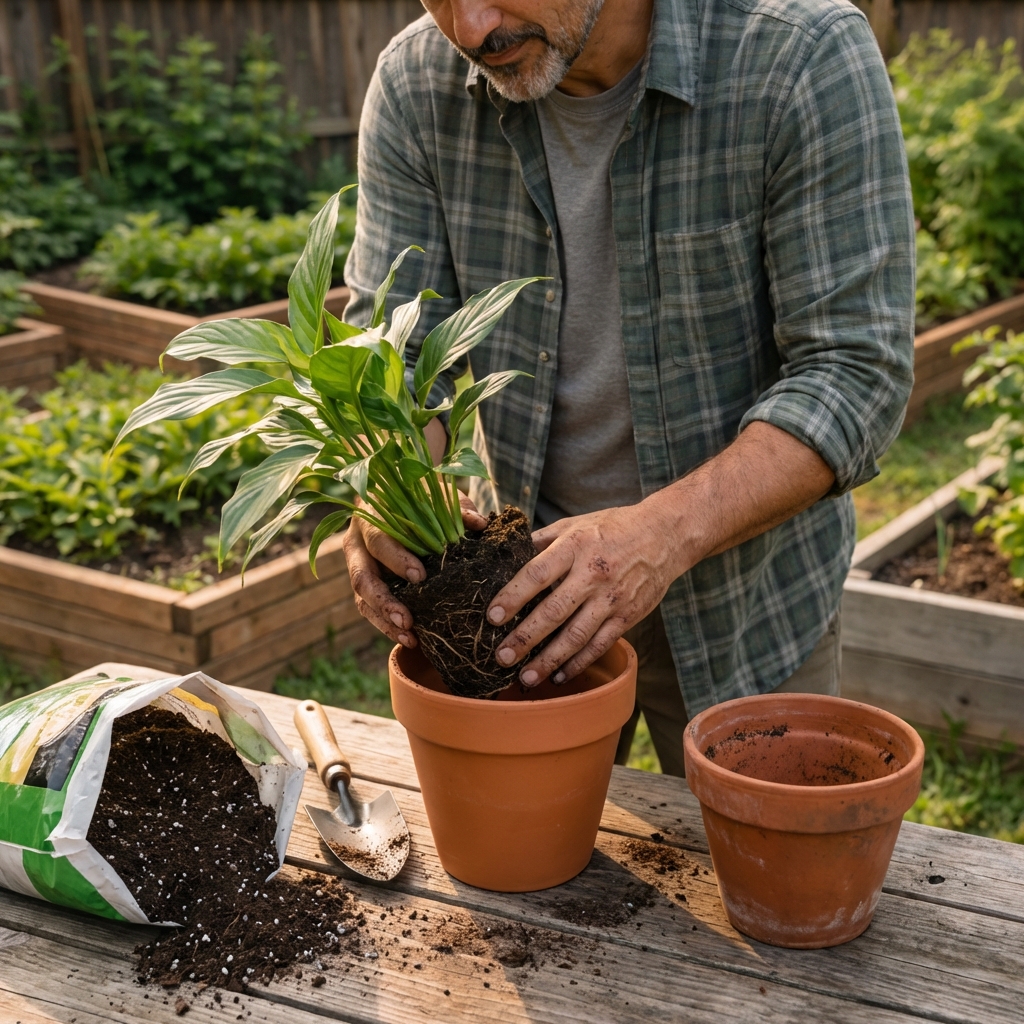
How to repot without bringing gnats along
- Use fresh, quality potting mix with good drainage.
- Gently remove as much old soil as practical from the root ball.
- Wash the pot before reusing it.
- After repotting, use BTI water for a couple of waterings as insurance.
Prevention that works in real homes
Watering habits that block fungus gnats
- Let the top layer dry before watering again.
- Empty saucers and cache pots after watering.
- Use pots with drainage holes whenever possible.
Improve drainage so soil does not stay soggy
- Use a chunky, well-aerated mix for plants that like it (many tropicals do).
- Avoid overpotting. A pot that is too large holds moisture longer.
Quarantine new plants
New plants are a common source. Keep them separate for a week or two, use a sticky trap nearby, and watch for flyers before you place them with your collection.
Check other wet spots
If gnats keep showing up, look beyond the pots. Standing water in drip trays, propagation stations, terrariums, or any constantly damp container can keep the population going.
Quick timeline: how long until they are gone?
- In 2 to 3 days: Sticky traps should start catching adults.
- In 7 to 14 days: You should notice far fewer gnats if you are drying the surface and using BTI.
- In 3 to 4 weeks (typically): Many infestations can be cleared because you have interrupted multiple life cycles. Timing varies with temperature, moisture, and how many pots are involved.
If you are still seeing lots of gnats after 3 to 4 weeks, the usual culprit is one pot staying constantly wet or an ongoing source like a bag of potting mix stored open indoors.
Troubleshooting: why they keep coming back
One plant is the gnat factory
It only takes one soggy pot to keep the whole room supplied. Put a sticky trap in each pot for a week and see which one fills up fastest. Start your heavy treatments there.
Your potting mix bag is hosting them
Open bags of mix can harbor gnats. Keep bags sealed. If you suspect a bag is contaminated, store it outside or in an airtight bin.
You are bottom-watering but the top stays wet anyway
Bottom-watering can help, but if you overfill the tray or leave water too long, the top layer can still stay damp. Water, let it wick for a short time, then remove extra water.
Safe takeaway
If you want the simplest, safest approach that works for most homes, do this combo: let the top of the soil dry, add yellow sticky traps, and use BTI in your watering routine for a few weeks. That breaks the cycle without harsh sprays and without turning plant care into a chemistry project.

Jose Brito
I’m Jose Britto, the writer behind The Country Store Farm Website. I share practical, down-to-earth gardening advice for home growers—whether you’re starting your first raised bed, troubleshooting pests, improving soil, or figuring out what to plant next. My focus is simple: clear tips you can actually use, realistic expectations, and methods that work in real backyards (not just in perfect conditions). If you like straightforward guidance and learning as you go, you’re in the right place.