Mosquitoes are not equally annoying all year. In spring you are dealing with the first hatch, in peak summer you are battling constant pressure, and in fall you are trying to stretch outdoor time without getting chewed up at dusk. The good news is you can match your essential oil choices and routines to the season and get better results with less fuss.
Quick reality check: essential oils can help repel mosquitoes and reduce bites, but they are not the same as long-lasting EPA-registered repellents. Think of these as useful home remedies for patios, garden walks, and short outdoor get-togethers, especially when you combine them with basic mosquito control like dumping standing water.
If you are in a high-risk area for mosquito-borne illness (or you will be outside for hours), consider using an EPA-registered repellent and following the label. Essential oil DIY blends are best for low to moderate exposure and short sessions outdoors.

Before you mix anything
Why season matters
Temperature, humidity, and breeding sites change through the year. Lighter, fresh scents (like citronella and lemongrass) can feel great in warm weather, while deeper herbal notes (like cedarwood) can be handy when evenings cool down and mosquitoes still show up.
What actually helps repel mosquitoes
Research supports certain plant-based compounds as repellents, especially oil of lemon eucalyptus (OLE, rich in PMD). Many common essential oils are popular for home use too, including citronella, peppermint, lavender, tea tree, geranium, rosemary, and cedarwood. Effectiveness varies by species, concentration, wind, and how often you reapply.
Safety basics (do this every time)
- Never use undiluted essential oils on skin. Dilute first to reduce irritation.
- Patch test a small area if you are sensitive.
- Keep oils away from eyes and mucous membranes.
- Infants and toddlers: do not use essential oils on infants. For young children (especially under 3), stick to clothing barriers and area control, or ask a pediatrician before using any topical blend.
- Around kids: use lower dilutions, avoid heavy application on hands, and supervise use.
- Around pets: be cautious. Cats are especially sensitive to many essential oils. Birds and small mammals can be sensitive too. Do not diffuse in closed rooms with pets and never apply oils to pets unless a veterinarian directs it.
- If you are pregnant or nursing: check with a healthcare professional before regular use.
Dilution guide for skin (approximate): Drop size varies, so treat drop counts as a rule of thumb. A simple way to think about it is 1% is about 3 drops per 10 mL (or about 6 drops per 1 ounce or 30 mL) of carrier oil. For adults, 1% is a solid starting point. For a stronger but still common range, 2% is often used. If your skin reacts, back down.
Spring: first hatch
Spring mosquitoes often show up after rains and warm spells. In many yards, the problem starts right next to the house: clogged gutters, saucers under pots, tarps, birdbaths, and puddles that hang around.
Best spring oils
- Lavender: gentle, widely tolerated, nice for quick skin blends.
- Tea tree: sharp scent that many people use in outdoor sprays. Use with care on skin.
- Citronella: classic outdoor option, works best with frequent reapplication.
- Geranium: floral and effective in many DIY blends.
Spring patio spray (surfaces)
Use: Surfaces and outdoor areas only. Not for skin.
This is for chairs, table legs, porch rails, and the outside of planters. Avoid spraying delicate fabrics and anything pets lick.
- 1 cup distilled water
- 1 tablespoon witch hazel or high-proof vodka (as a dispersant)
- 20 drops citronella essential oil
- 10 drops lavender essential oil
- 10 drops geranium essential oil
How to use: Add witch hazel or vodka to a spray bottle first, add oils, shake well, then add water. Shake before each use. Lightly mist outdoor surfaces before you sit down and again after about 45 to 60 minutes, or sooner if it is windy.

Summer: peak season
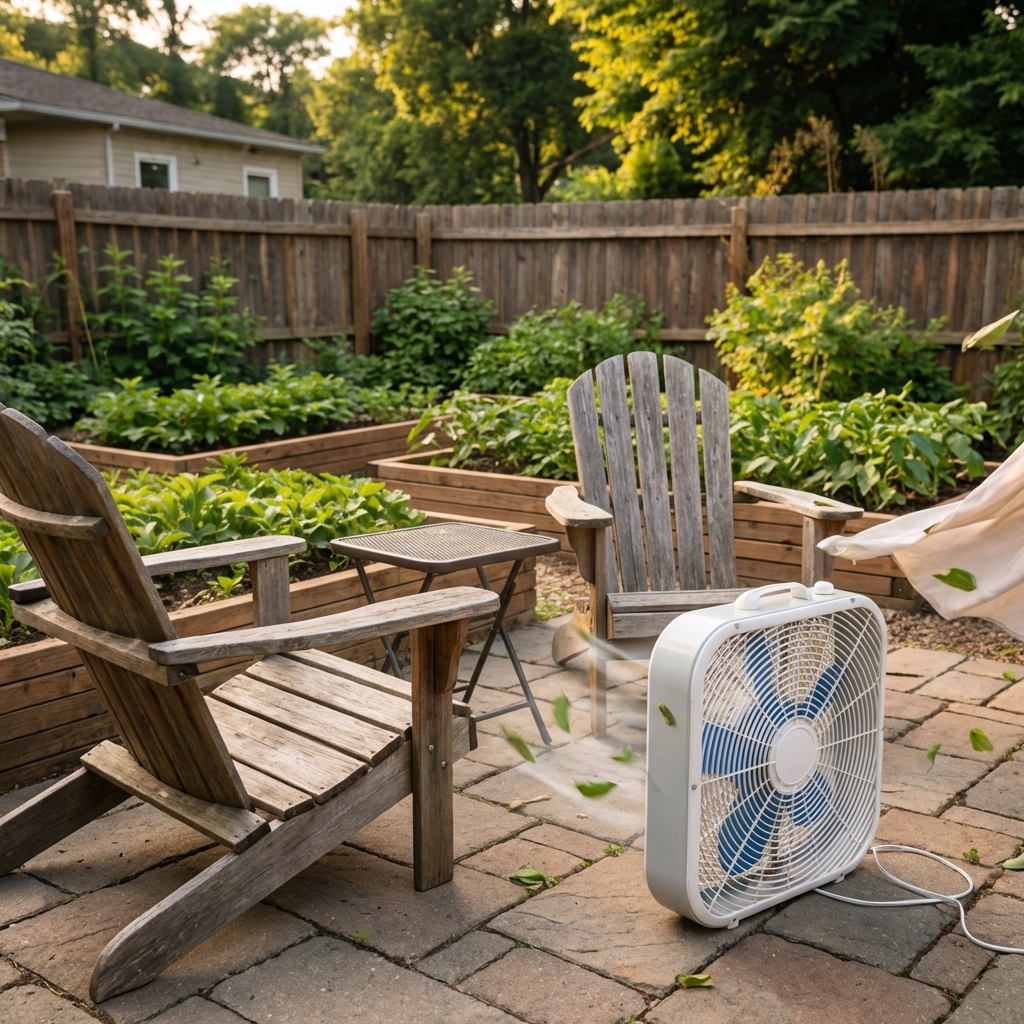
Summer is when you need the most consistency. Essential oils can help, but the biggest improvement usually comes from pairing them with a simple routine: dump water weekly, run a fan on the patio, and reapply on a schedule.
Best summer oils
- Oil of lemon eucalyptus (OLE): one of the best-studied plant-based options. Note: OLE is different from lemon eucalyptus essential oil. If you buy a product, check the label.
- Peppermint: strong scent, feels cooling, can be irritating for some skin types.
- Lemongrass: related to citronella and commonly used in outdoor blends.
- Cedarwood: earthy, pairs well with citrusy oils.
Summer skin roller (1% dilution)
Use: Skin, adult use.
This is convenient for quick touch-ups when you are out watering or harvesting.
- 10 mL roller bottle
- 1 drop peppermint essential oil
- 1 drop lavender essential oil
- 1 drop cedarwood essential oil
- Fill the rest with a carrier oil (fractionated coconut, jojoba, or grapeseed)
How to use: Roll onto ankles, calves, and forearms. Avoid broken skin. Reapply often, typically every 60 to 90 minutes outdoors, and sooner if you sweat a lot or it is windy.
Backyard tip that works with oils
Set up a box fan to blow across your seating area. Mosquitoes are weak flyers, and moving air makes it harder for them to land. Then use your spray or roller as the extra layer.
Fall: dusk bites
Fall mosquitoes can be sneaky. Days cool down, but evenings can still bring bites, especially near shrubs, tall grass, and damp leaf litter. This is the season to tighten up the yard and use deeper, longer-lasting scents.
Best fall oils
- Cedarwood: a common choice for outdoor pest blends.
- Clove bud: potent, use low on skin because it can irritate and sensitize.
- Rosemary: herbal and sharp, good for sprays.
- Patchouli: strong, earthy base note in blends.
Fall dusk spray (surfaces)
Use: Surfaces and outdoor areas only. Not for skin.
- 1 cup distilled water
- 1 tablespoon witch hazel (as a dispersant)
- 15 drops cedarwood essential oil
- 8 drops rosemary essential oil
- 5 drops clove bud essential oil
How to use: Shake well and mist around door thresholds, under patio furniture, and along shrub edges near where you sit. Avoid spraying directly onto herbs you plan to harvest that day.
Yard maintenance payoff: Rake out wet leaf piles and keep grass edges trimmed. Mosquitoes rest in shaded, humid spots.
Winter: mostly prevention
In many regions, winter knocks mosquitoes back hard. If you still notice bites indoors, it may be a different insect, or a few mosquitoes finding shelter inside. Focus on screens, door sweeps, and any standing water in basements, plant trays, or utility areas.
Winter reset checklist
- Clean gutters and check downspouts for standing water.
- Empty and store buckets, watering cans, and pot saucers.
- Refresh window screen repairs and seal gaps around doors.
- Check houseplants for soggy trays and avoid standing water in saucers (watering needs vary by plant).
If you choose to diffuse oils in winter, do it in a well-ventilated space and not around pets in closed rooms.
Make oils work better
1) Reapply often
Most DIY mixes fade fast outdoors. Plan on reapplying often, commonly every 45 to 90 minutes, especially in heat, humidity, wind, or after sweating.
2) Use a real solubilizer if you want a stable spray
Oil and water separate. Witch hazel or alcohol helps disperse oils, but it still needs shaking. If you want a more stable mix, a small amount of solubilizer made for body sprays works best, but many homeowners keep it simple and shake often.
3) Treat the area, not just yourself
Mist chair legs, railings, and the ground perimeter of your seating zone. Combine that with airflow (fan) and a quick skin application on ankles and calves.
4) Dump breeding water weekly
This is the unglamorous step that makes everything else more effective. Even a small amount of water can produce mosquitoes.
5) Make small batches and store safely
DIY sprays are best made in small batches. Store them in a cool, dark place and discard if the smell changes. If you use high-proof alcohol, keep the bottle away from heat and flames and label it clearly.

FAQ
Is oil of lemon eucalyptus the same as lemon eucalyptus essential oil?
No. Oil of lemon eucalyptus (OLE) is typically a processed extract standardized for PMD, the repellent compound studied in products. Lemon eucalyptus essential oil is a steam-distilled essential oil and is not the same thing.
Can I use these blends on my kids?
Use extra caution. Avoid essential oils on infants. For young children, especially under 3, consider clothing-based strategies (light long sleeves, socks) plus a fan on the porch. For older kids, keep dilutions low and avoid strong oils like clove on skin. When in doubt, ask your pediatrician.
Do citronella candles work?
They can help a little in low wind conditions, but they are usually not enough by themselves. A spray plus a fan typically gives a bigger improvement.
What is the easiest home remedy if I only buy one oil?
If you want one go-to for a DIY surface spray, many people start with citronella. If you want a more research-backed plant option, look for products featuring oil of lemon eucalyptus and follow the label.
Bottom line
Seasonal essential oil blends can be a practical way to cut down mosquito annoyance, especially for short outdoor time in your yard. Match your oils to the season, keep your dilution safe, and pair your sprays with the basics: dump standing water, trim damp hiding spots, and run a fan when you are sitting outside. That combo is what makes the difference in real backyards.

Jose Brito
I’m Jose Britto, the writer behind The Country Store Farm Website. I share practical, down-to-earth gardening advice for home growers—whether you’re starting your first raised bed, troubleshooting pests, improving soil, or figuring out what to plant next. My focus is simple: clear tips you can actually use, realistic expectations, and methods that work in real backyards (not just in perfect conditions). If you like straightforward guidance and learning as you go, you’re in the right place.