Orchids get labeled as “fussy,” but most problems come down to a few basics: light shifts with the seasons, watering habits that do not adjust, and potting media that breaks down quietly until roots suffer. The good news is you can fix a lot with simple, low-cost home remedies and a seasonal routine that matches what your orchid is already trying to do.
This guide focuses on common indoor orchids (especially Phalaenopsis, the grocery store favorite), but the seasonal logic works for many types. When in doubt, prioritize healthy roots, bright indirect light, and letting the pot dry slightly between waterings.
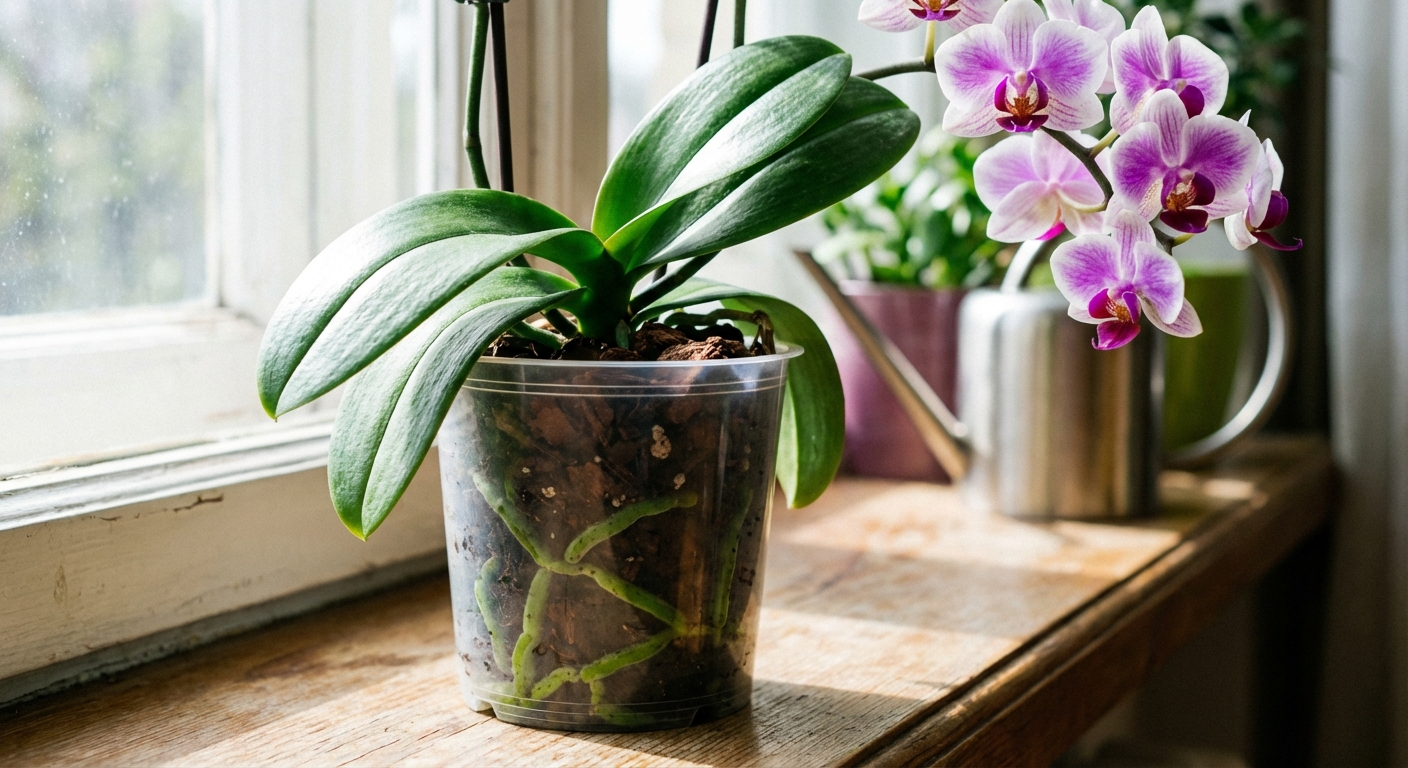
Before you use any home remedy
Home remedies are best used as gentle support, not as a substitute for correct care. If the environment is wrong, sprays and soaks just buy you time.
- Test first: Try any spray on one leaf area and wait 24 hours for spotting.
- Apply at the right time: Use treatments in the morning so leaves dry by night.
- Keep water out of the crown: For Phalaenopsis, water sitting in the center can cause crown rot.
- Sanitize tools: Wipe scissors with isopropyl alcohol before trimming spikes or roots.
- Know what you are growing: If you have a tag, keep it. Some orchids want more drying than others.
Light and water basics
If your orchid is struggling, check these two first. Most “mystery” issues trace back to light that is slightly off, or watering that is too frequent for the season.
Easy light guide
- Great indoor light: Bright, indirect light. An east window is often ideal. A south or west window can work with a sheer curtain or a little distance from the glass.
- Too little light: Very dark green leaves, slow growth, and no blooming.
- Too much light: Bleached patches, dry tan spots (sunburn), or a stressed look. Some red or purple tint can be normal in brighter light, but sunburn is not.
Best watering method
- Water thoroughly, then drain: Run lukewarm water through the pot until it is fully soaked, then let it drain completely. No standing water in a cachepot or saucer.
- Misting is not watering: It can raise surface humidity briefly, but it does not rehydrate roots in a pot. If misting keeps the crown wet, it can do more harm than good.
Potting media matters
Many orchids are in chunky bark, but store-bought Phalaenopsis are often packed in sphagnum moss. Moss holds water longer, so it usually needs less frequent watering than bark. Whatever the mix, you want airy roots and a wet to dry rhythm that fits your home.
Spring: wake-up season and root growth
Spring is when many orchids start pushing new roots and leaves. This is also the best time to reset anything that got off track over winter.
What to do in spring
- Increase watering gradually: As light and warmth increase, your orchid will use more water. Water when the potting mix is mostly dry, not on a fixed schedule.
- Start light feeding: Use a gentle fertilizer at 1/4 to 1/2 strength every 2 to 4 weeks.
- Repot if needed: If bark is breaking down, smells sour, or stays wet too long, repot now.
- Move closer to light: Brighter indirect light supports new growth. Avoid harsh midday sun.
Spring home remedies that help
1) “Flush day” with plain water
Once a month, run lukewarm water through the pot for 30 to 60 seconds to rinse fertilizer salts. Let it drain fully. Salt buildup is a sneaky cause of stalled roots and leaf tip burn.
2) Cinnamon for fresh cuts only
If you trim a rotten root or cut a flower spike, you can dab a tiny amount of ground cinnamon on the cut surface to dry it. Do not sprinkle cinnamon into the potting mix or onto healthy roots because it is very drying. (See the winter rot notes for where cinnamon can also help.)
Summer: faster drying, higher pest pressure
Summer light and warmth can be great for growth, but they also speed up drying and bring out pests like spider mites and mealybugs, especially in dry indoor air.
What to do in summer
- Water a bit more often: Media dries faster in warm rooms. Check the pot by weight or feel the mix near the center.
- Improve airflow: A small fan across the room is enough. Do not blast the orchid directly. Higher humidity without airflow can increase fungal risk.
- Protect from hot sun: Leaves can sunburn through glass. Sheer curtains help.
- Watch humidity: A realistic indoor target for many Phalaenopsis is about 40 to 60%. Higher can be fine if airflow is good. Very low humidity can invite mites and cause faster drying.
- Pebble tray reality check: Pebble trays rarely raise whole-room humidity. They mostly create a small microclimate right above the tray. A humidifier has a bigger impact.
Summer home remedies for common pests
Mealybugs (white cottony clumps)
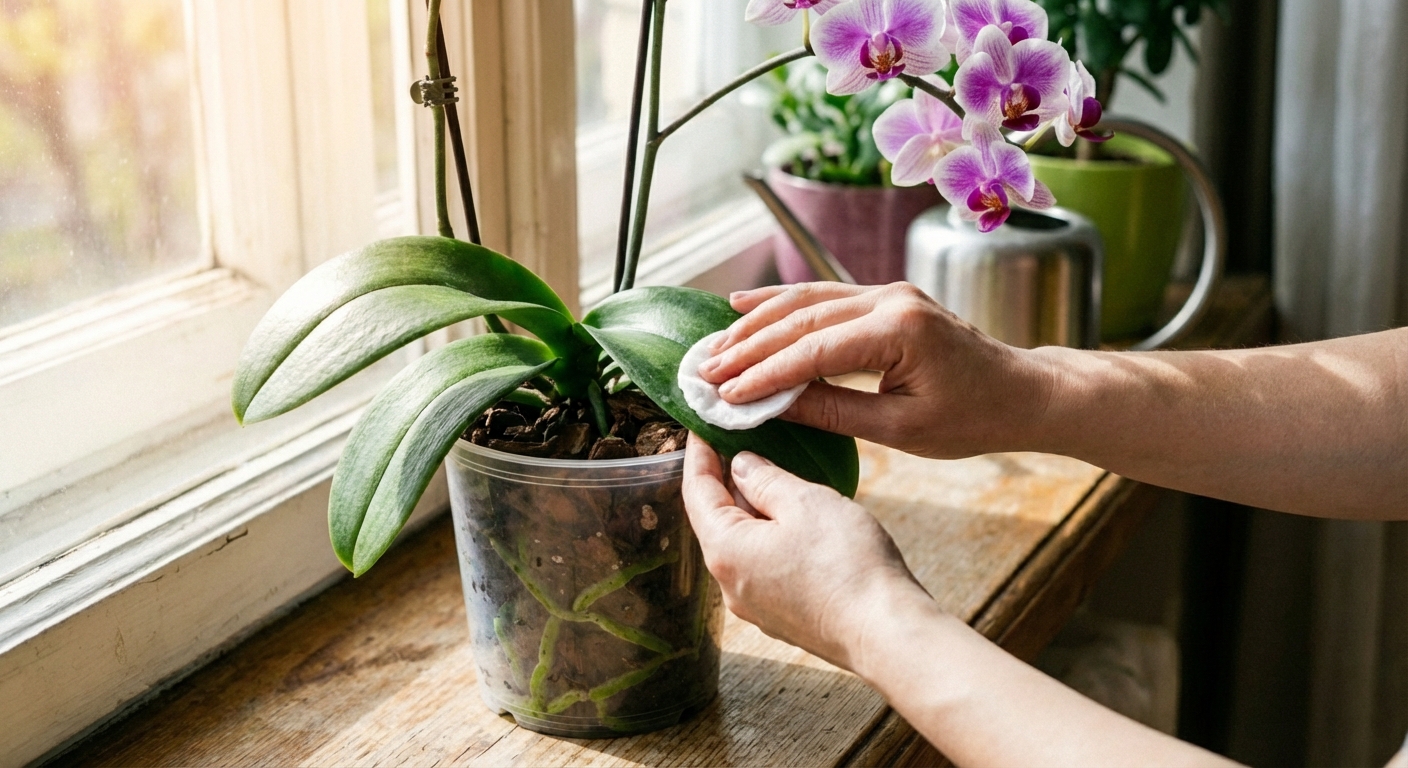
Spot-treat with a cotton swab dipped in 70% isopropyl alcohol. Avoid soaking roots or letting alcohol run into the potting media. Keep away from open flames and let the plant dry before returning it to bright light. Remove the visible bugs, then check again every few days for two weeks.
Scale insects (hard bumps on leaves and stems)
Gently scrape off with a fingernail or soft tool, then wipe the area with a cotton swab dipped in 70% isopropyl alcohol. Repeat weekly for a few weeks. Like mealybugs, scale can hide in leaf joints, so inspect closely.
Spider mites (fine webbing, stippled leaves)
Rinse the plant in the sink with lukewarm water, especially undersides of leaves. Repeat every 4 to 5 days for 2 to 3 cycles. Mites hate frequent washing and higher humidity. Isolate the plant if possible so mites do not spread.
Gentle soap spray option
Mix 1 teaspoon mild, pure liquid soap (unscented castile style is a common choice) in 1 quart of water. Spray leaves lightly, avoid soaking the crown, and do not drench the potting media. Rinse after a few hours. Always test on a small area first since orchids vary in sensitivity and soap formulas vary. Do not use harsh degreasers or antibacterial soaps.
Fall: set up the next bloom
For many orchids, fall is when temperature and light changes cue bloom spikes. The goal is steady care and a small nudge in the right direction, not a big overhaul.
What to do in fall
- Give brighter light: Days get shorter, so move the orchid a bit closer to the window while keeping it out of harsh sun.
- Reduce watering slightly: As rooms cool and growth slows, media stays wet longer.
- Encourage spike initiation: Many Phalaenopsis hybrids respond to a small nighttime temperature drop. If possible, let nights be about 5 to 10°F cooler than days (about 3 to 6°C) for a couple of weeks. Not every plant responds the same way, but it is a reliable nudge for many.
Fall home remedy: the drying check habit
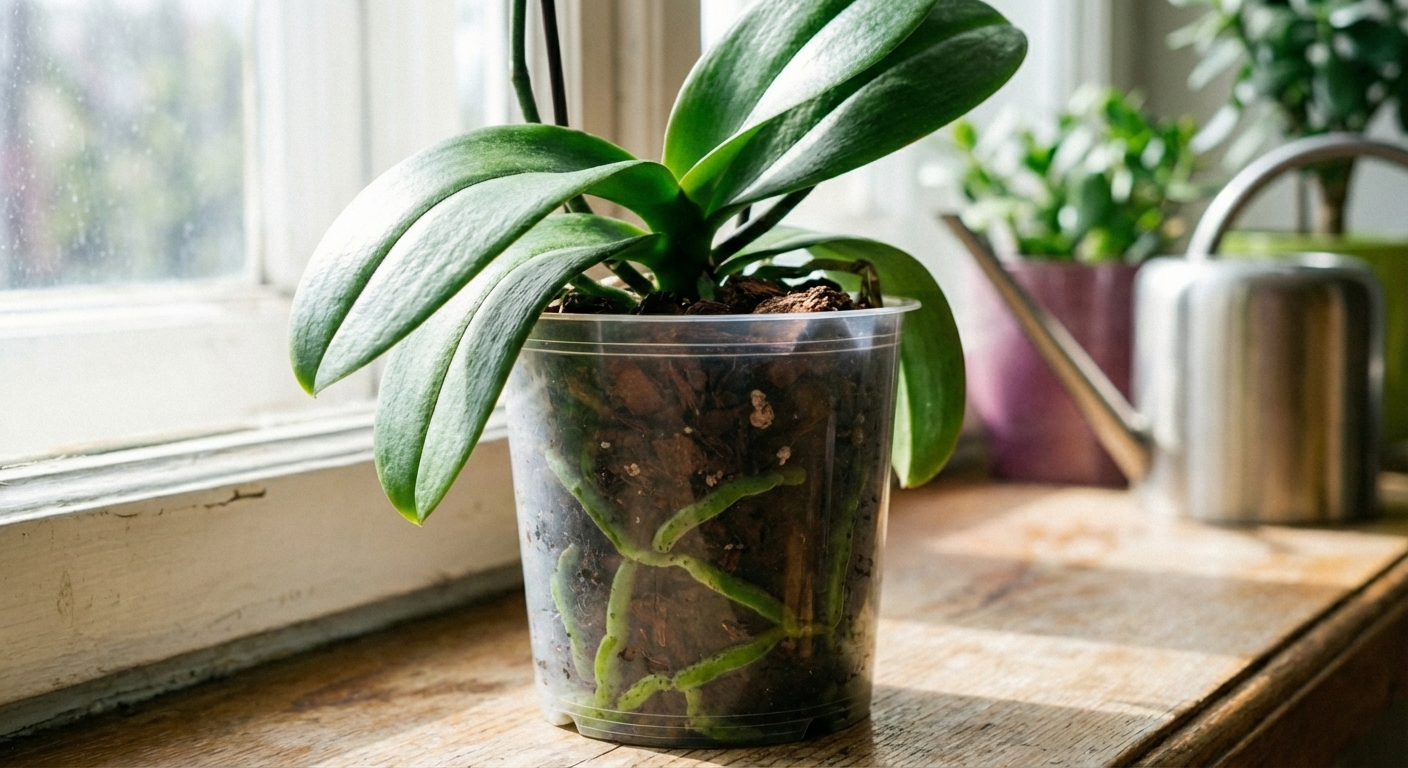
This is not a spray, but it is the most helpful fall fix. Before watering, look at roots if your pot is clear. Green roots usually mean moisture is present and silvery roots often mean it is time to water. Two notes that keep this tip accurate: algae can make roots look greener than they really are, and roots near the pot edge can dry faster than the center. When unsure, also check the pot by weight or feel for moisture deeper in the mix.
Winter: low light, slow growth, easy overwatering
Winter is where orchids get into trouble indoors. Light is weaker, homes are cooler, and many of us water out of routine instead of need. In winter, your main job is to avoid root rot while keeping the plant stable.
What to do in winter
- Water less often: Let the potting mix dry more between waterings. Always drain thoroughly.
- Keep leaves dry at night: Water early in the day so stray droplets evaporate.
- Boost light safely: A bright window or a simple grow light helps a lot.
- Keep away from vents: Hot, dry air can dehydrate buds and leaves.
Winter home remedies for rot and fungus concerns
1) Crown water rescue
If water accidentally pools in the crown (center of the plant), blot it out immediately with a paper towel. You can also use a corner of tissue to wick moisture out. This one habit prevents many winter losses.
2) Hydrogen peroxide, used carefully
For suspected crown rot or a small rotting spot, some growers use 3% hydrogen peroxide to bubble debris out and clean the surface. Apply sparingly with a cotton swab only to the affected area, then keep the plant warm and dry in that spot. Peroxide is not a true cure for infections, it is a surface oxidizer. Repeated use can damage tissues and stress roots, so do not pour it through the pot routinely.
3) Cinnamon as a drying agent on a small lesion
After removing soft tissue (if you are confident doing so), a light dab of cinnamon on the wound can help dry it. Keep cinnamon off healthy roots and avoid packing it into crevices. If you skipped the spring note, the rule is the same: cinnamon is for the cut, not the pot.
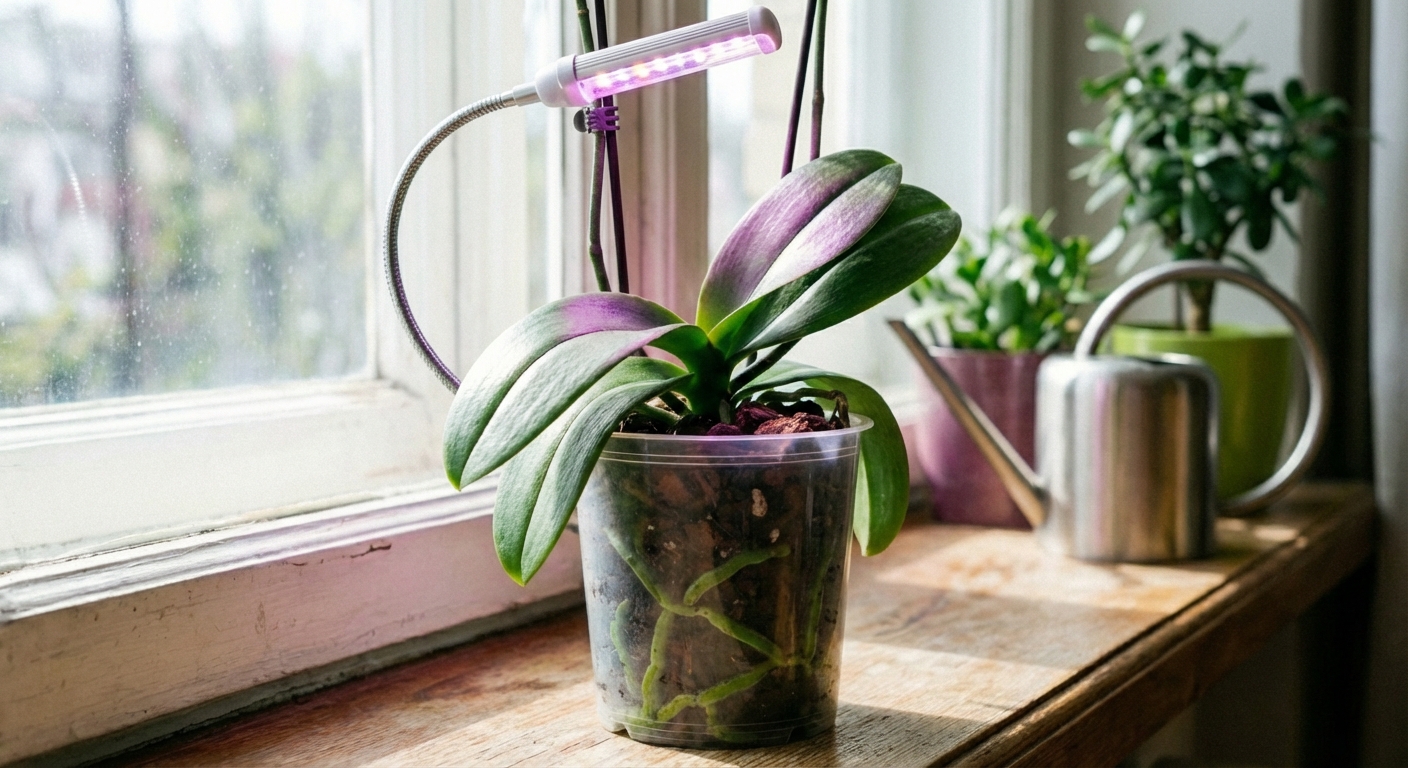
Seasonal watering and feeding: quick cheat sheet
- Spring: Water gradually more as growth ramps up. Feed every 2 to 4 weeks at 1/4 to 1/2 strength.
- Summer: Water more often, watch pests, keep airflow up. Feed every 2 to 4 weeks at 1/4 to 1/2 strength.
- Fall: Water a bit less, brighten light, consider a mild night temperature drop for spikes.
- Winter: Water the least, protect from drafts and vents, add light if needed. Feed lightly or pause if growth is slow.
If you only change one thing this year, let it be this: your watering frequency should change with the season.
Common orchid problems and simple home fixes
Wrinkled leaves
Usually a watering issue, but not always “needs more water right now.” Wrinkles can mean dehydrated roots from past overwatering, old media, or low humidity.
- Check roots: Firm and green or silvery is good. Brown and mushy means rot.
- Home fix: If roots look healthy, increase watering slightly and consider a humidity boost. If roots are poor, repot into fresh airy mix and reduce watering until new roots start.
Yellow leaf
One older bottom leaf yellowing slowly is often normal. Several leaves yellowing fast is a red flag.
- Home fix: Improve light and check for soggy media. Let the leaf come off naturally, do not yank.
Bud blast (buds drop before opening)
Common triggers are cold drafts, heater vents, low humidity swings, or moving the plant repeatedly.
- Home fix: Stop moving the orchid, keep temps stable, and keep it away from direct heat or cold air.
Not blooming
Most often: not enough light, or no seasonal cue.
- Home fix: Increase bright indirect light, and in fall try a slight night temperature drop for a couple of weeks.
DIY potting media refresh: when and how
If your orchid is in bark, it eventually breaks down, holds too much water, and suffocates roots. That is when “mysterious” decline shows up. The same idea applies to sphagnum moss that stays wet too long or becomes compacted.
Signs it is time
- Media stays wet for a long time even when you water lightly
- Sour or swampy smell from the pot
- Lots of hollow, papery, or mushy roots
- Plant wobbles or seems unstable
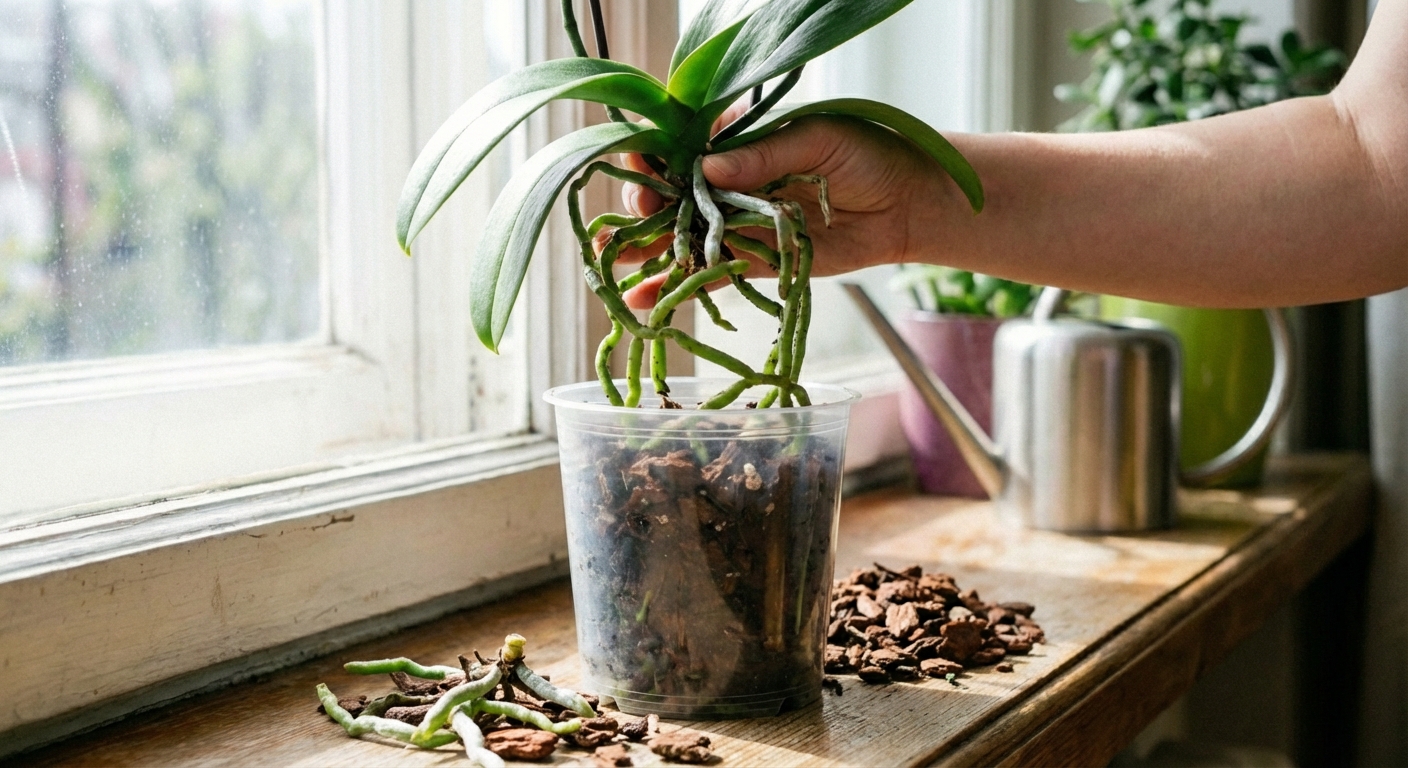
Simple repot steps
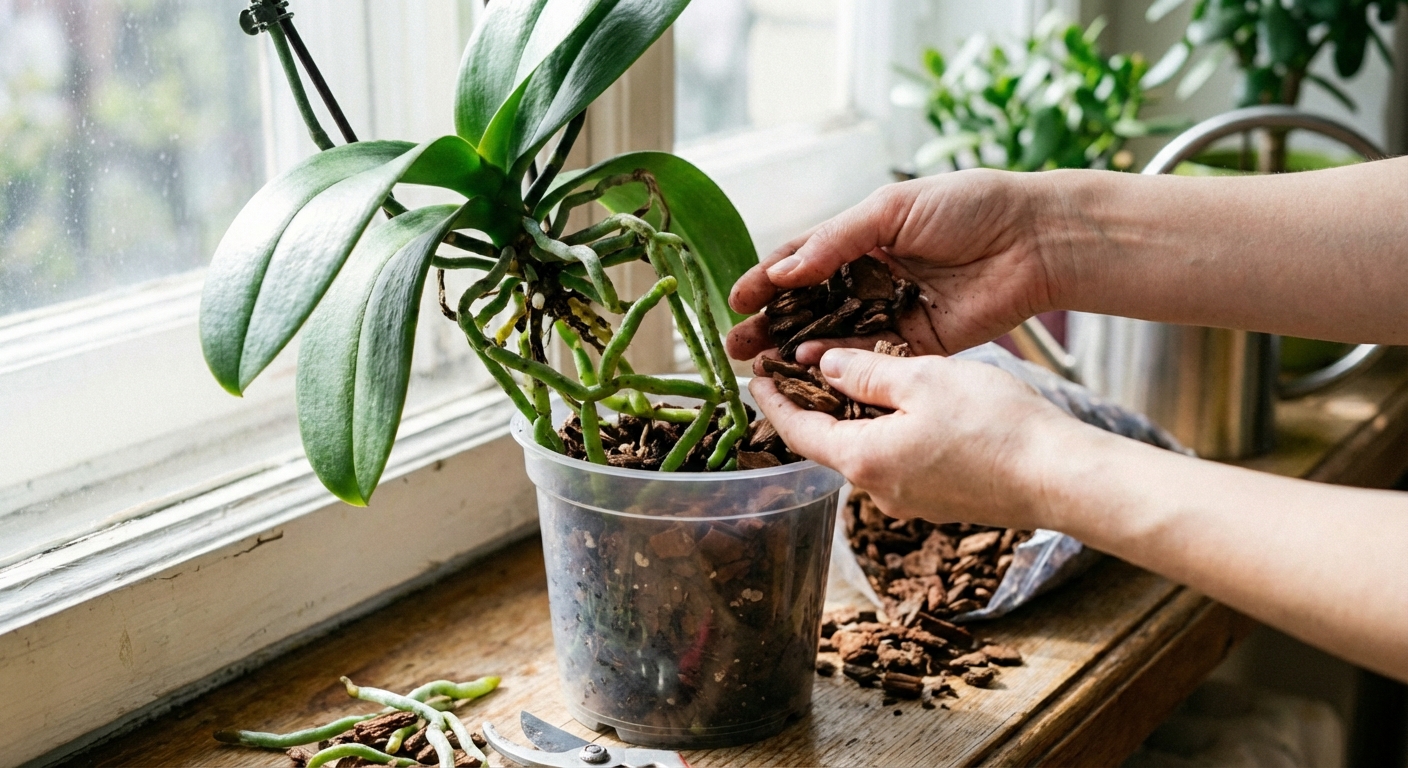
- Soak the pot briefly to loosen old bark or moss.
- Remove dead roots with clean scissors (mushy, hollow, or black).
- Repot into fresh orchid bark, moss, or a bark blend in a ventilated pot.
- Wait a few days before watering heavily if you made many cuts.
What to skip (common home remedy mistakes)
- Banana water, rice water, or sugary soaks: They can ferment and attract fungus gnats and bacteria.
- Oils on leaves: Many oils can clog stomata and worsen sunburn. If you use any oil-based product, do it sparingly and keep the plant out of bright sun.
- Ice cubes: Cold shock can happen depending on contact and how long ice sits against roots. The bigger issue is inconsistent watering and uneven wetting. Lukewarm water and a thorough soak are safer.
- Frequent peroxide drenches: Useful in specific cases, not as routine care.
When to escalate beyond home remedies
Home fixes are great for mild issues. If you see rapid spread, strong odor, or major root loss, step up your response.
- Fast-moving rot: Remove affected tissue, isolate the plant, and repot into clean media.
- Heavy pest infestations: Consider a dedicated insecticidal soap or horticultural product labeled for houseplants, and repeat as directed. Spider mites and scale often require repeated treatments.
- Multiple orchids affected: Quarantine new plants and disinfect shared tools and surfaces.
Seasonal routine you can actually stick to
If you want orchids that look good all year, keep it simple:
- Weekly: Quick look at roots, leaves, and the crown. Check for pests.
- Every watering: Water thoroughly, then drain completely. No standing water.
- Monthly: Flush with plain water to remove salts.
- Season change: Adjust light and watering frequency. That is it.
Orchid care gets easier the moment you stop treating it like a schedule and start treating it like a plant reacting to its season.

Jose Brito
I’m Jose Britto, the writer behind The Country Store Farm Website. I share practical, down-to-earth gardening advice for home growers—whether you’re starting your first raised bed, troubleshooting pests, improving soil, or figuring out what to plant next. My focus is simple: clear tips you can actually use, realistic expectations, and methods that work in real backyards (not just in perfect conditions). If you like straightforward guidance and learning as you go, you’re in the right place.