Fleas are one of those problems that feel personal. Your dog is itchy, you are stressed, and suddenly you are washing everything you own. The good news is you can make a big dent in fleas with simple home steps, as long as you handle the whole life cycle.
Here is the honest part: a “home remedy” rarely fixes a flea problem by itself. What works is a short, repeatable routine that tackles (1) fleas on the dog, (2) eggs and larvae in the home, and (3) the spots outside where fleas wait and jump back on.
One more key point: if you have multiple pets (including cats), plan to manage all of them at the same time. Otherwise fleas just hop to the untreated pet and the cycle keeps going.
First, know what you are fighting
Adult fleas are only the tip of the iceberg. Most of the problem is usually off the dog, especially in the places your pet sleeps and hangs out.
- Adult fleas primarily live on pets and feed, but they can be found in the environment briefly.
- Eggs fall off into bedding, rugs, and cracks in floors.
- Larvae hide in dark areas and feed on flea dirt.
- Pupae can “wait” for weeks to months, then hatch when they sense vibration, warmth, and carbon dioxide.
Quick note on flea dirt: it looks like black pepper. When you smear it on a damp paper towel, it turns reddish-brown because it is digested blood.
This is why you can bathe a dog and still see fleas again in a few days. The next batch hatches.
Safety notes before you start
- Puppies, seniors, pregnant dogs, and dogs with skin issues need extra caution. When in doubt, call your vet.
- Never use essential oils on your dog unless your veterinarian specifically instructs you. Many are irritating or toxic, and cats in the home are especially sensitive.
- Avoid garlic, alcohol, tea tree oil, and “flea dips” meant for livestock. These can harm pets.
- If your dog is weak, pale-gummed, has rapid breathing, or you see heavy flea loads on a small puppy, treat it as urgent. Fleas can contribute to anemia.
- Seek urgent veterinary care if you see facial swelling, hives, vomiting, collapse, or nonstop scratching with raw, oozing skin.
The simple home routine (what to do today)
This routine is built around two safe basics: soap-and-water bathing and daily flea combing. It will not replace veterinary preventatives in heavy infestations, but it is a solid DIY start and often gives fast relief.
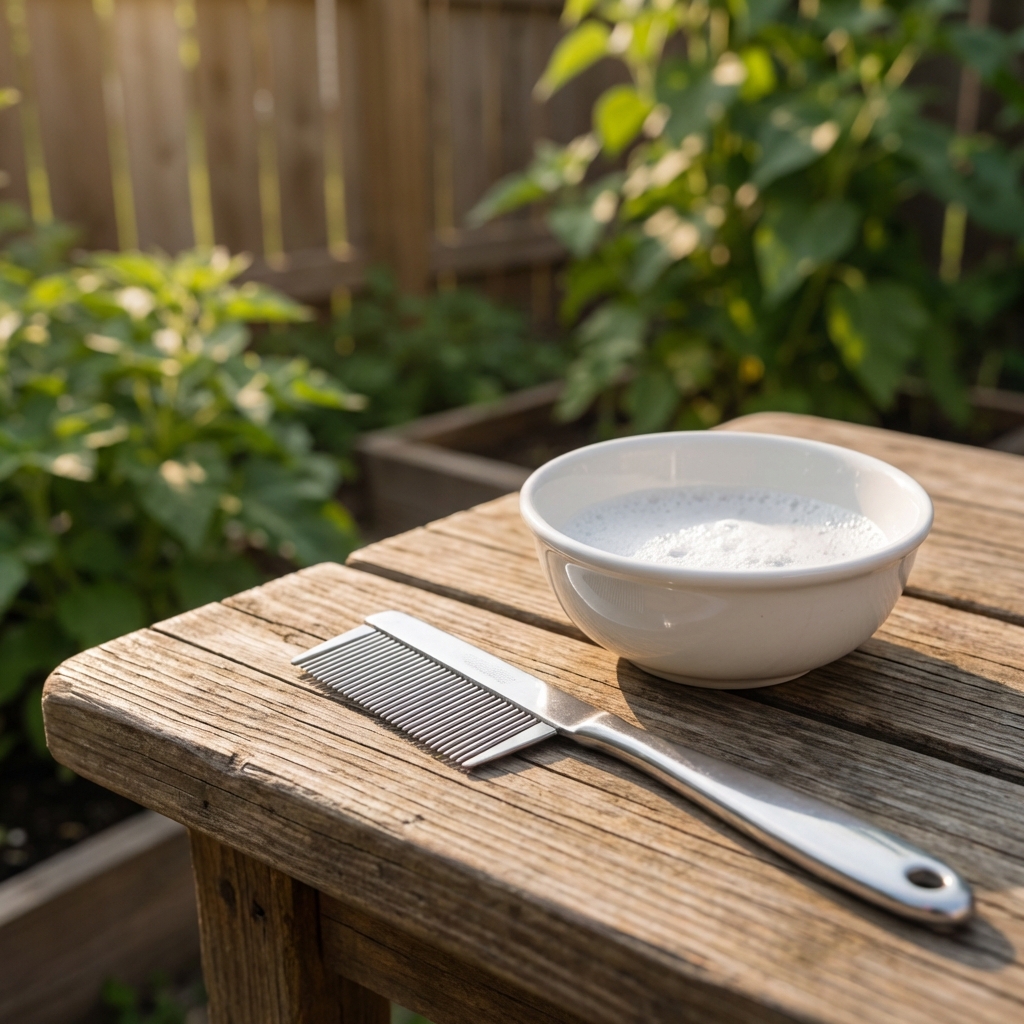
Step 1: Set up a flea-catching bowl
Before you comb, make a “flea trap” bowl so you can dunk what you catch.
- Fill a bowl with warm water.
- Add a few drops of mild dish soap (it breaks surface tension so fleas sink).
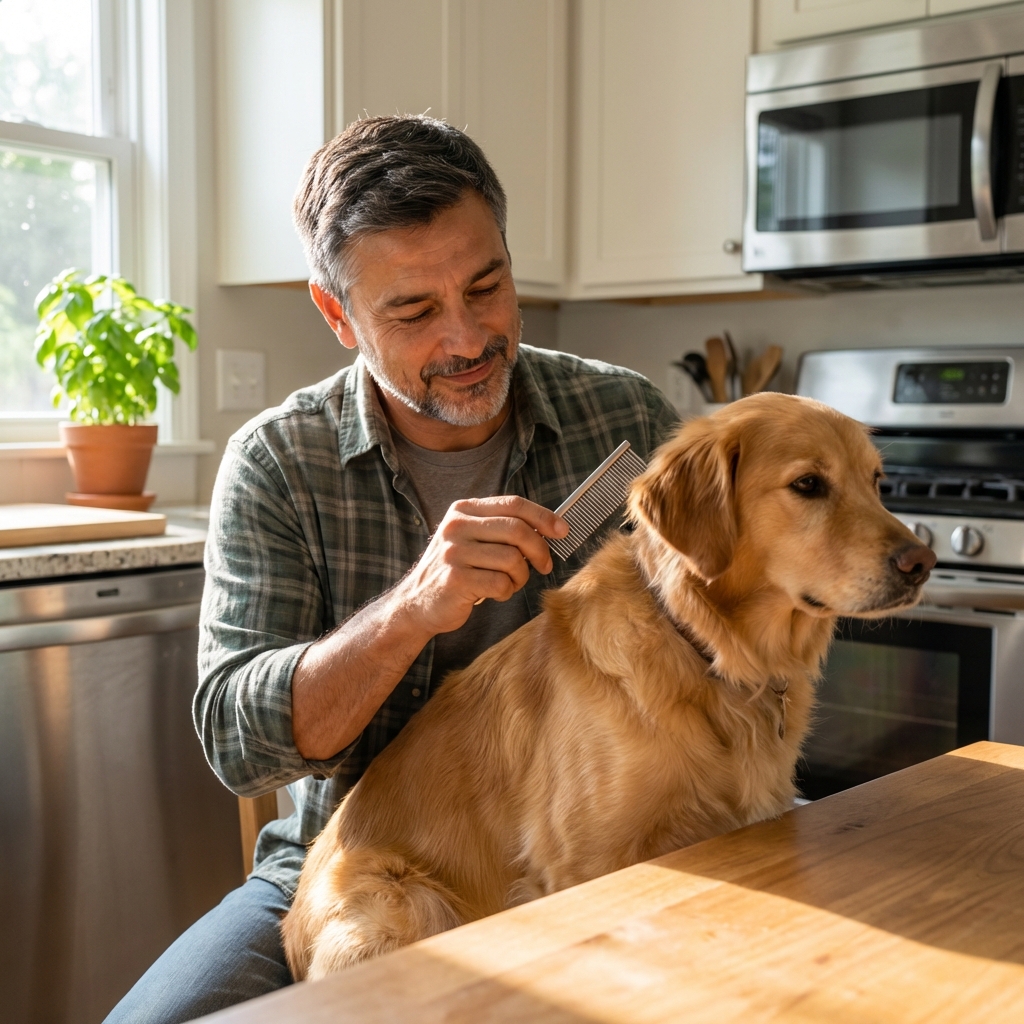
Step 2: Flea comb thoroughly (10 minutes)
Use a metal flea comb. Work in good light and focus on the high-traffic flea zones:
- Neck and collar line
- Base of tail
- Back of thighs
- Armpits and belly
Comb a few strokes, then dunk the comb into the soapy water. If you see black specks, place some on a damp paper towel. If it turns reddish-brown, that is flea dirt (digested blood), which confirms fleas.
Step 3: Bathe with warm water and mild soap
A basic bath can remove a lot of adult fleas. You do not need anything fancy.
- Wet your dog with warm water.
- Start at the neck and work soap into a ring first. This helps prevent fleas from racing to the face.
- Lather the body with a gentle pet shampoo, or a small amount of mild dish soap if you have no pet shampoo. Keep it away from eyes, nose, and mouth.
- Let the lather sit for about 5 minutes if your dog tolerates it.
- Rinse extremely well and towel dry.
After drying, do another quick comb-through to catch stragglers. Also note: dish soap is not a preventive. It can dry skin, so do not rely on it frequently.
Step 4: Give itchy skin some relief
Flea bites can keep itching even after the fleas are reduced.
- Use a cool, damp cloth on hot spots for a minute or two.
- If your dog tolerates it, a colloidal oatmeal dog shampoo can calm irritated skin.
The part most people skip: treat the home
If you only treat your dog, fleas will keep cycling in your house. In many infestations, indoor areas are the main reservoir because that is where your pet rests. Do these steps the same day you bathe and comb.
Vacuum thoroughly
- Vacuum rugs, carpets, baseboards, couch cushions, and under furniture.
- Go slow. The goal is to pull eggs and larvae out of hiding.
- Bonus: vacuuming can also stimulate pupae to hatch, which is helpful when you are actively cleaning and removing new adults.
- Immediately empty the canister into a sealed bag and take it outside, or change the vacuum bag.
Wash bedding and soft items on hot
- Wash dog bedding, blankets, and any throw rugs your pet lies on.
- Use the hottest water safe for the fabric and dry on high heat when possible.
Diatomaceous earth (optional)
If you want an extra step, some people use food-grade diatomaceous earth lightly in cracks and along baseboards. Real-world results are mixed, and it can irritate lungs even when food-grade, so treat it as optional and use caution.
- Choose food-grade, not pool-grade.
- Use a very light dusting only.
- Keep pets and people out of the area while applying, avoid creating airborne dust, and ventilate well. A well-fitting mask helps if you are sensitive.
- Vacuum it up later the same day.
If anyone in the home has asthma or breathing sensitivities, skip this step and focus on vacuuming and washing instead.
Do not ignore the yard
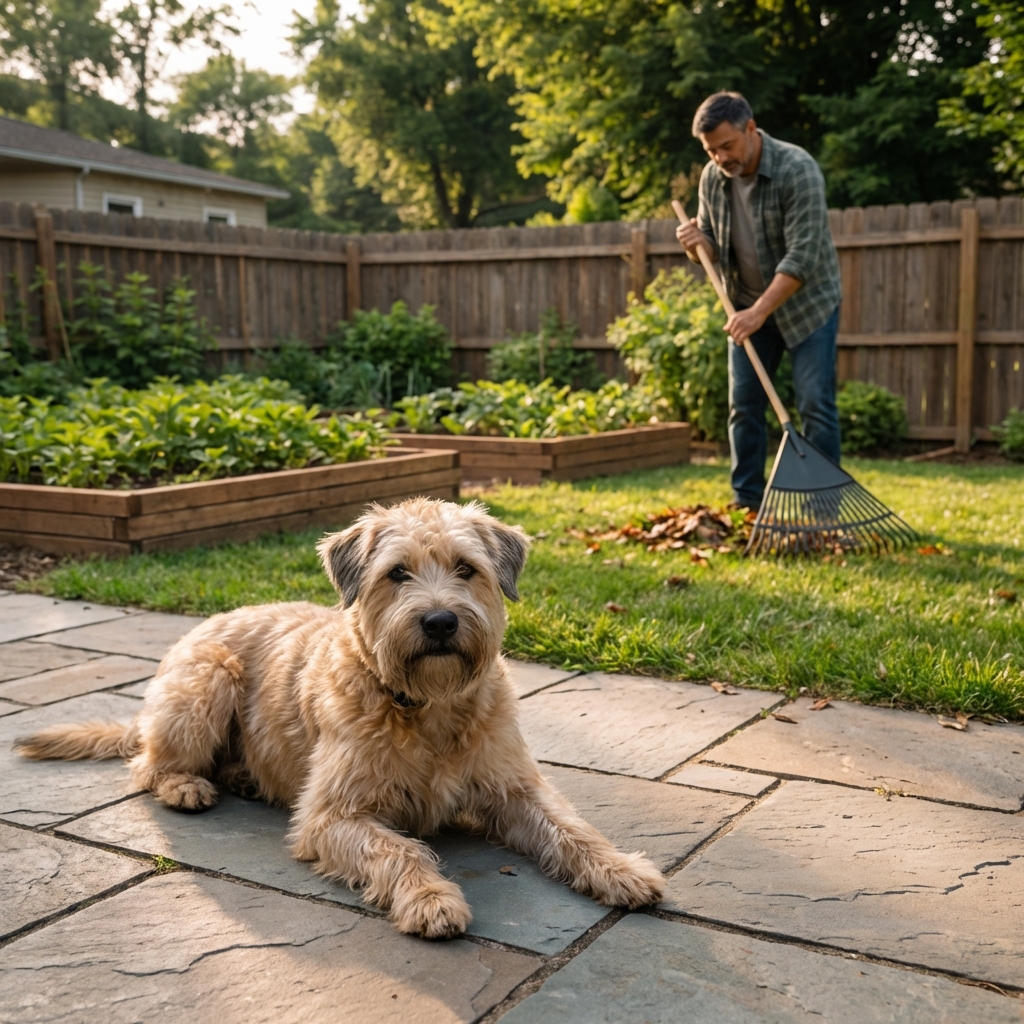
Some fleas do build up outdoors, especially where pets rest: shaded dirt, under decks, along fence lines, and under shrubs. That said, many homes find the bigger issue is still indoors, so do not trade indoor cleaning for yard work.
- Mow and trim to reduce humid shade.
- Rake up debris where larvae hide.
- Wash outdoor pet bedding or replace it.
- If you have a favorite dog lounging spot that stays damp, consider moving the resting area to a sunnier, drier location.
DIY schedule that actually works
Consistency beats intensity. Here is a simple, realistic schedule for most homes.
Days 1 to 3
- Flea comb once daily.
- Vacuum daily in the rooms your dog uses most.
Day 1 and Day 7
- Bathe and comb thoroughly.
- Wash bedding on hot.
Weeks 2 to 8
- Flea comb 2 to 3 times per week.
- Vacuum 2 to 3 times per week.
- Wash bedding weekly.
Most people notice improvement quickly, but full clean-up can take 2 to 8 weeks depending on severity and because pupae can hatch later.
What not to do
- Apple cider vinegar in water or sprayed on the coat: it may make your dog smell like vinegar, but it does not reliably kill fleas.
- Lemon or citrus sprays: can irritate skin and are risky around cats.
- Essential oil mixes: frequent cause of skin irritation and toxicity.
- Only treating the dog: fleas will keep coming from carpets, bedding, and other pets.
- Overbathing: can dry skin and increase itching. Stick to once a week unless your vet advises otherwise.
When home steps are not enough
Sometimes the most responsible move is using a proven veterinary product, especially when fleas are heavy or your dog is allergic to bites.
Talk to your vet if:
- Your dog has scabs, open sores, or hair loss from scratching.
- You see fleas again and again after two weeks of consistent cleaning.
- There are multiple pets and you cannot manage everyone the same day.
- Your dog has tapeworm segments in the stool or around the rear (fleas can spread tapeworms).
If you want a roadmap, vets typically recommend a monthly preventive (often oral or topical) and, in some cases, an in-home treatment designed to interrupt the flea life cycle. Ask what is appropriate for your dog’s age, weight, and health.
Quick FAQ
Can I use dish soap on my dog for fleas?
A small amount of mild dish soap can help remove and drown adult fleas during a bath, but it can also dry the skin. If you have a gentle dog shampoo, use that first. Do not use strong degreasing products repeatedly, and remember it is not a preventive.
How fast will fleas go away?
You can reduce adult fleas the same day with combing and bathing. Fully breaking the cycle often takes 2 to 8 weeks of consistent vacuuming and washing, depending on how established the infestation is.
Do I need to treat my house if I only see a few fleas?
Yes. Even a few fleas can lay eggs quickly. A little vacuuming and washing now saves a bigger problem later.
Bottom line
The simplest home remedy for fleas is not a single magic ingredient. It is a repeatable routine: comb, bathe, clean the home, and stay on schedule. If you do those four things, most flea situations improve fast. If they do not, that is your sign to bring in your vet and step up to a product that stops the cycle at the source.

Jose Brito
I’m Jose Britto, the writer behind The Country Store Farm Website. I share practical, down-to-earth gardening advice for home growers—whether you’re starting your first raised bed, troubleshooting pests, improving soil, or figuring out what to plant next. My focus is simple: clear tips you can actually use, realistic expectations, and methods that work in real backyards (not just in perfect conditions). If you like straightforward guidance and learning as you go, you’re in the right place.