Fleas are one of those problems that feel like they show up overnight. One day your dog is fine, the next day you notice scratching, tiny black specks, or a couple of fleas hopping for cover.
Homemade flea repellents can help, especially for light flea pressure or as a between-baths and between-treatments helper. The key is keeping expectations realistic: DIY options usually discourage fleas more than they solve fleas, and they rarely fix a full infestation without a real cleanup plan.
Also worth saying: evidence for common DIY repellents (like vinegar and lemon) is mixed. Many people find they help a little, some see no change. They are best viewed as low-impact add-ons, not a replacement for preventatives.
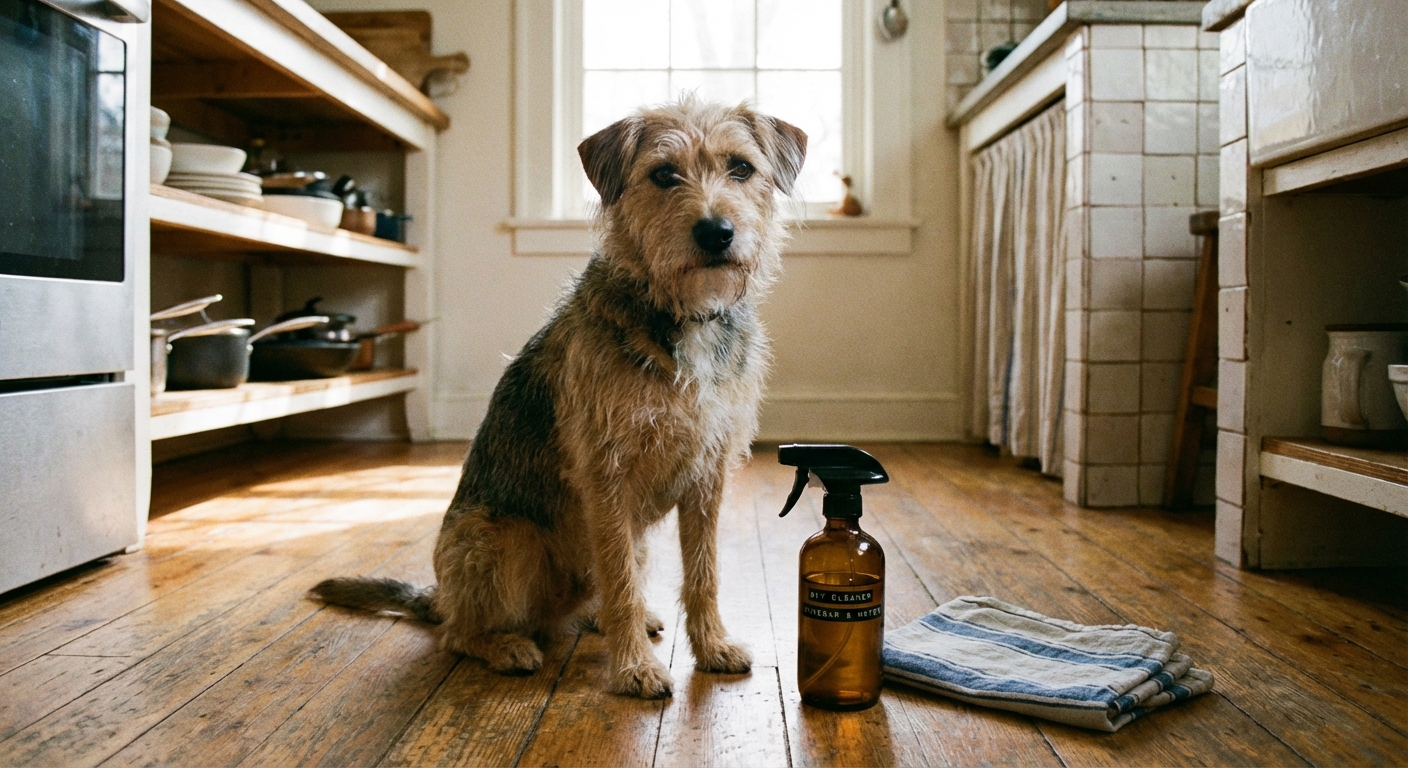
Before you start: safety first
Dogs have more sensitive skin than most people realize, and some common “natural” ingredients can be unsafe. Use these quick guardrails before you mix anything.
Check with your vet first if your dog is:
- A puppy under 12 weeks
- Pregnant or nursing
- On seizure medication or has a history of seizures
- Very small, elderly, or immunocompromised
- Dealing with open sores, hot spots, or a skin infection
Patch test every DIY spray
Apply a little to a small area (like the shoulder) and wait 24 hours. Stop if you see redness, hives, excessive scratching, or your dog seems uncomfortable.
Keep sprays away from faces and tongues
- Avoid spraying the face. Apply to your hands or a cloth first for better control.
- Prevent licking until the coat is dry (use a treat distraction, a walk, or a cone if needed).
If you have cats in the house
Be extra cautious. Cats are more sensitive to many oils and fragrances, and they groom constantly. Keep DIY sprays and any dog-only flea products away from cats, and do not let cats lick a treated dog.
Ingredients to avoid on dogs
- Tea tree oil (melaleuca), especially if ingested or improperly diluted. It can be toxic and is a common cause of “natural remedy” problems.
- Undiluted essential oils. Concentrated oils can irritate or burn skin and can be dangerous if your dog licks them.
- Garlic in “flea treats” or homemade tonics. Garlic can contribute to anemia, and concentrated supplements or extracts are higher risk.
- Apple cider vinegar in eyes, ears, or on broken skin. It stings and can worsen irritation.
What DIY can and cannot do
DIY flea repellents may help:
- Discourage fleas from hanging out on your dog (results vary)
- Support other flea control methods
- Reduce itch from mild exposure when paired with bathing and combing
DIY flea repellents usually cannot:
- Eliminate an infestation on their own
- Stop flea reproduction in your home (eggs and larvae in carpet and bedding)
- Replace vet-recommended preventatives if your area has heavy fleas or tick risk
One more curveball: flea allergy
Some dogs have flea allergy dermatitis (FAD), meaning one or two bites can cause intense itching, redness, and scabs. If your dog seems miserable even when you rarely see fleas, this may be why, and DIY repellents can feel like they “aren’t working.”
DIY option #1: Vinegar and water coat spray
This is one of the simplest, most affordable options. It will not kill fleas on contact, but for some dogs it may help make the coat less inviting for short periods.
What you need
- 1 cup water
- 1 cup apple cider vinegar (ACV) or white vinegar
- Clean spray bottle
How to make it
- Add the water and vinegar to a spray bottle (50/50).
- Shake well.
How to use it (the non-annoying way)
- Spray lightly onto your hands or a cloth first, then rub into the coat.
- Avoid eyes, nose, mouth, genitals, and any broken or irritated skin.
- Focus on the neck, shoulders, back, and base of the tail where fleas often gather.
- Keep your dog from licking until dry.
How often: once daily for a few days during mild flea activity, then 2 to 3 times per week as needed.
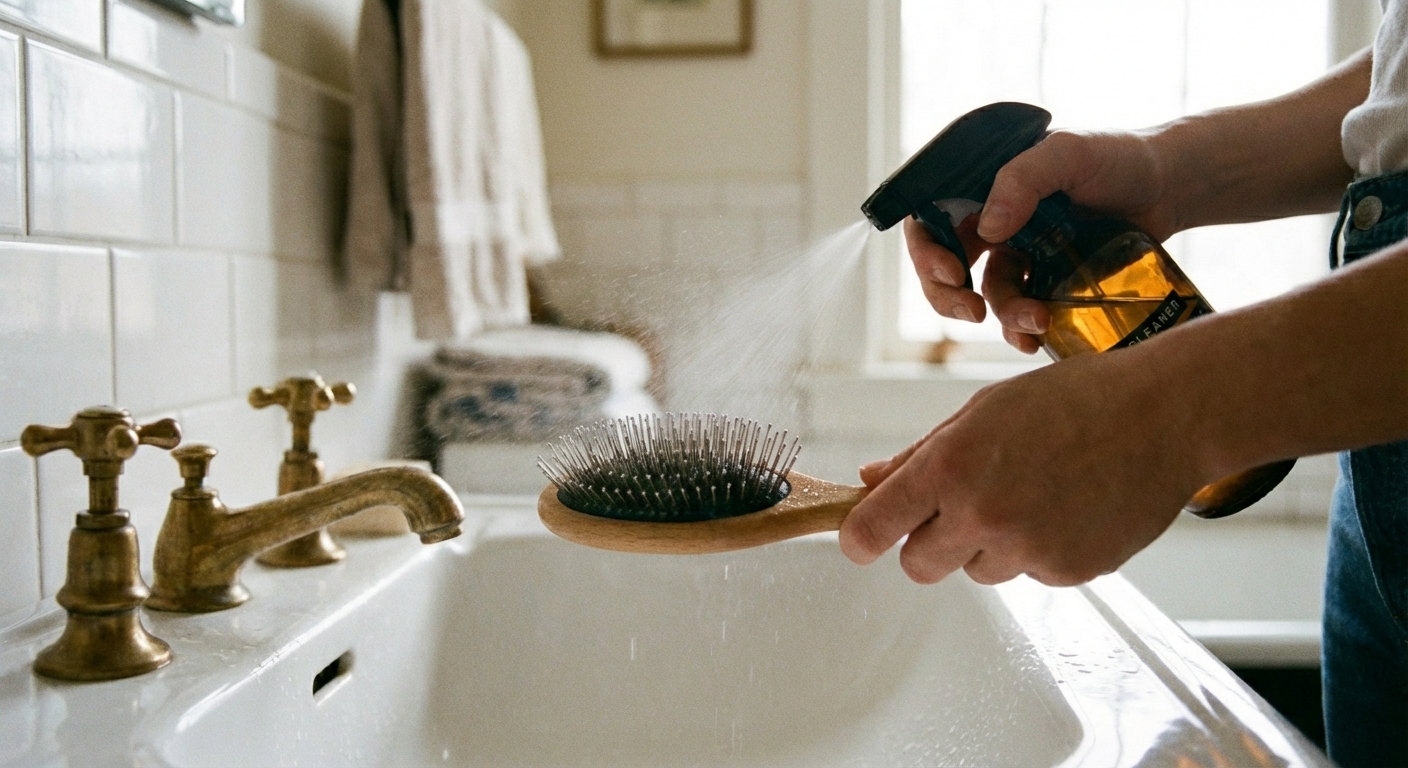
DIY option #2: Lemon water rinse
Lemon contains natural compounds that may help repel insects. This is best used as a light rinse or wipe-down, not a heavy saturating spray.
What you need
- 1 lemon
- 2 cups hot water
- A jar or bowl with a lid
- Strainer (optional)
How to make it
- Slice one lemon thin (leave the peel on).
- Pour hot water over the slices.
- Cover and let it steep 6 to 8 hours or overnight.
- Strain if you want a clearer liquid for a spray bottle.
How to use it
- Apply with a cloth and wipe the coat, or mist lightly and brush through.
- Avoid the face and do not use near eyes. Avoid irritated or broken skin.
- Prevent licking until the coat is dry.
- Refrigerate leftovers and use within 3 to 4 days.
How often: up to 2 to 3 times per week.
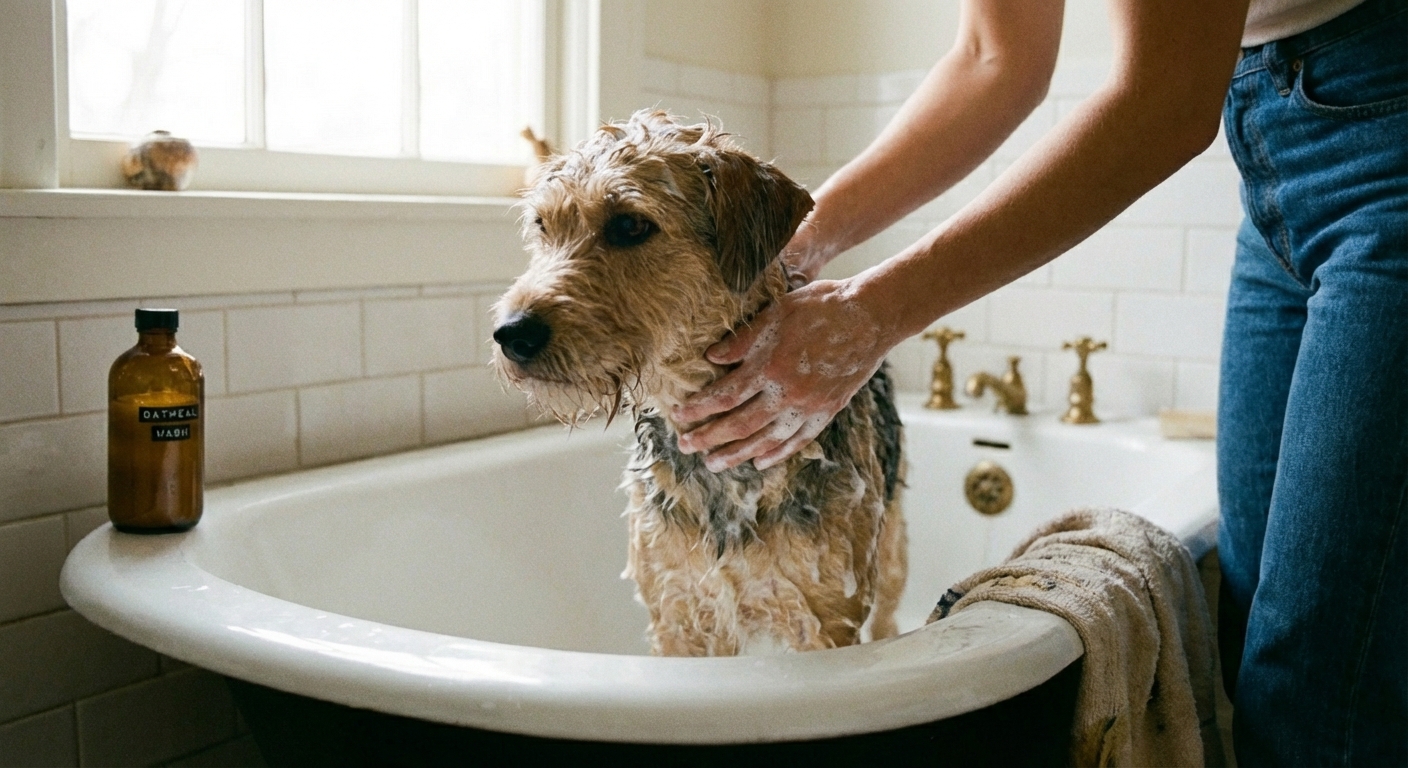
DIY option #3: Oatmeal bath for itch
If your dog is already itchy, a soothing bath helps break the scratch cycle. This does not repel fleas much, but it can make your dog more comfortable while you work on the bigger flea plan.
What you need
- 1 cup plain, unsweetened oatmeal
- Warm bath water
- Towel
How to do it
- Grind the oatmeal into a fine powder (a blender or food processor works).
- Add to warm bath water and stir.
- Soak your dog for 5 to 10 minutes, then rinse.
- Dry thoroughly, especially in skin folds.
Tip: Follow with flea combing once the coat is mostly dry.
The tool that makes DIY work better: flea comb
If you only do one thing in addition to a spray, make it consistent combing. It physically removes fleas and flea dirt and tells you whether your plan is actually working.
How to comb effectively
- Comb slowly, especially around the neck, behind ears, under the collar area, armpits, belly, and base of the tail.
- Keep a cup of warm water with a drop of dish soap nearby. Dunk the comb to trap fleas.
- Look for “flea dirt” (black specks). If you place specks on a wet paper towel and they smear reddish-brown, that is digested blood.
If you skip this, fleas come back: home cleanup
Most of the flea problem is not on your dog. It is in the house: eggs, larvae, and pupae tucked into carpet, bedding, and cracks. Homemade sprays help most when you pair them with cleanup.
Simple weekly reset (do this for 3 to 4 weeks)
- Wash bedding (dog bed covers, blankets, your sheets if your dog sleeps with you) in hot water. Dry on high heat if the fabric allows.
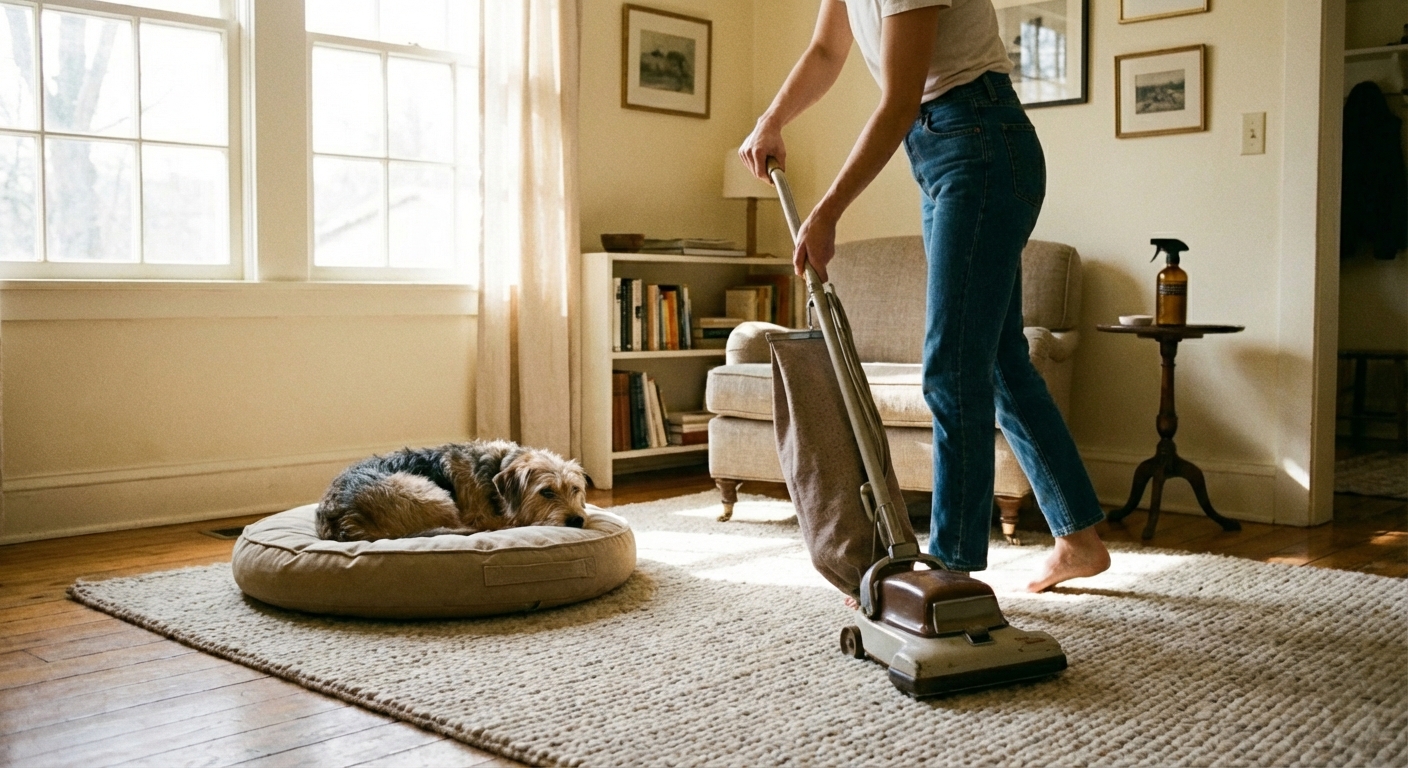
- Vacuum thoroughly including under furniture and along baseboards. Empty the canister outside right after.
- Clean soft surfaces where your dog naps. If a couch cushion cover can be washed, wash it.
Optional: baking soda and salt for carpets
Some homeowners use a light sprinkle of baking soda and salt worked into carpet, left for several hours, then vacuumed. It can help dry out larvae in some cases, but it is not a guaranteed fix and it can be messy.
- Keep pets and kids away until you vacuum thoroughly.
- Avoid creating dust (it can irritate lungs). If anyone in the home has asthma or sensitivities, skip this.
- Never leave it where pets can lick it.
When to consider stronger home help
If you are seeing fleas daily in the home, it can be worth adding an EPA-registered home treatment labeled for fleas (or hiring a professional). Follow the label closely, keep pets out until it is safe, and keep cleaning while the life cycle breaks.
Yard tips
If your dog spends time outside, you may be dealing with fleas in shaded, damp areas.
- Mow regularly and remove debris where moisture sits.
- Focus on shaded zones: under decks, shrubs, and along fences.
- Wash outdoor dog bedding and keep resting spots dry.
- Consider beneficial nematodes (often Steinernema carpocapsae or Steinernema feltiae) if fleas are a recurring seasonal issue in your yard. They work best with the right moisture and temperatures, so follow product instructions closely.
When DIY is not enough
There is a point where the kindest thing you can do is switch from “try a spray” to “break the flea life cycle.” Talk to a vet if you see any of these:
- Fleas are visible daily even after combing and bathing
- Your dog has hair loss, scabs, hot spots, or intense itching
- Tapeworm segments (small, rice-like pieces) in stool or around the rear
- Signs of anemia in small dogs or puppies (pale gums, weakness)
Vet-approved preventatives exist for a reason. If you want a more natural-leaning plan, ask your vet what fits your dog’s health and your local flea and tick risks.
Quick FAQ
Can I use essential oils for fleas on my dog?
Many essential oils can be risky for dogs, especially if applied to the coat where they can be licked. Cats are even more sensitive. If you are determined to use one, do it only with veterinary guidance and proper dilution. For most households, it is safer to skip essential oils entirely.
Does dish soap kill fleas on dogs?
Dish soap can kill fleas during a bath by helping trap them and rinse them away, but it can also strip protective skin oils and it is not formulated for pet skin. It does not provide lasting protection. If you use it, do it rarely, rinse thoroughly, and follow with a gentle dog shampoo next time.
How long does it take to get rid of fleas in a house?
Even with good cleaning, expect 3 to 8+ weeks to see a major drop because pupae can hatch later. Some heavy infestations can take longer. Consistency matters more than doing everything once.
Simple routine
- Daily (for a week): flea comb + light vinegar spray or lemon wipe-down
- Weekly: wash bedding + deep vacuum
- As needed: oatmeal bath for itch support
If you keep seeing fleas after a week of consistent combing and cleanup, that is your signal to bring in a vet-approved product and keep the cleaning going until the life cycle breaks.

Jose Brito
I’m Jose Britto, the writer behind The Country Store Farm Website. I share practical, down-to-earth gardening advice for home growers—whether you’re starting your first raised bed, troubleshooting pests, improving soil, or figuring out what to plant next. My focus is simple: clear tips you can actually use, realistic expectations, and methods that work in real backyards (not just in perfect conditions). If you like straightforward guidance and learning as you go, you’re in the right place.