When a smart push mower starts, runs for a few seconds, then quits, it usually comes down to one of three things: fuel flow, airflow, or spark and power. The “smart” parts add a few more possibilities like safety sensors, blade load detection, and battery management. The good news is most fixes are quick once you check things in the right order.
This guide covers both gas smart push mowers (self-propelled with sensors or electronic features) and battery smart push mowers (with load-sensing or electronic controls). Follow the checklist from easiest to most likely.
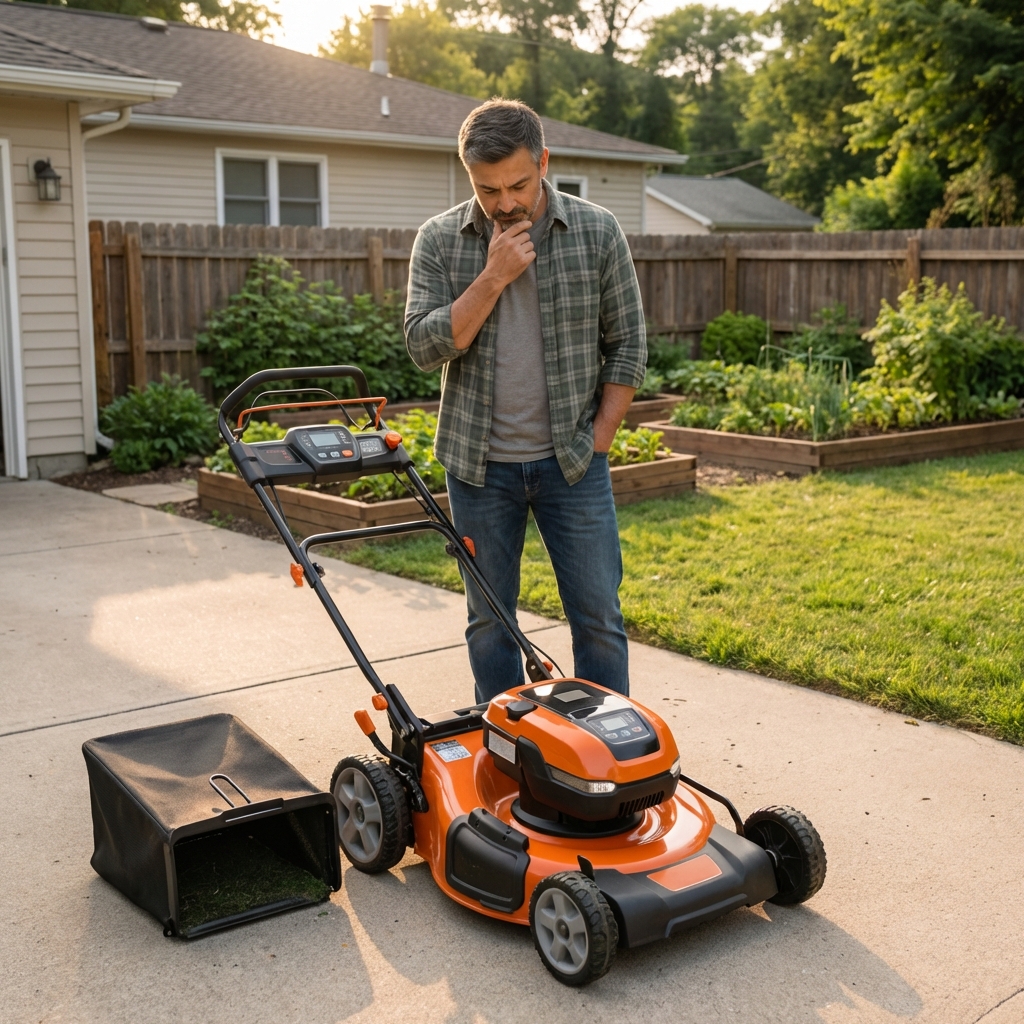
Safety first
- Disconnect power before touching the blade area. For battery models, remove the battery and any safety key (if equipped). For gas models, pull the spark plug boot off.
- Work outside or in a well-ventilated area. Gas fumes build up fast in garages.
- Let the engine cool before checking oil, removing covers, or touching the muffler.
Tools you might need
- Work gloves and a plastic scraper
- Spark plug socket and (optional) feeler gauge
- Clean rag and contact cleaner (battery terminals)
- Carb cleaner (gas models)
- Basic hand tools (screwdriver, nut driver)
- Optional: multimeter for battery and switch checks
Quick diagnosis
The symptoms point you toward the right section:
- Starts then dies in 1 to 5 seconds: often fuel delivery, choke position, dirty carb jet, or a safety interlock not fully engaged. On battery models, a loose key or start sequence issue is common.
- Runs for 30 to 90 seconds then quits: tank venting, ignition coil getting hot, battery protection, or restricted airflow.
- Runs until you hit thicker grass then stalls: blade obstruction, deck packed with wet clippings, dull blade, drive system dragging, or load-sensing cutting power.
- Only stays running with choke on: most often a dirty carburetor or an air leak, but it can also be restricted fuel flow (filter or line) or linkage issues.
Step 1: Easy checks
Confirm the handle bail and safety bar are fully engaged
Many smart mowers use a safety switch plus a sensor. If the bail is not pulled all the way, the mower can start then immediately shut down.
- Pull the bail firmly against the handle.
- Check for a loose or stretched bail cable on gas models.
- On battery models, listen for a relay click when you engage the bar. No click can mean the switch is not closing.
Battery models: check the safety key first
If your mower uses a removable safety key, make this your first stop. A loose or half-seated key can cause intermittent cutouts that look like a weak battery.
- Remove and reseat the key firmly.
- Inspect the key slot for grass or debris that keeps it from seating fully.
Check the grass bag or side discharge door
Some mowers have a bag or door interlock that can prevent operation if the bag is not seated or the rear door is not fully closed. On models without an interlock, a mis-seated bag usually affects cut quality more than running, but it can still add load in heavy grass.

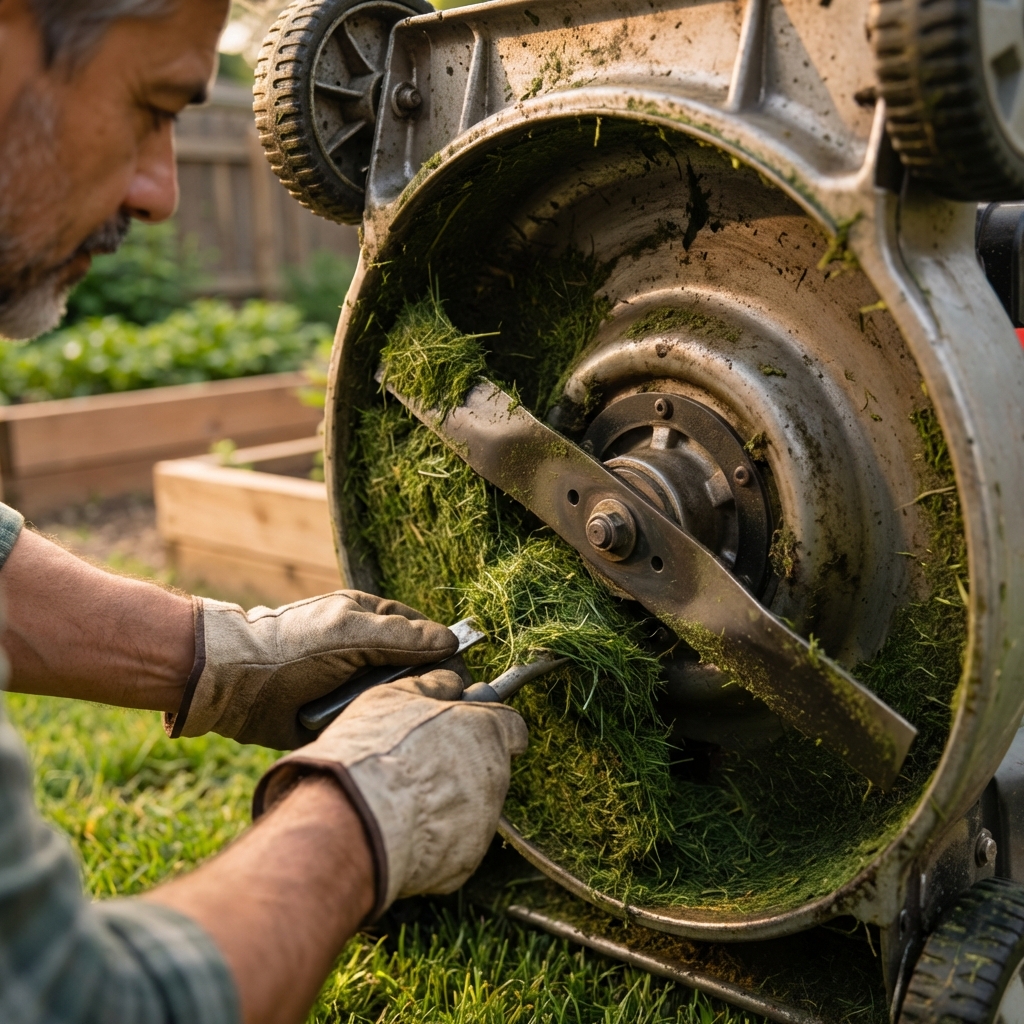
Look under the deck for packed clippings
Wet grass can pack tight and create drag that makes a smart mower cut power or stall.
- Tip the mower with the air filter and carburetor side up on gas models to reduce flooding risk.
- Scrape packed clippings with a plastic scraper.
- Make sure the blade spins freely by hand (battery removed or plug disconnected).
Step 2: Fuel issues (gas)
Old or contaminated gas
Untreated gas can start degrading in as little as 30 days, and ethanol blends can pull moisture into the system. Depending on storage conditions, problems often show up after 30 to 60 days.
- Drain the tank and refill with fresh fuel.
- If you store fuel, use a stabilizer and keep the container sealed.
- If the mower sat all winter with fuel in it, plan on a carb cleaning.
Fuel cap vent blocked
A clogged fuel cap vent can create a vacuum in the tank. The mower runs briefly, then starves for fuel.
- Wipe any spilled fuel first, then loosen the gas cap slightly and try to start the mower.
- If it stays running with the cap loosened, clean or replace the cap.
- Do not run long-term with a loose cap.
Clogged carburetor or main jet
If it only runs on choke, surges, or dies at idle, the carburetor is likely restricted.
- Try carb cleaner through the throat (air filter removed) as a short-term test.
- For a real fix, remove the carb bowl, clean the bowl nut jet and passages, and replace the bowl gasket if needed.
- If you are not comfortable opening the carb, a small engine shop can usually clean it quickly.
Sticky float or debris in the bowl
Debris can stick the float needle so fuel flow stops after start-up.
- Tap the carb bowl gently with a screwdriver handle and retry.
- If it improves, plan to clean the bowl and needle properly.
Clogged fuel line or fuel filter (if equipped)
Some walk-behind mowers have an inline fuel filter or a line that kinks when the handle is folded. Either can restrict fuel enough to cause a short run then stall.
- Look for pinched or cracked fuel line sections.
- Replace a dirty inline filter if your model has one.
Primer bulb issues (if equipped)
A cracked primer bulb or loose primer line can pull air instead of fuel, leading to hard starting and quick stalling.
- Press the primer and watch for wetness or fuel seepage.
- If the bulb is cracked or stays collapsed, replace it.
Step 3: Airflow problems
Dirty air filter
A clogged air filter chokes the engine and can cause stalling, especially under load.
- Foam filters: wash with warm soapy water, dry fully, then lightly oil if the manual calls for it.
- Paper filters: tap gently to remove dust or replace if dark and plugged.

Blocked cooling fins or intake screens
Some systems reduce power when temperatures climb. If the cooling intake is packed with chaff, the mower may shut down.
- Brush off debris around the engine shroud (gas) or motor vents (battery).
- Do not blast bearings or electronics with a hard pressure washer.
Step 4: Spark and ignition (gas)
Fouled or worn spark plug
A plug can spark fine cold, then fail under load or once hot.
- Remove and inspect the plug.
- If it is black and sooty, the engine has been running rich or the air filter is clogged.
- If it is wet with fuel, the engine may be flooded or not igniting consistently.
- Gap or replace the plug to the manufacturer spec.
Ignition coil failing when hot
If the mower runs for a few minutes and then dies, and it restarts only after cooling, a failing coil is a suspect.
- Test by checking for spark right after it dies (be careful and follow safe procedures).
- Coils are usually replaceable, but access varies by model.
Step 5: Oil level and tilt (gas)
Low oil protection (some models)
Some high-end walk-behind mowers have a low-oil sensor or low-oil shutdown. Many standard residential mowers do not. Either way, low oil can cause poor running and engine damage.
- Check the oil level on a flat surface.
- Top off with the recommended oil type.
- Do not overfill. Too much oil can also cause smoking and rough running.
Mower tipped the wrong way and flooded
If you recently tipped the mower for cleaning, oil or gas can move into the air filter or cylinder, causing stalling.
- Check the air filter for oil saturation and replace if needed.
- Let the mower sit upright for 30 minutes, then try again.
- If it is flooded, open the throttle, turn choke off, and pull-start several times to clear it (follow your manual).
Step 6: Battery and power (battery)
Follow the correct start sequence
Some mowers require a specific order, for example hold the bail, then press the start button, then keep holding the bail. If the order is off, it may start and cut out.
- Review the start steps printed on the mower or in the manual.
- If the mower has indicator LEDs, note any blink pattern or code.
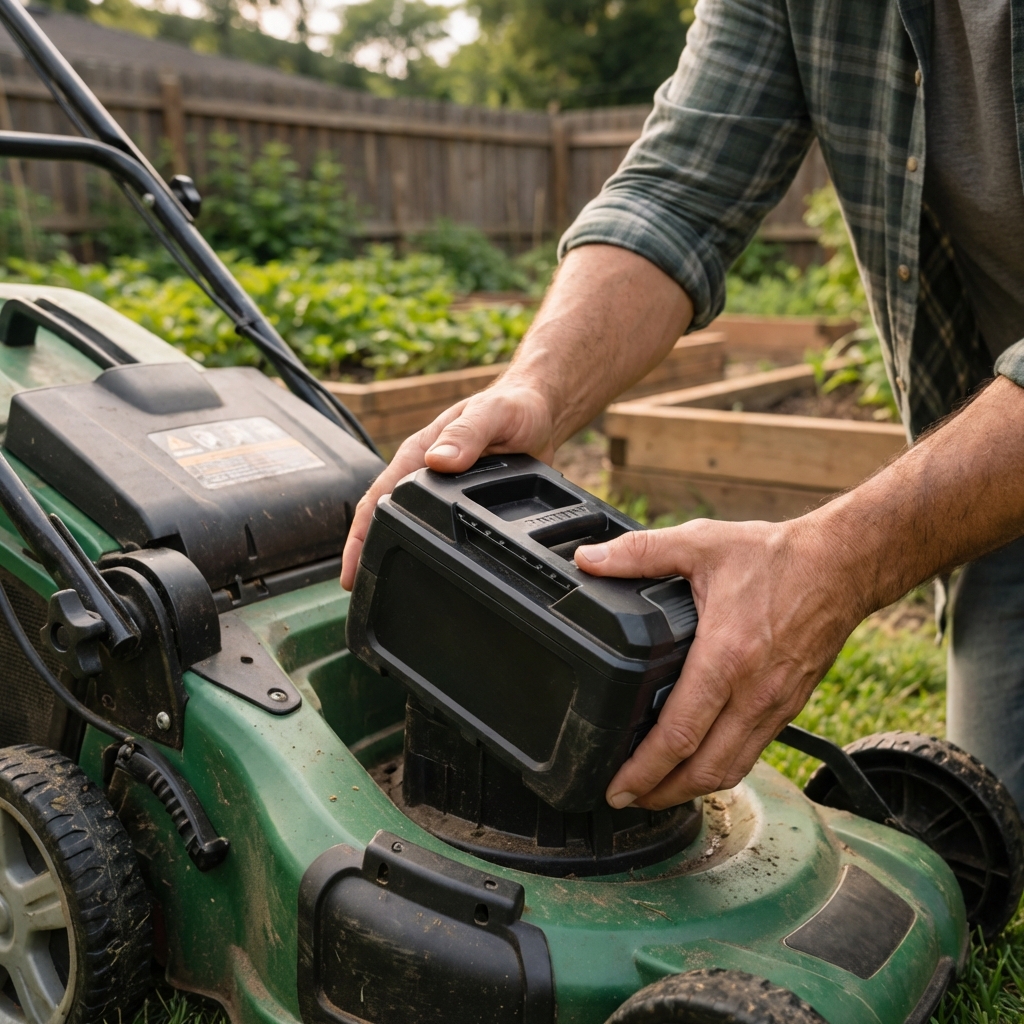
Battery not fully seated or contacts dirty
Battery mowers can start then cut out if the battery connection is intermittent.
- Remove the battery and reinstall firmly until it clicks or locks.
- Inspect contacts for grass juice corrosion or dirt.
- Wipe contacts with a dry cloth. If corrosion is present, use contact cleaner and let it dry completely.
Battery protection mode (overcurrent or overheating)
Smart battery packs often shut down to protect themselves if the current draw is high or the pack is hot.
- If it dies in thick grass, raise the cutting height and mow slower.
- Let the battery cool in the shade for 20 to 30 minutes.
- If the deck is packed underneath, clean it to reduce load (see Step 1).
Weak battery or failing cell
A battery can show “charged” but still sag under load, causing the mower to stop.
- Try a different known-good battery if you have one.
- Confirm you are using the correct battery model and charger for your mower platform.
- If the battery is older and runtime has dropped sharply, replacement may be the fix.
Key, fuse, or control issues
Some models use a removable key or fuse. A loose key can act like a stall.
- Remove and reseat the key.
- Check the fuse if your model has one and replace with the same rating.
Step 7: Smart features and shutdowns
Load sensing and power management
Many newer mowers adjust power based on load. If the mower senses excessive drag, it may reduce power or stop to protect the motor, belt, or battery.
- Clean the deck and sharpen or replace the blade.
- Avoid taking off more than one-third of the grass height in one pass.
- Mow when the lawn is dry if possible.
Safety sensors and interlocks
Some mowers have sensors for handle position, bag door position, or motor temperature.
- Check that doors and covers close fully.
- Inspect wiring near hinges and handle folds for pinched or broken wires.
App settings or firmware (models with connectivity)
Not common, but a firmware glitch or setting can cause odd behavior like stopping unexpectedly.
- Update the mower firmware in the app if available.
- Power cycle: remove battery, hold the start button (if present) for 10 seconds, then reinstall battery.
- If the mower shows an error code, look it up in your manual for the specific sensor or circuit involved.
If it stalls when you start mowing
If the mower idles but dies the moment the blade engages, focus on blade load and deck issues first (see Step 1 for deck cleaning).
- Blade adapter or shear pin: If damaged or partially slipped, it can bind and stall.
- Bent blade: Adds vibration and load, and can trip protection on battery models.
- Overly low cut height: Especially in spring growth, it can choke the mower.
- Self-propel drive dragging: A stuck drive cable or belt can add load. Try running with self-propel disengaged.
If you hit a rock or curb
A sudden impact can create a “starts then dies” problem, or a mower that runs rough and stalls under load.
- All mowers: Inspect the blade for bends or cracks and replace if damaged. Check that the blade spins freely (power disconnected).
- Gas mowers: A partially sheared flywheel key can throw off ignition timing. It often shows up after a hard hit. If you suspect this, a small engine shop can confirm and replace it.
- Battery mowers: A hard stop can trigger motor stall protection. Clean the deck, check for a wedged stick, and retry after a power cycle.
Simple tune-up checklist
If you want the highest success rate without chasing one symptom at a time, this is the order I would tackle a gas mower that will not stay running:
- Fresh fuel
- Clean or replace air filter
- New spark plug
- Check oil level
- Clean carb bowl and jet
- Check fuel line or filter (if equipped)
For battery mowers:
- Confirm safety key is fully seated (if equipped)
- Clean deck underside
- Fully charge and reseat battery
- Clean battery contacts
- Raise cutting height and reduce load
- Try a second battery (if possible)
When to call for service
It is time to bring it in or contact the manufacturer if:
- The mower is under warranty and you suspect a control board, sensor harness, or motor issue.
- You smell burning insulation or see melted wiring.
- The engine has low compression, metal noise, or will not turn freely by hand.
- Error codes keep returning after resets and basic checks.
Before you call, write down: model number, serial number, how long it runs before stalling, and whether it restarts immediately or only after cooling. That short list speeds up diagnosis a lot.
Quick FAQs
Why does my mower start then die right away?
Most often it is fuel delivery (old fuel, restricted carb jet, clogged fuel cap vent) or a safety bar or key that is not fully engaging. On battery models it can be a loose safety key, a battery that is not seated, or a protection shutdown under load.
Why will it run with the choke on but die when I open it?
That usually means the carburetor is not delivering enough fuel through the main circuit due to varnish or blockage. It can also be restricted fuel flow (filter or line) or an intake air leak. Cleaning the carb bowl and jet is the typical fix.
Can wet grass make a smart mower shut off?
Yes. Wet clippings increase drag and can pack under the deck. Battery mowers may shut down from overcurrent. Gas mowers may bog and stall if the deck is clogged.

Jose Brito
I’m Jose Britto, the writer behind The Country Store Farm Website. I share practical, down-to-earth gardening advice for home growers—whether you’re starting your first raised bed, troubleshooting pests, improving soil, or figuring out what to plant next. My focus is simple: clear tips you can actually use, realistic expectations, and methods that work in real backyards (not just in perfect conditions). If you like straightforward guidance and learning as you go, you’re in the right place.