Snake plants (Sansevieria, now classified as Dracaena trifasciata) are famous for surviving just about anything. That said, “surviving” is not the same as looking great. If you want strong, upright leaves, steady growth, and fewer mystery problems, the winning formula is simple: bright enough light, a pot that drains fast, and watering on the plant’s schedule, not yours.
This page focuses on organic solutions that work in normal homes: no harsh chemicals, no complicated routines, and no pretending your windows are a greenhouse.
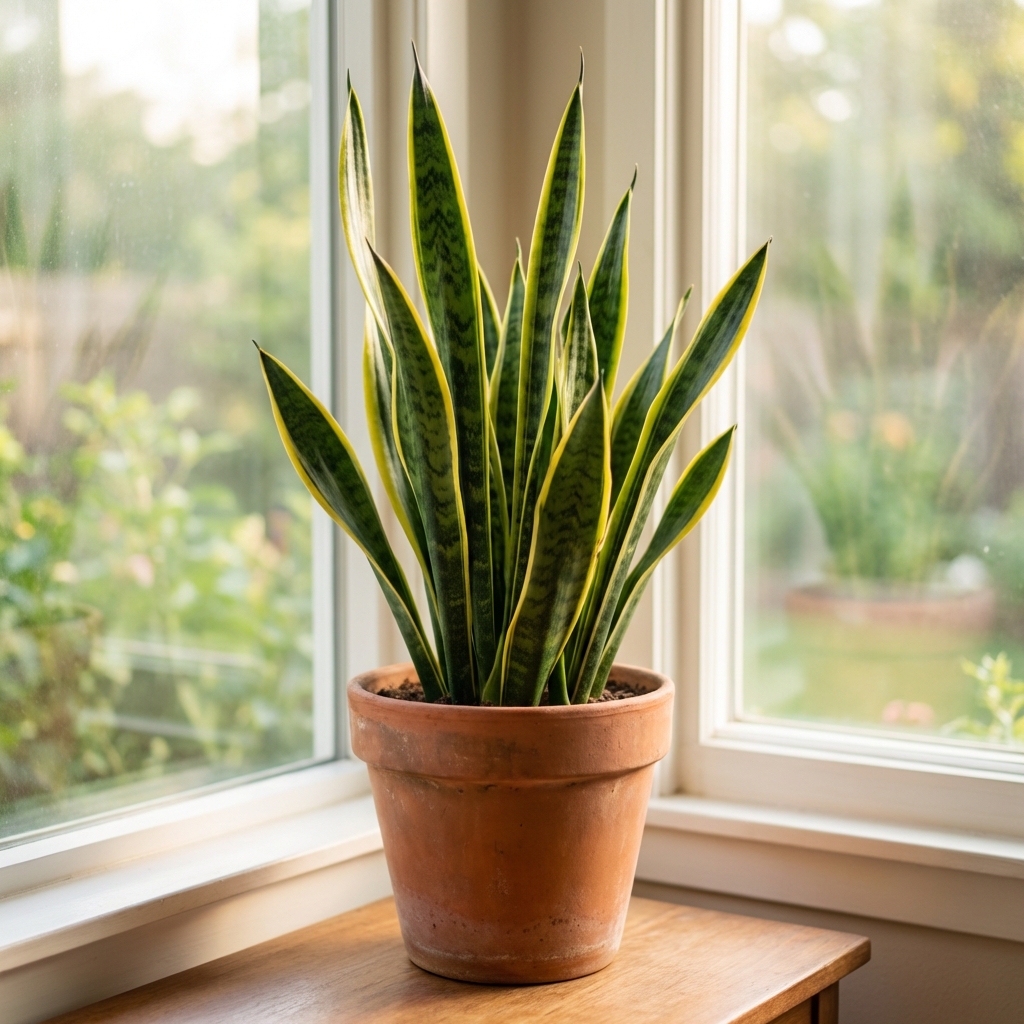
Quick care checklist
- Light: Bright, indirect is best, but it handles medium and lower light.
- Water: Soak fully, then let the soil dry out all the way. Err on the dry side.
- Soil: Fast draining, gritty mix. Avoid heavy potting soil by itself.
- Pot: Drainage hole required. Terra cotta helps prevent overwatering.
- Feeding: Light, seasonal feeding only. Too much fertilizer causes weak growth.
- Organic pest control: Alcohol wipe and insecticidal soap, plus better airflow and less soggy soil.
Light: the easiest way to level up growth
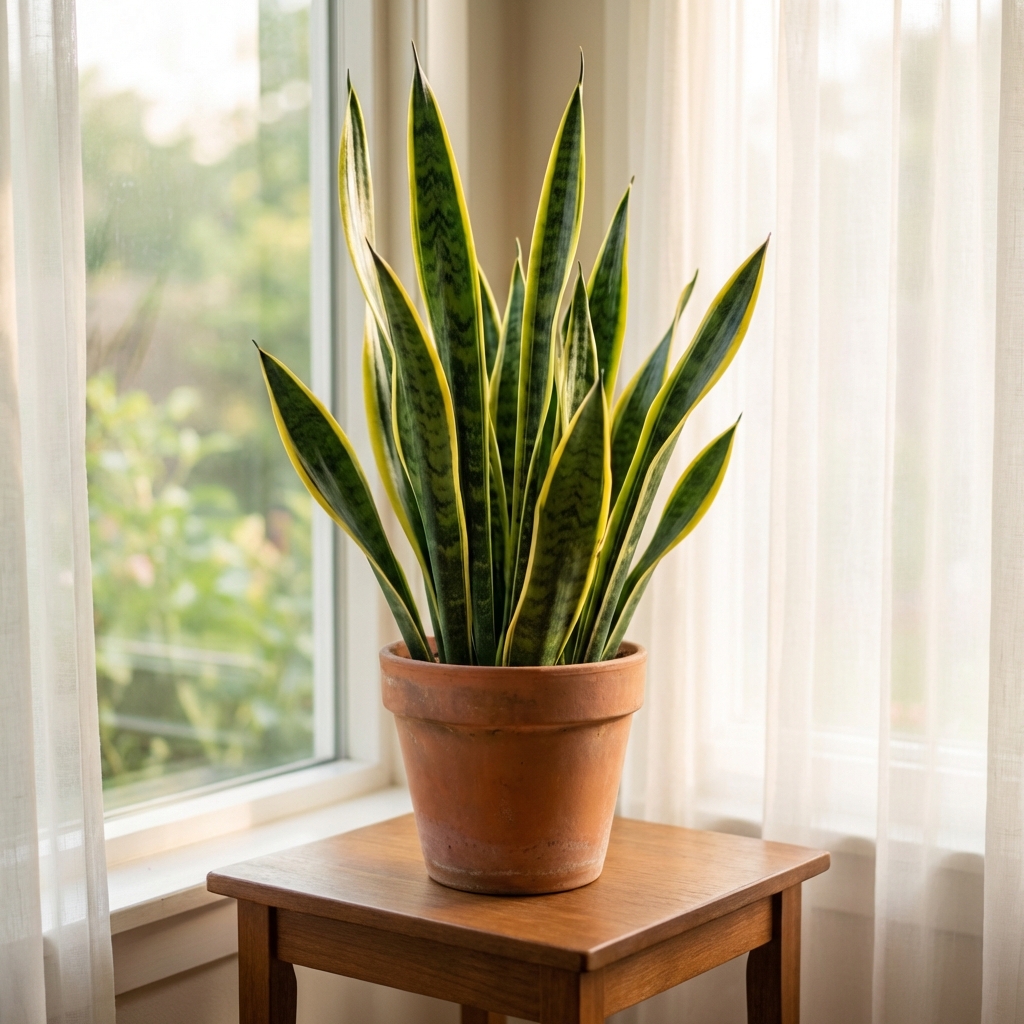
Snake plants tolerate low light, but they grow better and hold color better with bright, indirect light. Think a few feet back from a sunny window, or in a spot that gets strong daylight without harsh midday rays hitting the leaves for hours.
Signs your plant wants more light
- Leaves get long and skinny and start leaning.
- New growth is pale or slow.
- Variegated types lose contrast and look more green overall.
Organic fix
Move it closer to a window in small steps over 1 to 2 weeks. If you jump from a dim corner to full sun, you can scorch leaves. Slow is smooth.
Watering: the “less is more” rule
Most snake plant problems are watering problems, especially in winter. These are drought-tolerant plants with thick, water-storing leaves and rhizomes. They do not want frequent sips.
How to water (simple and reliable)
- Check dryness down the pot. A finger test works in small pots. For deeper pots, use a wooden skewer and see if it comes out clean and dry.
- When the pot is fully dry, water thoroughly until water runs out the drainage hole.
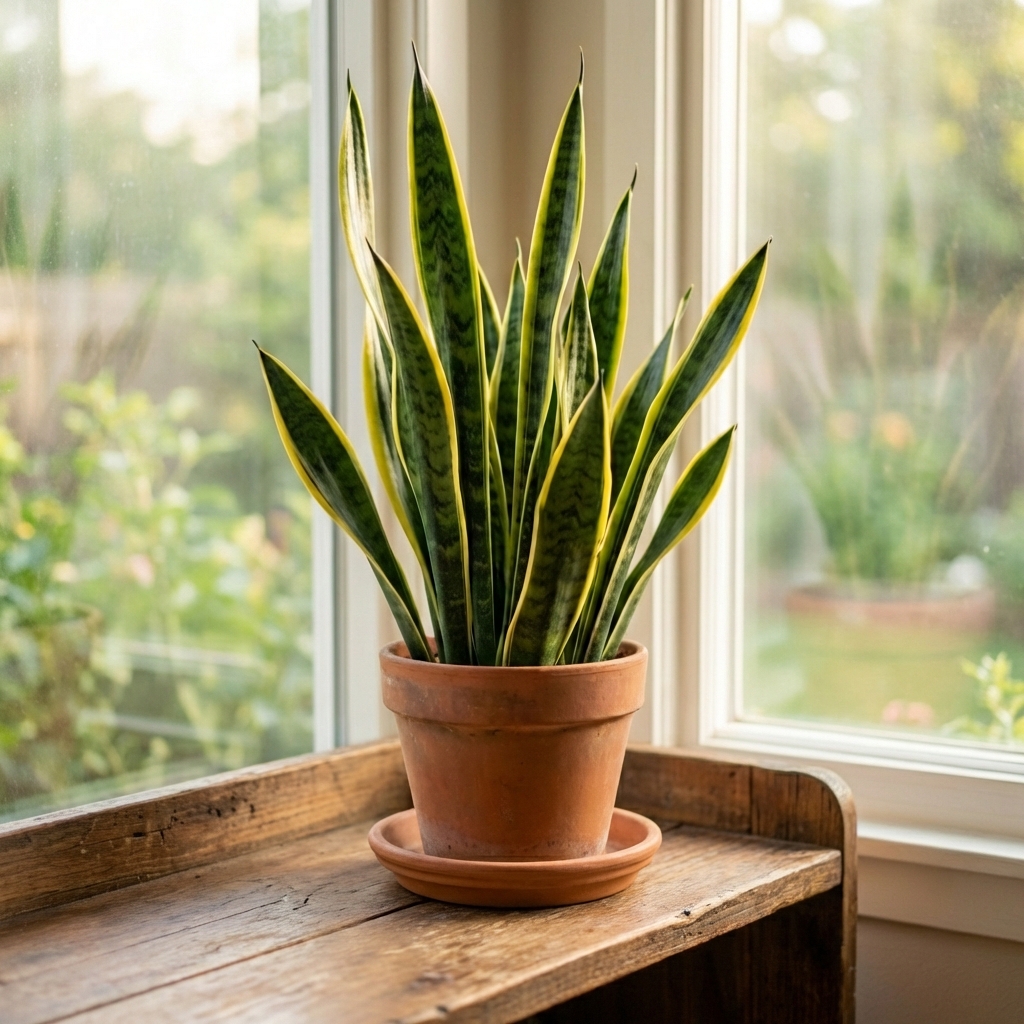
- Empty the saucer so the pot never sits in water.
How often is “normal”?
In many homes, snake plants are watered about every 2 to 6 weeks, depending on light, pot size, soil, and season. In winter, it is often closer to the longer end.
Organic habit that prevents root rot
Match watering to the season. When days get shorter and indoor temps drop, the plant uses less water. Keep your routine flexible instead of automatic.
Soil: an organic mix that drains fast
Snake plants want oxygen around their roots. Standard indoor potting mixes often hold water too long, especially in plastic pots.
A good organic soil blend
Use an organic potting soil as a base, then add grit for drainage. A practical mix:
- 2 parts organic potting soil
- 1 part pumice or perlite
- 1 part orchid bark or fine pine bark
This mix dries evenly, resists compaction, and helps prevent the soggy conditions that invite fungus gnats and rot.
Pot choice matters
- Terra cotta: Breathes and dries faster. Great if you tend to overwater.
- Plastic or glazed pots: Hold moisture longer. Fine, but soil and watering must be on point.
Organic feeding: gentle and seasonal
Snake plants are light feeders. Over-fertilizing leads to soft, weak growth and can burn roots, especially if the soil stays damp.
When to fertilize
- Feed in spring and summer when you see active growth.
- Skip feeding in fall and winter for most indoor conditions.
Organic fertilizer options
- Worm castings: Top-dress with a thin layer (about 1/4 inch) and water normally.
- Compost: Use sparingly indoors. A small top-dress is plenty and avoids smell.
- Liquid organic fertilizer: Dilute to half strength and apply once a month during active growth.
If your plant is in low light, reduce feeding even more. Low light plus fertilizer often equals stretched growth.
Cleaning leaves the organic way
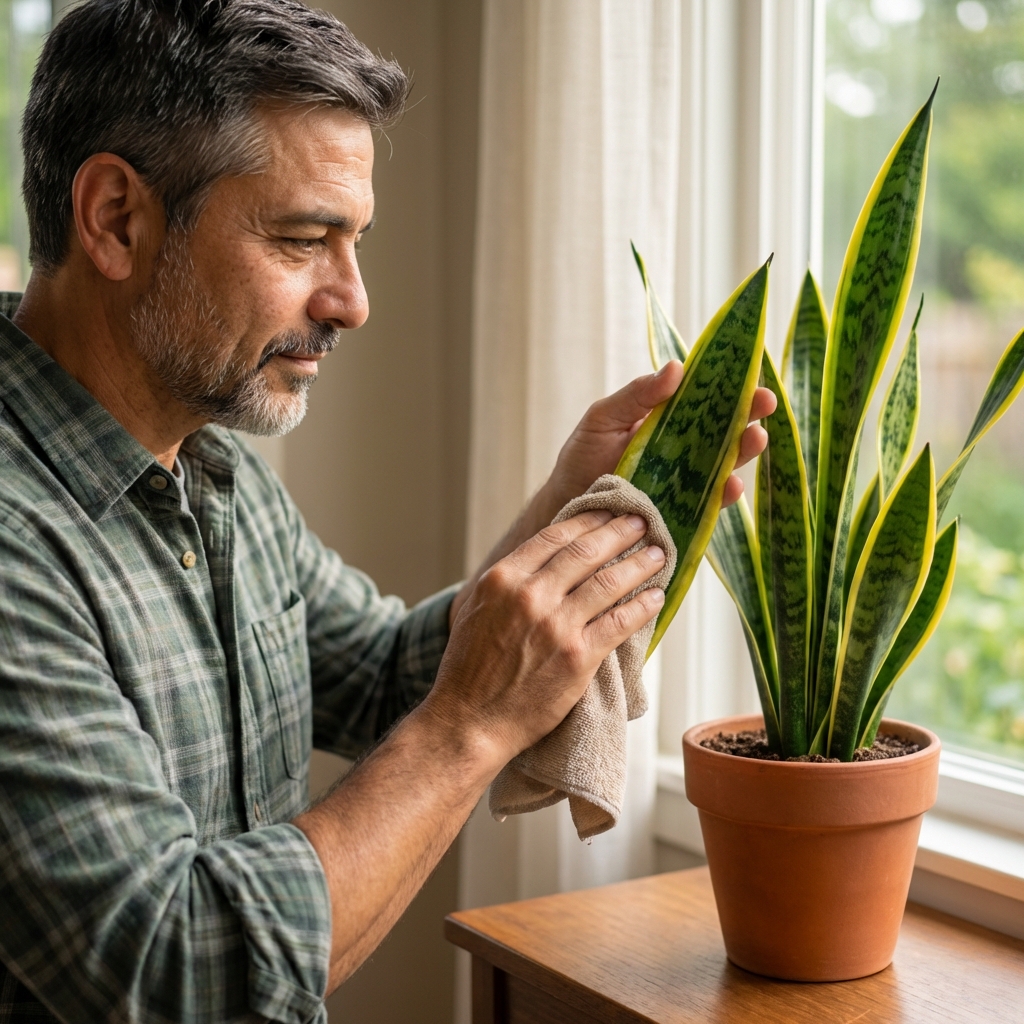
Dust blocks light and makes leaves look dull. Cleaning also helps you spot pests early.
Simple leaf cleaning routine
- Wipe leaves with a soft cloth dampened with plain water.
- For greasy buildup, add a tiny drop of mild castile soap to a bowl of water, then wipe again with plain water.
- Let leaves dry naturally.
Avoid leaf shine products. They can clog pores and attract more dust.
Organic pest control that actually works indoors
Snake plants are pretty tough, but they can still get pests, especially if the plant is stressed from low light and wet soil.
Most common pests
- Mealybugs: White cottony clusters in leaf joints.
- Spider mites: Fine webbing and speckled leaves, more common in dry air.
- Scale: Small brown bumps on leaves.
Step-by-step organic treatment
- Isolate the plant for a couple weeks.
- Physically remove pests: Dab mealybugs and scale with a cotton swab dipped in 70% isopropyl alcohol.
- Follow with insecticidal soap or a diluted castile soap spray. Spray tops and undersides of leaves. Do this in the evening or out of direct sun.
- Repeat weekly for 3 to 4 weeks. Eggs hatch in waves, so one treatment is rarely enough.
Neem oil note: Neem can work, but it can also leave residue and sometimes irritate leaves indoors. If you use it, dilute carefully and test on one leaf first.
Root rot: the most common “silent” problem
If a snake plant collapses at the base, smells funky, or has mushy roots, you are dealing with rot. The good news is you can often save it if you move fast.
Organic rescue plan
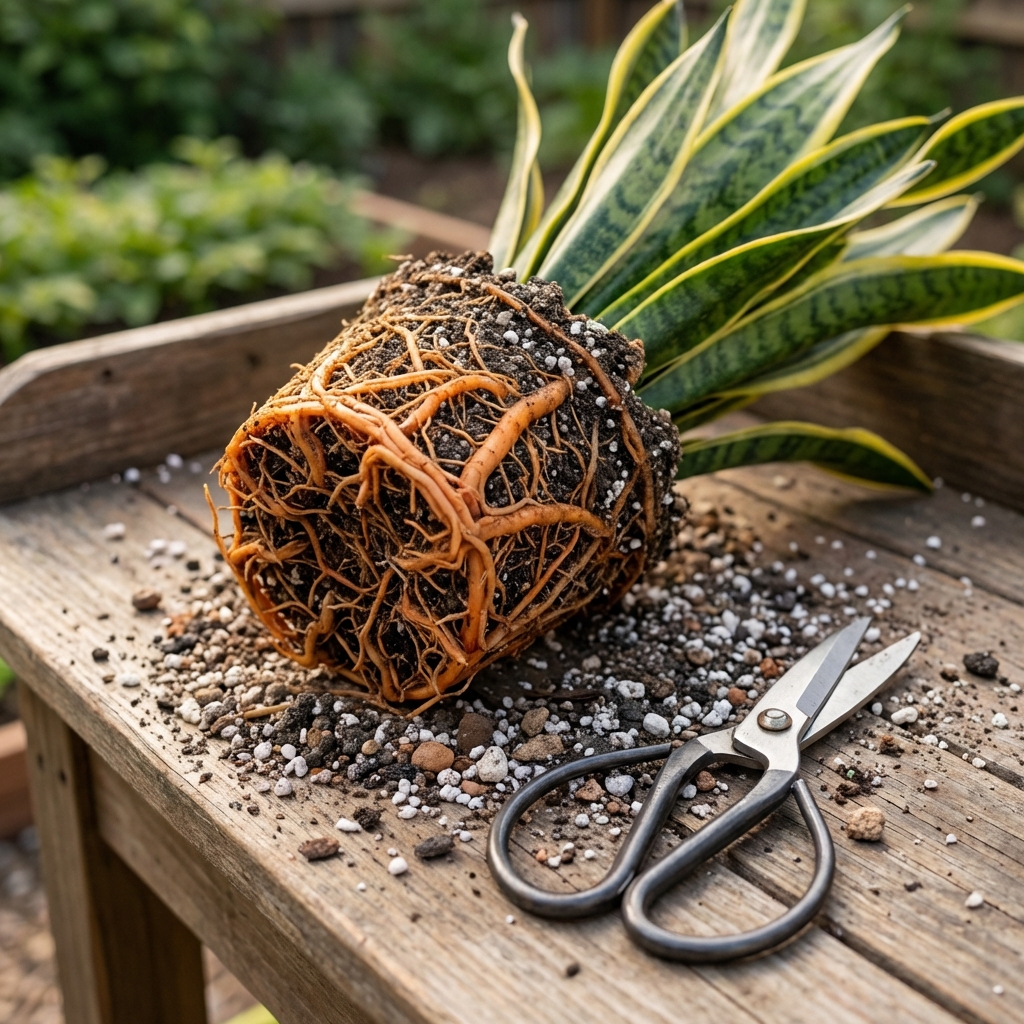
- Unpot the plant and remove all wet soil.
- Trim off mushy roots and any soft rhizome tissue with clean scissors.
- Let the plant air-dry for 24 to 48 hours in a shaded spot.
- Repot in a dry, gritty mix in a pot with a drainage hole.
- Wait about a week before watering, then water lightly.
If the base is too far gone, you can still propagate healthy leaf sections. Just know leaf cuttings from variegated varieties often revert to green.
Repotting and dividing, the low-stress way
Snake plants like being a little snug. Repot when roots circle heavily, the pot bulges, or the plant dries out extremely fast after watering.
When to repot
- Every 2 to 4 years is common.
- Best time is spring to early summer.
How to divide organically
Division is the fastest way to get new plants that match the parent. Cut the rhizome so each division has roots and at least one healthy growth point. Use a clean blade and let cuts dry for a day before potting.
Pet safety and placement
Snake plants are considered toxic to cats and dogs if chewed, usually causing drooling, vomiting, or stomach upset. The most practical solution is placement: a plant stand, a shelf, or a room pets do not access.
FAQ
Should I mist my snake plant?
No. Misting does not meaningfully raise humidity and can encourage leaf issues if water sits in tight leaf bases. Focus on good light and smart watering.
Why are my leaves wrinkled?
Wrinkling usually points to underwatering or roots that are not functioning well. Check the soil dryness and also inspect roots if watering has been frequent but the plant still looks thirsty.
Can snake plants handle low light?
Yes, but expect slower growth. If the plant starts leaning or stretching, it is asking for brighter light.
Bottom line
If you do three things, you will avoid most snake plant drama: use a fast-draining mix, water only when fully dry, and give it brighter light than a dark corner. Add gentle organic feeding in the growing season and simple leaf cleaning, and your snake plant will look like the “easy houseplant” it is supposed to be.

Jose Brito
I’m Jose Britto, the writer behind The Country Store Farm Website. I share practical, down-to-earth gardening advice for home growers—whether you’re starting your first raised bed, troubleshooting pests, improving soil, or figuring out what to plant next. My focus is simple: clear tips you can actually use, realistic expectations, and methods that work in real backyards (not just in perfect conditions). If you like straightforward guidance and learning as you go, you’re in the right place.