Stink bugs are one of those pests that feel personal. They show up when you least expect it, they love sunny windows, and if you squish them, they make sure you regret it.
The good news is you can get stink bugs under control without turning your home into a chemistry lab or losing half your tomato crop. The trick is using the right removal method (no crushing), then backing it up with a few prevention steps that actually work.
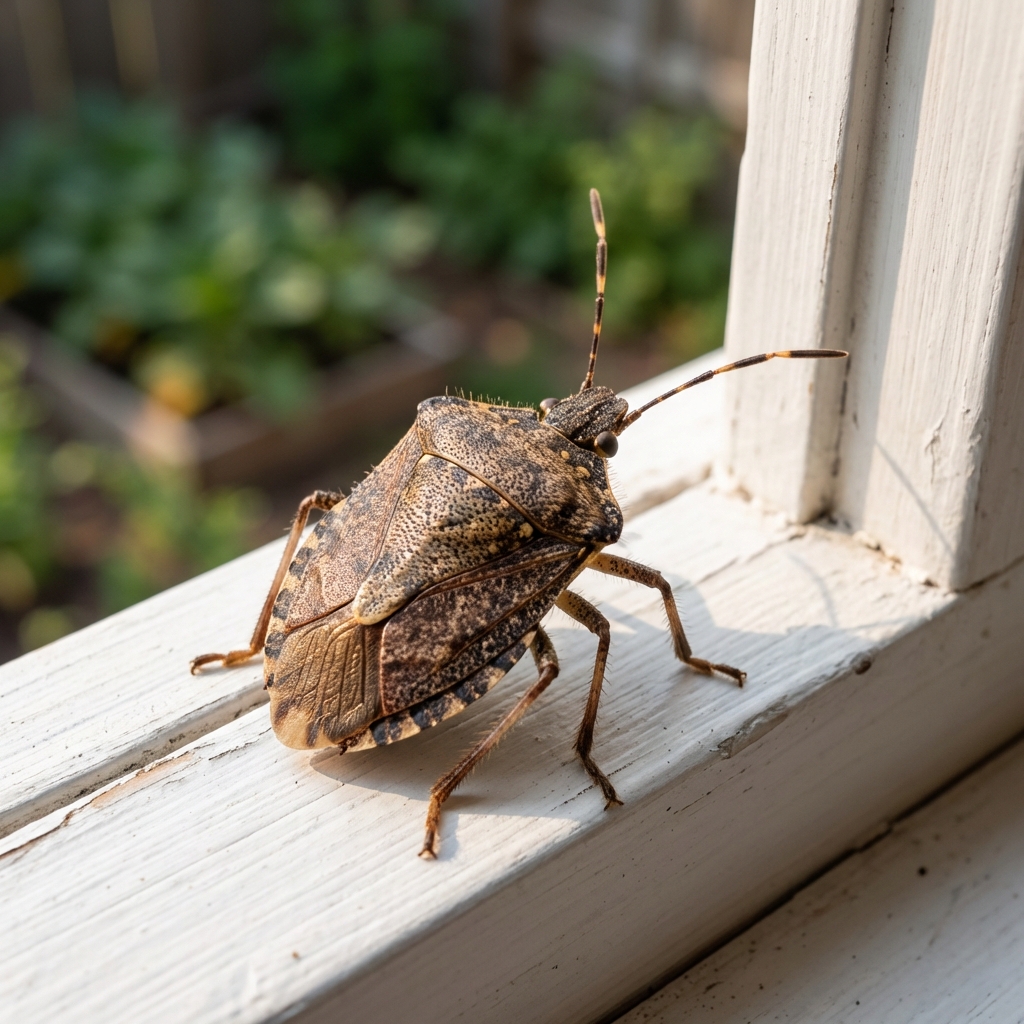
Know what you are dealing with
Most people are dealing with brown marmorated stink bugs. Adults are shield-shaped, about the size of a fingernail, mottled brown, and often have lighter bands on the antennae and along the edge of the abdomen.
Why this matters: stink bugs are tough, mobile, and not easily controlled by random spraying. Also, they are a nuisance indoors, but their real damage happens outdoors where they pierce fruits and veggies to feed.
Quick reality check: not every “stink bug” in the garden is a pest. Some stink bugs are predatory and helpful. Before you go to war, confirm you are seeing the pests on your plants (or their eggs), not just a lookalike passing through.
Quick signs of stink bugs in the garden
- Dimples and corky spots on tomatoes, peppers, peaches, apples, and beans.
- Deformed fruit or hard, pale areas under the skin.
- Clusters of barrel-shaped eggs on the underside of leaves.
- Nymphs (smaller, rounder juveniles) gathering on stems and fruit.
These symptoms are not exclusive to stink bugs. The best confirmation is spotting the bugs, nymphs, or egg clusters on the plant.
Do this first: remove stink bugs without making the smell worse
If you only take one tip from this page, make it this: do not crush stink bugs. Crushing triggers their foul defense odor and can stain surfaces.
Best indoor removal methods
- Vacuum and contain: Use a shop vac if you have one (even better if you can dedicate it to pests). If you use a regular vacuum, empty it immediately into a sealed bag outdoors. Some people add a small amount of soapy water to a shop vac canister to help kill them faster.
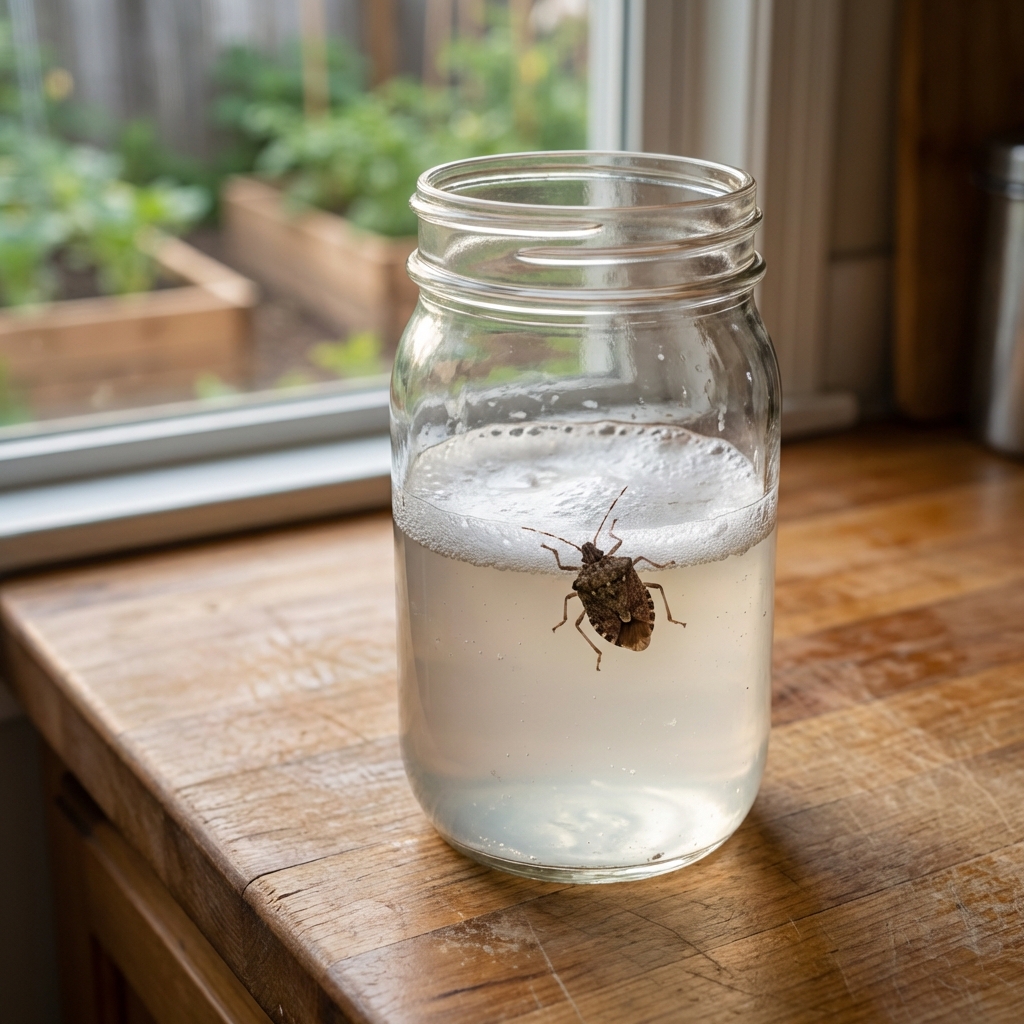
- Soapy water cup method: Fill a cup or jar with warm water plus a few drops of dish soap. Gently knock the stink bug into the container. The soap breaks the surface tension and they drown quickly.
- Tape pickup: If it’s on a wall or ceiling, use packing tape to lift it off and fold the tape over itself to trap it.
What to do if one releases odor
Ventilate the room. Wipe the area with warm soapy water, then follow with a 50/50 mix of water and white vinegar on hard surfaces if you want extra deodorizing help (test on a small spot first and avoid natural stone). Wash fabrics promptly.
What not to do indoors: skip foggers, bug bombs, and heavy indoor spraying. They are usually ineffective for stink bugs, and they can create unnecessary exposure in living spaces.
Stop them from getting inside
Indoor infestations are usually a fall problem. Stink bugs look for protected places to overwinter, then they wander around on warmer winter days. Most indoor sightings in winter and early spring are overwintering adults, not stink bugs breeding inside your home.
If you block the entry points, you cut the problem down dramatically.
Seal the obvious entry points
- Install or repair door sweeps and weatherstripping.
- Caulk cracks around window frames, siding joints, soffits, and fascia boards.
- Screen attic vents and bathroom fan vents with fine mesh.
- Replace torn window screens.
- Seal gaps where pipes and cables enter the house.
- Check bigger openings too: chimney caps, attic access points, and loose siding.
Light management helps more than you would think
Stink bugs are drawn to lights at night. If you see them clustering near doors and windows, switch exterior bulbs near entryways to warmer, yellow-toned bulbs and turn off exterior lights when you can. It is not magic, but it can reduce nighttime draw in many setups. Closing curtains in rooms where you see them collecting on windows can also help.
When to call a pro: If you are seeing large numbers daily, finding them in attic spaces, or cannot locate the entry points, a pest control pro or home energy auditor can help identify and seal the gaps that are easy to miss.

DIY traps that actually catch stink bugs
Traps will not eliminate an outdoor population by themselves, but they can help reduce indoor sightings and give you a sense of how active stink bugs are around your home.
Simple bottle trap
- Cut the top off a plastic bottle.
- Invert the top like a funnel and tape it in place.
- Add a little soapy water in the bottom.
- Place it near a sunny window where stink bugs gather.
Light trap (best used in a dark room)
In the evening, place a desk lamp aimed at a pan or tray filled with soapy water. In a dark room, stink bugs are attracted to the light and fall into the water.
Tip: Do not put the trap right next to your bed. The goal is to pull them away from living areas and catch them quietly.

Garden control: what works and what wastes time
Outdoors, stink bugs are hardest to control once you are in peak summer and the population is established. Think of control as a stack of small wins: scouting, physical removal, protecting plants, and targeted treatments.
1) Hand-pick early and often
In a backyard garden, this is surprisingly effective, especially early in the season and at the edges of the garden where they first show up.
- Go out in the early morning when bugs are sluggish.
- Knock adults and nymphs into a bucket of soapy water.
- Check undersides of leaves for egg clusters and scrape them off into the same bucket.
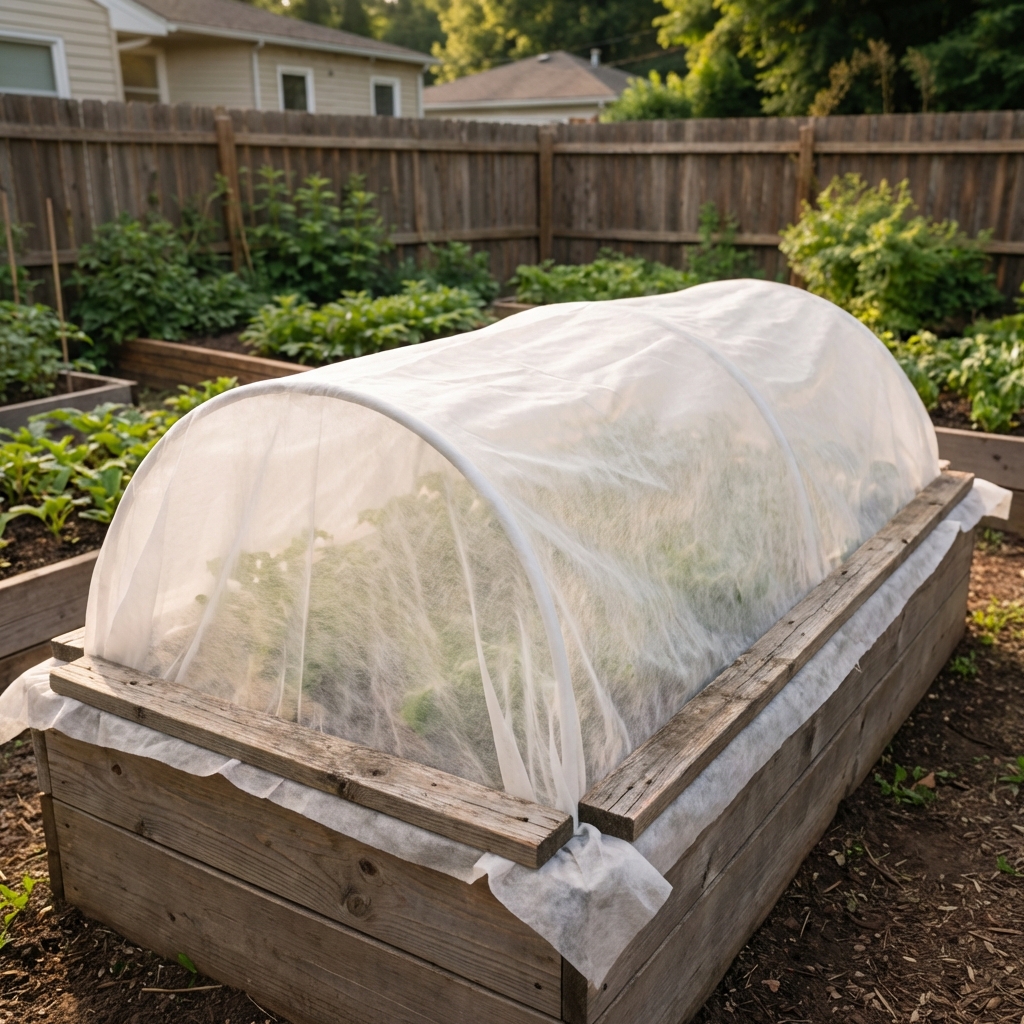
2) Use exclusion (row covers) the right way
Lightweight row covers can protect crops like peppers, eggplant, and beans, but only if you seal the edges well. Use landscape pins, boards, or soil to keep gaps from opening.
Important: Remove covers for crops that need pollination (like squash) during flowering, or hand-pollinate.
Sprays and treatments: safe options first
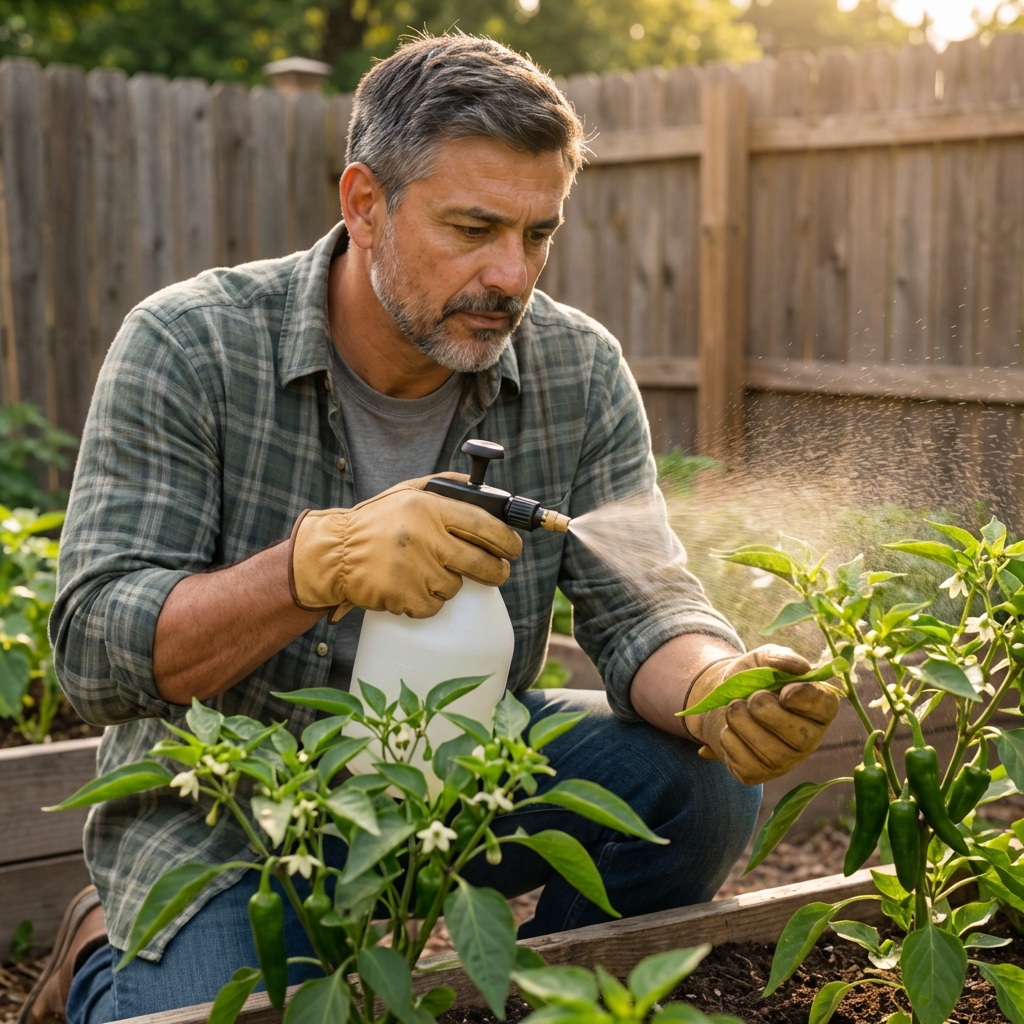
Stink bugs are not the easiest insect to knock down with sprays because they are mobile and their bodies are well protected. If you spray, aim for nymphs and use good coverage on stems and undersides of leaves. Always follow the product label for edible crops.
Soapy water spray (spot treatment)
A mild dish-soap solution can kill small nymphs on contact, but it can also stress plant leaves if overused.
- Mix roughly 1 teaspoon mild dish soap per 1 quart of water.
- Test on a few leaves first and check after 24 hours.
- Spray directly on the bugs, not as a routine whole-plant drench.
Insecticidal soap
This is a more plant-friendly option than DIY soap for repeated use. It works best on younger stages and requires direct contact.
Neem oil
Neem can reduce feeding and disrupt growth, especially in nymph stages, but results on stink bugs can be variable. Think of it as one tool in an IPM plan, not a guaranteed instant knockout. Apply in the evening to reduce risk to beneficial insects and avoid leaf burn.
Pyrethrin (use carefully)
Pyrethrin products can provide quicker knockdown, but they can also impact beneficial insects. If you go this route, spot treat and avoid spraying when bees are active.
What usually disappoints: spraying a random “all-purpose bug killer” once, at midday, and expecting it to solve the issue. Stink bug control takes repeat scouting plus targeted action.
Bring in the good guys: natural predators and realistic expectations
Beneficial insects and birds can help, but they rarely wipe stink bugs out completely in a home garden. Your goal is to keep damage low enough that you still harvest good produce.
Helpful allies
- Parasitic wasps (especially those that target stink bug eggs) can reduce populations over time.
- Spiders, praying mantises, assassin bugs and some birds will prey on nymphs and adults.
How to support beneficials
- Plant small-flowered herbs like dill, cilantro, alyssum, and fennel nearby.
- Avoid broad-spectrum insecticides whenever possible.
- Provide shallow water sources and habitat diversity.
Prevent stink bugs next season
Long-term stink bug control is mostly about making your yard and garden less welcoming and catching problems early.
Backyard prevention checklist
- Keep weeds down around the garden. Weedy borders are a common staging area.
- Harvest promptly. Overripe fruit attracts feeding.
- Rotate crops and clean up plant debris at the end of the season.
- Check plants weekly for eggs and nymph clusters, especially on the undersides of leaves.
- Use row cover early on the crops that get hit hardest in your yard.
Common questions
Why are stink bugs suddenly all over my windows?
They are attracted to warmth and light. Sunny windows are like a beacon, especially in fall and on warm winter days when they wake up and wander.
Will bleach or strong cleaners kill them?
It might, but it is overkill and can create fumes indoors. Use soap-and-water capture, vacuum removal, and sealing instead. It is safer and usually more effective.
Do stink bugs bite?
They are not considered dangerous to people and they do not typically bite, but they can poke with their mouthparts if handled roughly. The main issue indoors is nuisance and odor.
What if they keep coming back?
If you are removing them but not sealing entry points, you will keep seeing new ones. Focus on weatherstripping, door sweeps, and screening vents. In the garden, focus on early scouting and egg removal before populations build.
Quick action plan
- Inside today: remove with soapy water cup or vacuum, then empty and seal disposal outside.
- This week: seal gaps, repair screens, add door sweeps, and reduce outdoor lighting near entryways.
- In the garden: scout undersides of leaves, remove egg clusters, knock bugs into soapy water, and consider row cover for susceptible crops.
- When spraying: target nymphs and use insecticidal soap or neem with good coverage and repeat checks.
If you want, tell me what you are dealing with (indoors, outdoors, or both) and what crops you are growing. I can help you pick the simplest plan that fits your yard.

Jose Brito
I’m Jose Britto, the writer behind The Country Store Farm Website. I share practical, down-to-earth gardening advice for home growers—whether you’re starting your first raised bed, troubleshooting pests, improving soil, or figuring out what to plant next. My focus is simple: clear tips you can actually use, realistic expectations, and methods that work in real backyards (not just in perfect conditions). If you like straightforward guidance and learning as you go, you’re in the right place.