Bed bugs are one of those problems that can feel confusing fast, mostly because the signs are small and easy to misread. The good news is that bed bug identification is very visual. Once you know what a real bed bug looks like at each stage, plus the telltale traces they leave behind, you can stop guessing and start acting.
This page walks you through reliable bed bug images to look for, where to find them, and what to do if your inspection turns up evidence. No panic, just clear steps.
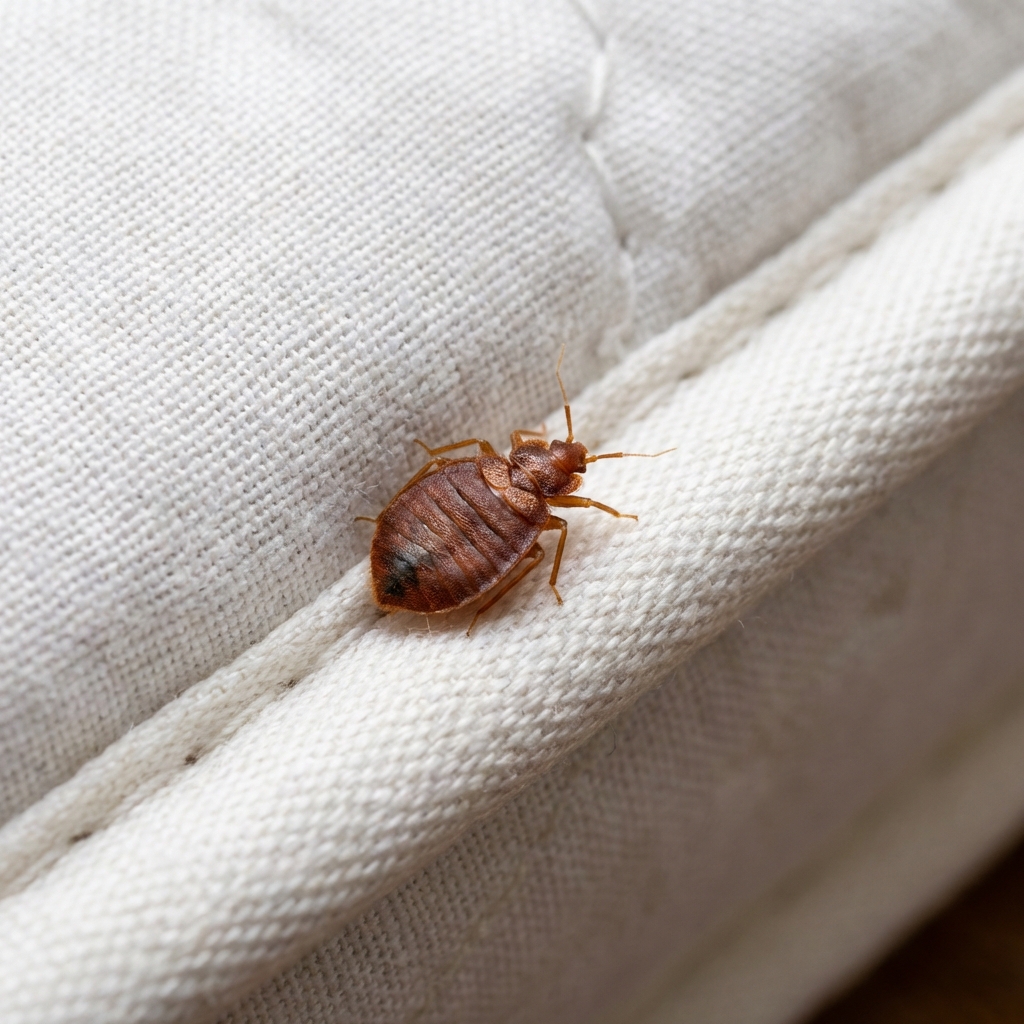
What bed bugs look like (adult, nymph, and fed)
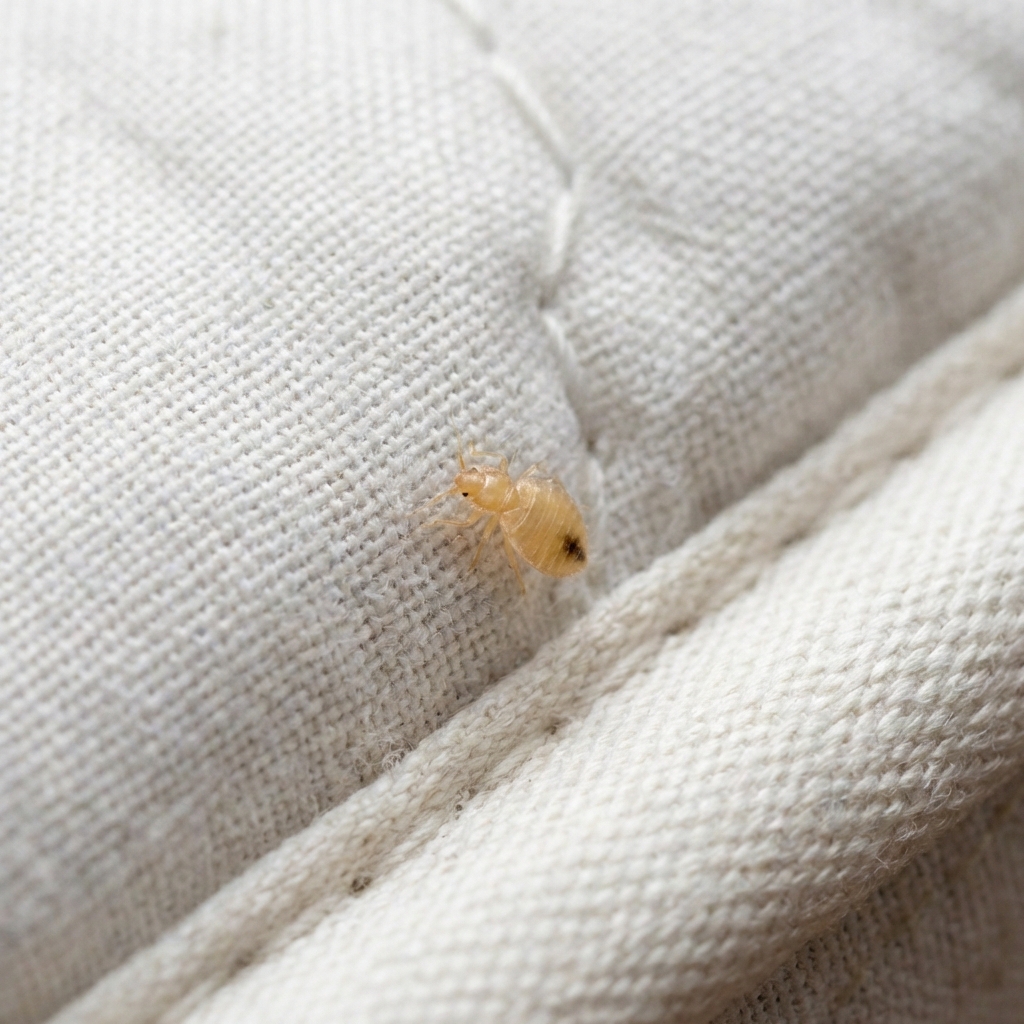
Bed bugs change appearance depending on age and whether they have recently fed. That is why one photo online can look “wrong” compared to what you see at home. Use these quick checkpoints when comparing images:
- Adult bed bugs: Flat, oval, and apple-seed sized, typically about 4 to 7 mm long. Color is usually reddish-brown.
- Nymphs (young bed bugs): Smaller and lighter, often pale or translucent. Early-stage nymphs can be about 1 to 4 mm and are easy to miss on light fabrics.
- Recently fed: More swollen and deeper red. Because nymphs are translucent, a fed nymph can look like a tiny moving red dot.
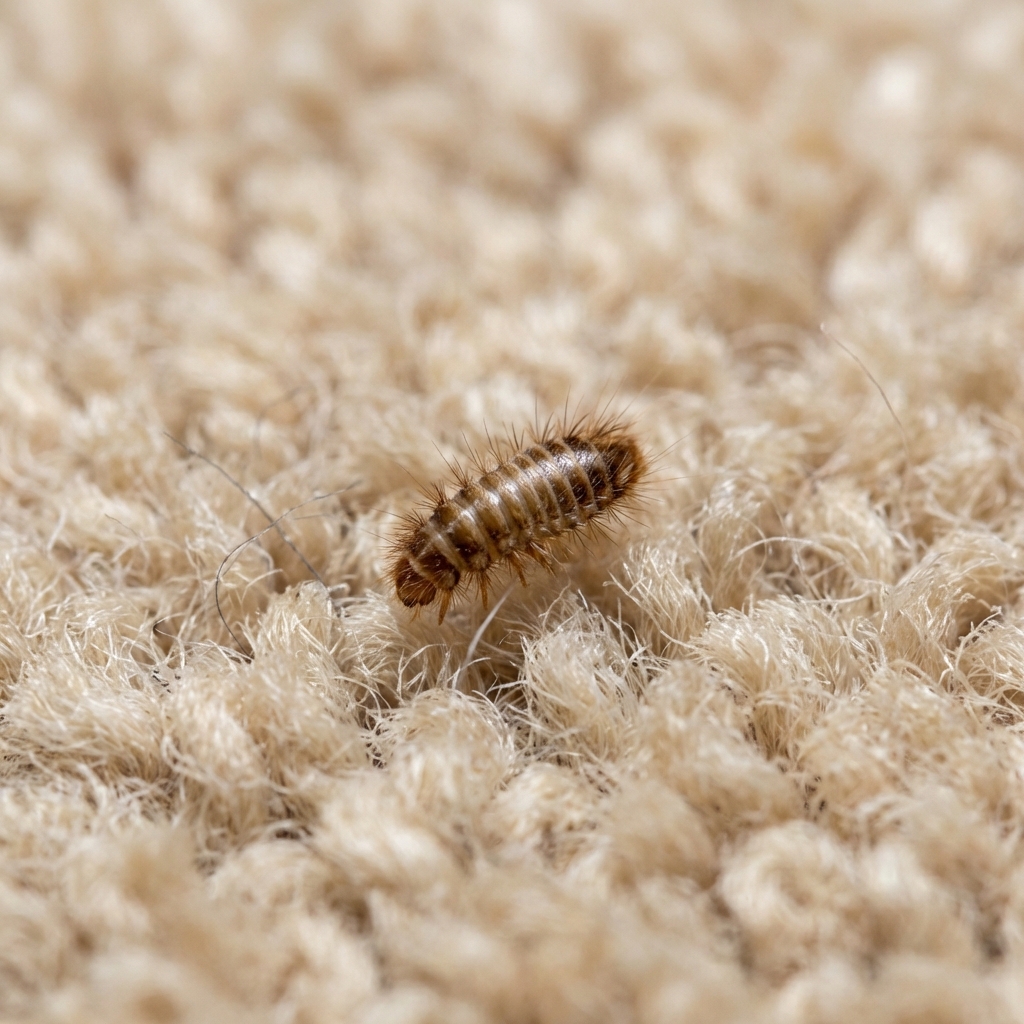
A key detail in reliable photos is the body shape. Bed bugs are broad and flat when unfed, not narrow-waisted like ants and not hairy like many carpet beetle larvae.
Next, focus on the evidence they leave behind. In many homes, that is what you will spot before you ever see a live bug.
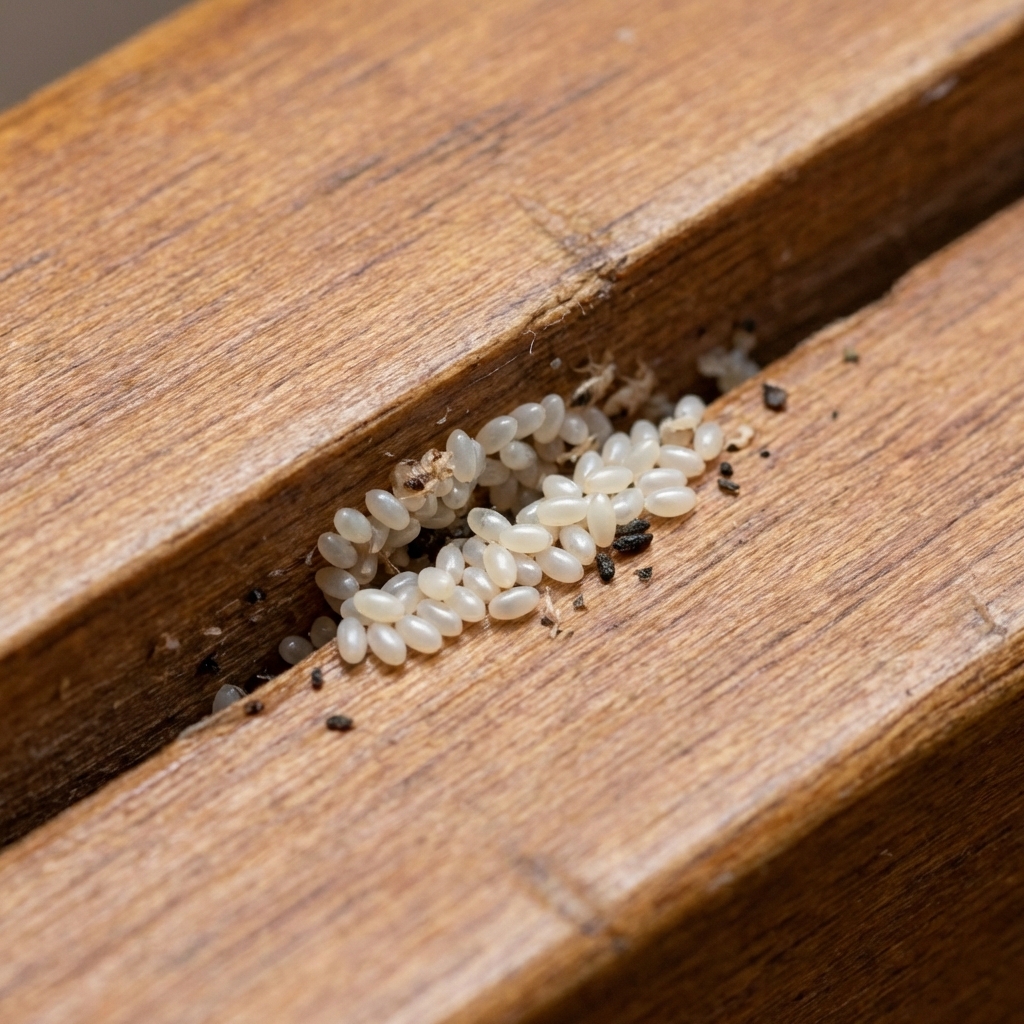
Bed bug eggs and shells (what you are really spotting)
Many people never see a live bed bug at first. What they see are eggs, shed skins, and clustered evidence in tight hiding spots.
- Eggs: Tiny, pearly white, and about 1 mm long. They are often cemented into cracks and seams.
- Shed skins: Light tan, papery “empty” shells from molting. These collect where bugs hide.
If you are comparing images, pay attention to scale. Eggs can look like grains of salt, but they are more oval and usually stuck in place rather than loose.
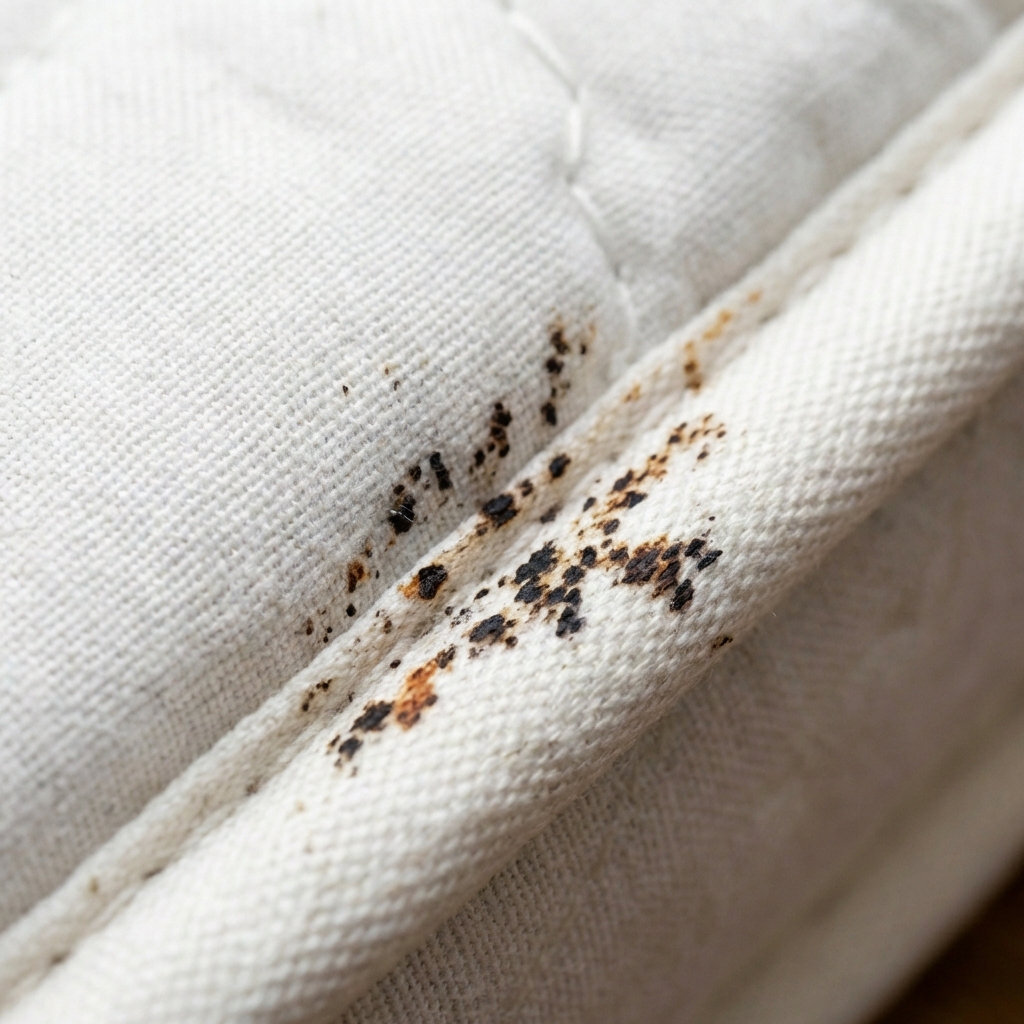
Bed bug stains: black spots, smears, and rusty marks
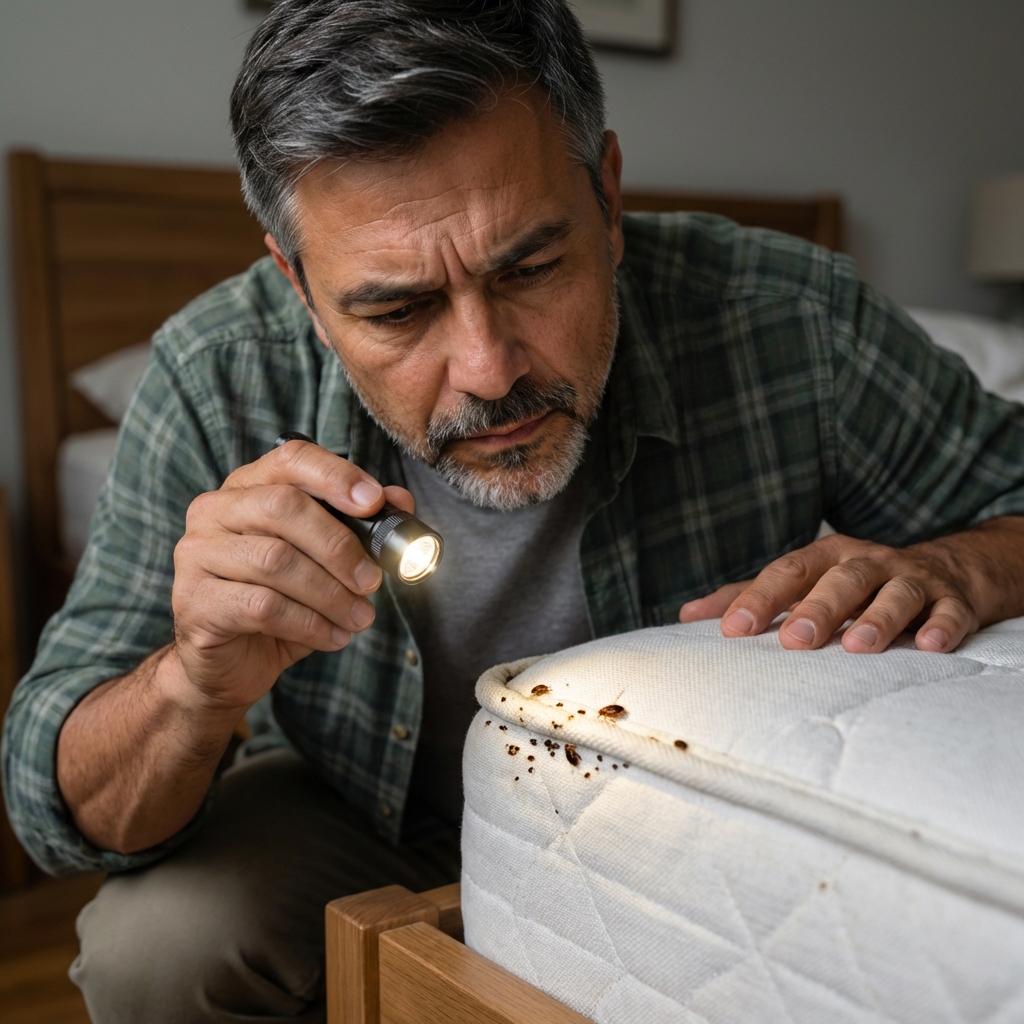
Stains can be one of the more reliable clues, especially on mattresses and sheets. Reliable images of bed bugs commonly show three stain types:
- Black dots: Fecal spots that look like ink dots from a marker tip. They often “bleed” into fabric slightly.
- Dark smears: When those spots get wet or rubbed, they can smear.
- Rusty or reddish spots: Sometimes from crushed bugs or small blood spots on sheets.
Not every dark dot is bed bugs. Mold can look similar, but bed bug spots tend to cluster near seams, tufts, and cracks close to where you sleep or sit.
Where to look first (the 10-minute inspection)
If you want answers quickly, do a focused search in the places bed bugs prefer. Bring a bright flashlight and something thin like an old credit card to gently open seams and cracks.
Start here
- Mattress seams and piping: Especially around corners and tags.
- Box spring edges: Under the fabric “dust cover” and along the wooden frame.
- Headboard and bed frame joints: Screw holes, cracks, and any tight gaps.
Then check nearby
- Nightstand joints and drawer corners
- Baseboards and carpet edges near the bed
- Picture frames and wall decor near the bed
- Wall outlets and switch plates close to the head of the bed
- Curtain hems, couch seams, and recliner folds if bites happen in the living room
Bed bugs vs look-alikes
A lot of “bed bug” photos online are actually other insects. Here are the mix-ups I see most often, and the visual detail that helps you rule them out.
- Carpet beetle larvae: Usually fuzzy or bristly and carrot-shaped. Bed bugs are smooth and flat.
- Fleas: Narrower, laterally flattened, and they jump. Bed bugs do not jump.
- Ticks: Ticks are arachnids with 8 legs (adults), while bed bugs are insects with 6 legs. Ticks also tend to look rounder, with legs more obviously splayed outward.
- Roach nymphs: Often more cylindrical, with longer antennae and faster movement.
If the insect in your photo has hairs, a narrow waist, or clearly jumps, it is probably not a bed bug.
What about bites?
It is tempting to diagnose bed bugs from skin alone, but bites vary a lot from person to person. Some people do not react at all. Others get itchy welts that look like mosquito bites.
Patterns can be suggestive, not definitive:
- Clusters or lines of bites after sleeping can be a clue.
- Bites that show up after sitting on a specific couch can be a clue.
- But bites alone cannot confirm bed bugs without physical signs like spots, shells, or a bug.
If you have bites but no evidence, keep inspecting and consider interceptors under bed legs to see if anything gets trapped.
If you think you found bed bugs: what to do next
Once you have a suspicious insect or clear signs, your goal is to confirm and contain. Avoid the most common mistake: moving items from room to room and accidentally spreading them.
Do this first
- Capture a sample: Use clear tape or a sealed bag. Take a sharp photo next to a coin for size.
- Reduce clutter: Fewer hiding spots makes treatment easier.
- Bag soft items: Seal bedding and clothes before moving them to the washer and dryer.
- Heat dry: A hot dryer cycle is one of the most reliable tools for fabrics. When fabric allows, wash hot, but prioritize the dryer on high heat and follow garment care labels. If you are unsure, the dryer step matters more than the wash temperature.
- Consider encasements: A quality mattress and box spring encasement can trap bugs inside and make future inspections easier.
Be careful with these
- Foggers: They can disperse bed bugs into new areas and rarely solve the issue.
- Random sprays: Repellent over-the-counter sprays, including some pyrethroid products used incorrectly, can push bugs into deeper hiding spots and make them harder to track.
If you can, contact a licensed pest professional for confirmation and a treatment plan. In some areas, a local extension office or entomology lab can also help confirm an ID from a clear photo or sample. A good pro will talk inspection, monitoring, and follow-up, not just one quick spray.
How to use bed bug images accurately
When you are comparing what you found to images online, use sources that show real photographs and multiple angles. A single blurry image can lead you in the wrong direction.
- Look for photos that show bed bugs on mattresses, seams, wood cracks, and fabric folds.
- Confirm with more than one sign: a bug plus spots, or shells plus eggs.
- Use a flashlight and inspect the exact edges and joints shown in reliable photos.
If you want the quickest confidence boost, focus on mattress seams, box spring corners, and headboard cracks. Those are the high-percentage locations in most homes.
Quick checklist
- Live bug with flat oval body and reddish-brown color (adults often 4 to 7 mm)
- Tiny white eggs cemented in a crack or seam (about 1 mm)
- Light tan shed skins clustered in hiding spots
- Black ink-like dots along seams, corners, or wood joints
- Evidence concentrated near sleeping or sitting areas
If you have two or more items from this list in the same area, it is time to treat the situation as a likely bed bug problem and move toward confirmation and control.

Jose Brito
I’m Jose Britto, the writer behind The Country Store Farm Website. I share practical, down-to-earth gardening advice for home growers—whether you’re starting your first raised bed, troubleshooting pests, improving soil, or figuring out what to plant next. My focus is simple: clear tips you can actually use, realistic expectations, and methods that work in real backyards (not just in perfect conditions). If you like straightforward guidance and learning as you go, you’re in the right place.