Celery seems simple until you bring home a bunch that turns rubbery in three days or tastes bitter in your soup. The good news is that celery is one of the easiest vegetables to shop for and store well once you know what to look for. Below is the same advice I give friends and neighbors: quick checks at the store, a couple of storage methods that work in real kitchens, and a few tricks to use the whole bunch.
How to pick celery you will actually enjoy
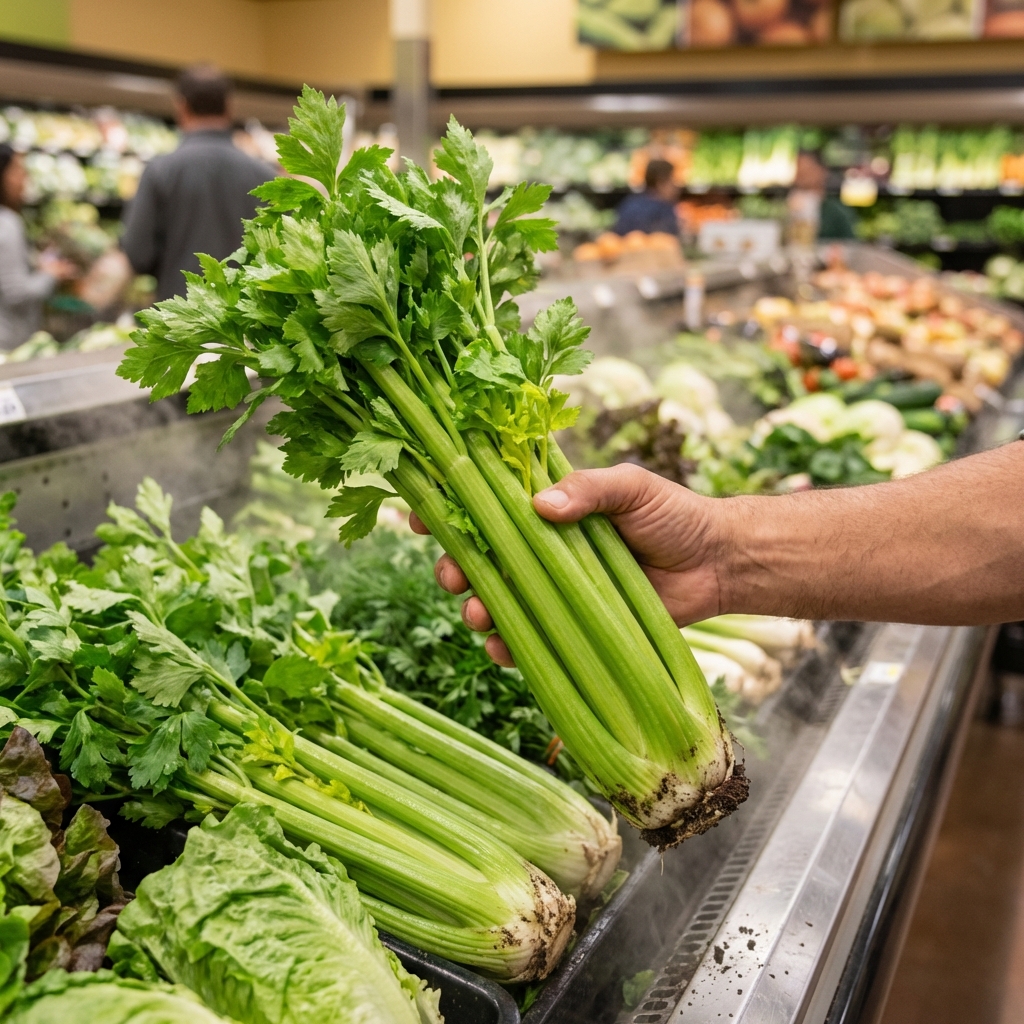
When you are staring at a wall of celery, focus on freshness first, size second. Bigger is not always better if it is old or dried out.
Look for these signs of fresh celery
- Firm stalks that snap: Give a stalk a gentle bend. It should feel stiff and crisp, not bendy.
- Tight, upright bunch: Loose, splayed stalks often mean the bunch has been sitting longer.
- Clean base: The cut end should look moist and pale, not brown, cracked, or dried like cork.
- Healthy leaves: Leaves can be green to yellow-green, but avoid slimy, blackened, or strongly wilted leaves.
- Even color: Light green is normal, but avoid lots of brown spotting or dark bruises along the ribs.
When to choose darker vs lighter celery
Darker, thicker stalks tend to be stronger flavored and can be a little more fibrous. They are great for stocks, braises, and long simmers.
Lighter, more tender hearts are usually milder and better for salads, snacking, and quick sautés.
Common store mistakes
A lot of celery waste happens before you even get home.
- Buying a wet bunch in a sealed bag: Moisture trapped in plastic can speed up rot. If the bag is fogged up or there is pooled water, pick another bunch.
- Choosing celery with a dried base: A dry cut end can make it harder for the bunch to hold onto moisture, and the stalks can start drying out fast.
- Ignoring smell: Fresh celery smells clean and green. Sour or musty odors usually mean it is breaking down.
Two great ways to store celery
Celery stays crisp when it has steady moisture, is protected from drying fridge air, and is not trapped in a swampy, closed-up environment. Pick one method based on your fridge space and how quickly you will use it.
One more small thing that helps: If you can, store celery away from high-ethylene produce like apples, pears, avocados, and bananas. It can slow down wilting and off flavors.
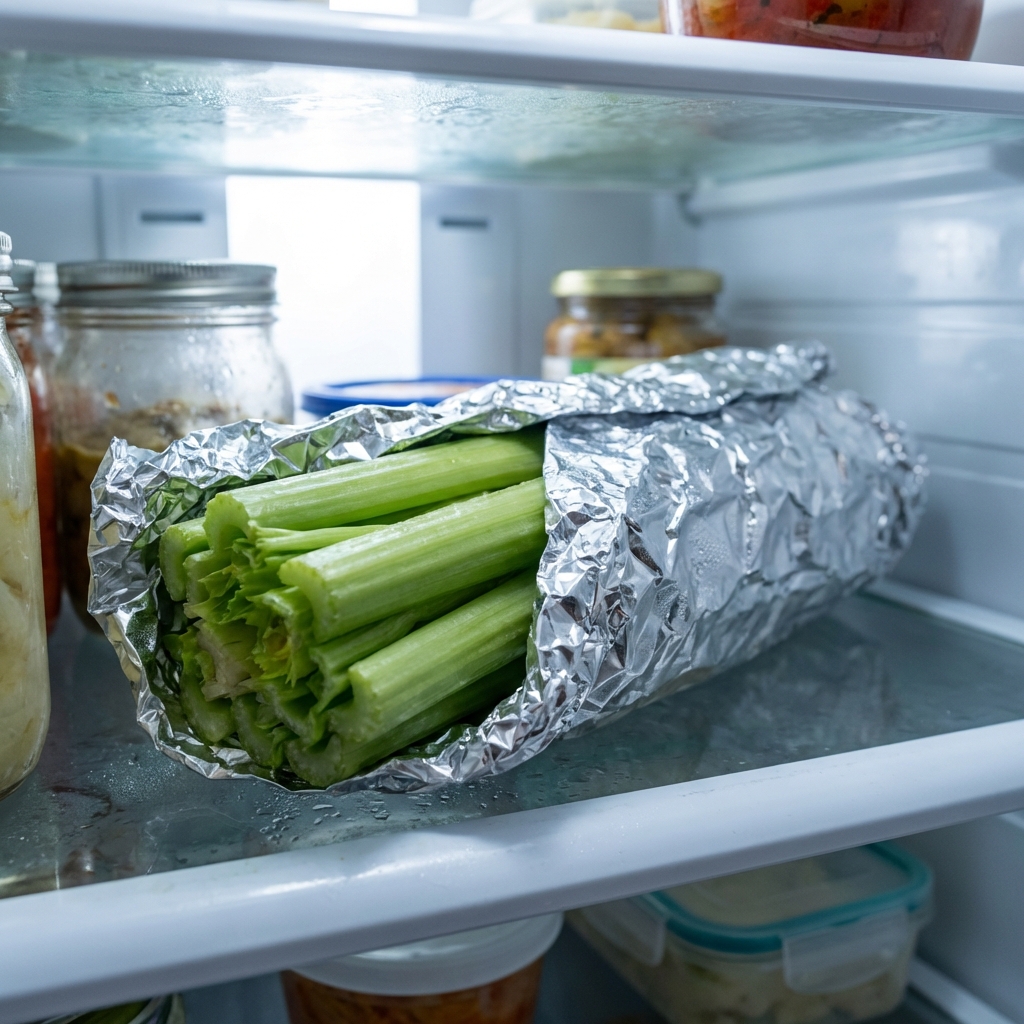
Method 1: Foil wrap for long crispness
This is my go-to because it keeps celery crunchy without getting slimy.
- Do not wash the whole bunch right away. Extra water can shorten storage.
- Wrap the bunch snugly and fully in aluminum foil, including the ends. Press it close to the ribs so it holds in moisture. The foil will still let gases escape through tiny gaps and folds.
- Store in the crisper drawer.
What to expect: Often 1 to 3+ weeks of good crunch, and up to about 2 to 4 weeks in a very cold, well-humidified crisper, depending on how fresh it was when you bought it.
Method 2: Ready-to-eat sticks (two options)
If you want ready-to-grab celery sticks, you have two reliable approaches. Choose based on how fast you will snack through them.
Option A: Container with a barely damp towel
- Wash and dry the stalks well.
- Cut into sticks.
- Store in an airtight container with a barely damp paper towel to control moisture.
What to expect: Typically 7 to 14 days of good crunch. Swap the towel if it starts to feel wet.
Option B: Sticks stored in water for max crunch
- Wash, trim, and cut into sticks.
- Store in a container and fully submerge the sticks in cold water.
- Cover and refrigerate. Change the water every 1 to 2 days and keep everything very clean.
What to expect: Very crisp celery for a shorter window, usually 3 to 7 days, depending on water changes and fridge temperature. If the water turns cloudy, smells off, or the celery gets slippery, toss it.
How to revive limp celery
If your celery is floppy but not slimy or smelly, it is usually just dehydrated.
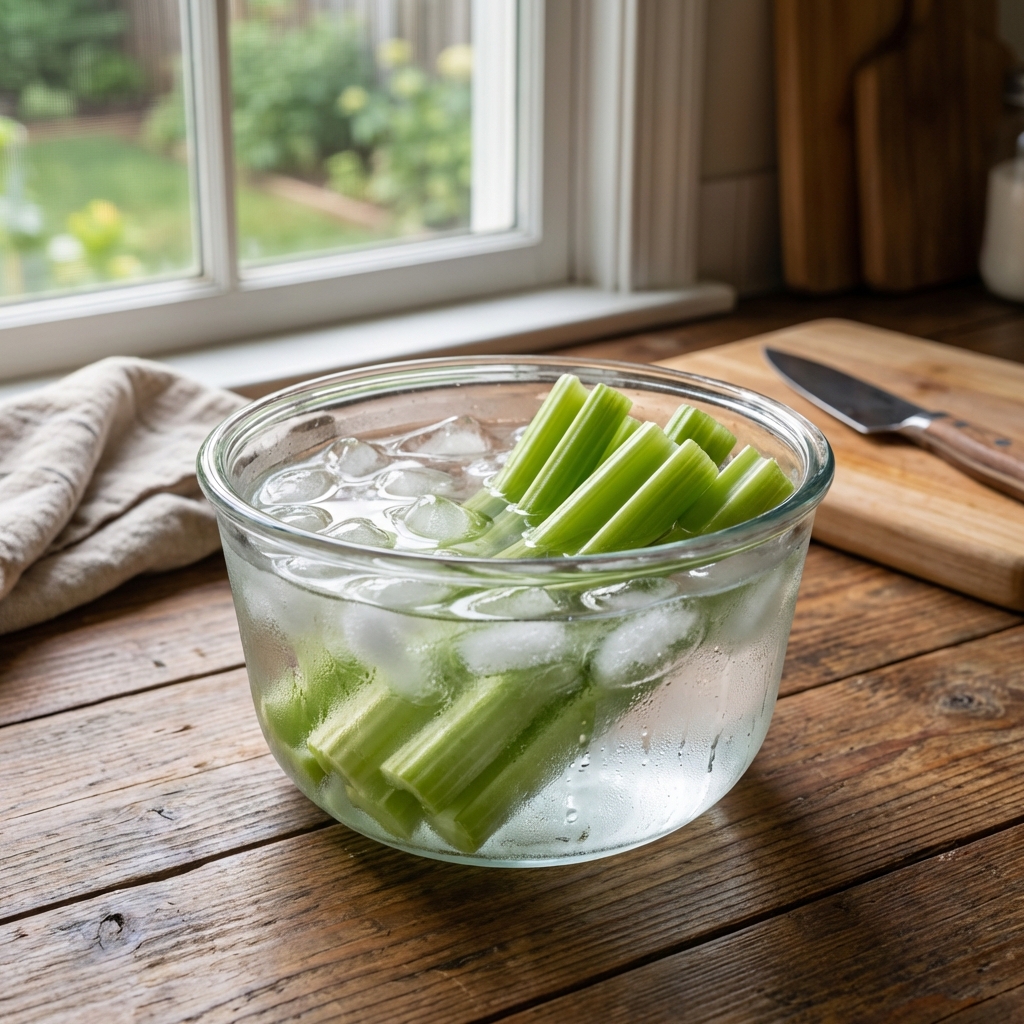
Quick crisping soak
- Trim a thin slice off the bottom of the bunch or the ends of sticks.
- Soak in a bowl of ice water for 20 to 40 minutes.
- Drain and dry well before re-storing.
Tip: This works best for celery that has gone soft, not celery that is old and hollow. If the ribs feel stringy and the flavor is bitter, use it in stock instead of forcing it into a salad.
Use the whole bunch
Celery is one of those vegetables where the "extras" are often the best part once you start using them on purpose.
What to do with celery leaves
- Chop like herbs: Stir into tuna salad, egg salad, potato salad, or grain bowls.
- Finish soups: Add at the end like parsley for a fresh, green pop.
- Make quick celery salt: Dry leaves thoroughly, crumble, then mix with salt. Store in a jar.
What to do with the base and inner heart
- Base: Slice thin for sautés, or freeze in a bag for stock scraps.
- Inner heart: Save for raw snacking, slaws, salads, and juicing. It is usually the sweetest and most tender.
- Quick prep tip: If outer stalks are very fibrous, peel off strings with a vegetable peeler. No need to do it for the whole bunch.
Food safety
Celery is not a high-risk food, but it can spoil in ways you should not ignore.
- Throw it out if it has slime, mold, a sour smell, or a mushy base.
- Trim and use soon if only the outer stalks are a little dry or the leaves are wilted.
- Wash before use, especially near the base where grit hides. Separate stalks and rinse under cool running water.
Quick celery FAQs
Should you wash celery before storing?
If you are storing the whole bunch, wait and wash right before you use it. If you are cutting sticks for snacking, wash and dry first, then store with a barely damp towel or in water that you change regularly.
Why does celery turn bitter?
Bitterness can be influenced by variety, age, growing conditions, and sometimes storage time. Older celery and very dark outer stalks are more likely to taste stronger. Use bitter celery in stock, soups, or braises where it blends in.
Can you freeze celery?
Yes, but it will not stay crisp. Freeze chopped celery for cooking: spread on a tray to freeze, then bag it. It is great for soups, stuffing, and stock.
Simple buying checklist
- Firm stalks that snap
- Tight bunch, clean base, no slime
- Leaves look fresh, not blackened
- Foil wrap for longer crispness
- Ice water soak to revive limp celery
If you want, tell me what you usually use celery for and how fast you go through a bunch. I can recommend the best storage method and what size bunch to buy so it does not end up forgotten in the crisper.

Jose Brito
I’m Jose Britto, the writer behind The Country Store Farm Website. I share practical, down-to-earth gardening advice for home growers—whether you’re starting your first raised bed, troubleshooting pests, improving soil, or figuring out what to plant next. My focus is simple: clear tips you can actually use, realistic expectations, and methods that work in real backyards (not just in perfect conditions). If you like straightforward guidance and learning as you go, you’re in the right place.