Venus flytraps (Dionaea muscipula) are tough little plants when you give them what they actually need, and they are unforgiving when you treat them like a typical houseplant. Most problems come from three things: not enough light, mineral-heavy water, or the wrong soil. Fix those and you are 80 percent of the way there.
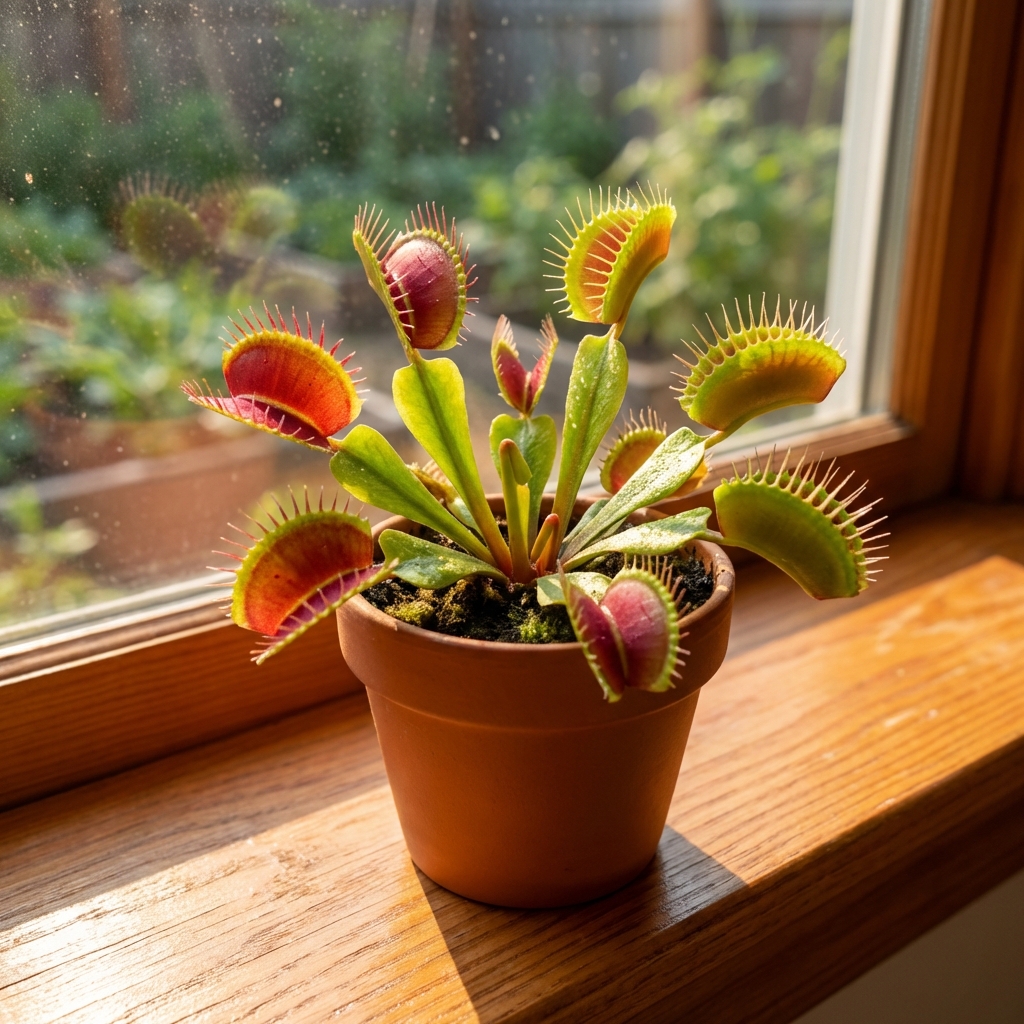
Quick identification
If you are not sure whether yours is a Venus flytrap or just looks similar, these are the easiest traits to check.
What a Venus flytrap looks like
- Traps with teeth: Each trap is two hinged lobes with fringe-like “teeth” around the edge.
- Trigger hairs: Inside each trap are tiny hairs. When an insect touches them enough times, the trap closes.
- Rosette growth: Leaves come from a central point and form a low rosette.
- Color changes: Traps can blush red inside under strong light. In lower light, they often stay green.
Common look-alikes
- Pitcher plants (Sarracenia, Nepenthes): They catch prey in pitchers, not snapping traps.
- Sundews (Drosera): Sticky tentacles, no “mouth” that shuts.
- Butterworts (Pinguicula): Greasy-looking leaves that trap gnats, no hinged traps.
Step-by-step care basics
This routine works in real homes and patios. You can follow it like a checklist.
Step 1: Give it strong light
Venus flytraps need far more light than most people expect. Aim for:
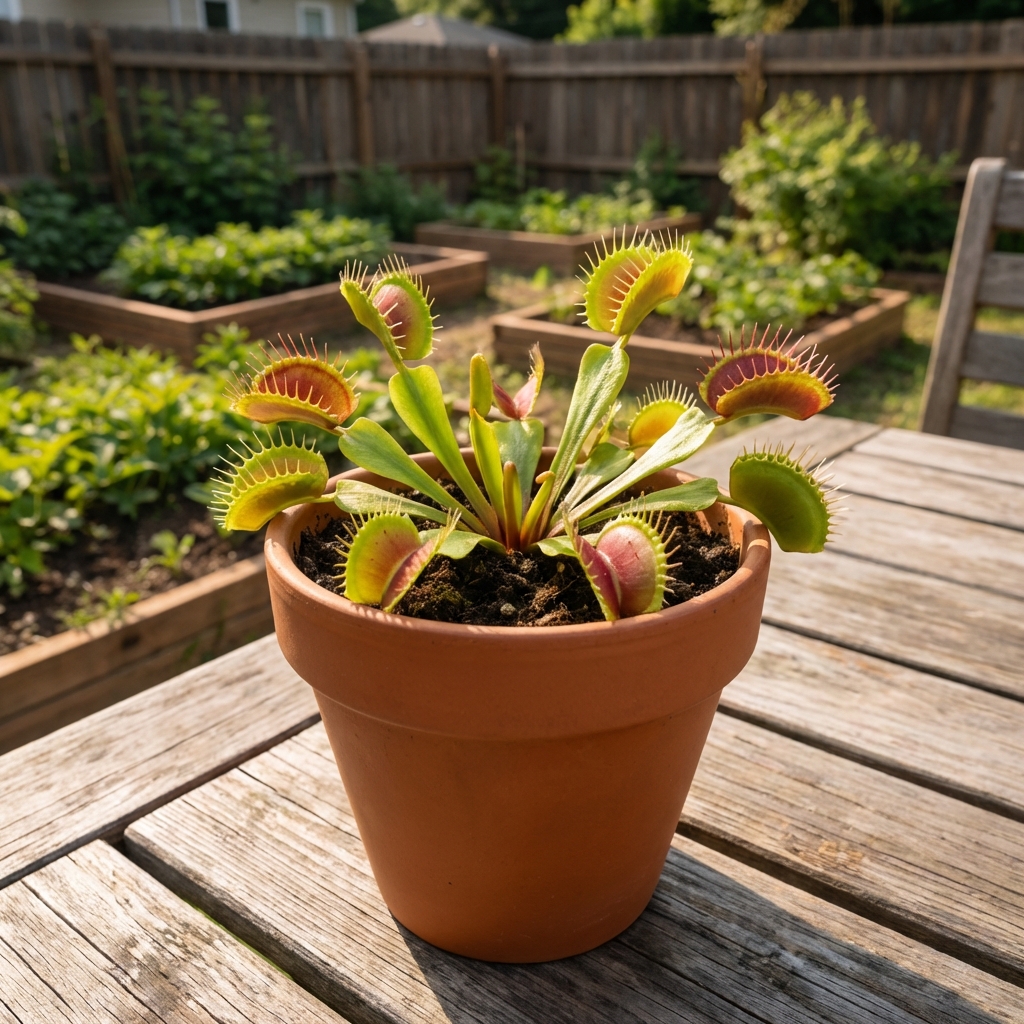
- Outdoors: 6 to 8+ hours of direct sun is ideal in the growing season.
- Indoors: A very bright south or west window helps, but a grow light is usually more reliable.
Reality check: Most flytraps are outdoor plants long-term. A windowsill often underperforms without strong supplemental light.
Signs it needs more light: long floppy leaves, small traps, weak color, slow growth.
Step 2: Use the right water only
This is the big one. Flytraps hate minerals and salts. Use:
- Distilled water
- Rainwater (collected cleanly)
- Reverse osmosis water
Avoid tap water unless you know it is very low mineral. If you have a TDS meter, aim for under 50 ppm when you can. Many growers can get away with higher numbers for a while, but try to avoid water that is consistently over about 100 ppm.
Step 3: Keep it moist (tray method)
During active growth, the simplest approach is the tray method.
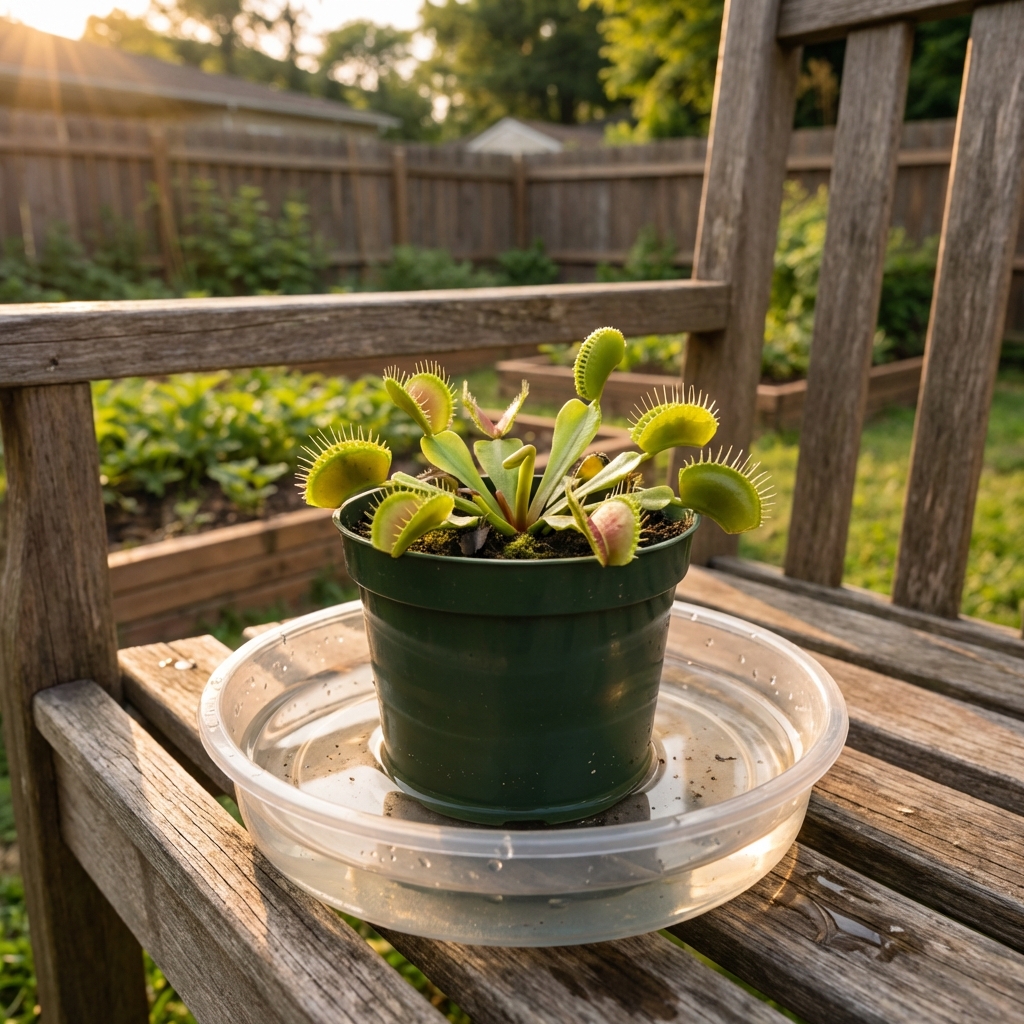
- Set the pot in a shallow tray.
- Keep about 0.25 to 1 inch of appropriate water in the tray.
- Adjust the water level to pot size, heat, and light. Small pots and cool, low-light setups need less.
- Let the tray dry for a day occasionally, then refill. Do not keep it bone dry.
Important: Do not let the crown sit submerged. In winter dormancy, keep it damp, not waterlogged.
Step 4: Use carnivorous plant soil, not potting mix
Regular potting soil and compost are too rich and will burn the roots. Good options:
- Classic mix: 1:1 peat moss and perlite (both unfertilized)
- Alternative: long-fiber sphagnum moss (unfertilized)
Avoid anything with fertilizer, “moisture control” additives, or Miracle-Gro type products.
Step 5: Choose the right pot
Use containers that do not leach minerals.
- Best choices: plastic pots or glazed ceramic pots with drainage
- Avoid: unglazed terracotta (it can leach minerals into the soil)
- Tip: deeper pots help because flytrap roots can be surprisingly long
Step 6: Skip fertilizer
Do not fertilize the soil. The roots are adapted for poor bog conditions. Fertilizer is a common reason traps blacken and plants decline.
Step 7: Feed only if it truly needs it
If your flytrap lives outdoors, it usually feeds itself. Indoors, light matters most. Occasional feeding can help, but it will not compensate for low light.
- Feed one small insect every 2 to 4 weeks during active growth if it is not catching anything.
- Prey should be no bigger than 1/3 the size of the trap.
- Use live insects when possible. If using dried insects, rehydrate and gently stimulate the trigger hairs so the trap seals.
Avoid hamburger, cheese, and human food. That is a fast track to rot.
Step 8: Let it go dormant
Venus flytraps are temperate perennials. Most need a winter rest each year to stay vigorous.
- When: roughly late fall through late winter
- What it looks like: slower growth, smaller leaves, some traps die back
- Conditions: cool temperatures, shorter days, less water
Many growers target something like 35 to 55°F, but there is wiggle room depending on your setup. The goal is cool and bright, not warm and swampy. Avoid letting the pot freeze solid for long stretches.
During dormancy, keep the medium damp and give bright light. Do not keep it warm and soaking wet.
Step 9: Flowering (cut or keep?)
Flytraps can flower in spring. Flowering takes energy.
- If the plant is small, recently stressed, or recovering: cut the flower stalk early to help it focus on growth.
- If the plant is large and thriving: you can let it bloom.
How to fix common problems
For a plant page, “fix” usually means getting a problem contained and corrected. Here are the most common issues and what actually works.
Black traps
Some blackening is normal. Traps do not last forever, especially after catching prey.
- Normal: one or two older traps turn black while new growth continues.
- Not normal: many traps blacken fast and the plant stops making healthy new leaves.
What to do:
- Check light: increase sun or improve your grow light setup.
- Check water: switch to distilled, rain, or RO water if you are not already.
- Check soil: confirm it is fertilizer-free. Repot if you suspect regular potting mix.
- Clean up: trim fully black traps with clean scissors, cutting near the base without tugging.
Root rot or crown rot (mushy base, sour smell)
This is usually caused by stagnant conditions, low light, and staying too wet, especially in cool weather.
What to do:
- Inspect: unpot the plant and check the rhizome. Healthy tissue is firm and pale.
- Trim: remove mushy, blackened tissue with sterilized scissors.
- Repot: use fresh carnivorous plant mix in a clean pot with drainage.
- Adjust conditions: increase airflow and light. In dormancy, reduce tray water so it is damp, not swampy.
Gray mold (Botrytis) on dying leaves
Botrytis shows up as fuzzy gray growth, often starting on old leaves in cool, humid, still air.
What to do:
- Remove: dead and dying leaves promptly.
- Improve: increase airflow and light.
- Water smarter: avoid splashing water onto the crown repeatedly.
- Treat if needed: if it keeps returning, consider a sulfur-based fungicide labeled for ornamentals and follow the label. Do not overdo treatments.
Mineral burn (crusty soil, slow decline)
If tap water or fertilizer has been used, minerals can build up in the soil and stress the plant.
What to do:
- Repot: move into fresh peat-perlite or sphagnum.
- Rinse: wash roots gently with distilled water as you repot.
- Commit: use low-mineral water going forward.
Pests to watch for
Flytraps do get pests, especially when grown indoors.
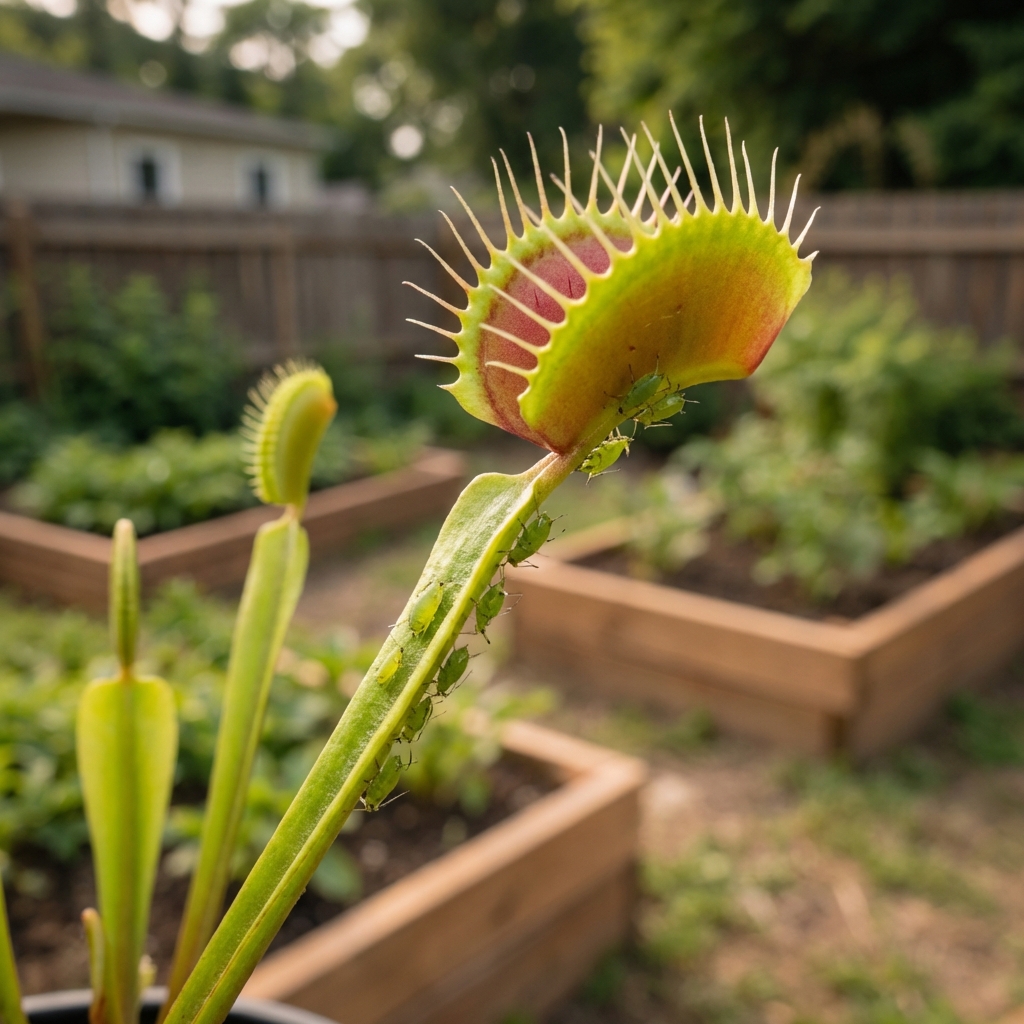
- Aphids: distorted new traps, clusters on growth points. What to do: rinse with water, then use insecticidal soap only if needed, mixed gently and applied out of direct sun. Avoid soaking the soil. Test on a small area first and consider rinsing the plant with pure water later.
- Spider mites: speckled leaves, fine webbing, weak growth. What to do: rinse thoroughly and improve conditions. Use a miticide labeled for spider mites if needed, following the label.
- Fungus gnats: tiny flies around the pot. What to do: let the surface dry slightly between refills (without drying the plant out), use yellow sticky traps, and use BTI (mosquito dunks) in the tray water made with distilled, rain, or RO water.
Tip: Carnivorous plants can be sensitive to sprays and residue. Use the mildest effective option, follow labels, and avoid repeated heavy applications.
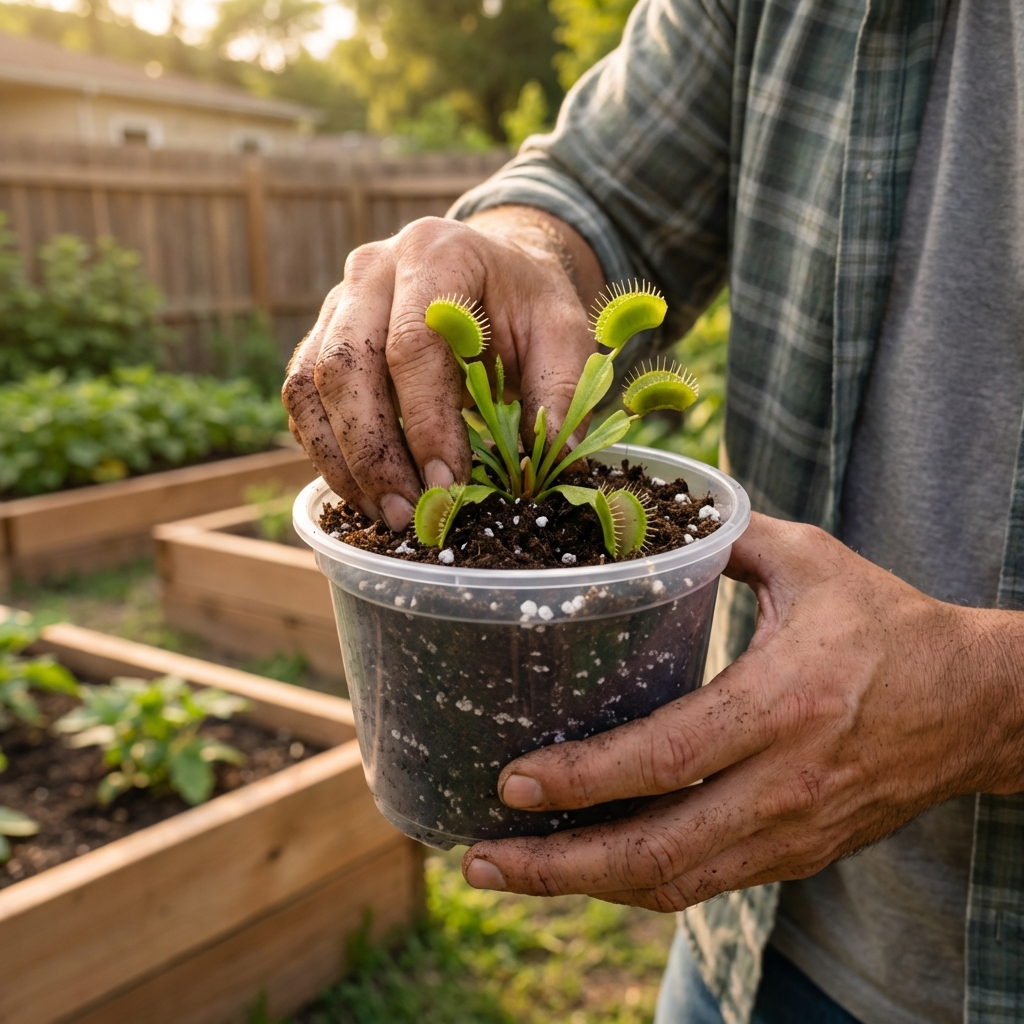
Repotting step-by-step
Repotting keeps the medium fresh and gives the roots room. Many growers repot every 1 to 2 years.
- Pick the right time: late winter to early spring is easiest, right as dormancy ends.
- Prepare fresh medium: moisten peat-perlite with distilled, rain, or RO water.
- Remove the plant: squeeze the pot and slide it out gently.
- Rinse lightly: use distilled water to remove old medium from roots if needed.
- Use enough depth: choose a deeper pot than you think you need.
- Set the crown correctly: keep the growing point above the medium, not buried.
- Water in: set it back in a tray and keep it evenly moist while it settles.
Seasonal care
Spring and summer (active growth)
- Maximum sun or strong grow light
- Tray method with consistent moisture, adjusted for heat and pot size
- Optional feeding if indoors and it is not catching prey
- Remove only fully dead leaves
Fall (slowdown)
- Expect smaller leaves and slower growth
- Reduce watering slightly as temperatures drop
- Stop feeding once dormancy begins
Winter (dormancy)
- Cooler temperatures and bright light
- Keep damp, not soggy
- Trim dead leaves to prevent mold
What not to do
- Do not use potting soil or anything with fertilizer.
- Do not water with mineral-heavy tap water.
- Do not keep it in a closed terrarium long-term.
- Do not trigger traps repeatedly for fun.
- Do not assume feeding fixes low light.
FAQ
Should I trigger the traps for fun?
Try not to. Closing uses energy, and repeated triggering without food can weaken the plant over time.
Why are my traps not closing?
Often the trap is old, damaged, or the plant is stressed from low light or poor water quality. Fix conditions first. New traps usually behave better.
Can a Venus flytrap live in a terrarium?
Most struggle long-term in closed terrariums because airflow is low and mold becomes a problem. An open-top setup with strong light can work, but it is usually easier in a normal pot with good sun.
Is it safe for pets?
Venus flytraps are not known for dangerous toxicity, but pets can chew plants and upset their stomachs, and the plant will not enjoy it either. Place it out of reach.
The simple routine
If you remember nothing else, remember this: strong light, pure water, poor soil, and winter dormancy. Do those four things and your Venus flytrap will look like the real deal, not a sad novelty plant fading on a windowsill.

Jose Brito
I’m Jose Britto, the writer behind The Country Store Farm Website. I share practical, down-to-earth gardening advice for home growers—whether you’re starting your first raised bed, troubleshooting pests, improving soil, or figuring out what to plant next. My focus is simple: clear tips you can actually use, realistic expectations, and methods that work in real backyards (not just in perfect conditions). If you like straightforward guidance and learning as you go, you’re in the right place.