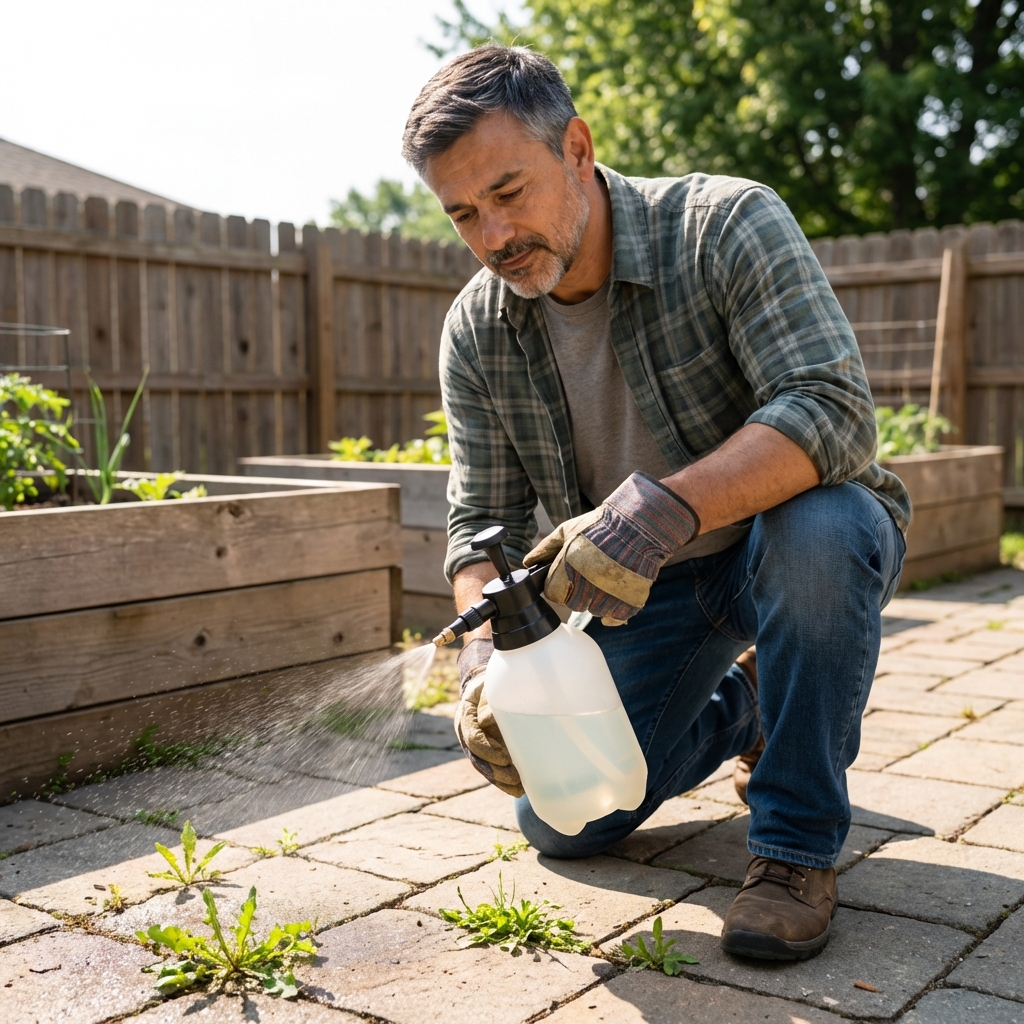
If you are trying to get weeds under control without buying a bunch of products, a vinegar and salt spray can be a handy tool. It is best used as a spot treatment for weeds growing where you do not want plants at all, like cracks in a walkway or along gravel. Used in the wrong place, it can also damage nearby plants, stain or etch some surfaces, and make soil harder to garden in later. This guide walks you through a simple recipe, where it works, and how to apply it carefully.
Before you mix it: what it does
Household vinegar is acetic acid. It damages cell membranes and dries out leaf tissue on contact. Salt (sodium chloride) pulls moisture out of plant cells and, depending on how much you use and your conditions, can make it harder for anything to grow in that spot for a while. Dish soap helps the spray stick to waxy leaves instead of beading up and rolling off.
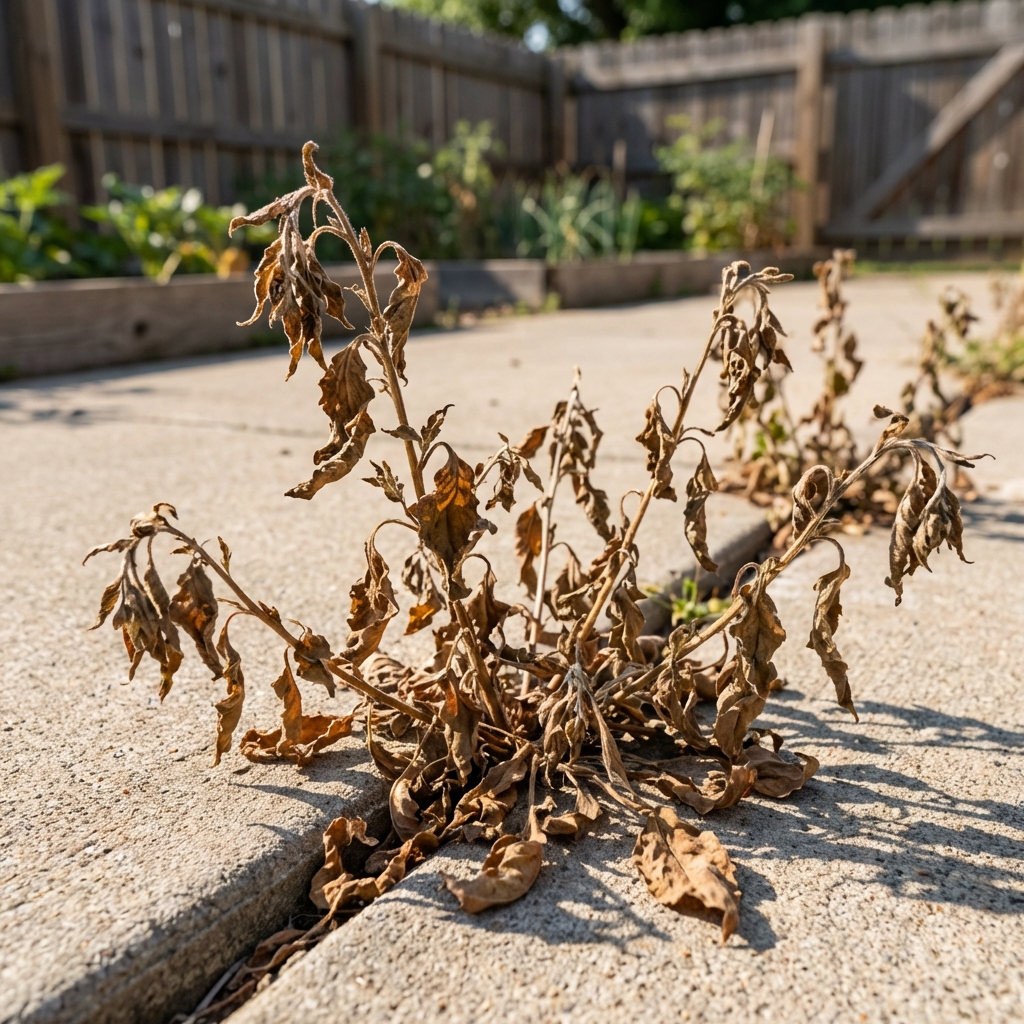
Important reality check: this mix is a contact herbicide. It mostly kills what it touches. It is not systemic, so it does not reliably travel down into the roots. Many weeds can regrow from roots if the spray does not reach or destroy the growing point. That is why timing and repeat applications matter.
- Works best on: tiny, young weeds, annual weeds, weeds in cracks, weeds in gravel.
- Less effective on: deep-rooted perennials like dandelion, plantain, bindweed, thistle.
- Not a good idea for: garden beds, lawns, anywhere you want to plant soon.
Beginner recipe
This is the basic mix using standard 5% household white vinegar. It is strong enough to knock back small weeds without jumping straight to harsher concentrates.
Ingredients
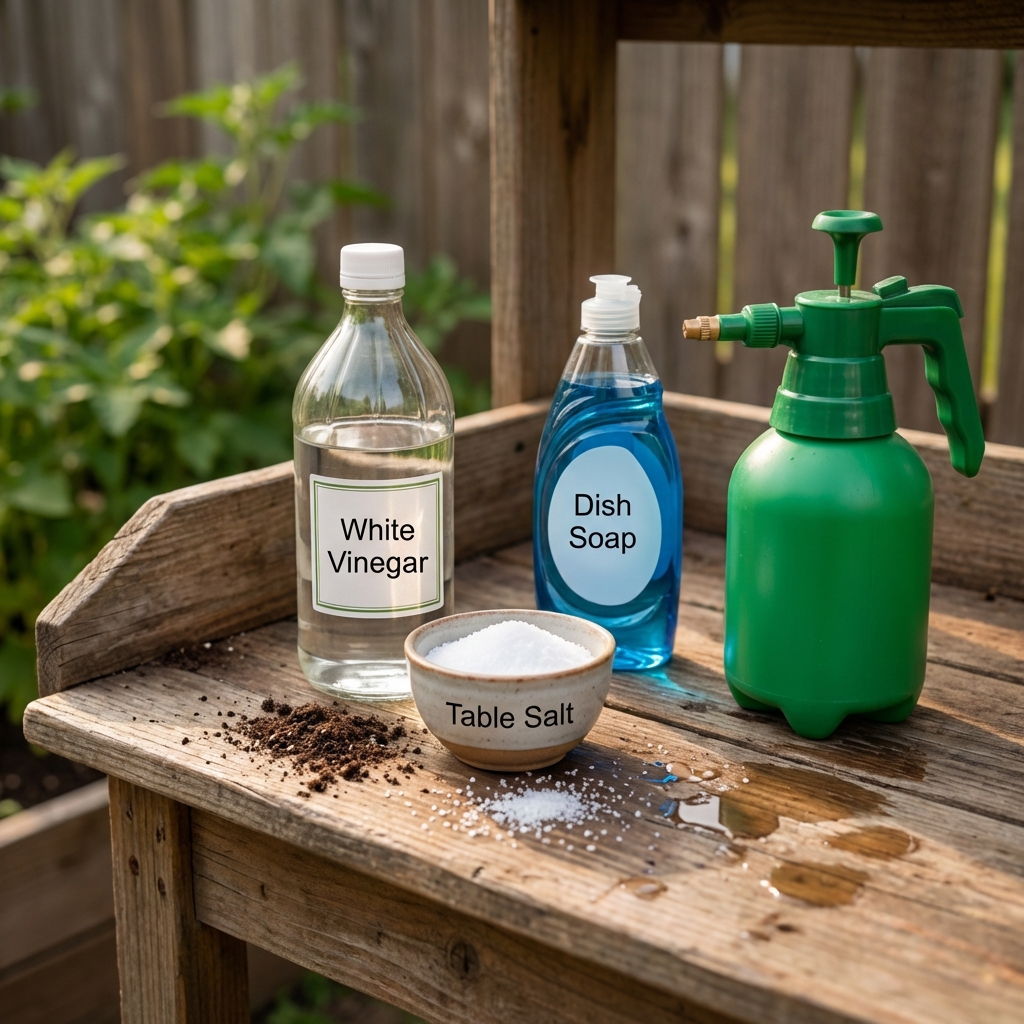
- 1 gallon white vinegar (5% acidity)
- 1 cup table salt
- 1 tablespoon liquid dish soap (basic, non-bleach, non-antibacterial is fine)
- About 2 cups warm water (only to help dissolve the salt)
Mixing steps
Dissolve the salt first. Pour about 2 cups of warm water into a bucket or large measuring container, add the salt, and stir until mostly dissolved.
Add vinegar. Pour the dissolved salt mixture into your sprayer, then add the gallon of vinegar.
Add soap last. Add 1 tablespoon dish soap at the end and swirl gently. Do not shake hard or you will make a lot of foam.
Makes: a little over 1 gallon (roughly 1.1 gallons). The warm water is just there to dissolve the salt.
Sprayer tip: Salt can clog sprayer nozzles if it does not fully dissolve. Warm water and a little patience prevent most problems.
Where to use it (and where not to)
Good places to use vinegar and salt
- Cracks in sidewalks and driveways
- Gravel paths and gravel driveways (spot spray only)
- Along fence lines where you are not trying to grow plants
- Around the base of mailboxes or utility poles (watch overspray)
Places to avoid
- Vegetable beds and flower beds: it can burn your plants and the salt can linger in the soil.
- Lawns: it kills grass just like it kills weeds.
- Near tree roots: repeated applications in the same spot may stress shallow feeder roots, especially for young trees.
- Near ponds, streams, or storm drains: avoid runoff and environmental harm.
If you want something similar that is less risky for soil, use plain vinegar plus a small squirt of soap (skip the salt) and treat it as a short-term burn-down, not a long-term solution.
Surface note: vinegar is acidic. Repeated spraying can dull or etch some stone (especially limestone and some natural stone) and may affect concrete over time. If you care about the finish, spot-test in an out-of-the-way area first.
How to apply it
Best conditions
- Sunny, dry day: heat and sunlight help it work faster.
- No rain for 24 hours: rain can wash it off before it does its job.
- Little to no wind: drift is the easiest way to damage plants you like.
Step-by-step
Put on gloves and eye protection. Vinegar stings, and sprayers bounce mist around more than you think.
Set your sprayer to a coarse spray. You want less mist and more targeted droplets.
Spray the leaves until wet. Coat the weed, especially the center where new growth comes from. Do not soak the soil.
Stay off surrounding plants. Shield nearby plants with a piece of cardboard if needed.
Check in 2 to 6 hours. Small weeds often wilt same day. Tough weeds may only brown on top.
Repeat as needed: for many weeds, you will need a second spray 3 to 7 days later. If a weed keeps coming back from a deep root, switch tactics (hand pulling after rain, digging the taproot, or smothering with mulch or cardboard).
Common mistakes
- Spraying on a breezy day: drift will burn nearby plants fast.
- Using it like a general garden spray: this is spot control, not a bed-wide treatment.
- Over-salting: more salt is not better. It increases long-term soil issues and does not magically fix perennial weeds.
- Expecting it to kill roots every time: contact sprays are mainly top-kill.
- Spraying right before rain or irrigation: wash-off equals wasted effort.
Safety and handling
- Protect your skin and eyes: wear gloves and eye protection.
- Do not mix with bleach: never combine household chemicals. Vinegar and bleach can create dangerous fumes.
- Label your sprayer: use a dedicated sprayer so you do not accidentally use it later for plant sprays.
- Keep pets and kids away until dry: once dry, risk is lower, but avoid fresh contact.
- Store safely: do not store mixed solution in metal containers. Vinegar is corrosive to some metals. Keep it in a plastic sprayer out of direct sun.
Stronger vinegar warning: horticultural vinegar (often 10% to 30%) can cause chemical burns and serious eye injury. If you use it, handle it like a pesticide: goggles, gloves, long sleeves, and follow the product label and local rules.
Cleanup and disposal
- Use what you mix when you can. This is especially true for salty solutions you do not want hanging around.
- Do not dump leftovers into storm drains, gutters, or near waterways. Avoid runoff.
- Rinse the sprayer well. Flush with clean water and spray a little water through the nozzle to clear salt so it does not clog later.
Will salt ruin my soil?
Salt can build up, especially if you treat the same strip over and over. How long it lingers varies a lot by soil type, drainage, rainfall, and how often you apply it. In small, occasional spot applications on hardscape cracks, this is usually not a problem because you are not trying to garden there anyway.
In soil where you want plants later, salt is a headache. It can also move with water, so pay attention to slope, runoff, and where that water goes.
If you accidentally salted a garden area
- Stop applying immediately.
- Flush with water over multiple deep waterings (only if your area allows, and if runoff will not cause problems).
- Add organic matter like compost to help soil structure and microbial recovery.
- Wait and test by planting a few inexpensive seeds in that spot before committing prized plants.
Alternatives for garden beds
- Mulch and cardboard: smothers weeds without chemical burn and improves soil over time.
- Hand pulling after rain: easiest time to get roots out cleanly.
- Hoeing shallow seedlings: fast for annual weeds when soil is dry on top.
- Boiling water (hardscape only): great for cracks, but keep it away from plants and skin.
If you are dealing with weeds in a planted bed, the best long-term “recipe” is usually mulch depth plus consistent weeding while plants are small.
Quick FAQ
How fast does it work?
Small weeds can wilt within hours on a sunny day. Bigger weeds might look burned on top but can regrow in a week or two.
Can I use apple cider vinegar?
You can, but white vinegar is cheaper and more consistent. Save apple cider vinegar for the kitchen.
Should I use stronger vinegar?
For beginners, start with 5%. Stronger vinegar is more hazardous to handle and can cause serious eye and skin injuries. If you do move up, treat it like a stronger chemical and follow the product label carefully.
What about adding more soap?
A little helps it stick. Too much soap can create suds, clog sprayers, and spread solution farther than you intended.
Is this allowed where I live?
Rules vary. In some areas, applying homemade mixes for weed control can fall under local pesticide or herbicide regulations, and some HOAs have restrictions about what can run off into shared drainage. If you are unsure, check local guidelines before spraying.
Bottom line
Vinegar and salt weed killer is best as a targeted tool for hardscape areas where you do not want plants growing. Mix it correctly, spray on a calm, sunny day, and keep it away from beds and lawns. When you need weed control in actual garden soil, skip the salt and lean on mulching, hand pulling, and smothering for better long-term results.

Jose Brito
I’m Jose Britto, the writer behind The Country Store Farm Website. I share practical, down-to-earth gardening advice for home growers—whether you’re starting your first raised bed, troubleshooting pests, improving soil, or figuring out what to plant next. My focus is simple: clear tips you can actually use, realistic expectations, and methods that work in real backyards (not just in perfect conditions). If you like straightforward guidance and learning as you go, you’re in the right place.