Vinegar is one of those “sounds too easy” weed fixes that can actually work, as long as you use it in the right spot and with the right expectations. It is not a magic, permanent weed solution. What it is good at is fast top-kill on small weeds and seedlings, especially in cracks, gravel, and along hard edges where you are not trying to protect nearby plants.
Below is the real backyard-friendly way to use vinegar for weed control, what to mix, when to spray, what to avoid, and a few organic options that keep weeds from bouncing right back.
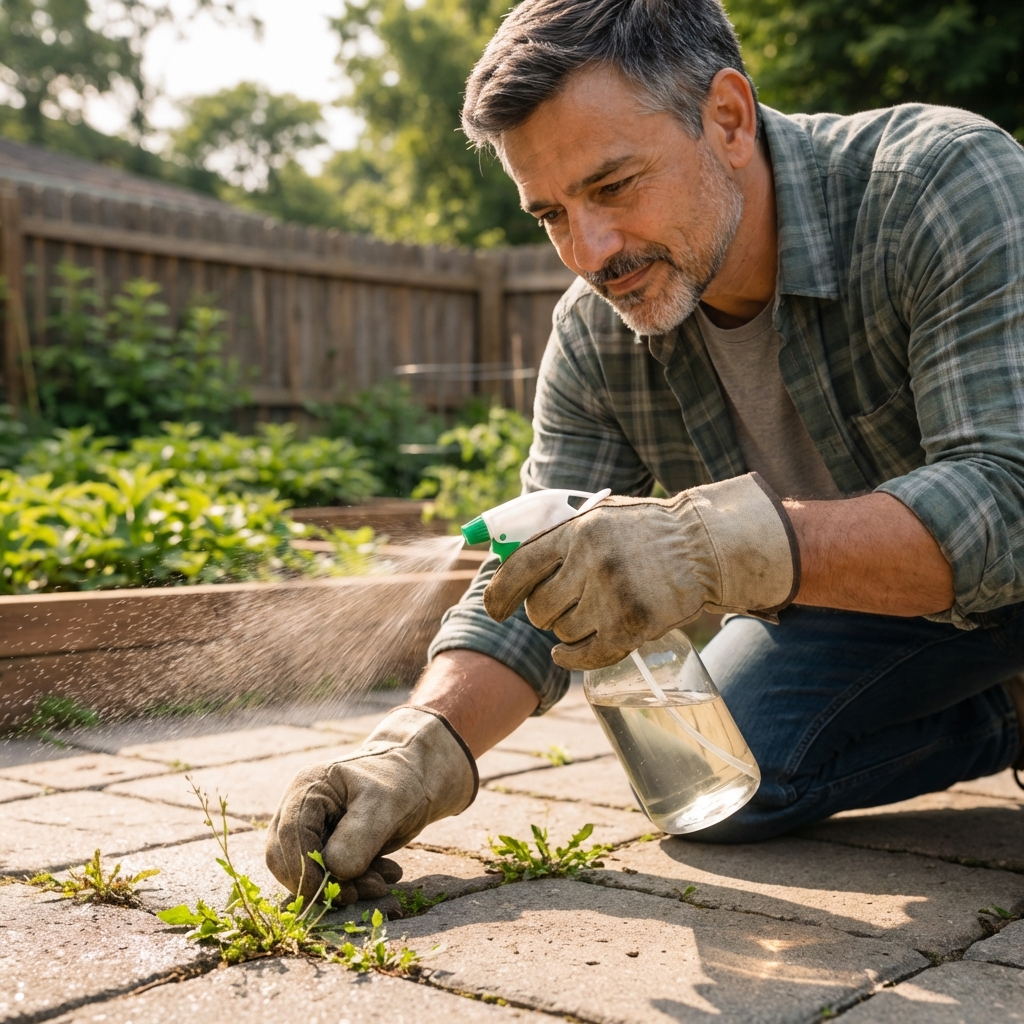
How vinegar kills weeds (and why they come back)
Household vinegar is typically 5% acetic acid. It works as a contact burn-down that desiccates and burns tender foliage. That is why weeds can look wilted within hours on a hot day.
The catch is simple: vinegar usually kills what it touches, not the whole root system. That means:
- Great on: tiny broadleaf weeds, young seedlings, fresh sprouts in cracks and gravel
- So-so on: larger weeds with thicker or waxy leaves
- Often temporary on: perennial weeds that regrow from roots (dandelion, bindweed, Bermuda grass, nutsedge)
If you use vinegar expecting it to replace pulling, mulching, or smothering, you will be disappointed. If you use it as a quick tool in the right places, it is genuinely helpful.
Best places to use vinegar weed killer
Think “hardscape,” not “garden bed.” Vinegar does not know the difference between a weed and your favorite flower.
Use it here
- Cracks in sidewalks and driveways
- Between pavers and patio stones
- Gravel paths
- Along fence lines where you are not trying to keep plants alive
- At the base of raised beds, on weeds outside the bed
Avoid it here
- Vegetable beds and flower beds
- Near seedlings or low-growing plants you care about
- Near tree roots that surface close to the soil
- On windy days where drift can hit ornamentals
Quick surface note: Vinegar overspray can spot or etch some natural stone and can dull certain concrete finishes. Test a small hidden area first, and rinse overspray on hard surfaces with water.
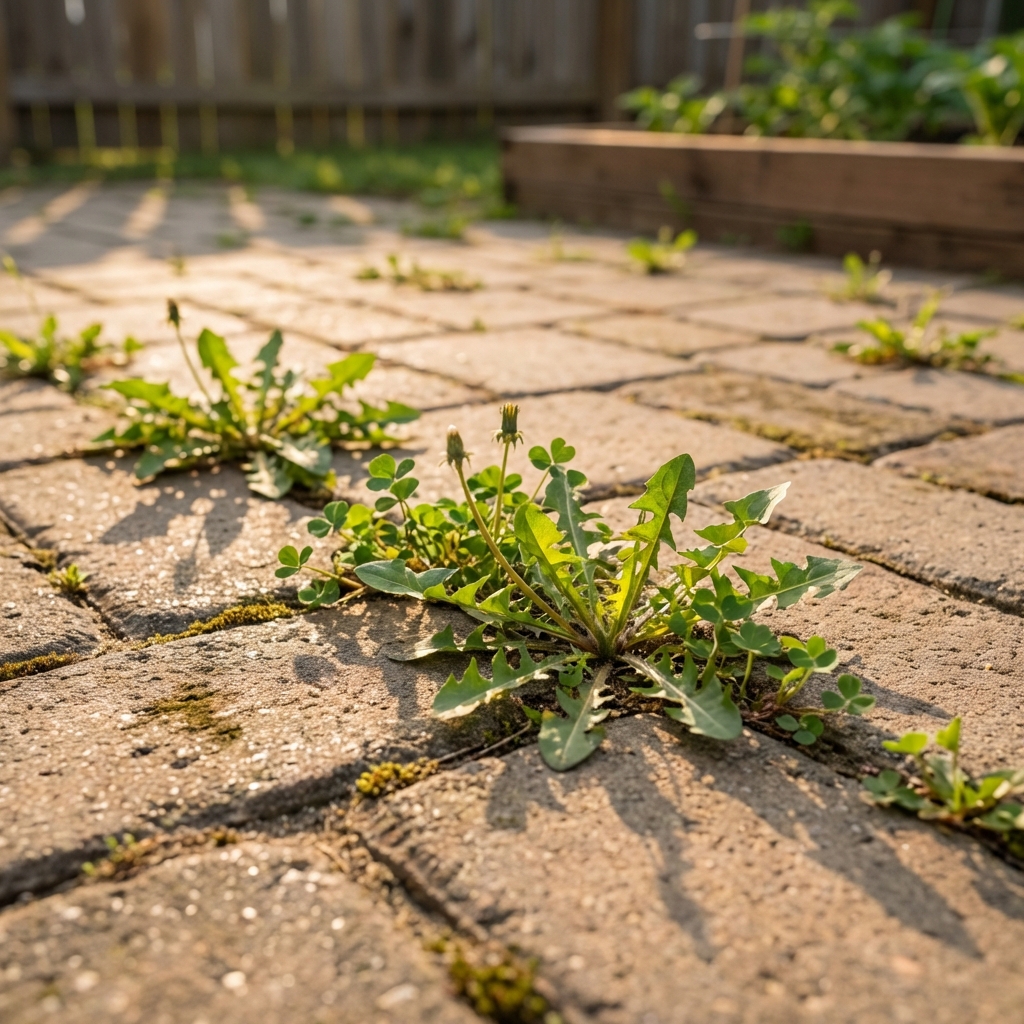
Simple vinegar mixes that work
You do not need a complicated recipe. The key is coverage and timing.
Option 1: Straight white vinegar (5%)
Best for: tiny weeds and seedlings.
- Pour into a spray bottle or pump sprayer.
- Spray until leaves are evenly wet, not dripping.
This is the most “effortless” option, and it is often enough for young weeds in cracks.
Option 2: Vinegar + a small amount of soap (better sticking power)
Best for: waxy leaves and weeds that shrug off a light spray.
- 1 quart (4 cups, about 1 liter) 5% white vinegar
- 1 teaspoon (about 5 mL) liquid castile soap or mild dish soap
Mix gently. Soap helps the vinegar spread and cling to leaves instead of beading up and rolling off.
What about salt?
You will see recipes that add salt. Salt can work, but it is a blunt instrument. It can linger in soil, damage nearby plants, and create dead zones where nothing grows well.
If you use salt at all, keep it limited to deep cracks in hardscape where you truly do not want anything growing, and avoid areas where runoff can wash into beds or lawn.
When to spray for the best results
If you want vinegar to feel low-effort, do it when conditions are stacked in your favor.
- Pick a sunny, warm day: Heat and sun speed up leaf burn.
- Spray mid-morning to mid-afternoon: Leaves are dry and actively growing.
- Avoid rain right after spraying: Aim for at least 6 to 24 hours with no rain (longer is better), so the solution stays on the leaf surface.
- Target young weeds: Two-inch weeds are easy. Twelve-inch weeds are stubborn.
Check the area the next day. If the weed is only partially burned, re-spray in 2 to 3 days.
How to spray without harming your good plants
Vinegar is non-selective. It will burn whatever green tissue it touches.
Quick control tips
- Shield nearby plants: Use a piece of cardboard as a spray guard.
- Go low pressure: A heavy mist drifts. Use a coarse spray close to the target.
- Spot spray, do not broadcast: Treat individual weeds, especially near beds.
- Watch wind: If you feel a breeze on your face, drift can happen.
- Aim for leaf-only contact: Wet the leaves, not the soil. Avoid soaking the ground.
- Use a dedicated sprayer: Label it “vinegar” and do not reuse it for fertilizers, pesticides, or plant care sprays.
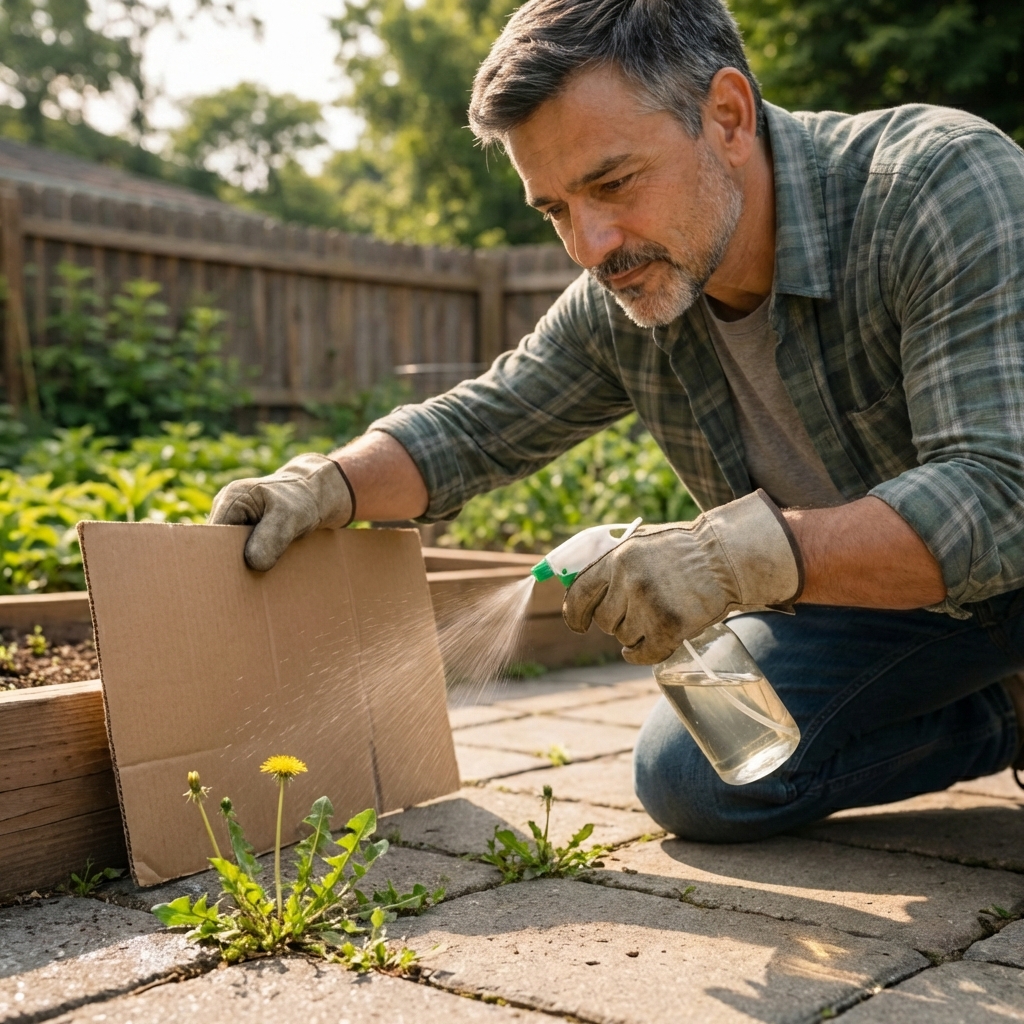
Safety: common-sense precautions
Even household vinegar can irritate eyes and skin. Stronger vinegar can cause serious chemical burns.
- Wear gloves and closed-toe shoes.
- Avoid inhaling spray mist and keep it out of your eyes.
- Keep kids and pets off the area until the spray is dry.
- Do not spray on edible plant leaves, and avoid drift into vegetable beds.
About “horticultural vinegar” (often 20% acetic acid): It is much stronger and more hazardous, especially for eyes and skin. In some areas, higher-strength acetic acid products may also be regulated or restricted for weed control. Check local rules and label directions before buying or using it. For most home situations, start with 5% and use better timing and repeat applications rather than jumping straight to stronger acids.
Equipment note: Vinegar can corrode some metal parts over time. Use plastic sprayers when possible, and rinse the sprayer with water after use.
Will vinegar ruin soil?
Used as a spot spray on hardscape, vinegar is unlikely to cause lasting issues. In garden soil, repeated applications or heavy soaking can stress nearby plants, harm beneficial organisms, and temporarily shift pH in the treated area.
Think of vinegar as a surface contact tool, not something you pour into the ground. If you are tempted to drench roots, that is a sign you are dealing with a perennial weed where vinegar is not the best long-term answer.
Weeds vinegar will not solve (and what to do instead)
Some weeds are built to come back. Here are better organic approaches when vinegar turns into a weekly chore.
Deep-rooted perennials (dandelion, plantain)
- Best fix: A weeding fork or dandelion puller, removing as much root as possible.
- Prevention: Thicker turf or mulch where appropriate.
Creeping grasses (Bermuda, quackgrass)
- Best fix: Smother with cardboard plus 3 to 6 inches (8 to 15 cm) of mulch for several months.
- Edge control: Install deeper edging, and keep runners cut back.
Nutsedge
- Reality: Vinegar burns leaves, but tubers keep sending up new shoots.
- Best fix: Dig carefully and remove tubers, knowing this often takes repeated attempts. Reduce overwatering and improve drainage. Also, avoid unnecessary soil disturbance, since it can spread tubers around.
Big annual flushes (after rain)
- Best fix: A hoe on a dry day, then mulch.
- Timing trick: Knock them out when they are thread-sized. That is when weeding feels effortless.
Simple routine: keep weeds from coming back
If you only spray vinegar, you can get stuck in a cycle. Pair it with prevention and you will do far less work.
A simple 3-step system
- 1) Knock back: Spot spray vinegar on young weeds in cracks and gravel.
- 2) Block light: Refill joints with polymeric sand (for pavers) or top up gravel to reduce bare pockets.
- 3) Patrol fast: A 5-minute weekly walk is easier than a 2-hour cleanup once a month.
In beds, the easiest move is usually mulch or living cover, not vinegar.
Quick FAQ
Does vinegar kill weeds permanently?
Usually no. It often kills the top growth, especially on young weeds. Many perennials regrow from roots.
How long does it take to work?
On a warm sunny day, you can see wilting in hours. Full browning can take 24 to 48 hours.
Can I spray vinegar around vegetables?
I would not. Drift and splash can damage crop leaves. Use mulch, hand pulling, shallow hoeing, or careful smothering in veggie beds.
Is dish soap safe?
A tiny amount helps the spray stick. Use a mild soap and avoid heavy doses that can be harsh on plants and soil.
Bottom line
Vinegar is a solid organic option for spot-treating small weeds where you do not want anything growing, especially in cracks and gravel. Keep the spray off your good plants, spray on warm sunny days, and expect repeat treatments for stubborn or perennial weeds.
If weeds keep returning in the same place, shift your energy to blocking light with better joint fill, mulch, or smothering. That is what turns vinegar from a frequent task into an occasional touch-up.

Jose Brito
I’m Jose Britto, the writer behind The Country Store Farm Website. I share practical, down-to-earth gardening advice for home growers—whether you’re starting your first raised bed, troubleshooting pests, improving soil, or figuring out what to plant next. My focus is simple: clear tips you can actually use, realistic expectations, and methods that work in real backyards (not just in perfect conditions). If you like straightforward guidance and learning as you go, you’re in the right place.