Bed bugs are small, sneaky, and really good at staying out of sight. The tricky part is that a lot of people go looking for an obvious bug crawling across the sheets, but that is not how it usually shows up. Most of the time, you find signs first: tiny stains, shed skins, or bites that do not add up.
This guide explains what bed bugs look like at every stage, what is commonly mistaken for them, and how to check your home in a way that actually works.
Quick ID: what bed bugs look like
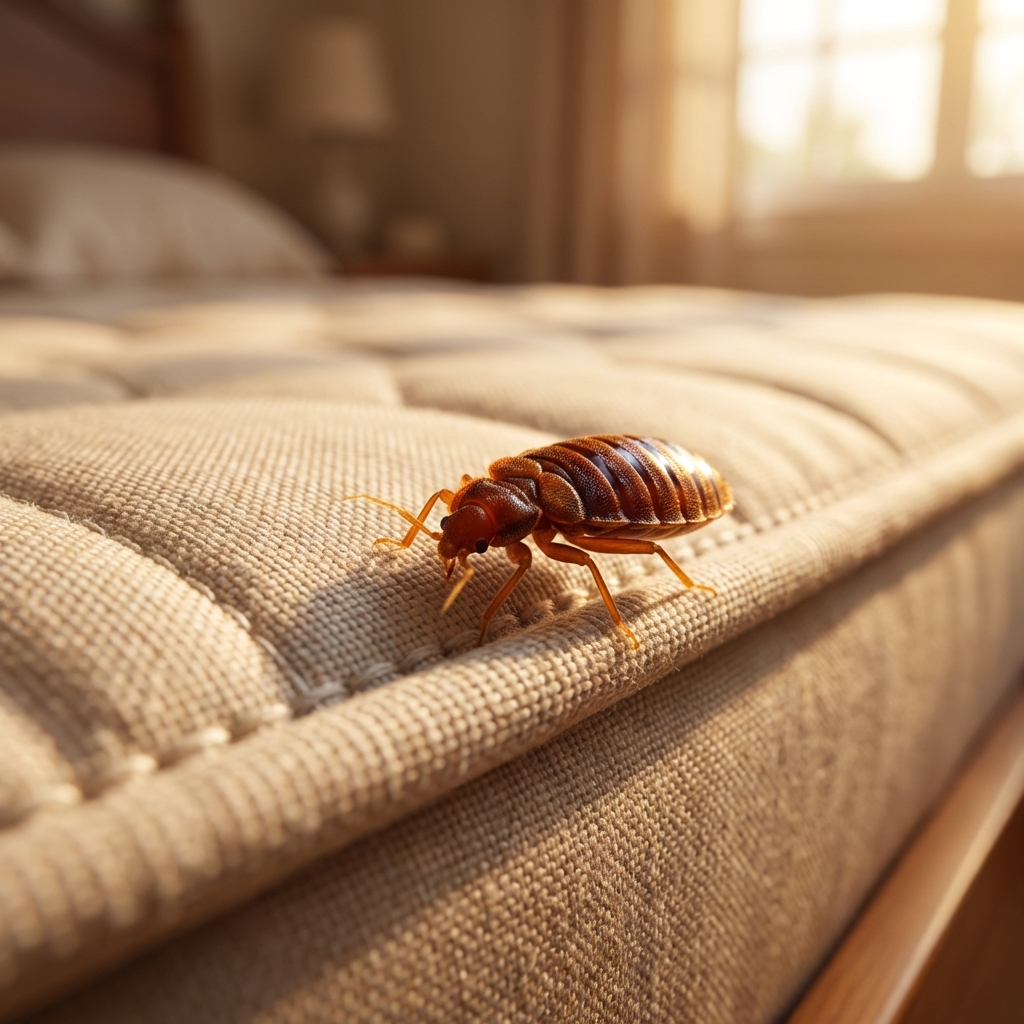
Adult bed bugs are about the size of an apple seed, flat and oval. Their color is usually reddish-brown. After feeding, they look more swollen and deeper red.
- Size: roughly 5 to 7 mm (adults)
- Shape: flat, oval, and wide for their length
- Color: tan to reddish-brown, darker after feeding
- Movement: fast crawlers, they do not fly and they do not jump
What bed bugs look like by life stage
If you only know what adults look like, you can miss an infestation. In real homes, you may see nymphs, eggs, or shed skins more often than a live adult.
Eggs
Bed bug eggs are tiny and easy to overlook. They are typically pearl-white and look like tiny elongated ovals, closer to a mini grain of salt than a grain of rice.
- Size: about 1 mm
- Color: white to translucent
- Where you find them: tucked into cracks, seams, and corners near where people sleep

Nymphs (baby bed bugs)
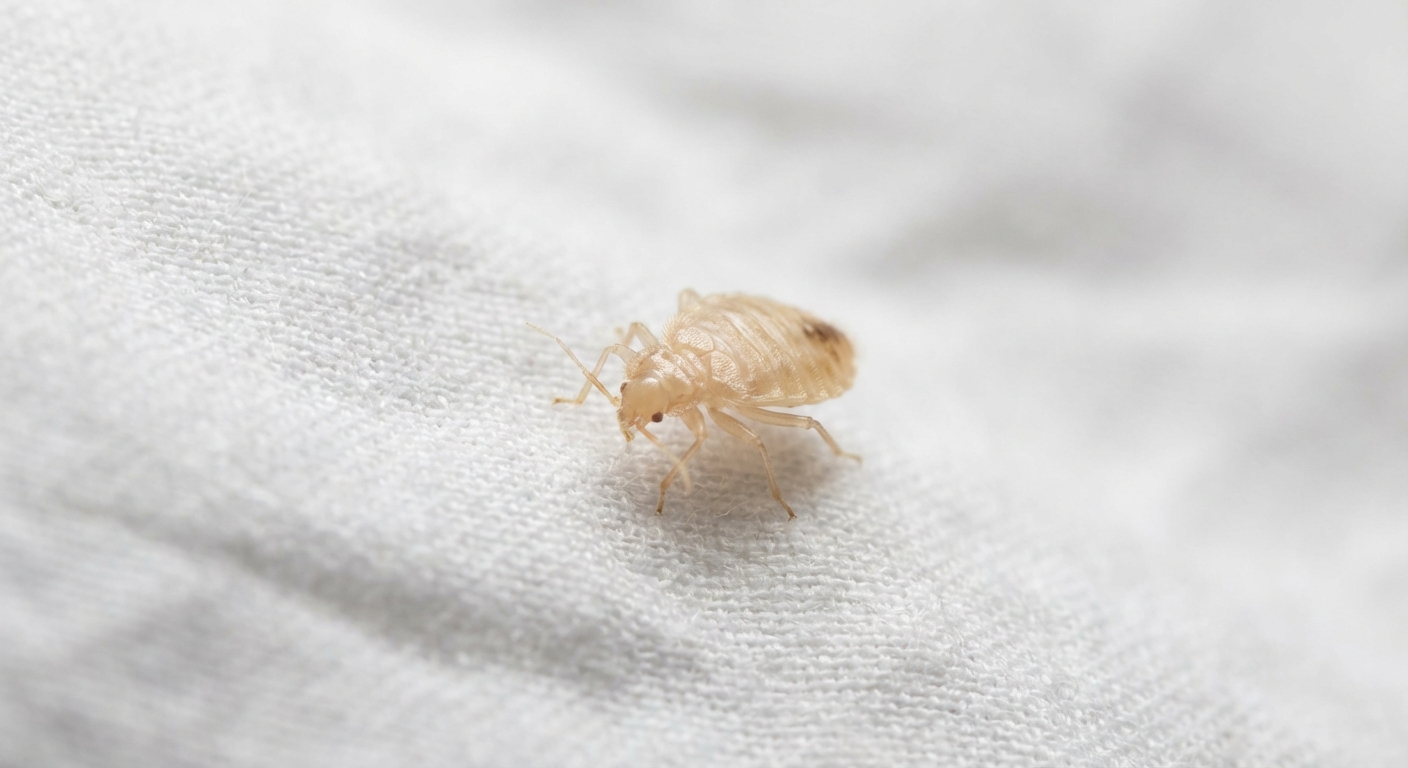
Nymphs look like smaller versions of adults but lighter in color. Early-stage nymphs can look nearly clear until they feed, then their bodies may look reddish.
- Size: roughly 1 to 5 mm depending on age
- Color: translucent to pale tan, darker after feeding
- Common clue: they are easiest to spot right after feeding
Shed skins (exoskeletons)
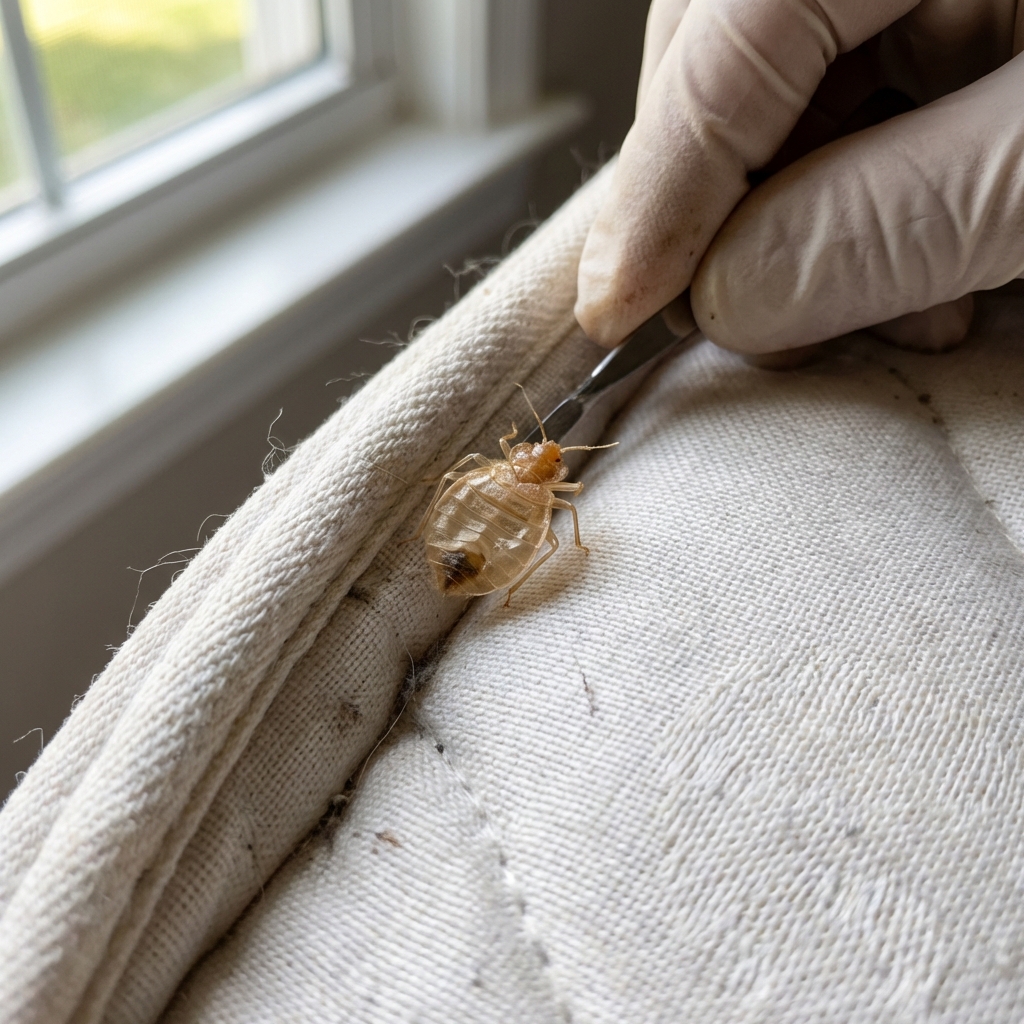
As bed bugs grow, they shed their skins. These look like a dry, papery version of the bug, often light tan, and they collect where bed bugs hide.
- Appearance: hollow, brittle, tan shells
- Where you find them: mattress seams, bed frames, headboards, baseboards
Signs bed bugs leave behind
Often, you confirm bed bugs by finding the trail they leave: stains, spotting, and clusters around hiding areas.
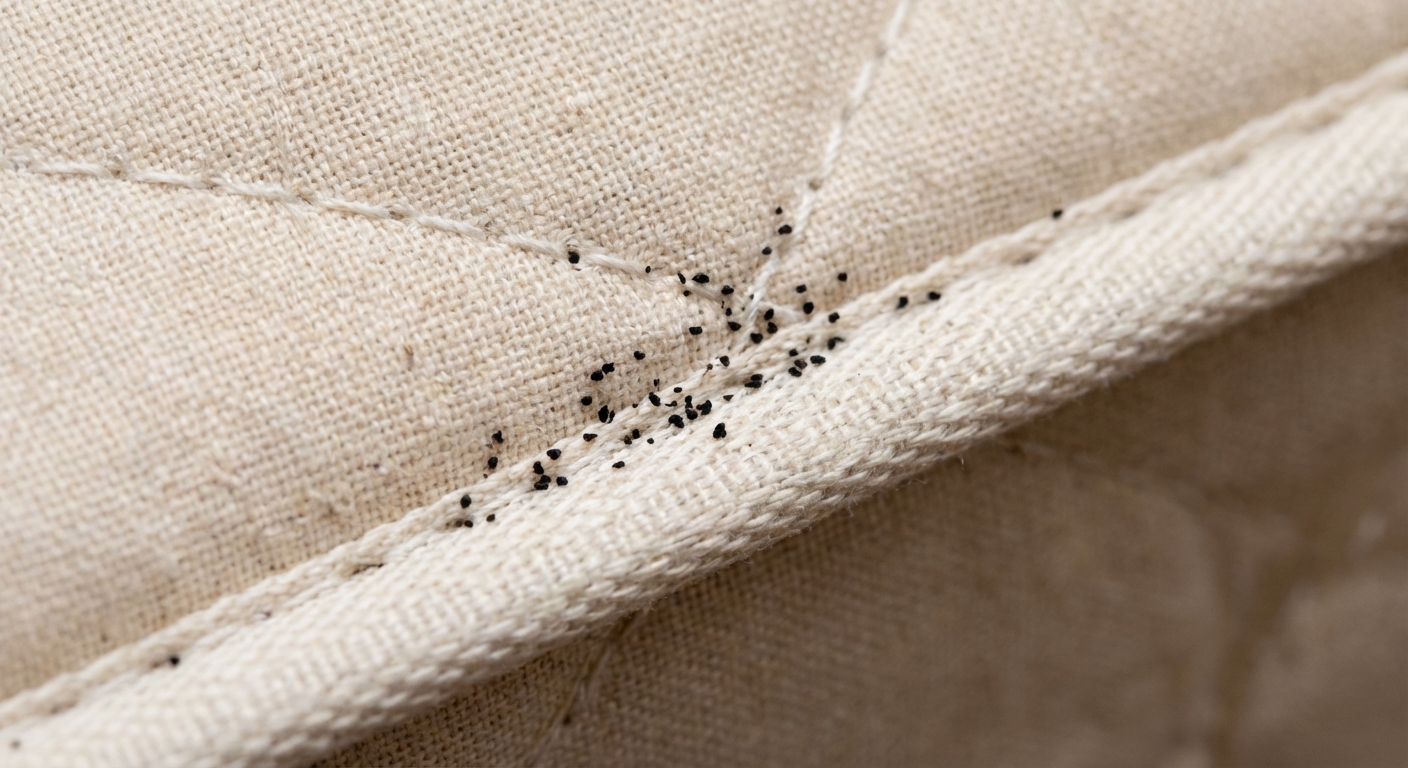
Black dots or ink-like spotting
These tiny dark marks can be bed bug fecal spots. They often show up along seams, corners, and cracks near sleeping areas.
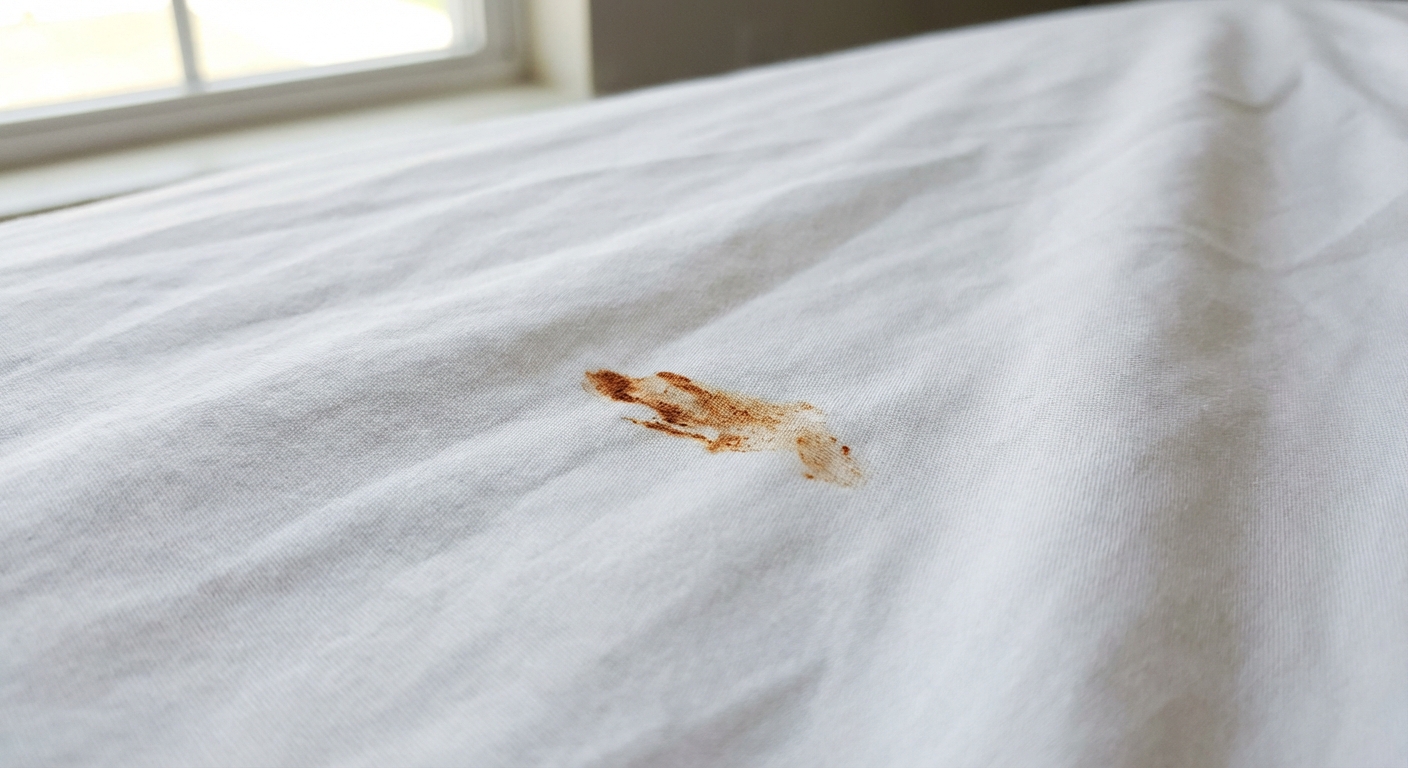
Rust-colored smears
You may see reddish-brown stains on sheets or pillowcases. This can happen if a bug is crushed after feeding.
Musty odor (heavy infestations)
Some people describe a musty, sweet, or coriander-like smell in severe infestations. Do not rely on this alone. It is not a dependable early sign.
Where to look first
Bed bugs like tight spaces close to where humans rest. Start your search within a few feet of the bed, then expand outward.
- Mattress seams and tags (especially near the head of the bed)
- Box spring edges, underside fabric, and wood frame joints
- Bed frame joints, screw holes, and cracks
- Headboard mounting points and the back side
- Nightstands corners, drawer joints, and undersides
- Baseboards and wall cracks near the bed
- Upholstered furniture seams and under cushions
Tip: Use a bright flashlight and a thin card (like an old gift card) to gently run along seams and creases. Bed bugs can tuck into very narrow crevices, sometimes around 1 mm.
Common look-alikes
A lot of “bed bug” photos people send around are actually other household insects. Here are the most common mix-ups.
Carpet beetles
Carpet beetles are often found near windowsills, rugs, or closets. Adults can be rounder and patterned. Their larvae look fuzzy or bristly, not flat and oval.
- Bed bugs: flat, oval, no patterned wings
- Carpet beetles: often mottled or patterned, larvae are hairy
Fleas
Fleas are small and dark but they jump. Bed bugs crawl. Flea bites are often around ankles, especially if you have pets.
- Bed bugs: crawl, hide in seams and cracks
- Fleas: jump, often linked to pets and carpets
Ticks
Ticks are rounder, have a tougher body, and attach to skin for long periods. Bed bugs do not latch on like ticks do.
Bed bug bites: what to know
Bites can be a clue, but they are not proof. Reactions vary widely, even within the same household.
- Timing varies: bite marks can show up hours or even days after a feeding.
- Patterns vary: some people get clusters or lines, others get scattered spots, and some people barely react.
- Location varies: often on exposed skin (arms, shoulders, neck), but it is not consistent.
- Other causes: mosquitoes, fleas, and skin irritation can look similar.
Trusted steps to confirm bed bugs
If you suspect bed bugs, the goal is to confirm quickly without spreading them around the house.
- Do a focused inspection: mattress seams, box spring, headboard, and bed frame joints.
- Look for multiple clues: live bugs, eggs, shed skins, and spotting together is much more convincing than a single stain.
- Capture a specimen if you can: press it into clear tape or seal it in a small zip bag so a pest pro or local extension office can confirm the ID.
- Use simple monitors: bed bug interceptor cups under bed legs can help confirm activity over time.
- Be careful with “bug bombs”: foggers can scatter bed bugs deeper into walls and furniture. They rarely solve the problem.
What not to do
- Do not move infested items room to room: it is one of the fastest ways to spread bed bugs.
- Do not put pesticides on bedding: follow label directions and keep chemicals off sheets, pillows, and skin-contact surfaces.
- Be cautious with DIY heat: space heaters, hair dryers, and open-flame methods can be unsafe and often do not heat hiding spots evenly.
What to do if you find bed bugs
If you see a live bed bug, treat it like a small emergency. The sooner you act, the easier it is to get ahead of it.
1) Contain, do not panic-clean
- Do not move bedding or clothing through the house uncovered.
- Bag items in sealed plastic bags before transporting to laundry.
2) Heat treat what you can
High heat is one of the most reliable tools homeowners have.
- Wash with hot water when the fabric allows.
- Dry on high heat (often the dryer is the more important part).
- For items you cannot wash, dryer-only heat can still help if safe for the item.
3) Vacuum and isolate the bed
- Vacuum seams, cracks, and bed frame joints slowly.
- Empty the vacuum into a sealed bag immediately and take it outside.
- Pull the bed slightly away from the wall and keep bedding from touching the floor.
4) Consider encasements
A mattress encasement and box spring encasement can help trap any remaining bugs inside and make future inspections easier. They work best as part of a bigger plan, not as a standalone fix.
5) Consider professional help
Bed bugs can be hard to eliminate completely with DIY methods alone, especially if they have spread beyond one room. A licensed pest professional can confirm the ID and recommend a targeted plan (often a mix of heat, residual products, and monitoring).
When to call a pro
- You find bed bugs in more than one room.
- You keep getting new bites and are seeing fresh spotting weekly.
- You live in a multi-unit building (apartments, condos, duplexes).
- Anyone in the home is highly sensitive to bites or infection risk from scratching.
If you are renting, document what you found with clear photos and notify the landlord or property manager promptly. Early reporting matters.
FAQ
Can you see bed bugs with the naked eye?
Yes. Adults are visible, about apple-seed sized. The challenge is that they hide well and are easiest to find in seams and cracks rather than out in the open.
Do bed bugs always live in the mattress?
No. They often start near the bed, but they can also hide in box springs, bed frames, headboards, furniture seams, baseboards, and even behind loose wallpaper.
Are bites enough to confirm bed bugs?
No. Bite reactions vary a lot and may be delayed by hours or days. Confirmation usually comes from finding bugs, shed skins, eggs, or spotting in hiding areas.
Bottom line
Bed bugs are flat, oval, reddish-brown insects about the size of an apple seed as adults. But the most reliable way to identify them is to look for the whole package: eggs, shed skins, and dark spotting in the seams and cracks near where you sleep. If you confirm them, focus on containment and a targeted plan rather than quick-fix sprays that spread them around.

Jose Brito
I’m Jose Britto, the writer behind The Country Store Farm Website. I share practical, down-to-earth gardening advice for home growers—whether you’re starting your first raised bed, troubleshooting pests, improving soil, or figuring out what to plant next. My focus is simple: clear tips you can actually use, realistic expectations, and methods that work in real backyards (not just in perfect conditions). If you like straightforward guidance and learning as you go, you’re in the right place.