Let’s clear up the biggest misconception first: bedbugs are not garden pests. They do not eat leaves, sap, roots, or fruits. Bedbugs are blood-feeders. If you are seeing small, flat, brown bugs on outdoor furniture, near a porch, around a shed, or even along a foundation planting, the question becomes: are these truly bedbugs, or are they one of the many outdoor insects that look similar?
Quick takeaways (what bedbugs do not do):
- They do not live on plants and they are rarely found out on leaves in daylight.
- They do not come from soil, compost, or mulch.
- They do not fly or jump. They crawl and hide in seams and cracks.
This page walks you through both possibilities. You will learn what can cause bedbugs to show up around gardens and patios, how they get there, how to confirm an ID, and what to do while protecting your home and plants.
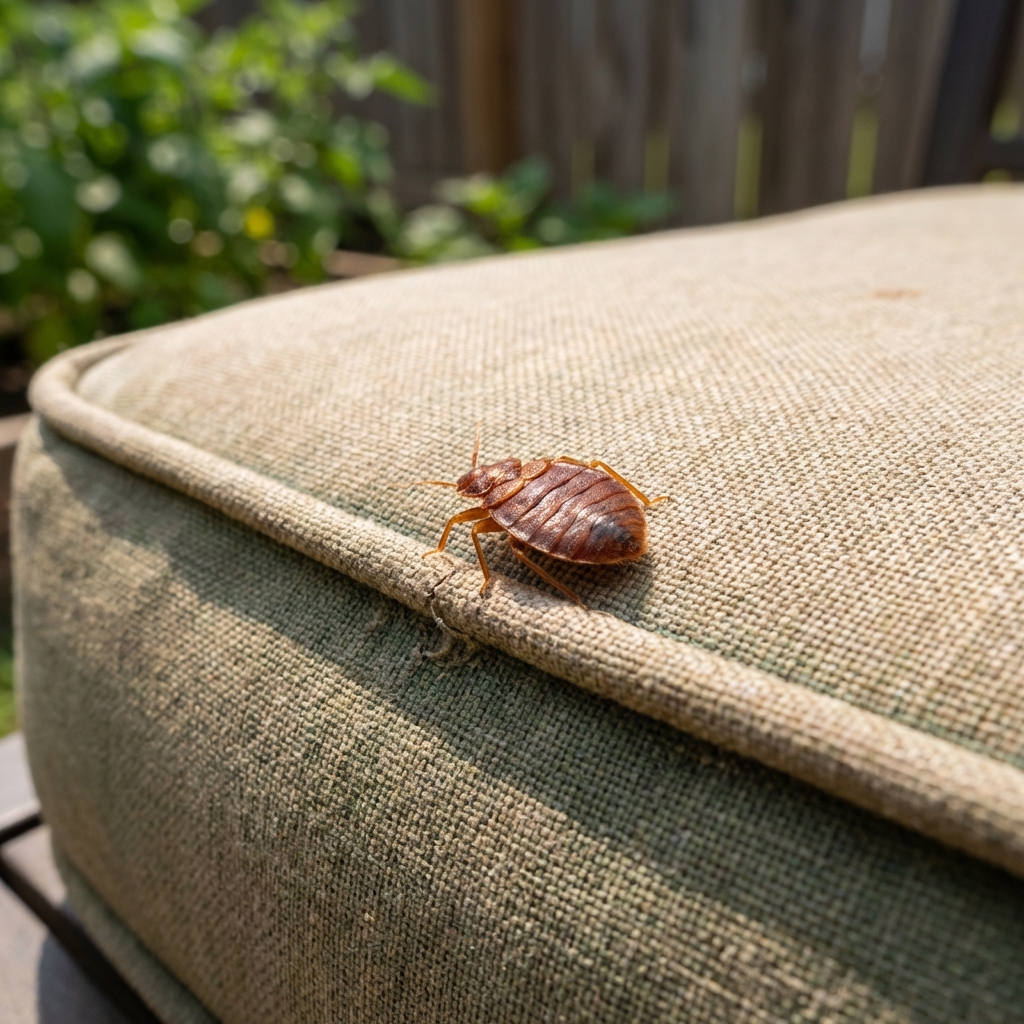
Can bedbugs live in a garden?
In most cases, bedbugs do not sustain a long-term population in open garden beds. Outdoors is usually too exposed, too dry, too wet, too hot, or too cold depending on the season. Bedbugs prefer tight cracks and protected hiding places near a steady host, like mattresses, couches, baseboards, and upholstered furniture.
That said, bedbugs can show up outside for a limited time, especially in sheltered microhabitats, if they are:
- Hitchhiking on something that got carried outdoors, such as laundry, blankets, moving boxes, backpacks, or cushions.
- Hiding in protected outdoor items close to the house, like patio furniture seams, storage benches, planters near walls, or clutter by the foundation.
- Dispersing from an indoor infestation after disruption (deep cleaning, vacuuming, moving furniture, or some pesticide treatments that irritate or repel bugs).
If you are seeing them out in the open on plants, it is more likely you are dealing with a lookalike insect.
What causes bedbugs to show up around a garden?
1) An indoor infestation spilling outward
This is the most common explanation when bedbugs are real. Bedbugs can scatter when their hiding spots are disturbed. You might notice them around:
- Door thresholds and weather stripping
- Baseboards near exterior walls
- Garages, mudrooms, and laundry areas
- Patios or decks connected to infested rooms
When it is urgent: If you find suspected bedbugs on patio cushions and anyone in the home has recent unexplained bites, inspect indoors the same day. Outdoor sightings can be a spillover signal.
If you have bites indoors, dark spotting along mattress seams, or shed skins in furniture cracks, treat this as an indoor issue first.
2) Bringing them outside on “garden stuff”
Anything soft, folded, or stored can transport bedbugs. In garden settings, common carriers include:
- Outdoor cushions and umbrellas stored indoors over winter
- Moving blankets used for hauling pots or furniture
- Reusable shopping bags and totes used for garden supply runs
- Kids’ backpacks set on patio chairs or deck benches
Bedbugs are not attracted to plants, but they are very good at grabbing a ride.
3) Secondhand and curbside items near the yard
A big outdoor trigger is used furniture. A “free” couch on the curb, a thrifted wicker chair, a secondhand storage ottoman, or even a used rug placed in a sunroom can start the cycle. If that item ends up in a garage or on a porch near garden access, you can see bedbugs outside.
4) Clutter and hiding places close to the house
Bedbugs love tight spaces. They do not need food every day, so they can hide in protected spots for a while. Outdoor areas that can support hiding include:
- Stacks of lumber, cardboard, or bagged soil stored against the house
- Cracked siding, loose trim, and gaps around hose bibs
- Storage sheds with lots of fabric or cushions
- Woodpiles directly beside doors
This does not mean your compost pile caused bedbugs. It means the clutter created protected cracks and seams close to where people sit and move in and out.
5) Wildlife and pets near sleeping or sitting areas
Bedbugs prefer humans, but they can feed on other warm-blooded hosts if they have to. However, when people report “bedbugs outdoors” tied to wildlife, the established source is often not common bed bugs (Cimex lectularius). It is more often a close lookalike that lives with bats or birds.
Important: Many “bedbugs outdoors” reports are actually bat bugs or bird bugs, which look extremely similar and come from nesting or roosting sites in eaves, vents, attics, chimneys, and wall voids.
Bedbug lookalikes gardeners misidentify
If the bug is on foliage, mulch, or soil, odds are high it is not a bedbug. Here are the usual suspects that get blamed.
Stink bug nymphs
Young stink bugs can be rounder and patterned, and some are brown. They are plant feeders and show up on vegetables and ornamentals. They move more like typical garden bugs and are often found right on leaves and fruit.
Spider beetles
Spider beetles can look like a “bedbug with long legs.” They are more dome-shaped than a bedbug and are often found around stored products, sheds, or garages.
Carpet beetles
Adult carpet beetles are small and can be mottled. They do not look exactly like bedbugs, but people confuse them because they show up around windows, sills, and baseboards and can be found near doors to patios.
Bat bugs and bird bugs
These are the trickiest. They are close relatives of bedbugs and look very similar. A professional often needs a microscope to confirm. Two clues that point toward bat bugs or bird bugs are nearby roosts or nests (bats in an attic, birds in vents or eaves) and activity that clusters around those areas. Under magnification, bat bugs often have longer hairs on the body, but most homeowners cannot verify that reliably.
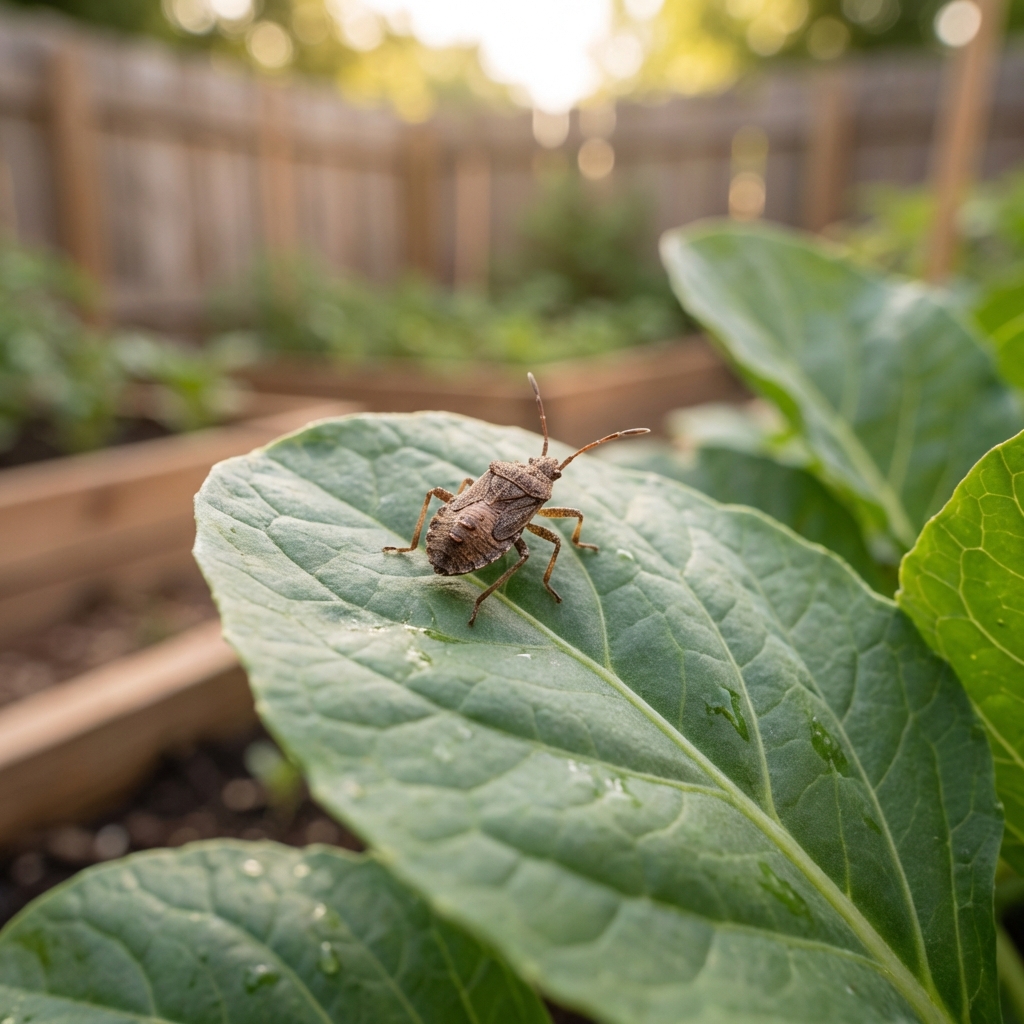
Quick reality check: If the insect is regularly found on plants during the day, especially feeding on leaves or stems, it is probably a garden pest, not a bedbug.
How to tell if it is actually a bedbug
Use a mix of behavior, body shape, and location. You do not need to be an entomologist, but you do need to be systematic.
What bedbugs usually look like
- Shape: oval and very flat when unfed, more swollen after feeding
- Color: tan to reddish-brown; nymphs can be pale
- Wings: no functional wings
- Movement: they crawl; they do not jump like fleas and they do not fly
Where they are usually found outdoors
- Seams and folds of patio cushions
- Cracks in wooden benches, deck boards, and railings
- Inside storage bins, folded tarps, or fabric covers
- Along door frames and thresholds
Simple confirmation steps
- Do a seam check: inspect cushion seams with a flashlight. Look for live bugs, shed skins, eggs, and black pepper-like spotting.
- Use tape: press clear packing tape on the bug and stick it to a white index card for a clear view and easy transport.
- Bag suspects: place the item (or the bug on tape) in a sealed zip bag.
- Compare bites cautiously: bite patterns alone are not reliable, but if multiple people are waking with bites and you find spotting on bedding, that points indoors.
If you can, take a sharp close-up photo and show it to a local extension office or a licensed pest professional. Correct ID saves you time and money.
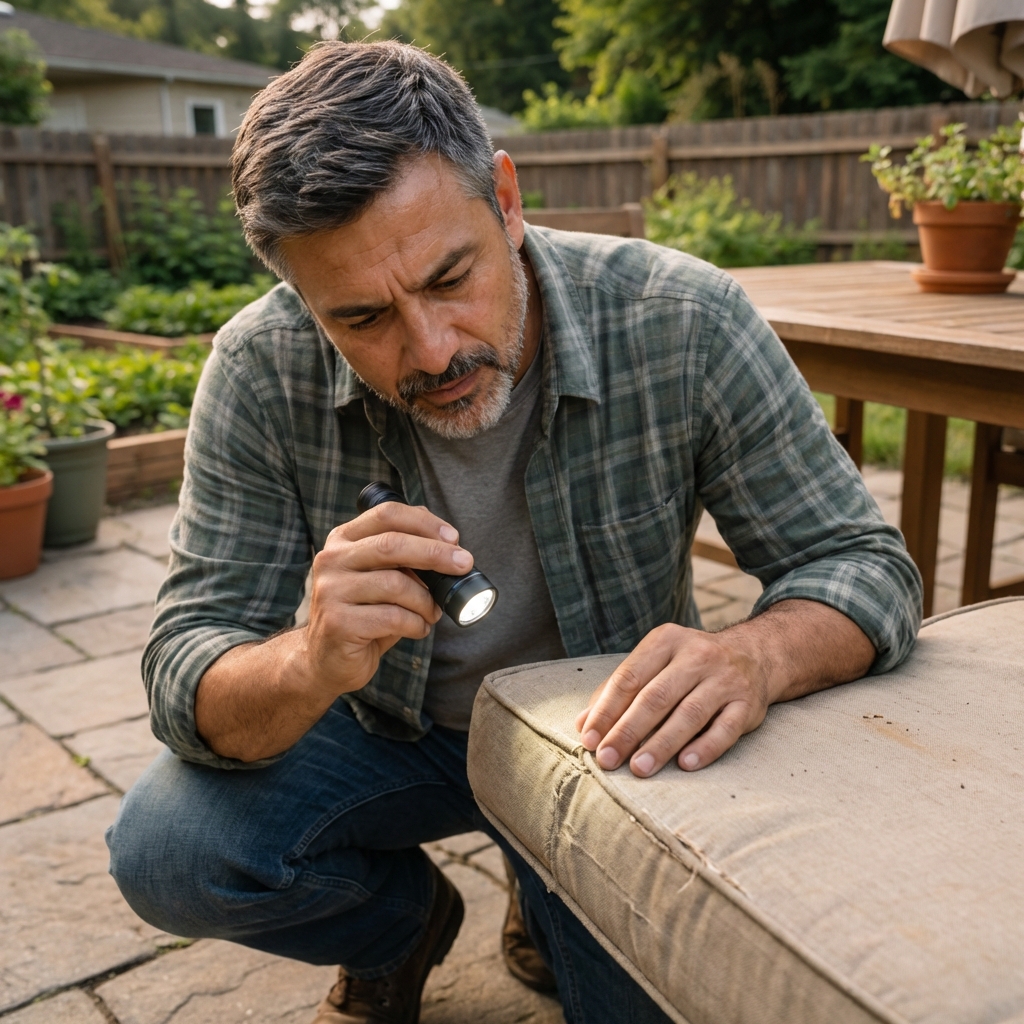
Why bedbugs are not coming from soil or mulch
This is a very common worry: “Did my compost or mulch bring bedbugs?” In general, no.
- Bedbugs do not live off decaying plant matter.
- They are not like fleas or grubs that have outdoor life stages tied to soil.
- Commercial bagged soil and mulch are not typical bedbug sources.
What can happen is that a pile of bags, cardboard, or stored materials near the house creates hiding spaces. But the source is still bedbugs being introduced by people, belongings, or wildlife, not garden amendments.
What to do if you find bedbugs outside near your garden
If you have confirmed bedbugs on patio items or near the foundation, treat it as a home protection issue first, then clean up the outdoor zone so they cannot linger.
Step 1: Stop moving items between indoors and outdoors
Do not carry cushions, throws, laundry baskets, or rugs back inside until you have contained and treated them. This is how small outdoor finds become a full indoor problem.
Step 2: Heat treat what you can
- Dryer: for removable covers and fabrics, run the dryer on high heat. A common target is about 30 minutes once items are fully hot. Follow care labels and local guidance.
- Hot wash then dry: washing helps, but the dryer heat is what reliably kills all stages for most washable items.
- Black bag solar method: this can work only if the internal temperature reaches lethal levels long enough, which is hard to guarantee. Treat it as a backup, not your main plan.
Step 3: Vacuum and physically remove
Vacuum cracks in patio furniture, deck edges, and storage seams.
- If you use a bagged vacuum, remove the bag right away, seal it in another bag, and take it to an outdoor trash bin.
- If you use a bagless vacuum, empty the canister into a bag outdoors, seal and discard it, then wash or wipe the canister and clean or replace filters so survivors do not crawl back out.
Step 4: Reduce outdoor hiding spots
- Move woodpiles and storage off the foundation
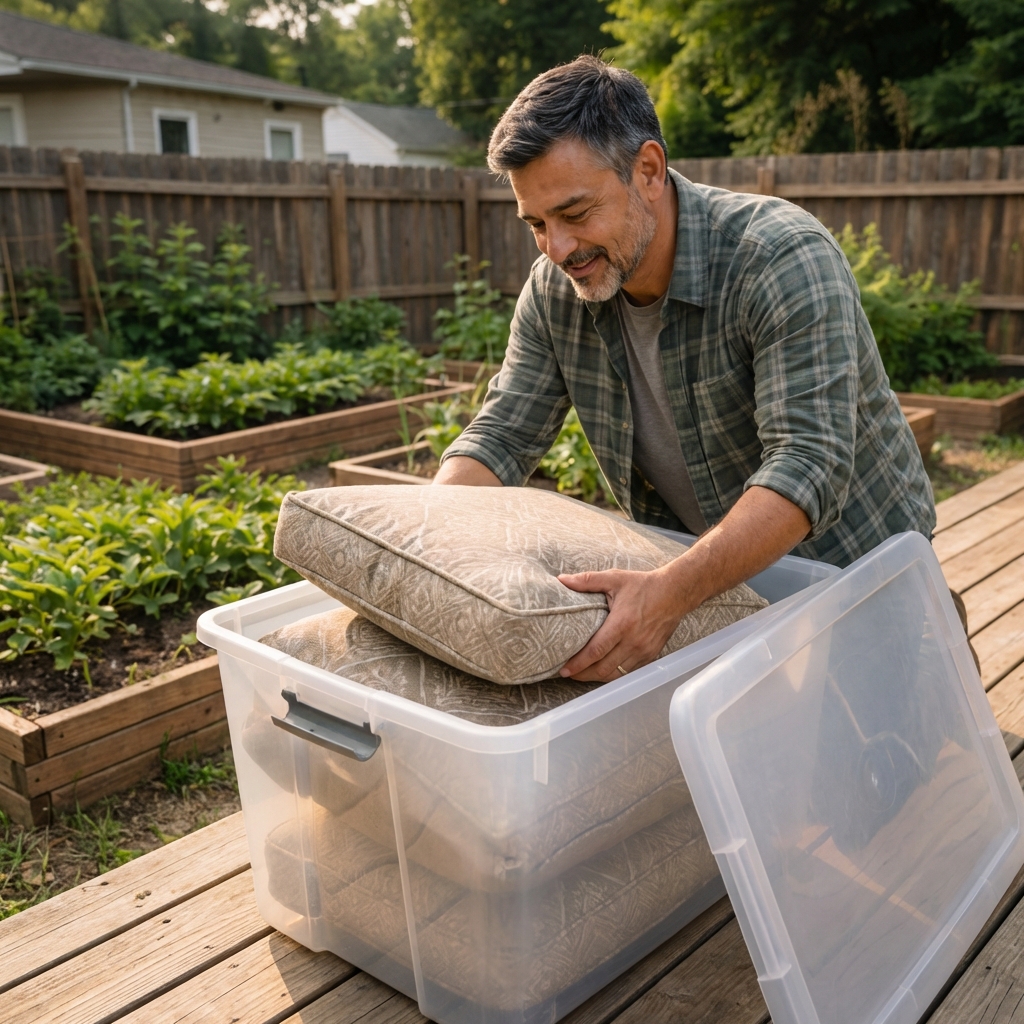
- Store cushions in sealed bins if possible
- Limit cardboard storage in sheds and garages
- Seal obvious cracks around doors and trim
Step 5: Be cautious with pesticides around edible plants
It is tempting to spray, but bedbugs hide in seams and cracks where many garden sprays will not reach. Also, pesticides labeled for garden pests are often not labeled for bedbugs, and bedbug products are often not labeled for use on or near edible plants.
If you want chemical help, your safest path is to:
- Use products specifically labeled for bedbugs and for the surface you are treating
- Keep applications away from edible plant surfaces unless the label explicitly allows it
- Avoid total-release foggers (bug bombs) indoors, which are often ineffective for bedbugs and can make them scatter
- Consider hiring a licensed professional, especially if there is any sign of indoor spread
If you suspect the bedbugs are coming from indoors
Outdoor sightings often mean you should do a quick indoor check the same day:
- Inspect mattress seams, box spring corners, and bed frame joints
- Check the couch, especially under cushions and along stapled fabric
- Look for black spotting, shed skins, and live bugs
- Install bed interceptors under bed legs if you suspect activity
If you confirm indoor bedbugs, a full control plan usually needs multiple steps over time. Many households benefit from professional treatment because DIY-only approaches often miss hiding sites.
Prevention tips for gardeners and patios
- Quarantine secondhand items: keep used furniture in a garage or sealed area until inspected and treated.
- Store cushions smart: sealed bins beat stacks in a corner.
- Do a seasonal seam check: at the start of patio season, inspect cushions and storage benches before you bring anything inside.
- Keep clutter off the foundation: it reduces hiding spots for lots of pests, not just bedbugs.
- Be careful after travel: luggage and backpacks often get set on patio furniture when you unpack. Put bags in a controlled spot and launder travel clothes promptly.
When to call a pro
Bring in a licensed pest control professional if any of the following are true:
- You are finding bugs repeatedly over more than a few days
- You have bites and cannot locate the source
- You suspect bat bugs or bird bugs due to nesting activity in eaves, vents, or attic areas
- The problem involves multiple units (apartments, townhomes) or shared walls
The goal is not just killing visible bugs. It is finding the source, breaking the cycle, and preventing reintroduction.
Bottom line
If you are seeing “bedbugs” in the garden, the most likely causes are hitchhiking from belongings, spillover from an indoor infestation, or a lookalike insect that actually lives outdoors. Start by confirming what you have, then focus on seams, cracks, and movable items near the house. In most cases, your soil and plants are not the source.

Jose Brito
I’m Jose Britto, the writer behind The Country Store Farm Website. I share practical, down-to-earth gardening advice for home growers—whether you’re starting your first raised bed, troubleshooting pests, improving soil, or figuring out what to plant next. My focus is simple: clear tips you can actually use, realistic expectations, and methods that work in real backyards (not just in perfect conditions). If you like straightforward guidance and learning as you go, you’re in the right place.