Blossom end rot is one of those tomato problems that feels personal. Your plant looks healthy, flowers set fruit, and then the bottom of the tomato turns dark, leathery, and sunken. The good news is it is very common and, in most home gardens, it is preventable once you understand what is actually happening.
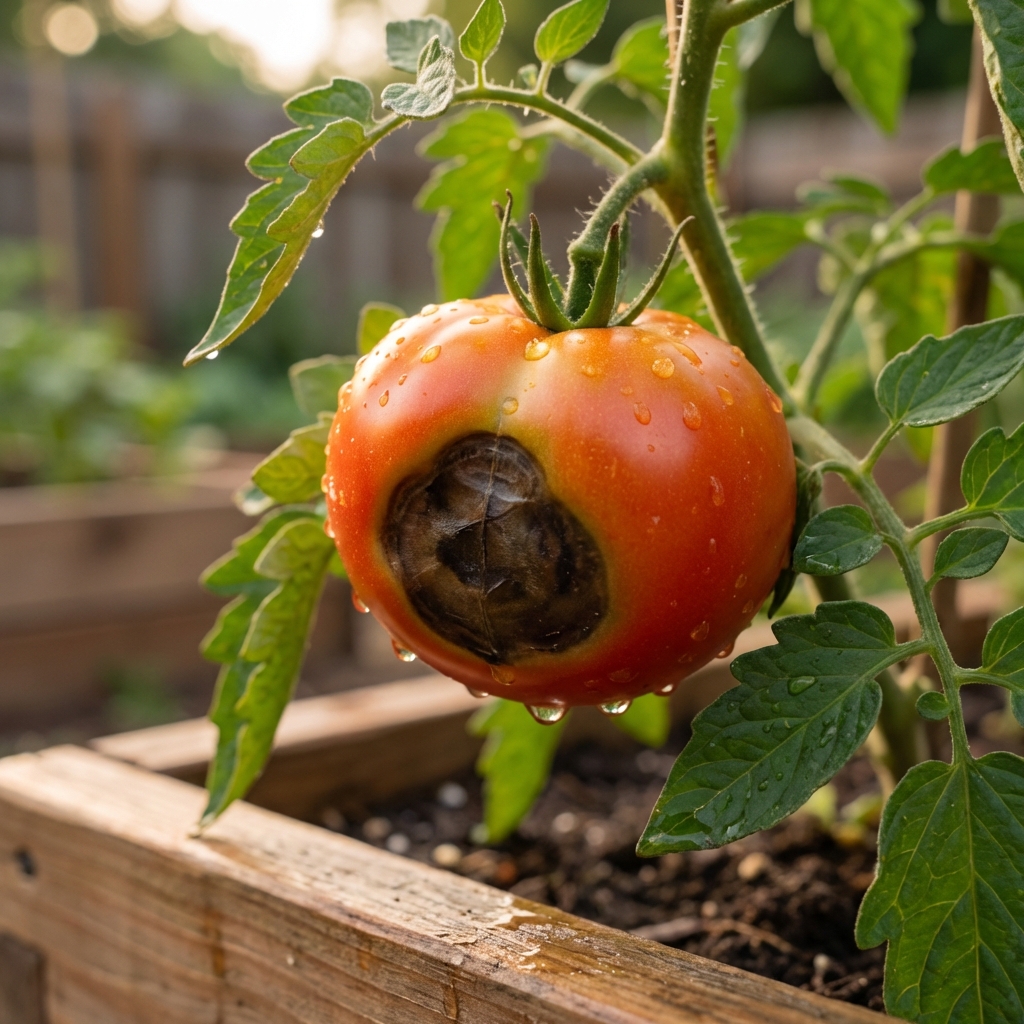
What blossom end rot looks like
Blossom end rot usually shows up as a dry, brown to black spot on the bottom of the fruit (the blossom end, opposite the stem). It often starts small and water-soaked, then turns papery or leathery as it expands.
- Location: Almost always on the blossom end of the tomato.
- Texture: Sunken and firm, not fuzzy.
- Timing: Most common on the first flush of fruit, especially during fast growth.
It is most often discussed with tomatoes, peppers, and eggplant. Similar blossom-end breakdown can show up on squash or zucchini too, but tomatoes are the classic victim.
Quick diagnosis guardrail: If the spots are on the sides or shoulders, look more like rings, feel soft and slimy, or have fuzzy mold, you may be dealing with something else (like anthracnose, insect damage, sunscald, or a secondary rot) rather than classic blossom end rot.
The real cause: calcium is not reaching the developing fruit
Blossom end rot is caused by a calcium deficiency in the fruit itself while it is forming. Here is the key detail most gardeners miss: it is often not because your soil has no calcium. It is because the plant cannot move enough calcium into the fruit at the right time.
Calcium moves with water through the plant. Calcium is also relatively immobile once it is deposited, so the fruit needs a steady supply during early development. When water flow is inconsistent, calcium delivery becomes inconsistent, and the fruit can come up short.
Susceptible varieties
Some tomatoes are simply more prone to blossom end rot. Paste and plum types (like Roma and San Marzano) are widely known to show it more often than round slicers or cherry tomatoes. If your sauce tomatoes are struggling while your cherry tomatoes look perfect, you are not imagining it.
Large fruits and fast-growing early fruit clusters also tend to show it more, especially when weather swings push rapid growth.
Top reasons blossom end rot happens
1) Uneven watering (the most common trigger)
The classic pattern is letting the plant get too dry, then soaking it. That swing stresses roots and disrupts steady water movement, which is how calcium gets to the fruit.
- Dry spell followed by heavy watering or rain
- Infrequent deep watering in hot weather
- Containers drying out quickly, sometimes daily in summer
2) Fast growth from heavy nitrogen fertilizing
Too much nitrogen pushes lots of leafy growth. The plant prioritizes new shoots and leaves, and fruit can lose the calcium competition during rapid growth.
- High-nitrogen lawn fertilizer used in beds by mistake
- Overdoing manure or green fertilizers early on
- Feeding too aggressively when the first fruits are forming
3) Root stress and damage
Even if you water well, stressed roots cannot pull and deliver water consistently.
- Compacted soil or poor drainage
- Root pruning from rough transplanting
- Overcultivating close to the plant and breaking feeder roots
- Root-knot nematodes in warm climates
4) Container and raised bed issues
Blossom end rot is common in pots because potting mix dries faster and nutrients wash out more easily. Salt buildup from frequent fertilizing in containers can also stress roots and interfere with steady uptake.
- Small containers heat up and dry out fast
- Light potting mixes that do not hold moisture well
- Irregular watering due to heat and wind
- Overfertilizing that leads to excess salts in the root zone
5) Soil pH problems (less common, but real)
If soil pH is way off, calcium can be present but less available to plants. Tomatoes generally do best around slightly acidic to neutral conditions.
If you suspect pH issues, a basic soil test is worth it. Guessing can lead to adding products you do not need.
Is blossom end rot a disease or a pest?
No. Blossom end rot is a physiological disorder. It does not spread plant-to-plant like blight, and you cannot spray your way out of it with fungicides or insecticides.
That said, once the end of a tomato is damaged, secondary molds can move in later. The original cause is still calcium delivery and water stress.
Quick fixes that help right now
Remove affected fruit
Pick off tomatoes with blossom end rot as soon as you see it. The plant will not repair that spot, and removing the fruit can help the plant avoid wasting resources on fruit that will not improve. It can also reduce the chance of secondary rot and pest attention.
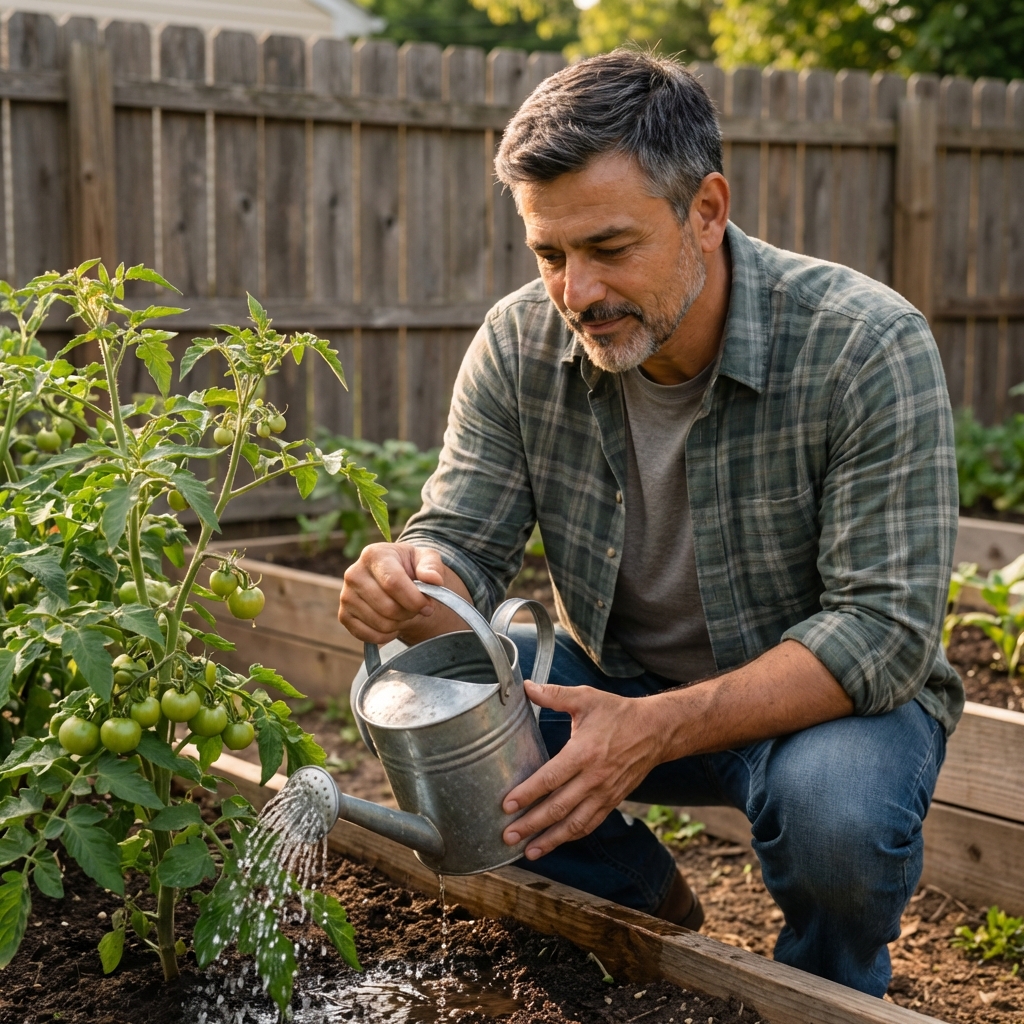
Get watering consistent
Your goal is steady moisture, not constant sogginess. A simple approach:
- Water deeply so moisture reaches the root zone.
- Water again when the top 1 to 2 inches of soil feel dry (frequency varies by heat and soil type).
- During hot spells, check daily, especially for containers. For pots, use the weight test too. A light pot usually needs water even if the surface looks slightly moist.
Mulch to smooth out moisture swings
Add 2 to 3 inches of mulch around the plant (straw, shredded leaves, untreated grass clippings in thin layers, or bark fines). Keep mulch a couple inches away from the stem to prevent constant wetness at the base.
Pause high-nitrogen feeding
If you have been feeding frequently and growth is very leafy, back off for a bit. Choose a tomato fertilizer with a balanced or lower first number (nitrogen) and avoid quick green-up products.
Should you add calcium? Sometimes, but do it the smart way
Because calcium is part of the story, many gardeners reach for calcium sprays immediately. Here is the practical reality:
- Foliar sprays are not a magic fix for fruit already affected. The damaged tissue will not recover.
- Many gardens already have calcium, especially if you have limed before, have clay-leaning soil, or use moderately hard water. Some acidic, sandy, or heavily leached soils truly can be low.
- Calcium helps most when it is in the root zone and moisture is steady so the plant can move it.
When calcium amendments make sense
- Your soil test shows low calcium.
- You garden in very sandy soil that leaches nutrients quickly.
- You are using a soilless potting mix and never replenish minerals.
Common calcium sources (choose based on your soil)
- Garden lime: Adds calcium and raises pH. Use only if pH is low.
- Gypsum: Adds calcium without raising pH much.
- Calcium nitrate: Fast-acting, but also adds nitrogen, so it can worsen leafy growth if overused.
If you are not sure, a soil test beats guessing. Overcorrecting pH can create new nutrient problems.
How to prevent blossom end rot all season
1) Water on a schedule, not on a whim
In-ground tomatoes often do well with a deep watering a few times per week, adjusted for heat, rain, and soil type. Containers often need daily watering in summer. The best schedule is the one that keeps soil moisture steady.
2) Use mulch early
Mulch is one of the simplest set it and forget it tools for preventing moisture stress.
3) Keep roots happy
- Avoid digging close to the plant once it is established.
- Provide good drainage. Tomatoes hate sitting in water.
- Support plants well so they are not rocking in the wind and stressing roots.
4) Fertilize gently once fruit sets
After flowering and fruit set, lean toward a fertilizer plan that supports fruiting rather than pushing leaves. Overfeeding is a common root cause in perfectly green plants with ugly fruit.
5) Choose the right container size and mix
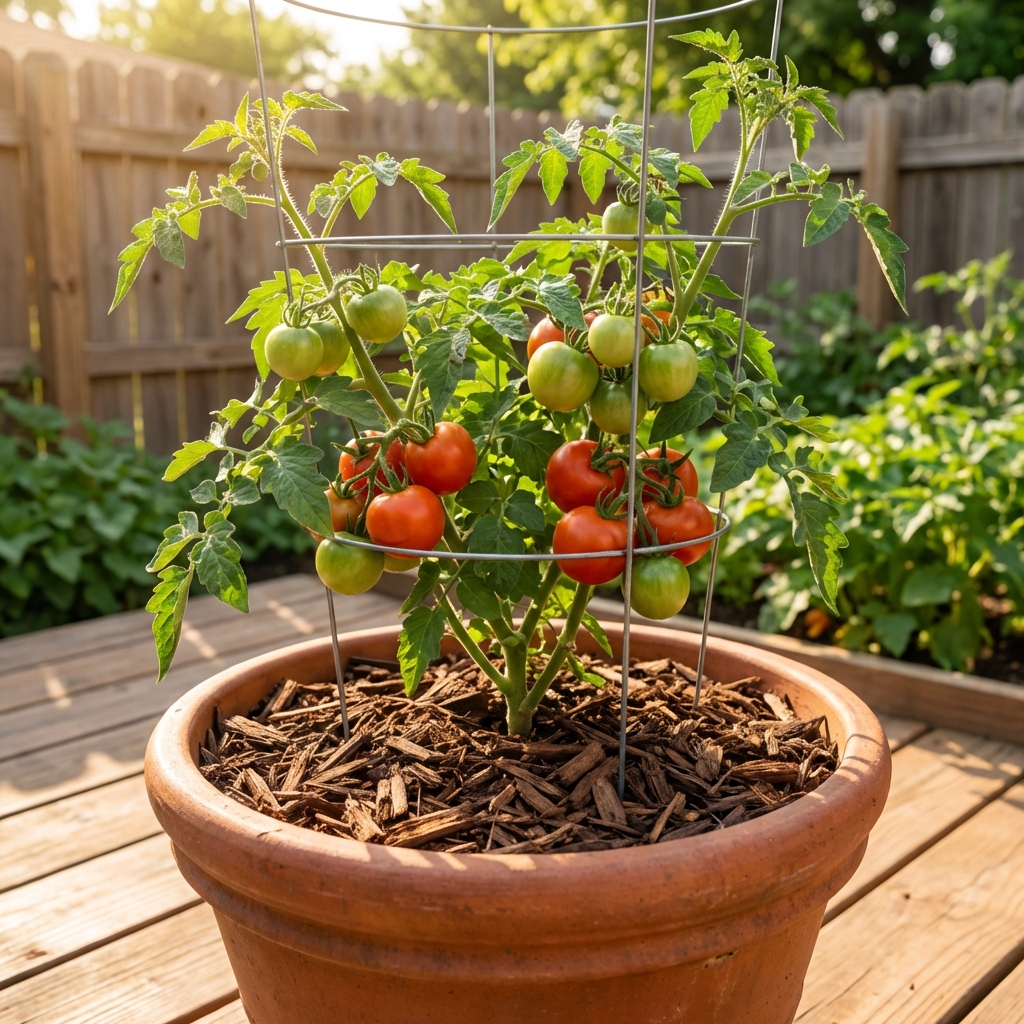
- Use 10 to 20 gallon containers for most standard varieties. Compact patio or determinate types can sometimes do fine in 5 to 10 gallons, while large indeterminates are happiest in 15 to 25+.
- Choose a quality potting mix that holds moisture but drains well.
- Consider a drip line or simple timer if you travel or miss days.
- In containers, flush the pot occasionally with plain water to reduce fertilizer salt buildup (let water run out the drainage holes).
FAQ
Will tomatoes with blossom end rot ripen normally?
They may continue to change color, but the damaged end will not heal. Most gardeners discard them. If the affected area is small and the rest of the fruit is firm and healthy, you can cut off the bad portion and use the rest, but quality is often poor.
Can I eat a tomato with blossom end rot?
Often, yes, if it is otherwise firm and fresh. Cut off the damaged portion generously and use the good part right away. Discard the tomato if it smells off, has fuzzy mold, is soft throughout, or the rot is extensive.
Does Epsom salt fix blossom end rot?
No. Epsom salt is magnesium sulfate, not calcium. It will not correct blossom end rot and can make calcium uptake harder if magnesium levels get too high.
Can too much rain cause blossom end rot?
Yes. A stretch of dry weather followed by heavy rain is a common trigger because it creates a big moisture swing. Mulch and consistent watering help buffer those swings.
Why does it happen mostly on the first tomatoes?
Early in the season, plants often grow fast, roots are still expanding, and watering patterns are less stable. Once the plant is established and conditions steady out, later fruit often looks fine.
A simple checklist to stop it
- Pick off affected fruit.
- Water deeply and consistently, avoiding dry-then-drench cycles.
- Mulch 2 to 3 inches to stabilize moisture.
- Stop heavy nitrogen feeding and switch to a fruit-friendly fertilizer plan.
- Consider a soil test before adding lime or other calcium products.
Once moisture is steady, most plants grow out of blossom end rot and start producing clean fruit again. That is the best kind of tomato problem: frustrating, but fixable.

Jose Brito
I’m Jose Britto, the writer behind The Country Store Farm Website. I share practical, down-to-earth gardening advice for home growers—whether you’re starting your first raised bed, troubleshooting pests, improving soil, or figuring out what to plant next. My focus is simple: clear tips you can actually use, realistic expectations, and methods that work in real backyards (not just in perfect conditions). If you like straightforward guidance and learning as you go, you’re in the right place.