Let’s get one thing straight: scabies has nothing to do with being “dirty.” It is a common, highly contagious skin condition caused by a tiny mite that spreads mainly through close contact. If you have kids in school, live with roommates, care for someone, or share bedding with a partner, it can happen.
Below is the plain-language breakdown of what scabies is, how people usually get it, what it feels like, how it is diagnosed, and what to do so you do not end up stuck in a repeat cycle.
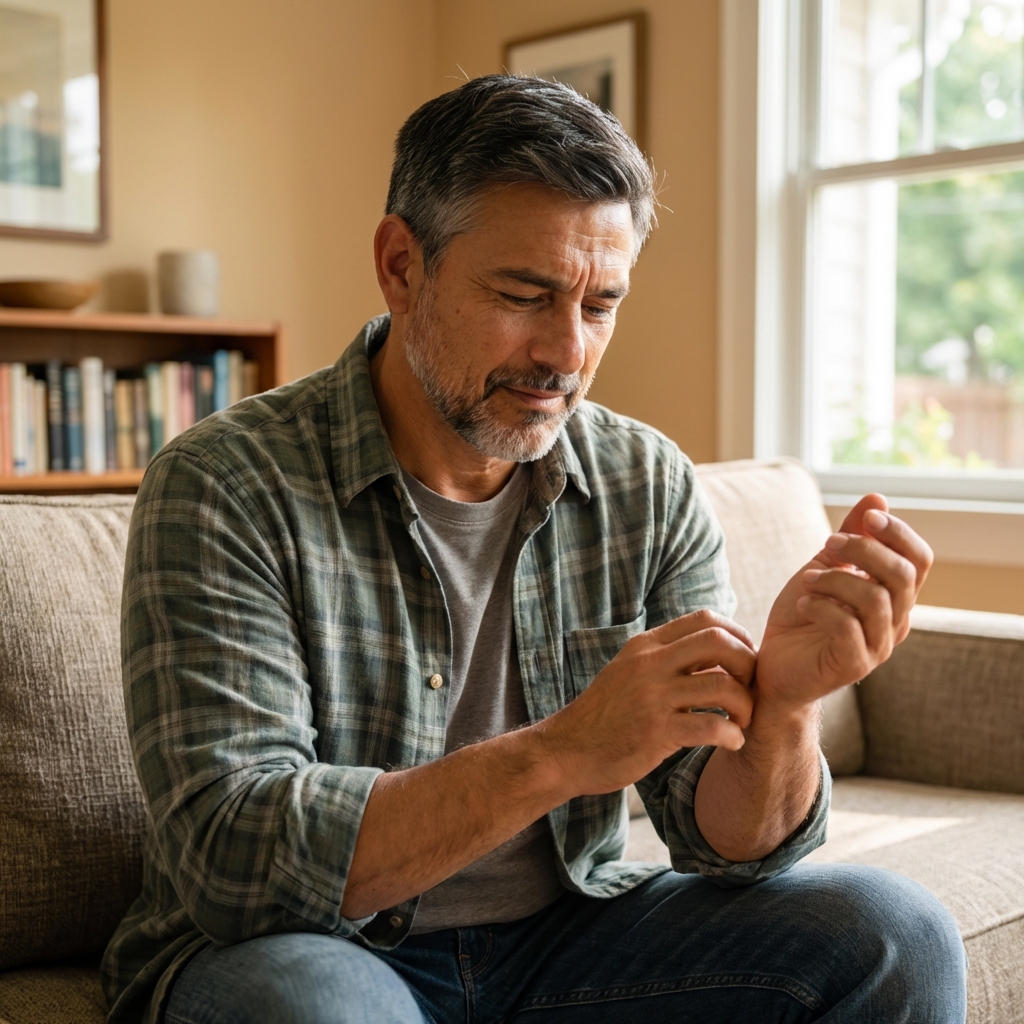
What scabies is
Scabies is caused by a microscopic mite called Sarcoptes scabiei. The mites burrow into the top layer of skin to live and lay eggs. Your body reacts to the mites, eggs, and waste, and that reaction is what causes the intense itching and rash.
Because symptoms are an allergic-type response, they can take time to show up, especially the first time you get scabies.
Key takeaways
- Cause: mites, not bacteria or fungus
- Main symptom: intense itching, often worse at night
- Common sign: small bumps or a pimple-like rash, sometimes with thin “burrow” lines
- Contagious: yes, especially with close skin contact
How you get scabies
Scabies spreads most often through prolonged skin-to-skin contact. Quick contact like a handshake is less likely to spread it, but close contact that lasts long enough gives mites a chance to move from one person to another.
Most common ways it spreads
- Living with someone who has it: households are a top source because of shared couches, beds, and close contact
- Sleeping in the same bed: including children climbing into a parent’s bed
- Sexual contact: a very common route for adults
- Caregiving contact: helping someone bathe, dress, or transfer
- Group living settings: dorms, long-term care facilities, shelters, and childcare centers can see outbreaks
Can you get it from sheets, towels, or furniture?
Rarely, but it is possible. Scabies mites do not survive long away from human skin. In typical conditions, they often live about 24 to 72 hours off the body, although temperature and humidity can change that. Transmission from bedding or clothing is more likely when items were used very recently, and it is more likely with heavy infestations or crusted scabies (more on that below). In everyday cases, the main driver is still close skin contact.

Symptoms
Scabies can look like a lot of everyday skin problems: eczema, bug bites, dry winter skin, contact dermatitis. The pattern and the itching are usually what raise suspicion.
Common symptoms
- Intense itching, often worse at night
- Small red bumps, sometimes in clusters
- Thin wavy lines (burrows) that can look like tiny scratches
- Sores or scabs from scratching
Common locations on the body
- Between the fingers
- Wrists and elbows
- Armpits
- Waistline and belly button area
- Buttocks and inner thighs
- Genital area (adults)
- Breasts (around nipples)
In babies and very young children, scabies can also show up on the scalp, face, neck, palms, and soles.
How long until symptoms show?
- First time: symptoms can take 2 to 6 weeks to appear
- If you have had scabies before: symptoms may show up within 1 to 4 days
How it is diagnosed
Many clinicians can diagnose scabies based on the story (especially nighttime itching and close-contact spread) and a skin exam. When the diagnosis is uncertain, they may use tools like:
- Dermoscopy: a handheld scope to look for burrows and mite patterns
- Skin scraping or tape test: to look for mites, eggs, or droppings under a microscope
One important note: tests can be negative even when scabies is present. That is why your clinician may treat based on clinical suspicion, especially during household clusters or outbreaks.
When to see a clinician
If you think it might be scabies, it is worth getting confirmation and a treatment plan. It can mimic other rashes, and the right plan matters if there are multiple people involved.
Seek medical advice if:
- Itching is intense and not improving
- Multiple household members have similar itching or rash
- You see burrow-like lines or spreading bumps in classic locations
- There are signs of infection from scratching (increasing redness, warmth, pus, fever)
- A baby, elderly adult, or immunocompromised person is affected

Treatment
Scabies treatment usually requires medication that kills the mites. In many places, that means prescription treatment. In some countries, certain options may be available over the counter, so local rules vary. Either way, it is best to follow clinician or pharmacist guidance so the treatment is done correctly.
Over-the-counter anti-itch products can help symptoms, but they do not reliably kill scabies mites.
Common treatments
- Permethrin 5% cream: often first-line. Many guidelines advise applying it to clean, dry skin over the whole body from the neck down (and in some cases including the scalp, hairline, face, and ears, especially for infants, older adults, and immunocompromised people). It is commonly left on 8 to 14 hours and then washed off. A second application is often recommended about 7 days later. Your clinician will tell you exactly how to apply it for your situation.
- Oral ivermectin: used in some cases, outbreaks, or when topical treatment is difficult. Dosing is clinician-guided, and a repeat dose is commonly used (often around 7 to 14 days later).
Important: treat close contacts
One of the biggest reasons scabies “won’t go away” is that only one person gets treated. In many cases, clinicians recommend treating:
- Everyone in the household
- Sexual partners
- Anyone with prolonged close skin contact in the past several weeks
Itching after treatment does not always mean treatment failed
It is very common to keep itching for 2 to 4 weeks after successful treatment. That is your immune system calming down. New bumps can also happen because the skin is irritated from treatment, or because scabies triggered eczema-like inflammation. What you want to watch is whether new burrows or clearly new bumps keep appearing after the expected window, which can suggest reinfestation or incomplete treatment.
Comfort tips while your skin calms down
If your clinician says treatment is complete, symptom relief can still take time. These can help in the meantime:
- Moisturizer for dry, irritated skin
- Cool compresses to take the edge off the itch
- Oral antihistamines at night if itching affects sleep (ask your clinician or pharmacist which is safest for you)
- Mild topical steroid for inflammation, if recommended by a clinician
Crusted scabies
Crusted scabies (sometimes called Norwegian scabies) is a less common form where a person can have a very large number of mites. It can be extremely contagious and is more likely to spread through bedding, clothing, and surfaces. It is seen more often in people who are immunocompromised, elderly, or living with certain neurological or skin conditions, and it may not itch as much as classic scabies.
If crusted scabies is possible, do not self-treat. It usually needs a more intensive, clinician-directed plan and careful contact management.
Home steps to prevent reinfestation
Think of this like breaking a loop: treat the person, then handle the high-contact items so mites do not hop right back. You do not need to sterilize your entire home, but you do need to hit the things that touched skin recently.
What to wash
- Clothes worn recently
- Bed sheets, pillowcases, blankets
- Towels and washcloths
Use the hottest water that is safe for the fabric, then dry on high heat if possible.
What you cannot wash
Items that cannot be laundered can be sealed in a plastic bag so mites die off away from human skin. A common public-health recommendation is at least 3 days, and some guidance suggests up to 7 days to be safe. Timing can vary based on the situation (especially with crusted scabies), so follow clinician or local public-health advice when available.
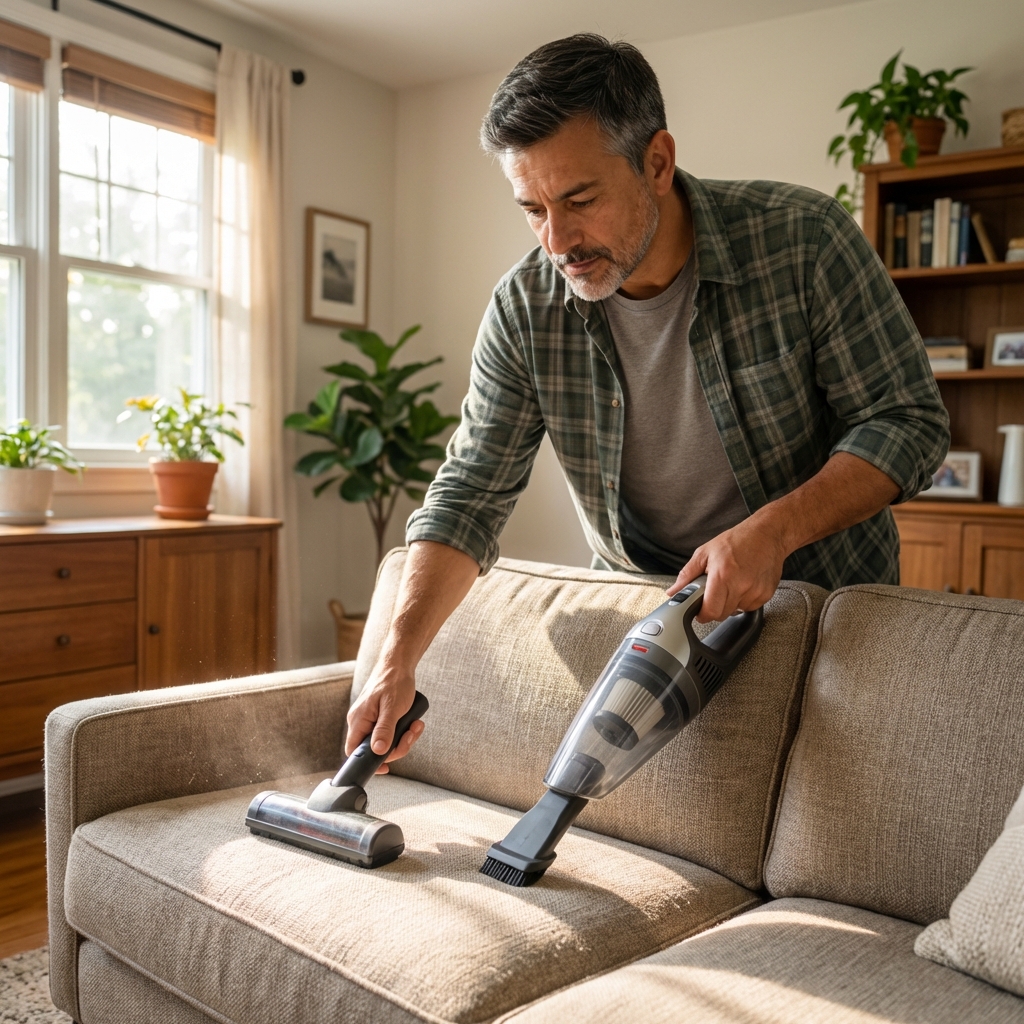
Vacuum high-contact surfaces
- Upholstered furniture
- Car seats
- Mattress surfaces (top and sides)
- Rugs in rooms where people lounge or sleep
Focus on places where bare skin spends time. Deep cleaning every corner is usually not necessary.
Myths
Does scabies mean my house is dirty?
No. Scabies spreads through contact, not cleanliness. Clean homes get scabies, too.
Can pets give humans scabies?
Human scabies is typically spread from other humans. Some animal mites can cause temporary itching in people, but they usually do not establish the same ongoing infestation. If you suspect an animal-related issue, check with a vet and a clinician.
Can I see the mites?
Not usually. They are microscopic. What you see are the skin reaction and sometimes burrows.
Do I need to stay home?
Policies vary, especially during outbreaks. Many schools and workplaces allow return after the first treatment is completed (sometimes the next day), but close contacts may still need treatment too. Follow medical advice and any local policy.
Practical checklist
- Confirm with a healthcare professional when possible
- Use the prescribed treatment exactly as directed (timing and full-skin coverage matter)
- Treat household members and close contacts if recommended
- Wash and dry recently used bedding, towels, and clothing
- Bag items that cannot be washed (often 3 to 7 days, unless told otherwise)
- Vacuum couches, mattresses, and high-contact seating
- Expect itching to linger, but watch for new bumps or burrows
If you are stuck in a loop of recurring symptoms, it usually comes down to one of three things: missed contacts, incomplete application, or reinfestation from items used very recently. Tightening up those steps is often what finally breaks the cycle.

Jose Brito
I’m Jose Britto, the writer behind The Country Store Farm Website. I share practical, down-to-earth gardening advice for home growers—whether you’re starting your first raised bed, troubleshooting pests, improving soil, or figuring out what to plant next. My focus is simple: clear tips you can actually use, realistic expectations, and methods that work in real backyards (not just in perfect conditions). If you like straightforward guidance and learning as you go, you’re in the right place.