Rats follow food, water, and shelter first. Strong smells can help discourage them from certain spots, but scent is rarely a full solution by itself. Research on scent-based rodent repellents is limited and real-world results are inconsistent, so treat repellent scents as a supporting tool you use while you remove the real reason rats are hanging around.
Below are the scents people use most often, plus simple DIY ways to apply them around a garden, shed, garage, compost area, or crawlspace entry points.
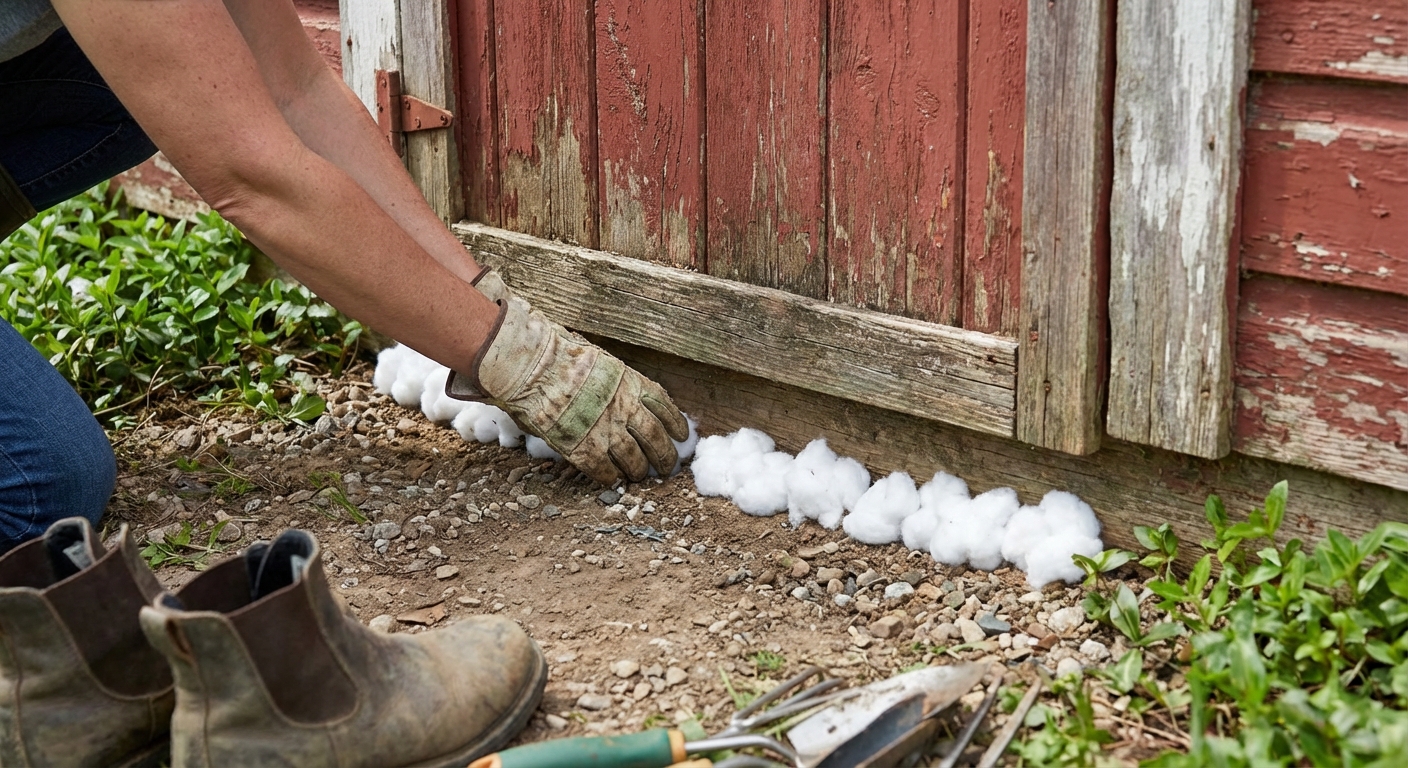
Scents that may help keep rats away
Rats have an excellent sense of smell. Very strong, sharp scents can be irritating to them and may make an area less attractive, especially when combined with good cleanup and exclusion. In many cases, the best you can expect is that scents temporarily shift travel routes instead of eliminating an infestation.
Peppermint
Peppermint oil is the most common DIY option. It is strong, easy to find, and simple to refresh. It tends to work best in small, enclosed or semi-enclosed spaces like a shed corner, garage storage area, or under a sink where you can keep reapplying it.
Clove
Clove oil contains eugenol, a strong-smelling compound. Some people find it helps deter rodents or other pests in certain settings, but results vary and it is not a guarantee.
Eucalyptus
Eucalyptus oil has a sharp medicinal scent that some people find helpful around entry points. It can be useful for cotton balls and sachets.
Citronella and lemongrass
These are more commonly used for mosquitoes, but their strong, fresh scent may help in a rotation with peppermint or clove. On their own, results are mixed.
Ammonia (use with caution)
Ammonia has a urine-like odor to many people and is sometimes suggested as a deterrent. It can irritate lungs and eyes for people and pets, and it is not something I recommend using inside living spaces. If you use it at all, keep it outdoors, very limited, and never mix it with bleach or other cleaners.
Mothballs (not recommended)
Mothballs are often mentioned online, but they contain pesticides and can be harmful to people, pets, and wildlife. They also need airtight conditions to work as intended. In many areas, using mothballs outdoors or in unapproved ways can violate the product label. For most home and garden situations, skip them.
DIY options that fit real life
The main reason scent repellents “don’t work” is that they are applied too weakly, placed too far from rat travel routes, or not refreshed often enough. Here are a few simple approaches that are easy to maintain.
1) Peppermint cotton balls (fastest method)
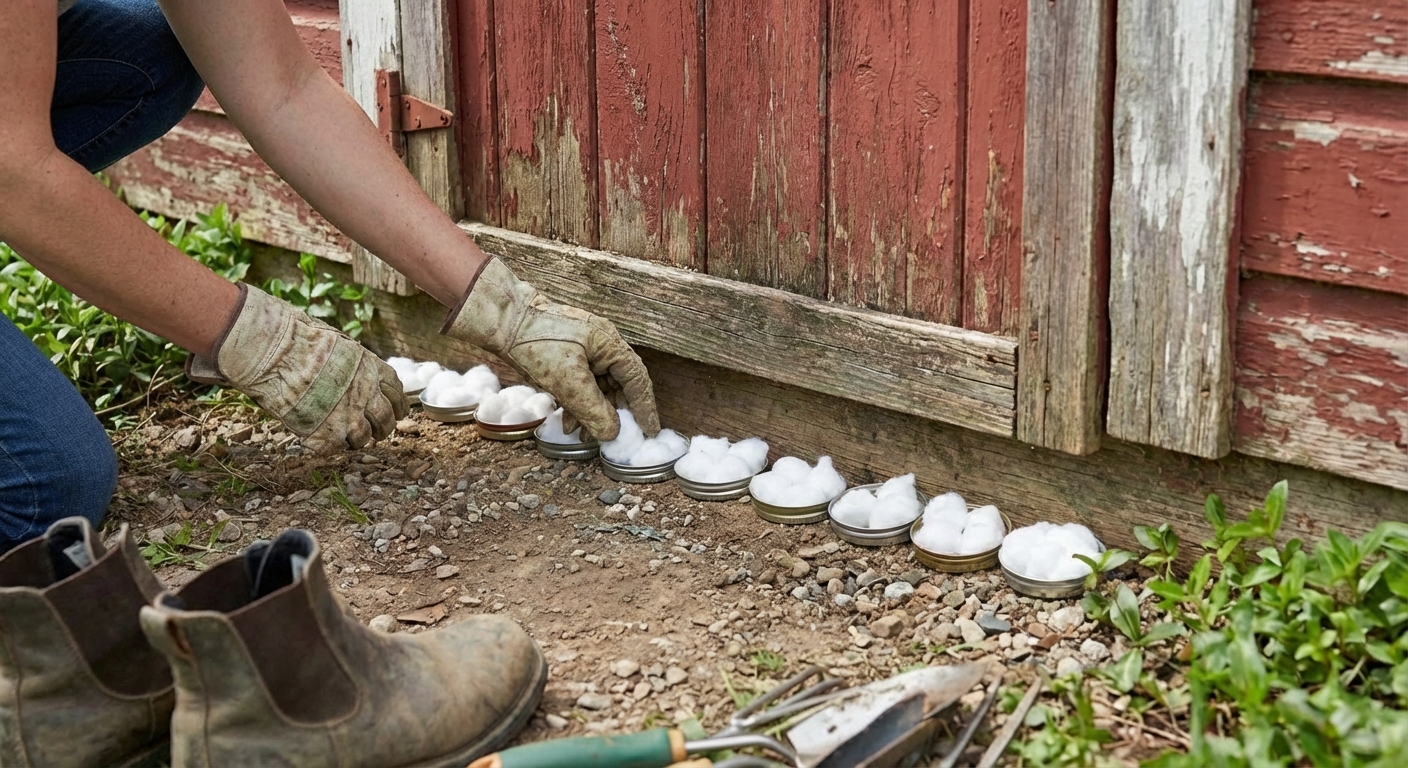
- What you need: Peppermint essential oil, cotton balls, small lids or shallow dishes.
- How to do it: Add 10 to 20 drops of peppermint oil to each cotton ball. Place each one in a lid or dish to keep oil off surfaces.
- Where it works best: Along walls, behind appliances, near garage door corners, beside shed doors, near gaps under decks.
- Refresh: Every 2 to 3 days at first, then weekly if the smell stays strong.
Pet note: If you have dogs or cats, place cotton balls where they cannot reach them (or put them inside a vented container) to reduce the risk of licking or chewing.
2) Peppermint spray (for paths and perimeter)
This is useful for outdoor edges and non-porous surfaces where you can reapply quickly.
- Mix: 2 cups water, 1 teaspoon mild dish soap, 20 to 30 drops peppermint oil.
- Shake: Oils separate, so shake before every use.
- Apply: Lightly mist around suspected entry points, along fences where rats travel, and around trash can pads.
- Reapply: After rain, watering, or every few days.
Tip: Test a small spot first. Essential oils can stain some painted surfaces and plastics.
Outdoor caution: Avoid spraying directly on edible crops, delicate plants, or into areas where runoff could reach storm drains, ponds, or waterways.
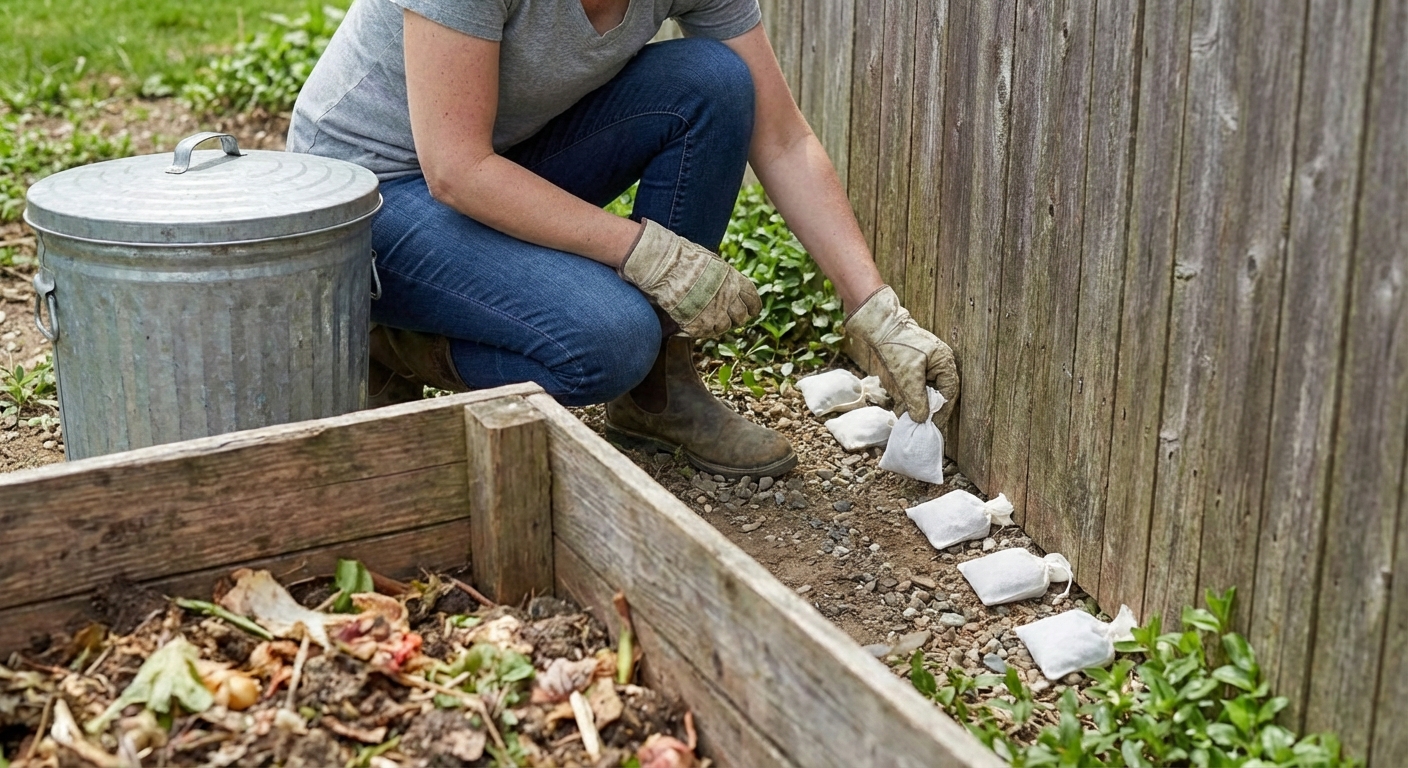
3) Clove or eucalyptus sachets (good for closets, sheds, bins)
- What you need: Small cloth bags, cotton pads or cotton balls, clove or eucalyptus oil.
- How to do it: Add 10 to 15 drops to the cotton, seal in the bag, and hang or place near trouble spots.
- Refresh: Weekly, or sooner if the smell fades.
4) Scent rotation (helps with “they got used to it”)
Some homeowners report better results by rotating scents so the area does not become background noise. For example, peppermint for a week, then clove for a week, then eucalyptus.
Where to place scents
Rats like cover. They hug walls and edges, and they reuse the same runways. If you put a repellent scent in the middle of an open space, they will simply go around it.
- Along walls and fence lines: Especially where you see rub marks, droppings, or flattened grass.
- Near entry points: Gaps under doors, around pipe penetrations, vents, and corners.
- Behind and under: Stored items, shelving, appliance areas, compost bin corners, and woodpiles.
- Near attractants: Trash cans, pet food storage, chicken feed bins, and compost.
How to spot runways and entry points
If you place scents randomly, it is easy to miss the routes rats actually use. Check these common signs first:
- Droppings: Often clustered along walls, behind stored items, or near food sources.
- Rub marks: Greasy smudges along baseboards, fence edges, or pipes where they repeatedly pass.
- Burrows: Holes near slabs, under sheds, along fence lines, or next to dense cover.
- Chew marks: Gnawed corners on wood, plastic, or around gaps that are being widened.
- Tracks: In dusty areas, you can sometimes see footprints and tail drags.
Important safety notes
Essential oils are concentrated. “Natural” does not automatically mean safe.
- Keep oils away from pets: Cats are especially sensitive to many essential oils. Avoid applying oils where pets can lick, rub, or chew.
- Avoid food prep surfaces: Do not use essential oil sprays on countertops or anywhere you handle food.
- Ventilation matters: If the smell is overwhelming to you, it is too strong for a small indoor area.
- No mixing ammonia with other cleaners: Never mix ammonia with bleach or anything that could produce toxic fumes.
What works better than scent alone
If you are seeing droppings, gnaw marks, or you are hearing scratching, treat scent as the “extra” while you do the big three steps that actually reduce rat activity.
1) Remove food and water
- Store bird seed, pet food, and chicken feed in metal cans with tight lids.
- Clean up fallen fruit and spilled seed regularly.
- Secure trash can lids and rinse cans if needed.
- Fix dripping hoses, spigots, and leaky outdoor faucets.
2) Reduce shelter
- Keep weeds and tall grass trimmed along fences and sheds.
- Raise woodpiles and keep them away from buildings if possible.
- Thin dense groundcover right next to foundations.
3) Exclude them
Seal gaps with materials rats cannot chew through. For many homeowners, this is the turning point.
- For small gaps, use stainless steel wool or copper mesh plus sealant as a tight filler, then cover with a gnaw-proof repair if needed.
- For long-term repairs, use materials like metal flashing, patch plates, or mortar/cement where appropriate.
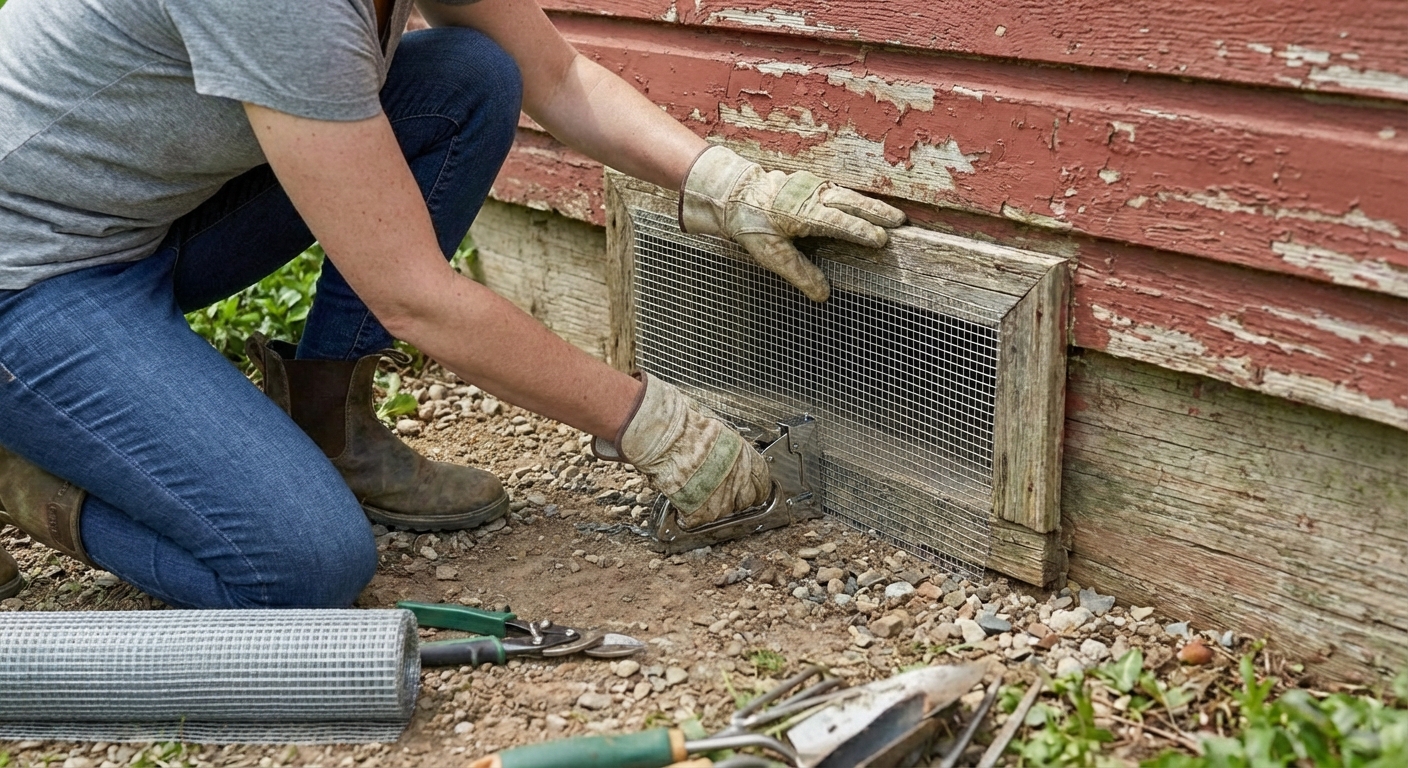
- Use hardware cloth for vents and larger openings.
- Install door sweeps on garage and shed doors.
If rats are active right now
If you already have rats on-site, scents can help you steer activity away from certain areas while you reduce the population and lock down entry points.
- Use monitoring: Place a few unset snap traps (or non-toxic monitoring blocks) along walls to confirm runways before you commit to a full setup.
- Trap safely: Use quality snap traps placed along walls, not out in the open. Keep them out of reach of kids and pets, or use tamper-resistant boxes designed for traps.
- Consider professional help: If activity is heavy, or you suspect nesting in walls or attics, contact a licensed pest control professional.
- Follow local rules: If you use rodenticides, follow local regulations and label directions closely. In many situations, improper use can harm pets and wildlife.
Quick FAQ
Do rats hate peppermint oil?
Many rats avoid strong peppermint at close range, but it is not a guaranteed solution. If food and shelter are nearby, they may tolerate it or choose another route.
How often should I reapply scents?
Plan on every few days outdoors, and weekly indoors if the smell remains strong. Rain, sprinklers, heat, and airflow all reduce how long it lasts.
Will planting mint keep rats away?
Mint smells nice to us, but living plants are usually not concentrated enough to repel rats reliably. Also, mint spreads aggressively in gardens, so plant it in a pot if you do.
What if I already have rats inside?
Use scent as a short-term deterrent while you focus on exclusion and removal. If activity is heavy, consider contacting a licensed pest control professional, especially if you suspect nesting in walls or attics.
A simple plan for this week
- Day 1: Identify attractants, clean up spills, secure feed and trash.
- Day 2: Place peppermint cotton balls or sachets along runways and near entry points.
- Day 3: Start sealing gaps and installing door sweeps or hardware cloth.
- Ongoing: Refresh scents on schedule and keep the area trimmed and tidy.
If you want, tell me where you are seeing signs of rats (garden bed, compost, garage, attic, chicken coop), and I can suggest the best scent placement and the top two exclusion fixes for that exact spot.

Jose Brito
I’m Jose Britto, the writer behind The Country Store Farm Website. I share practical, down-to-earth gardening advice for home growers—whether you’re starting your first raised bed, troubleshooting pests, improving soil, or figuring out what to plant next. My focus is simple: clear tips you can actually use, realistic expectations, and methods that work in real backyards (not just in perfect conditions). If you like straightforward guidance and learning as you go, you’re in the right place.