Winter is when deer show up like clockwork. Natural browse gets buried, calories are harder to come by, and suddenly your arborvitae and evergreens look like a salad bar.
Before you toss out a pile of corn and call it good, it helps to understand one key thing: deer do not switch diets quickly in winter. Their rumen microbes adapt to whatever they have been eating. A sudden change can cause serious digestive trouble and can be fatal in severe cases, especially if deer are already stressed. (This is a common warning from state wildlife agencies and extension offices, even though specific recommendations vary by region.)
Quick scope note: This guide is written for North American homeowners dealing with wild deer (often white-tailed deer). Rules and best practices can change quickly during disease outbreaks, so check local guidance first.
This guide covers what you can feed deer in winter if you choose to, how to do it step by step, and how to control deer pressure on your yard without accidentally making the problem worse.
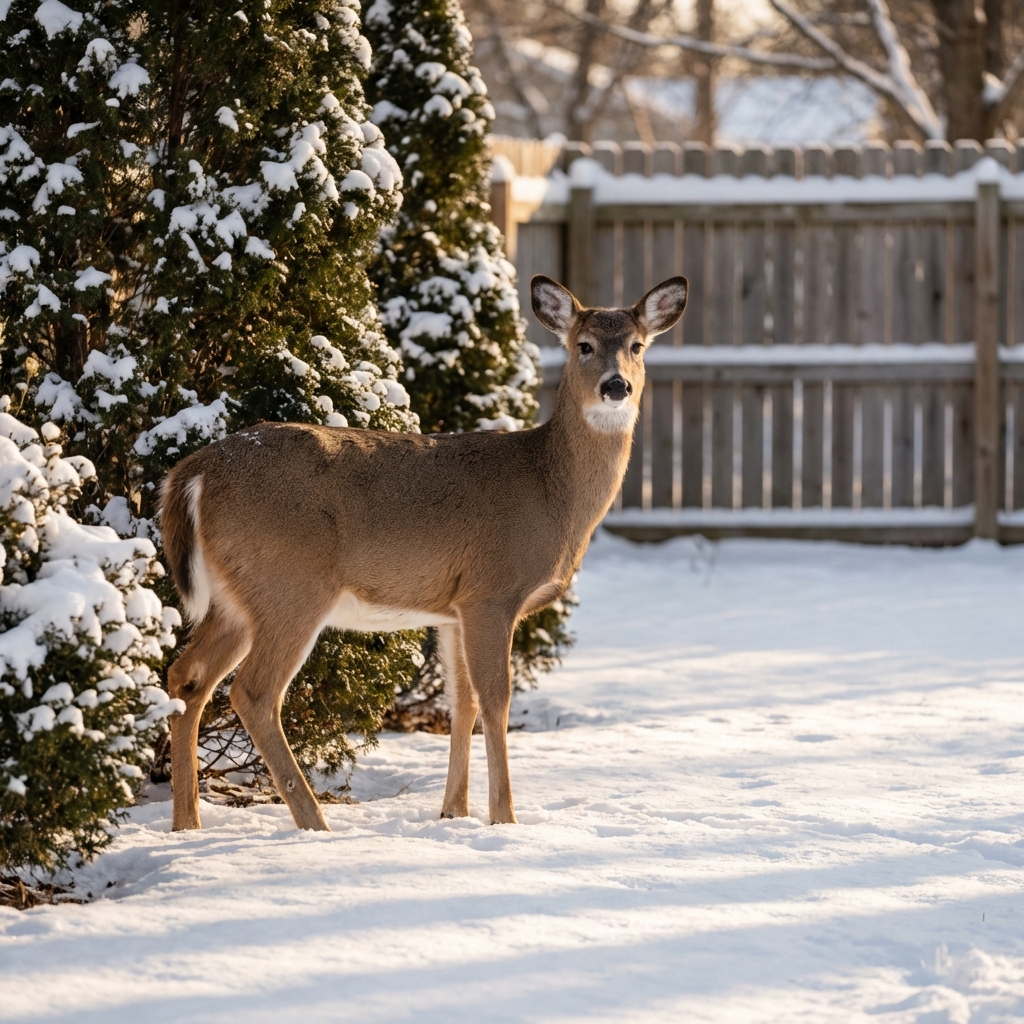
Quick reality check before you feed
- Check your local rules first. Many states and counties restrict or ban feeding, and rules often tighten during chronic wasting disease (CWD) concerns or outbreaks.
- Feeding can increase deer traffic. Once you start, deer may visit daily and bring friends.
- Disease and crowding are real concerns. Concentrating deer at a feed site can increase the spread of illnesses and parasites. This is one reason agencies discourage feeding in many areas, especially where CWD is present.
- Feeding and control are different goals. If your goal is “help deer,” feeding can still create problems. If your goal is “save my shrubs,” feeding often backfires.
- In many areas, not feeding is the best option. Plant protection and habitat improvements often work better for homeowners and create fewer risks.
If you still want to help, the safest approach is to offer small amounts of foods that are closer to what deer naturally browse in winter, while keeping sites clean and low-crowding.
Step-by-step: What can I feed deer in winter?
Step 1: Identify what deer are already eating
Look around your property line and nearby woods. In winter, deer typically browse:
- Twigs and buds from woody plants
- Blackberry and raspberry canes
- Acorns (if any remain)
- Evergreen tips when desperate
If deer are already on woody browse, avoid suddenly dumping high-starch feed that their system is not ready for.
Step 2: Choose the lowest-risk winter options
Many wildlife agencies recommend not feeding wild deer at all because of disease risk, crowding, and diet-related problems. If you feed anyway, these options are generally closer to natural winter browse and tend to be lower risk than corn or sweet feed.
- Cut branches and brush (best place to start). Offer fresh cuttings from safe local trees and shrubs such as apple, willow, dogwood, and many common maples. Place them in a loose brush pile so deer can browse naturally.
- Deer pellets designed for winter (high fiber). Choose a plain, higher-fiber pellet rather than a sweet “candy” mix. Introduce slowly and keep amounts small.
- Alfalfa hay (use caution). Some people use mold-free alfalfa because it is higher quality than typical grass hay, but in deep winter deer on a woody browse diet may not digest hay well unless it is introduced very gradually. Poor digestion can contribute to a “full stomach, low nutrition” problem. If you use hay, offer a little at a time and keep it clean and dry.
- Fallen apples (small amounts). Only if deer already have access to fruit in your area and you are not creating a high-traffic pile.
Tip: If you are not sure what a commercial feed is, skip it. Sweet mixes with lots of corn, molasses, and grains are the most likely to cause digestive issues when introduced suddenly.
Step 3: Avoid common foods that cause problems
These are popular, but risky, especially as sudden winter feed:
- Whole corn (including “deer corn”). High starch, low fiber. A sudden corn-heavy meal can contribute to rumen upset and acidosis in deer that are not adapted.
- Bread, donuts, and kitchen scraps. Not natural deer foods and a common cause of digestive problems.
- Moldy hay or spoiled produce. Mold can be deadly.
- Large piles of any feed. Overeating is part of the problem, and piles also concentrate deer and attract rodents.
Step 4: Set up a low-risk feeding area
If legal in your area and you decide to feed, use a setup that limits crowding and contamination.
- Pick a spot away from roads to reduce collision risk.
- Use multiple small stations spaced apart rather than one big pile.
- Keep it off the ground when possible (a simple hay rack or feeder helps reduce waste and contamination).
- If providing water, use a heated bowl or a fresh supply to ensure it remains ice-free.
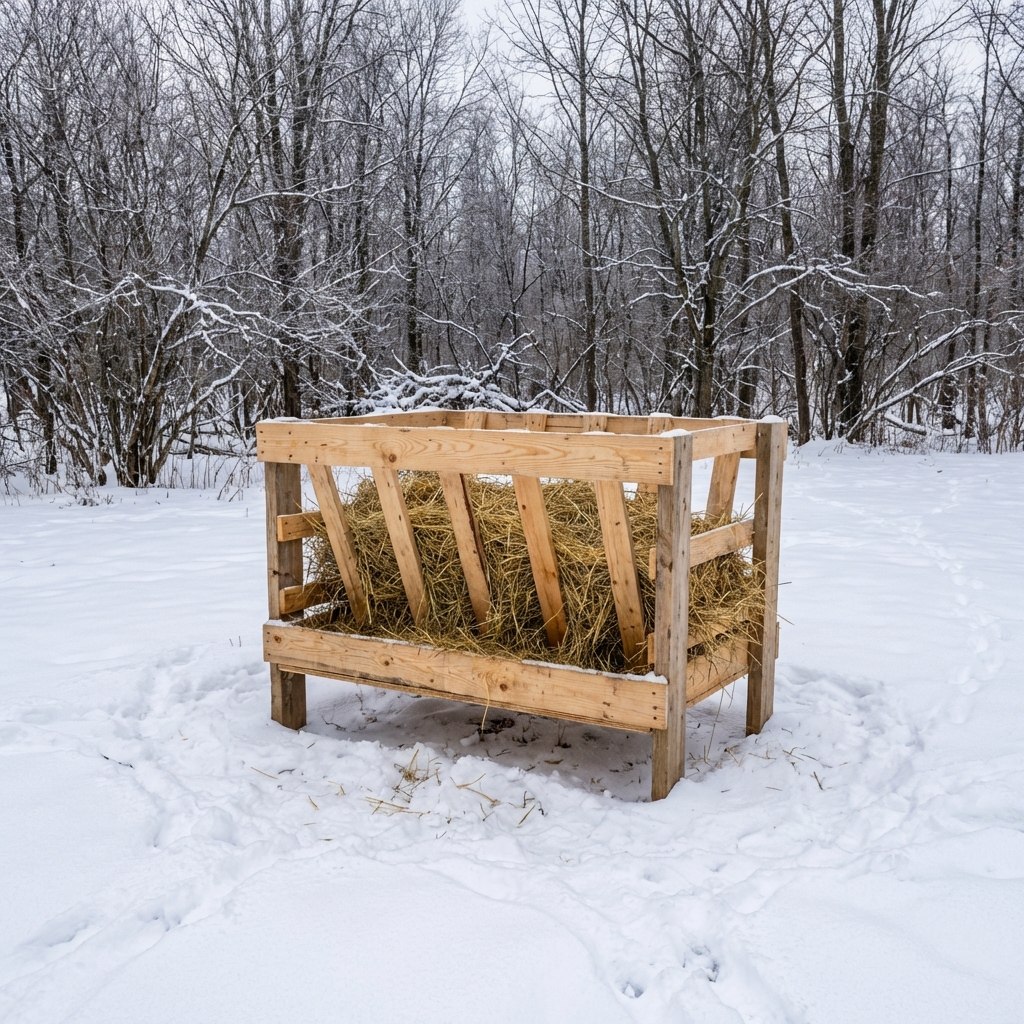
Step 5: Start small and stay consistent
Deer handle consistency better than big swings. If you feed:
- Start with very small amounts for several days (for example, a few handfuls of pellets per station, or a small bundle of browse)
- Increase slowly only if deer are actively using it
- Do not start feeding for a weekend, then stop
If you need to stop, taper down gradually rather than quitting overnight during severe weather.
Step 6: Keep it clean to reduce disease risk
If you feed at all, hygiene matters. It will not eliminate disease risk, but it can reduce it.
- Do not use shared troughs or big ground piles
- Move feeding stations periodically to avoid a muddy, manure-heavy hotspot
- Clean feeders regularly and discard old, wet feed
- Stop feeding if you see sick-looking deer (drooling, stumbling, extreme thinness) and contact your local wildlife agency
Winter deer identification: Signs you are feeding or attracting deer
Tracks in snow
Deer tracks are heart-shaped and often around 2 to 3 inches long for an adult, though size varies by animal and conditions. In deep snow, tracks can look wider and messier as hooves splay.
Droppings
In winter, droppings are usually pellet-like. If you see clumped droppings, deer may be eating wetter foods or higher moisture feed.
Browsing lines
A classic sign is a clean “browse line” roughly 3 to 6 feet off the ground where twigs and evergreen tips are nipped off.
Plant damage patterns
- Deer often leave ragged or torn edges on woody stems (a helpful rule of thumb, not a guarantee).
- Rabbits usually make clean, angled cuts close to the ground.
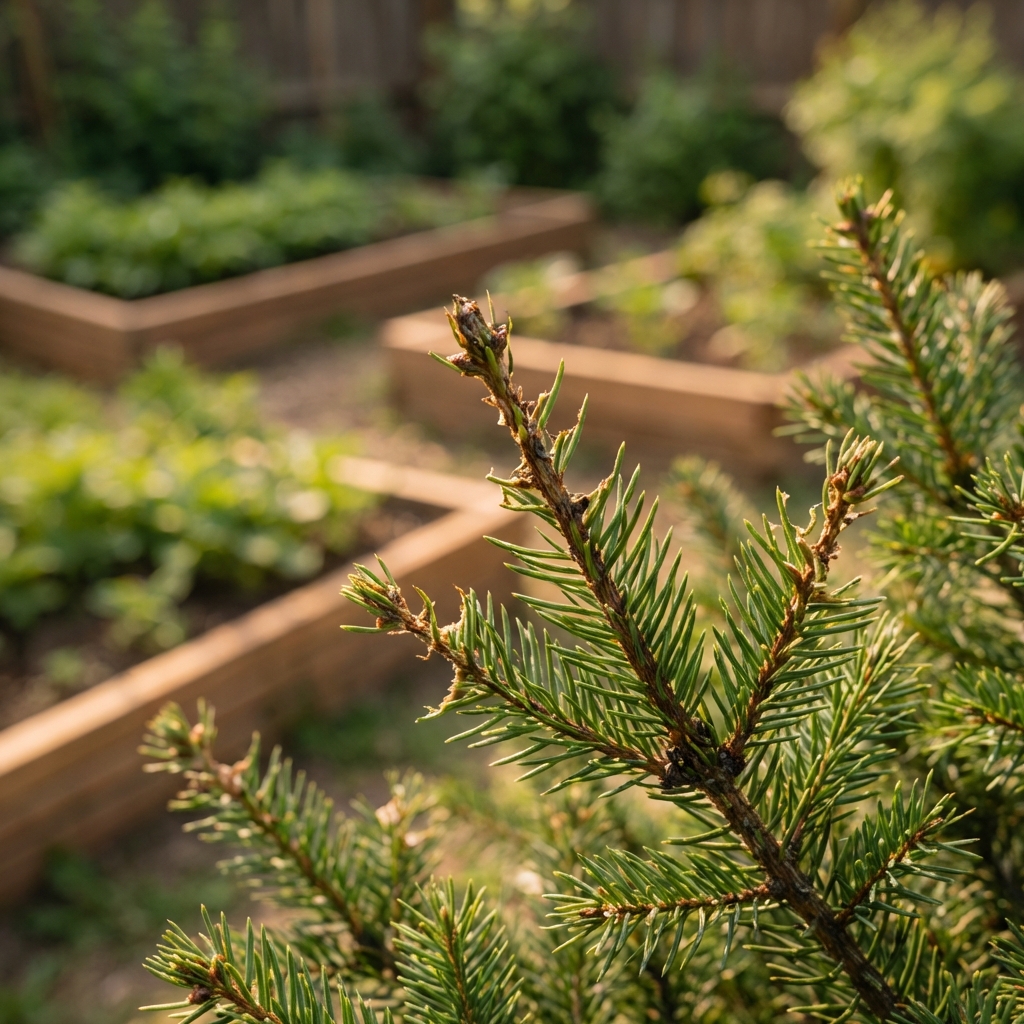
Control: How to protect your yard while food is scarce
If your real goal is “stop deer from eating my plants,” feeding often backfires by increasing traffic and browsing pressure. These control methods are usually more reliable for homeowners.
Option 1: Physical barriers (most effective)
- Fencing: 7 to 8 feet is the most reliable height for deer exclusion in many settings.
- Temporary garden fence: A 5 to 6 foot fence can work in smaller areas with low pressure, especially if reinforced and kept tight.
- Tree and shrub protection: Use wire cages around young trees and burlap wraps for vulnerable shrubs.
Option 2: Repellents (helpful but needs reapplication)
Look for repellents labeled for deer that use putrescent egg solids, garlic, or predator scents. Apply:
- Before heavy browsing starts
- After thaw, rain, or heavy snow events
- On a rotation so deer do not get used to one smell
Option 3: Plant smarter near the house
No plant is truly deer-proof, but you can reduce damage by avoiding their top winter favorites near entry paths and foundation plantings.
- Use less-preferred choices closer to the house
- Keep tasty plants in fenced areas
- Expect browsing during harsh winters even on “resistant” plants
Option 4: Remove easy shelter and access
- Trim low branches that provide hiding cover right next to your landscape beds
- Do not leave fallen fruit piles under trees all winter
- Keep brush piles away from the garden if deer bed nearby
Best help without feeding
If you want to support deer but avoid concentrating them, think habitat instead of handouts.
- Let part of your property stay natural. Shrubby edges and native thickets provide browse and cover.
- Plant native shrubs and trees suited to your region to improve long-term winter forage.
- Avoid salt or mineral blocks near roads and residential areas.
FAQ
Is it okay to feed deer in winter?
Sometimes it is legal and well-intended, but it can increase disease risk and draw deer into neighborhoods. Many wildlife agencies recommend not feeding, especially where CWD is a concern. In many places, the better choice is protecting plants and improving habitat instead of feeding.
What is the safest thing to feed deer in winter?
If you choose to feed, fresh cut branches and brush (browse-style feeding) is often the lowest-risk place to start. If using commercial feed, small amounts of high-fiber deer pellets introduced slowly are generally safer than corn or sweet feeds. Hay is controversial and can be hard for deer to digest unless introduced very gradually.
Why is corn risky for deer in winter?
Corn is high in starch and low in fiber. Deer adapted to woody browse can struggle to handle sudden high-starch meals, which can lead to rumen upset and, in severe cases, acidosis.
Will feeding deer keep them from eating my shrubs?
Usually not. Feeding often increases deer visits and browsing pressure. Fencing and targeted plant protection are more dependable.
Is feeding linked to CWD?
Feeding can concentrate deer, which increases nose-to-nose contact and contamination at a shared site. That is why many agencies restrict feeding and baiting in CWD areas.
Takeaway
If you decide to feed deer in winter, think small amounts, high fiber, gradual changes, low crowding, and clean setups. If your main problem is landscape damage, you will usually get better results from barriers, repellents, and smart plant placement than from a feed pile.

Jose Brito
I’m Jose Britto, the writer behind The Country Store Farm Website. I share practical, down-to-earth gardening advice for home growers—whether you’re starting your first raised bed, troubleshooting pests, improving soil, or figuring out what to plant next. My focus is simple: clear tips you can actually use, realistic expectations, and methods that work in real backyards (not just in perfect conditions). If you like straightforward guidance and learning as you go, you’re in the right place.