Aerating is one of those lawn chores that feels optional until your grass starts thinning, water starts running off, and the ground feels like a parking lot. In plain terms, core aeration pulls small plugs of soil to open channels for air, water, and roots. The quick answer is simple: aerate when your grass is about to enter its strongest growth period. That way it can recover fast and fill in the holes.
Below is timing that works for most home lawns, plus the signs that tell you it is time even if you are not sure what grass you have.
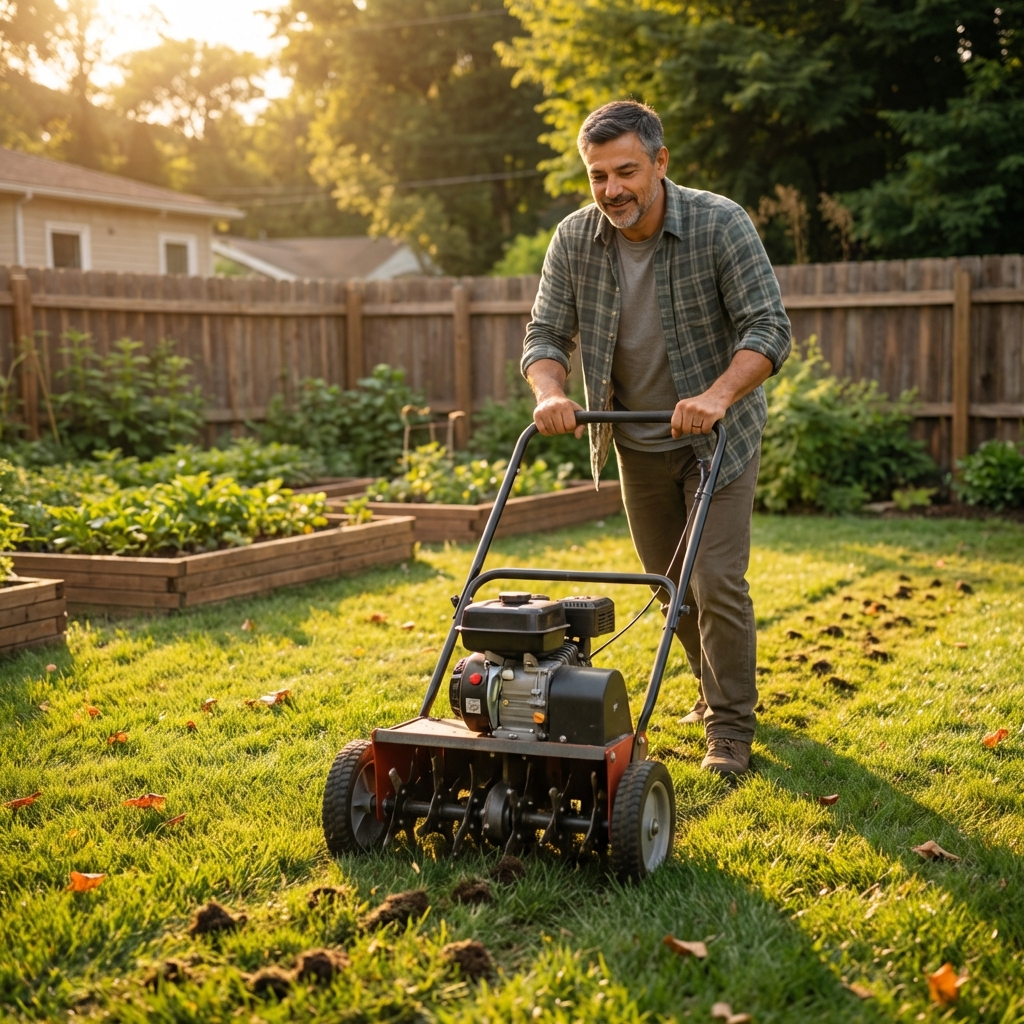
Best time to aerate (quick guide)
- Cool-season grasses (Kentucky bluegrass, perennial ryegrass, fescues): early fall is best. Spring is a decent second choice.
- Warm-season grasses (Bermuda, zoysia, St. Augustine, centipede): late spring through early summer once the lawn is fully green and actively growing.
- Skip aeration during dormancy, or during heat and drought stress unless you can irrigate.
If you only remember one thing, remember this: aerate right before your lawn’s best growing window, not right before its worst stress window.
How to choose the right season
Cool-season lawns: aim for early fall
Cool-season grasses grow most aggressively when temperatures cool down a bit. Early fall gives you:
- Fast recovery because growth is strong
- Fewer weed issues than spring in many areas
- Great timing to combine aeration with overseeding
Spring aeration can work, but it often lines up with crabgrass and other annual weeds starting to germinate. If you aerate in spring, be extra mindful about weed pressure.
Warm-season lawns: aerate after green-up
Warm-season grasses need heat to grow. Aerating too early, when the lawn is still waking up, slows recovery. The sweet spot is late spring into early summer, when:
- The lawn is actively growing and filling in quickly
- Roots can expand into the loosened soil
- You are not stressing the lawn during dormancy
Before you start (quick checklist)
- Locate utilities: call 811 (or your local utility marking service) before you punch holes in the yard.
- Clear the lawn: pick up sticks, rocks, and toys.
- Flag hazards: mark sprinkler heads and any shallow lines so you do not clip them.
Signs your lawn needs aeration
Calendars are helpful, but your yard will tell you what is going on. If you notice several of these, aeration is usually worth doing:
- Water puddles or runs off instead of soaking in
- Hard soil that is tough to push a screwdriver into
- Thin grass even though you fertilize and mow correctly
- Heavy traffic from kids, pets, or frequent walking paths
- Newer construction where topsoil was stripped or compacted by equipment
- A spongy feel that can be a sign of thatch building up
The screwdriver test (fast and reliable)
After watering or a light rain, push a long screwdriver into the lawn.
- If it slides in easily 2 to 4 inches, compaction is probably not your main issue.
- If it barely goes in, or you have to force it, your soil is likely compacted and aeration can help.
Quick thatch check
If the lawn feels spongy, cut a small wedge (a few inches wide) and look between the green grass and the soil. If the thatch layer is more than about 1/2 inch, you may benefit from dethatching or a plan to reduce thatch, in addition to (or instead of) aeration.
When you should not aerate
Even if your lawn needs it, timing matters. Avoid aeration when:
- The lawn is dormant (common for warm-season grass in winter, and cool-season grass in severe heat).
- It is extremely hot and dry and you cannot irrigate. The bigger issue is overall stress and moisture loss, not that the holes themselves are “bad”, but it is easy to set recovery back if the lawn cannot stay hydrated.
- The soil is bone-dry or saturated. Dry soil is tough to pull plugs from, and saturated soil can smear and compact even more.
- You recently applied pre-emergent herbicide. Aerating breaks the chemical barrier on the soil surface, which can reduce the weed control’s effectiveness.
Also note: if you plan to overseed, many pre-emergents will prevent grass seed from establishing. In practice, that means you usually pick one plan or the other for that window: weed barrier now, or seeding now.
Core vs spike aeration
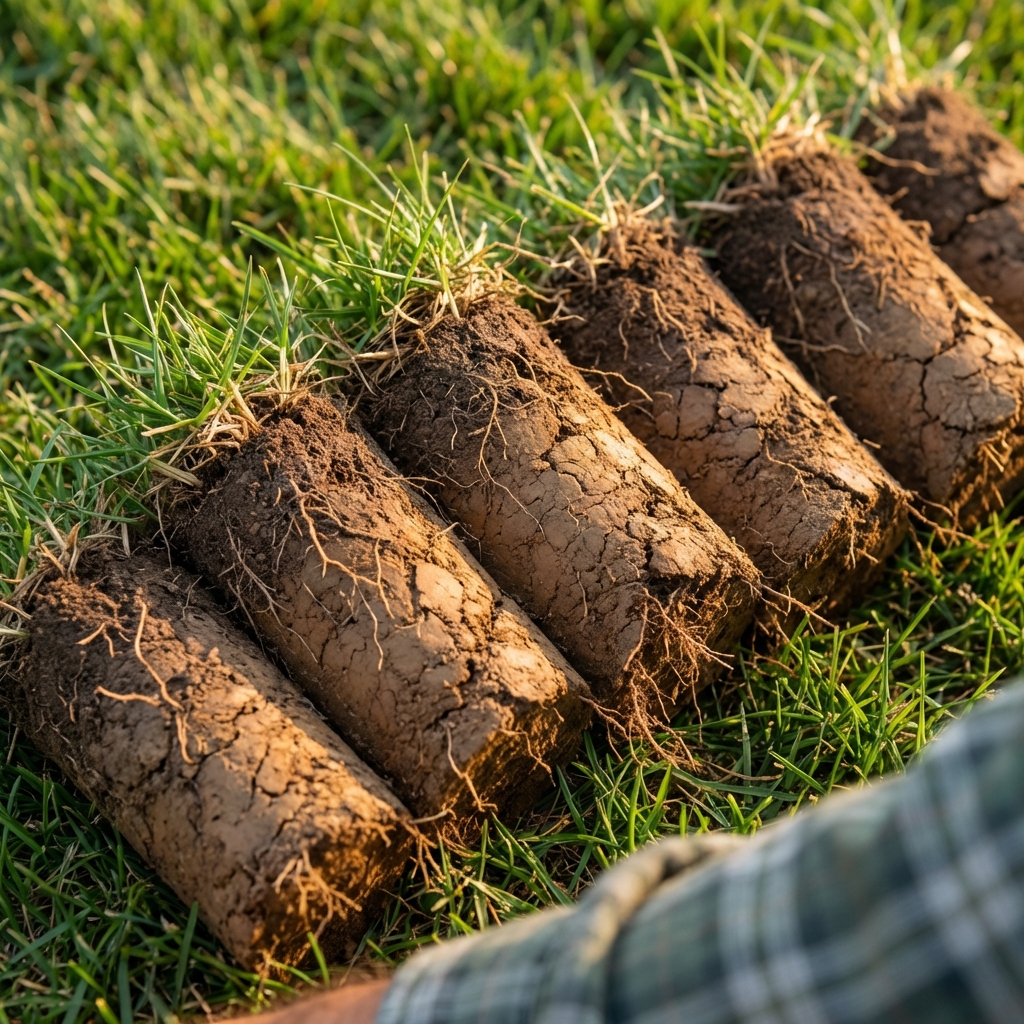
For most home lawns, core aeration is the one that actually relieves compaction. It removes plugs of soil, creating open channels for air, water, and roots.
- Core aeration: pulls soil plugs. Best for compacted lawns.
- Spike aeration: pokes holes without removing soil. It can help a little, but it may push soil sideways and make compaction worse in heavy clay.
If your goal is healthier roots and better drainage, go with core aeration whenever possible.
What “good” aeration looks like
- Plug depth: roughly 2 to 3 inches is a solid target for most homeowner machines and typical compaction.
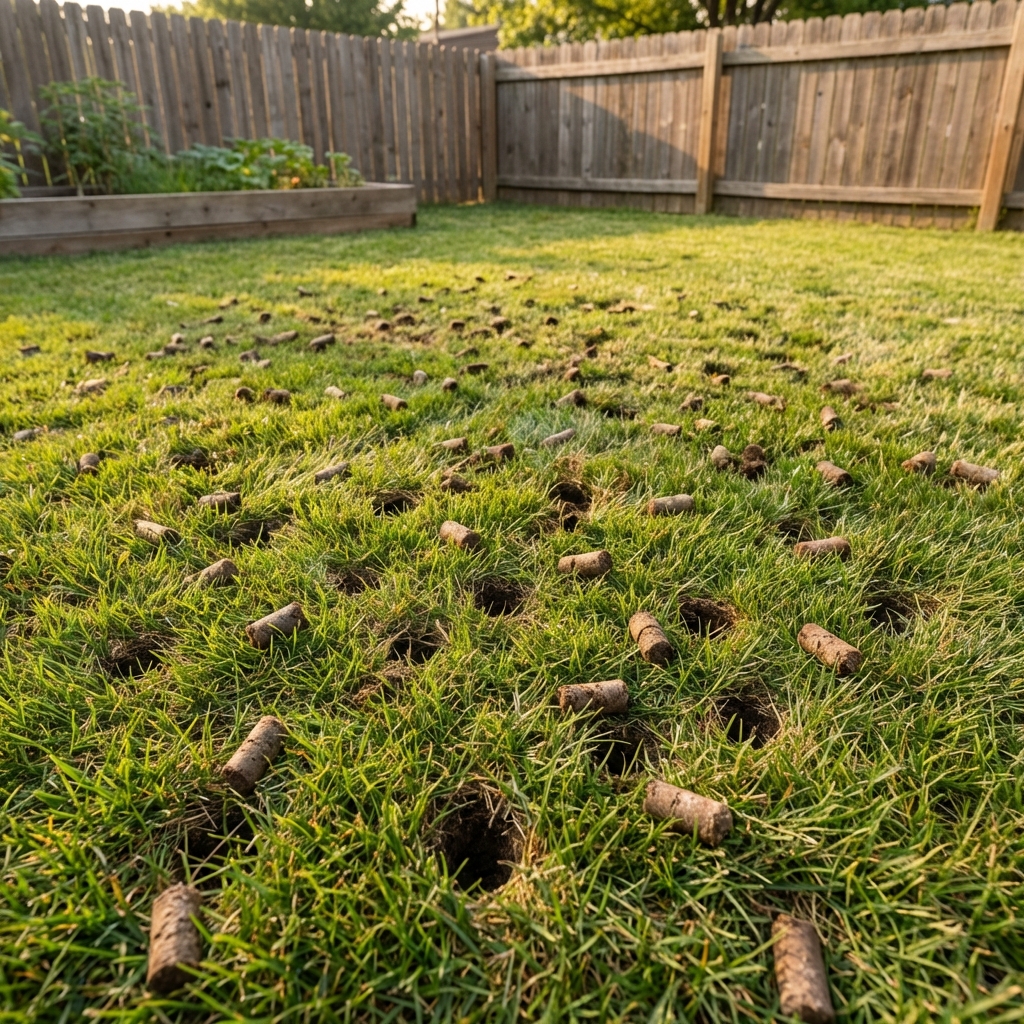
- Hole spacing: a few inches apart (machine-dependent). If you can still see lots of untouched space, do a second pass.
How often should you aerate?
This depends on soil type and traffic.
- Heavy clay or high traffic lawns: about once a year
- Average home lawns in decent shape: every 2 to 3 years
- Sandy soils with low traffic: less often, as needed
If your lawn has chronic puddling or hardpan soil, yearly aeration for a couple seasons can make a noticeable difference.
Best conditions on aeration day
A great aeration job is mostly about soil moisture and coverage.
- Soil moisture: aim for soil that is moist, not muddy. Water the day before if needed.
- Two passes help: make one pass, then a second pass at a different angle for better plug coverage.
- Mark sprinklers and shallow lines: flags save headaches.
- Leave the plugs: let them dry and break down naturally. They topdress the lawn over time.
What to do after aerating
For cool-season lawns
- Overseed right after aeration if the lawn is thin. Seed-to-soil contact improves when holes are open.
- Topdress lightly with compost if you can. Even a thin layer helps soil structure over time.
- Water consistently, especially if you seeded.
For warm-season lawns
- Fertilize lightly if your soil test and local guidance support it. Active growth plus aeration is a strong combo.
- Keep mowing steady. Do not scalp right after aerating.
- Water normally so the lawn can recover and roots can expand.
One realistic expectation: aeration is not instant magic. You usually see the best improvement over the next few weeks and then more clearly the following season as roots get deeper and the soil structure improves.
FAQ
Can I aerate and overseed at the same time?
Yes, and for cool-season lawns it is often the best pairing. Aerate first, then seed, then topdress lightly (optional), then water.
Is aeration worth it if my lawn is not compacted?
If drainage is fine, the soil is not hard, and the lawn is healthy, you might not need it. Many lawns do well on a 2 to 3 year schedule or as-needed based on traffic and soil type.
Do I need dethatching instead?
Maybe. Aeration helps with compaction. Dethatching helps when you have a true thatch layer (often over 1/2 inch) that blocks water and air. Some lawns benefit from both, but many “spongy” lawns are actually dealing with compaction, shallow roots, or wet soil. A quick thatch check (cut a small wedge and measure the layer) tells you which problem you are solving.
How do I know what kind of grass I have?
A quick clue is the season it grows best. If it looks happiest in spring and fall, it is likely cool-season. If it takes off in summer heat and goes tan in winter, it is likely warm-season. If you are still unsure, a local garden center or extension office can usually ID it from a clear close-up photo.
Bottom line
Aerate when your grass is about to grow strongly: early fall for most cool-season lawns, and late spring to early summer for warm-season lawns (after green-up). Combine it with the right moisture, a good core aerator, and a simple aftercare plan, and you will get real improvement without overcomplicating it.

Jose Brito
I’m Jose Britto, the writer behind The Country Store Farm Website. I share practical, down-to-earth gardening advice for home growers—whether you’re starting your first raised bed, troubleshooting pests, improving soil, or figuring out what to plant next. My focus is simple: clear tips you can actually use, realistic expectations, and methods that work in real backyards (not just in perfect conditions). If you like straightforward guidance and learning as you go, you’re in the right place.