Hydrangeas are one of those shrubs that can look tough and forgiving, right up until pruning time. Cut at the wrong time and you can accidentally remove next season’s flower buds. Cut at the right time and you get a healthier plant, cleaner shape, and better blooms.
Here’s the simple truth: when you cut back hydrangeas depends on what type you have. Some bloom on last year’s stems (old wood), some bloom on this year’s growth (new wood), and some can bloom on both.
Quick note: This guide covers the common shrub hydrangeas. If you have a climbing hydrangea, see the FAQ at the end for a simple timing tip.

Quick answer: best time to prune by type
If you want the fast version, use this as your starting point. Then keep reading so you do not guess wrong.
- Bigleaf mophead and lacecap (Hydrangea macrophylla): Prune right after flowering in summer. Avoid hard pruning in fall, winter, or early spring.
- Mountain hydrangea (Hydrangea serrata): Same timing as bigleaf. Prune right after flowering.
- Oakleaf (Hydrangea quercifolia): Prune right after flowering if needed. Usually needs very little pruning.
- Panicle (Hydrangea paniculata): Prune in late winter to early spring before new growth takes off.
- Smooth (Hydrangea arborescens): Prune in late winter to early spring.
- Reblooming bigleaf types (like Endless Summer): Light pruning only, and timing is more flexible. Still, do major shaping after the first flush.
Step 1: figure out what hydrangea you have
If you inherited a hydrangea or lost the plant tag, you can still narrow it down. This matters because it tells you whether buds are formed last year (old wood) or this year (new wood).
Bigleaf (macrophylla)
- Leaves: Large, shiny, oval leaves with serrated edges.
- Flowers: Mophead balls or lacecap blooms.
- Bloom time: Often early to mid summer.
- Key pruning clue: Usually blooms on old wood, but many newer cultivars have at least some reblooming ability.
Quick clarity: “Lacecap” is a flower style (flat blooms with a lacy center), not a separate species. You can see lacecap blooms on bigleaf and mountain hydrangeas.
Mountain (serrata)
- Leaves: Similar to bigleaf, usually smaller and a bit finer textured.
- Flowers: Often lacecap, sometimes smaller mopheads.
- Bloom time: Similar to bigleaf, often early to mid summer.
- Key pruning clue: Most bloom mainly on old wood, so treat them like bigleaf for pruning.
Panicle (paniculata)
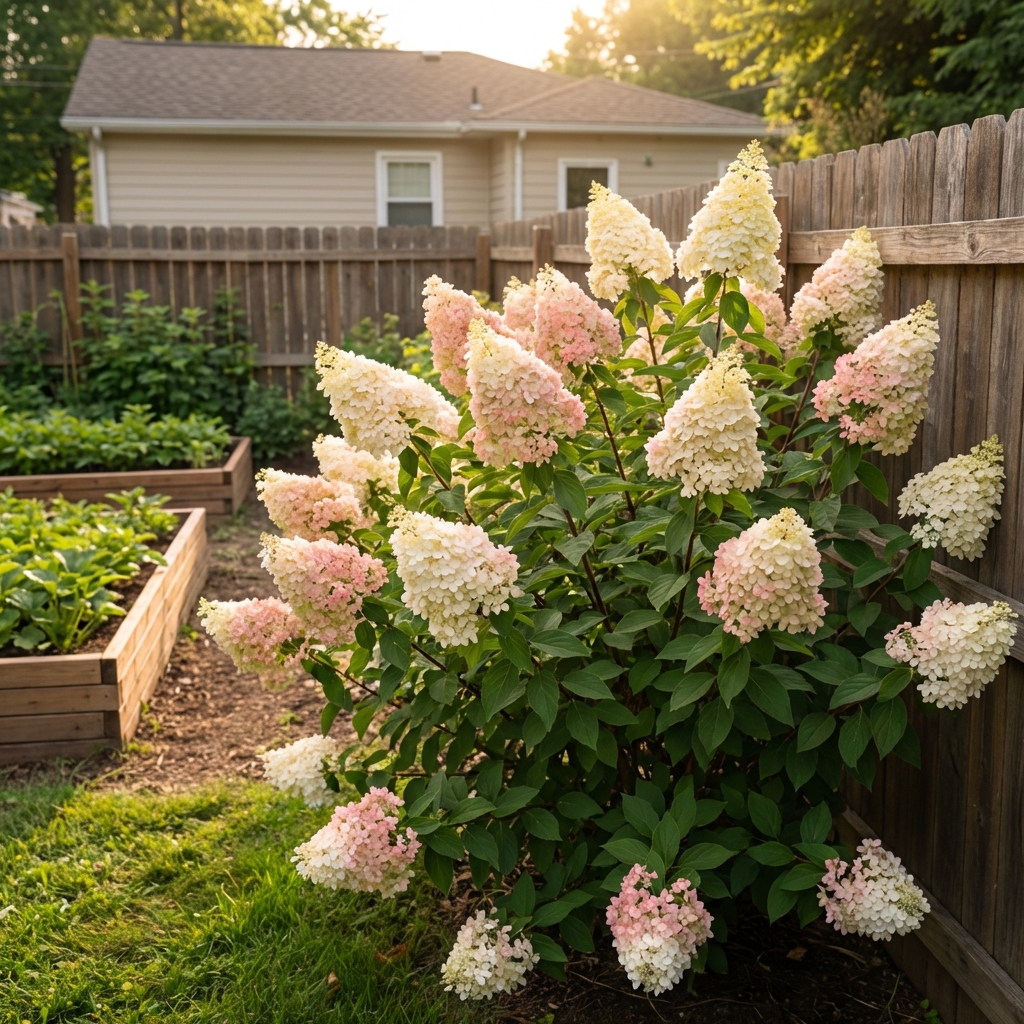
- Flowers: Cone-shaped clusters (white, lime, blush, or pink as they age).
- Stems: Often more upright and “woody” looking.
- Bloom time: Mid to late summer into fall.
- Key pruning clue: Blooms on new wood.
Smooth (arborescens)
- Flowers: Round white or greenish white clusters, like ‘Annabelle’.
- Leaves: Matte, heart to oval-shaped.
- Bloom time: Early to mid summer.
- Key pruning clue: Blooms on new wood.
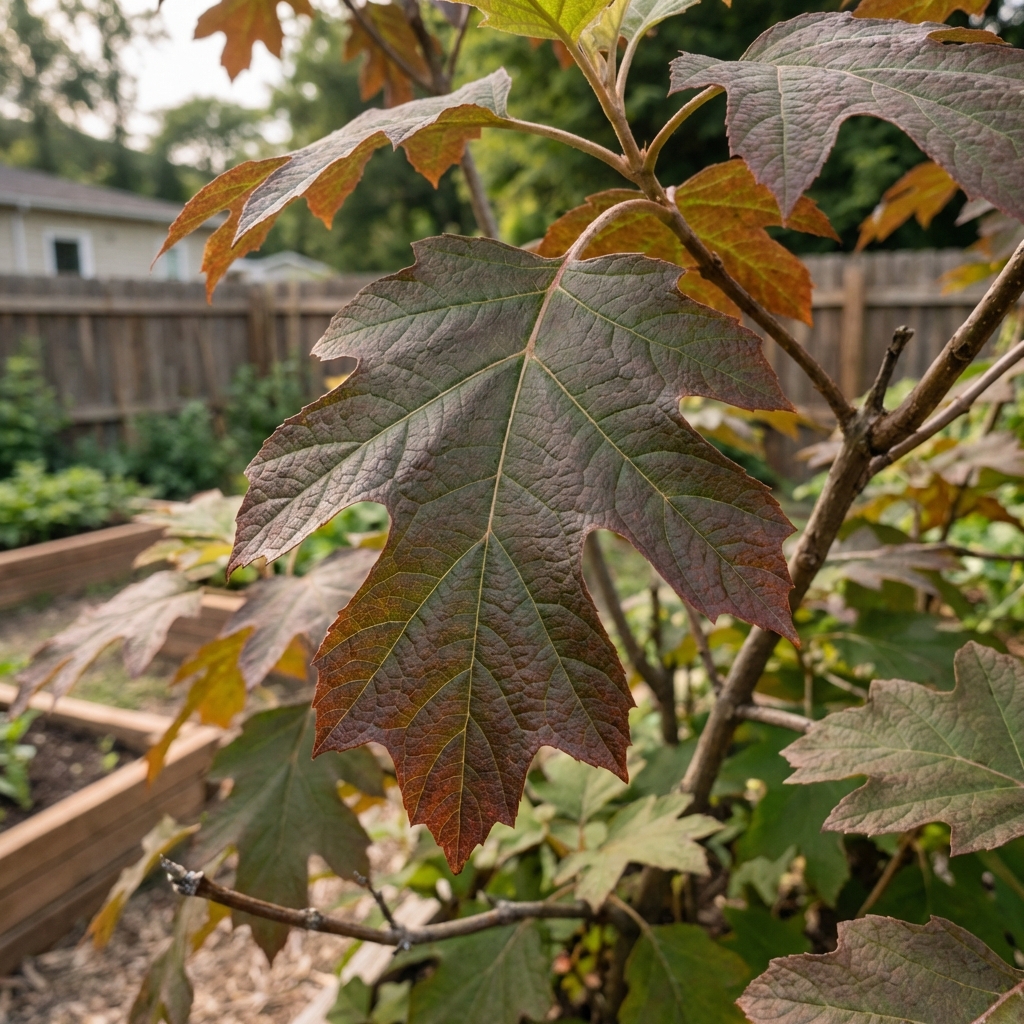
Oakleaf (quercifolia)
- Leaves: Oak-shaped leaves, often with great fall color.
- Flowers: Cone-shaped clusters, usually white aging to pink or tan.
- Key pruning clue: Blooms on old wood.
If you are still unsure: Look at when it blooms. Hydrangeas that bloom later (mid to late summer) are often new-wood bloomers that can be pruned in late winter. But do not use bloom time as your only clue. Microclimates, winter dieback, and reblooming varieties can shift the schedule.
Old wood vs new wood in plain English
This is the part that saves your flowers.
- Old wood bloomers set their flower buds on stems they grew last season. If you cut those stems off in late fall, winter, or early spring, you remove the buds.
- New wood bloomers form buds on fresh growth in spring. You can cut them back while dormant and they will still flower.
A lot of pruning advice online sounds contradictory because it is aimed at different hydrangea types. Once you know which one you have, the confusion fades.
When to cut back bigleaf, lacecap, and mountain hydrangeas
Best time: Right after flowering, usually mid to late summer.
If you have a classic bigleaf mophead or lacecap hydrangea that blooms once per year, assume it blooms on old wood. Mountain hydrangeas are similar. That means the safest approach is:
- Let it bloom.
- As soon as blooms fade, remove spent flowers and do any light shaping.
- Stop pruning by late summer to early fall so the plant can set buds for next year.
One more nuance that matters: Many modern bigleaf cultivars (not only the famous rebloomers) can set some buds on both old and new wood. Even so, heavy pruning still tends to reduce the earliest and most reliable blooms, which usually come from old wood.
What to cut
- Dead wood: Remove it anytime. Dead is dead.
- Spent blooms: Cut back to the first set of healthy, fat buds below the flower head.
- Weak or crossing stems: Remove a few at the base to improve airflow.
What not to do
- Do not cut the whole shrub down in fall “to tidy it up.”
- Do not do a heavy prune in early spring unless you are willing to sacrifice flowers.
When to cut back panicle hydrangeas
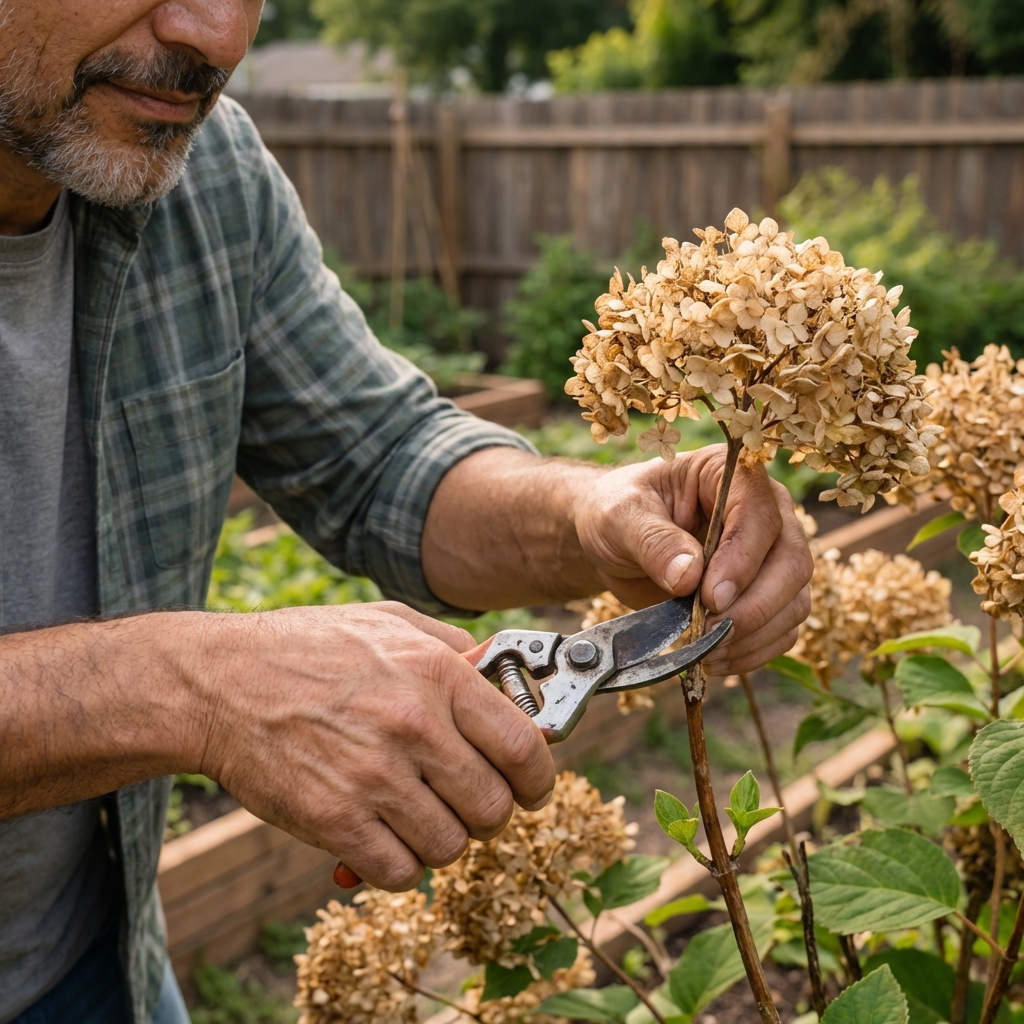
Best time: Late winter to early spring, before leaf-out.
Timing tip by climate: “Late winter” might be February in mild areas and March or even early April in colder ones. The goal is the same: prune while the plant is still dormant, just before growth takes off.
Panicle hydrangeas are the easiest for most home gardeners because they bloom on new wood. You can prune without worrying about cutting off next season’s buds.
How hard can you prune?
- Light prune: Remove about 10 to 20 percent of height for a natural look and lots of blooms.
- Moderate prune: Cut back stems by about 1/3 for a neater shape and larger flower clusters.
- Hard prune: Sometimes done on older shrubs, but it can cause floppier growth and fewer, heavier blooms that sag.
Backyard tip: If your panicle hydrangea flops in summer, prune a little less next spring and avoid high-nitrogen fertilizer. Fast, soft growth is more likely to bend.
When to cut back smooth hydrangeas (Annabelle types)
Best time: Late winter to early spring.
Smooth hydrangeas also bloom on new wood. They respond well to pruning, but there is a sweet spot.
Best approach for most gardens
- Remove dead wood and thin weak stems at the base.
- Cut remaining stems back to about 12 to 24 inches tall.
How to choose the height: If yours flops, leave more structure (often closer to 18 to 24 inches, sometimes even a bit taller depending on the cultivar and how much shade it gets). Cutting all the way to the ground can work, but it often leads to fewer, very large blooms on long stems that can flop after rain.
When to cut back oakleaf hydrangeas
Best time: Right after flowering, only if needed.
Oakleaf hydrangeas are naturally handsome shrubs with a nice shape. Most of the time, your “pruning” is just removing:
- Dead or damaged branches
- A few older stems at the base to renew the plant
- Wayward growth that blocks a path or window
If you prune late, you risk removing next year’s flower buds since oakleaf blooms on old wood.
What about reblooming hydrangeas?
Reblooming bigleaf hydrangeas can flower on old wood and new wood, depending on the cultivar and conditions. That gives you a little wiggle room, but it does not mean you can prune aggressively whenever you want.
- Do: deadhead spent blooms and remove dead wood in spring.
- Do: shape lightly after the first big flush of blooms.
- Do not: cut the whole plant back hard unless you are okay with fewer blooms while it regrows.
Realistic expectation: In colder zones, even rebloomers can struggle if winter kills stems. You may still get blooms, but they might show up later than you expect.
Deadheading vs cutting back: what is the difference?
These two get mixed up all the time.
- Deadheading means removing spent flower heads. It is mostly cosmetic, and it can encourage tidier growth.
- Cutting back means shortening stems or removing branches to change size, shape, or structure.
If you are nervous about pruning, start with deadheading only. You will make the shrub look better without drastically changing what it does next season.
How to prune, step by step
This simple routine works for most hydrangeas once you have the timing right.
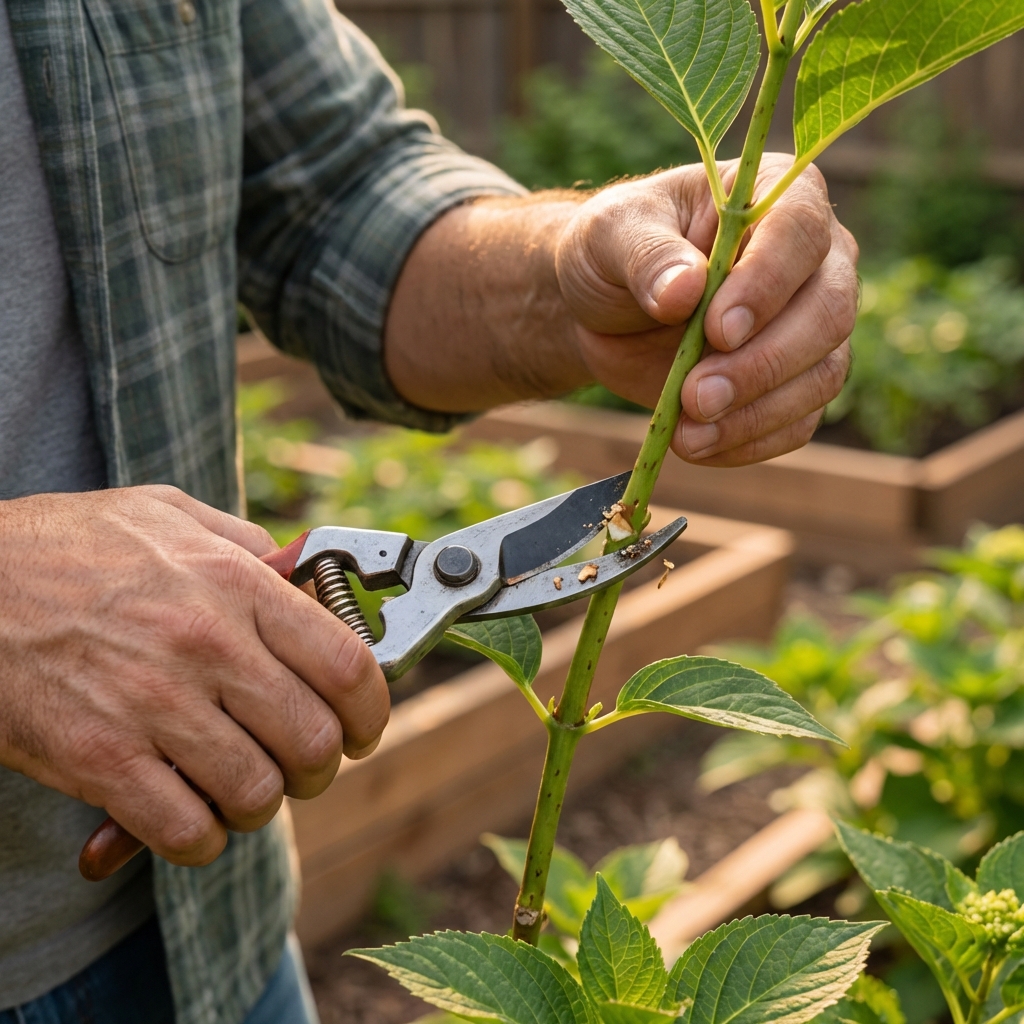
- Use clean, sharp pruners. Wipe blades with rubbing alcohol if you have been cutting diseased plants.
- Remove dead wood first. Dead stems are brittle and often gray inside. Live stems are flexible and green inside when lightly scraped.
- Cut above a node or bud set. That is where new growth will push.
- Thin for airflow. Remove a few crowded stems at the base, especially in humid areas.
- Step back often. It is easy to overdo it when you are standing too close.
If you see disease: Bag and trash infected leaves and stems (do not compost them), and disinfect tools between cuts to avoid spreading problems like leaf spot or botrytis.
Common mistakes that cost you blooms
- Pruning old-wood hydrangeas in fall. This is the number one reason people get leafy shrubs with no flowers.
- Pruning in early spring without checking buds. Those fat buds are next season’s flowers on many types.
- Shearing like a hedge. Hydrangeas look better and perform better with selective cuts, not uniform “haircuts.”
- Confusing winter damage with pruning needs. In cold climates, stems may die back. Wait until you see new growth before deciding what is truly dead.
FAQ
Can I cut back hydrangeas in October?
Usually not a good idea for bigleaf, mountain, lacecap styles, or oakleaf hydrangeas. October pruning can remove buds already set for next year. Panicle and smooth types are more forgiving, but late winter to early spring is still the better window.
Should I cut back hydrangeas for winter?
In most cases, no. Leaving the structure through winter helps protect buds and gives the plant a little insulation. You can clean up in spring once you see what survived.
My hydrangea never blooms. Is pruning the problem?
It might be, especially if you prune in fall or early spring and you have an old-wood bloomer. Other common causes are late frost damage, too much shade, deer browsing, or too much nitrogen fertilizer.
When should I remove dead hydrangea blooms?
You can deadhead anytime, but on old-wood types, cut cautiously and stay just below the spent bloom, above the first healthy buds. If you are unsure, wait until spring and remove only the dead flower head.
How do I prune a climbing hydrangea?
Climbing hydrangea (Hydrangea anomala subsp. petiolaris) is not a shrub, and it does not get the same “cut it back” treatment. If it needs pruning for size or to clear a window, do it right after it flowers. Focus on removing wayward shoots and thinning lightly, not chopping the whole plant back.
Bottom line
If you remember one thing, make it this: prune hydrangeas based on bloom wood.
- Old wood types: prune right after flowering.
- New wood types: prune late winter to early spring.
If you tell me what your blooms look like (round ball, flat lacecap, or cone) and roughly when it flowers, I can help you narrow down the type and the safest pruning window.

Jose Brito
I’m Jose Britto, the writer behind The Country Store Farm Website. I share practical, down-to-earth gardening advice for home growers—whether you’re starting your first raised bed, troubleshooting pests, improving soil, or figuring out what to plant next. My focus is simple: clear tips you can actually use, realistic expectations, and methods that work in real backyards (not just in perfect conditions). If you like straightforward guidance and learning as you go, you’re in the right place.