Bed bugs are tiny, flat, and built to hide. If you only check the mattress and call it good, you can miss the places that actually keep an infestation going. The good news is you do not need fancy gear to find them. You need a smart search pattern, a flashlight, and a few low-tox tools that work with how bed bugs behave.
Below is a quick, realistic guide for where bed bugs hide most often, what signs to look for, and low-tox steps to confirm and control them without foggers or heavy sprays.
Fast signs that tell you where to look
Before you start tearing up the room, look for clues. Bed bugs leave a trail if you know what you are hunting.
- Fecal spots: tiny dark dots that look like ink. Often along seams and edges.
- Shed skins: pale, papery shells from growing nymphs.
- Eggs: pinhead-sized, white, and stuck into cracks.
- Live bugs: flat and reddish-brown. Smaller and lighter when unfed.
- Musty odor: sometimes noticeable in heavier infestations.
Important: Bites alone are not reliable proof. Reactions vary, and other insects and skin irritations can look similar.
Quick rule: Start closest to where people sleep and sit. Early on, they are often within about 5 to 8 feet of a host, but clutter, multi-unit buildings, and heavier infestations can spread them farther.
Top places bed bugs hide (start here)
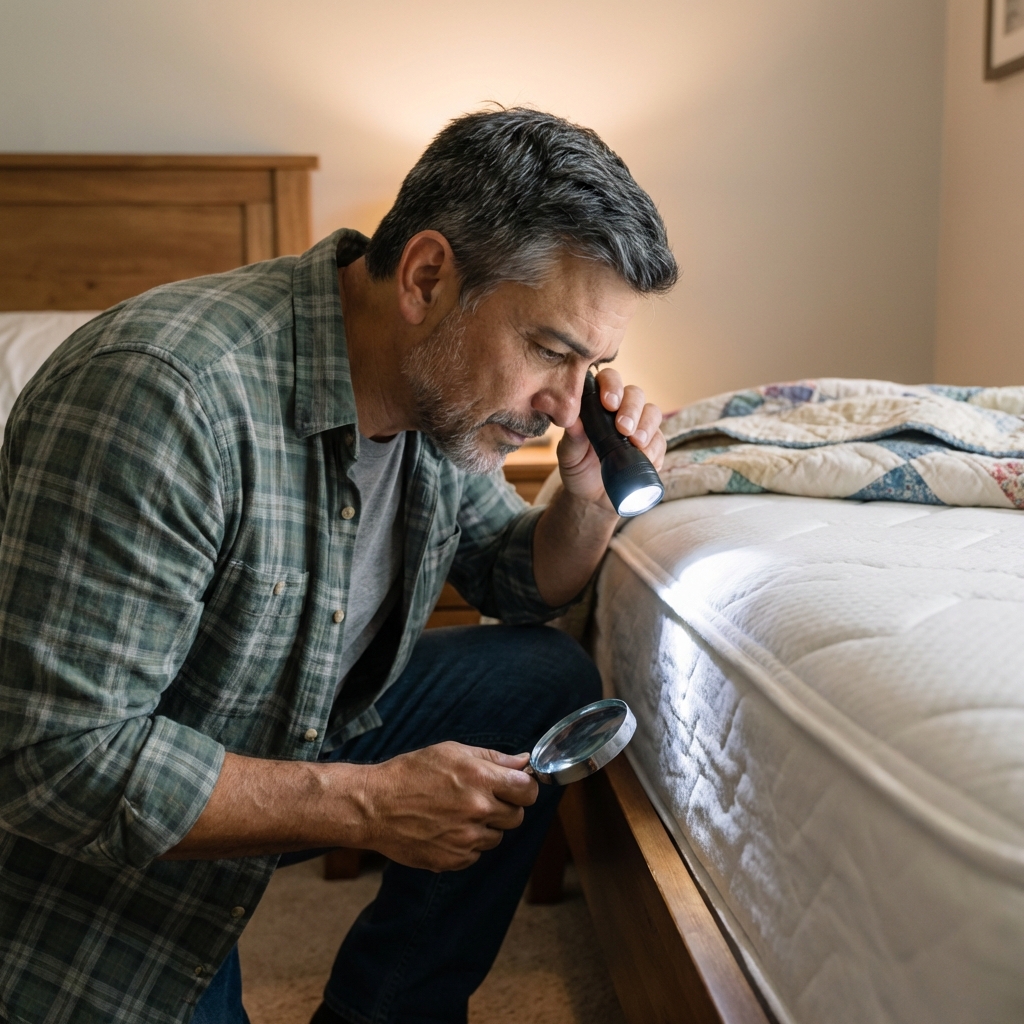
If you only have 10 minutes, check these spots in order. Use a bright flashlight and a thin card or old gift card to gently run along creases and cracks.
1) Mattress seams and tags
Focus on piping, stitched seams, and the fabric label area. Lift the seam edge with your fingernail or card and look for dark spotting.
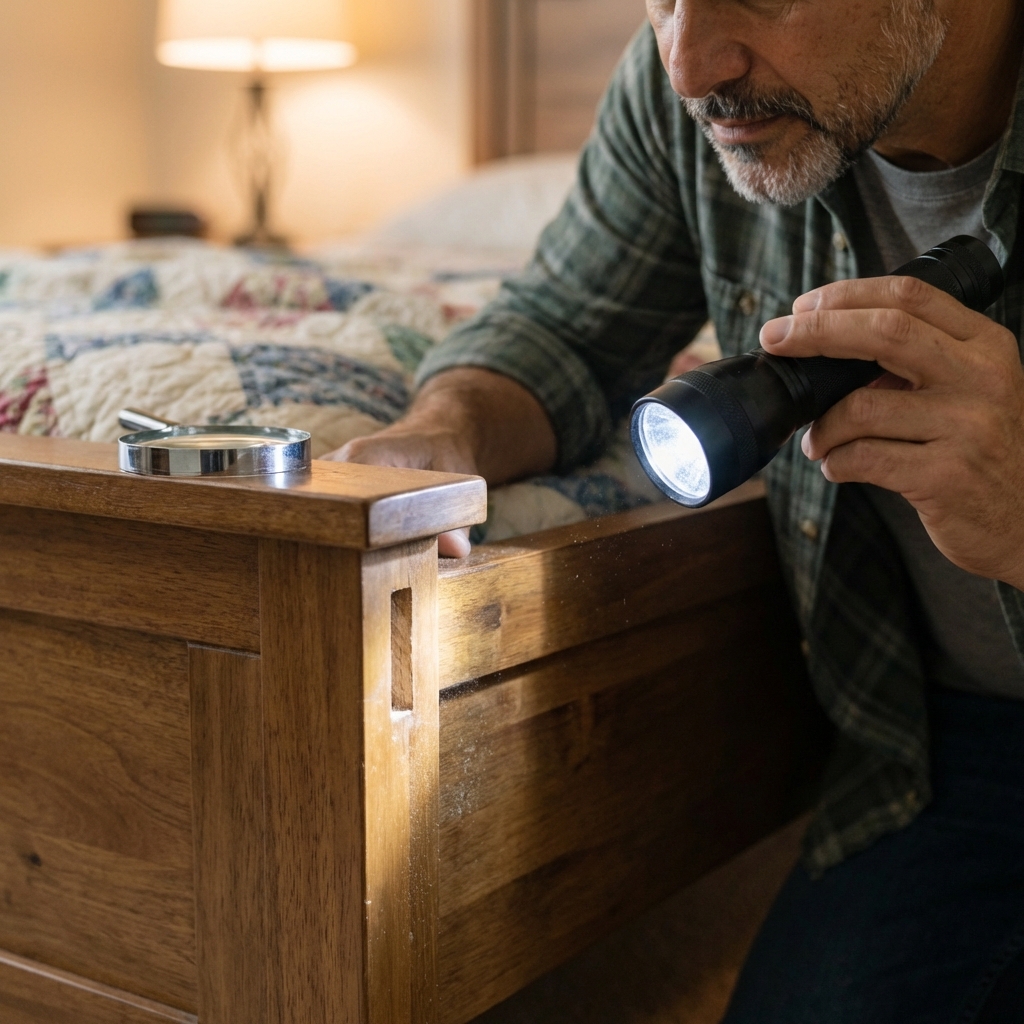
2) Box spring and bed frame joints
Box springs are prime real estate. Check the underside, stapled fabric, wooden slats, and corners. If you can do it safely, you may need to peel back or remove part of the thin dust cover (cambric) on the underside to inspect inside the wood structure, since bed bugs often hide where you cannot see from the outside. On the frame, inspect screw holes, joints, and any cracks in wood.
3) Headboard (especially mounted ones)
Headboards sit right where you breathe and sleep. Look behind it and around mounting points. Wall-mounted headboards are a frequent hiding place.
4) Nightstands and bedside clutter
Pull out drawers and check drawer joints, the underside of the nightstand, and inside corners. Clutter gives bed bugs more hiding options.
5) Baseboards and carpet edges
Check where carpet meets the wall, behind peeling baseboard caulk, and in small gaps at corners near the bed.
Secondary hiding spots people miss
Once bed bugs get established or the bed area gets treated, they spread to nearby cracks and quiet areas. These are common “why are they still here?” spots.
- Upholstered furniture: seams, welting, under cushions, and the dust cover underneath the couch or chair.
- Curtain hems and curtain rod brackets: especially if the bed touches the wall under a window.
- Picture frames and mirrors: backs and hanging hardware.
- Electrical outlets and switch plates: behind cover plates, not inside wiring. Turn power off at the breaker before removing plates.
- Bedside electronics: alarm clocks, phone docks, and power strips. Check cracks and vents.
- Luggage and storage bins: seams, zippers, folds, and handles.
- Laundry area items: hampers, folded piles, and the floor-wall edge behind machines.
Distance reality check: Many infestations stay close to sleeping areas, but they can be found across a room and into adjacent rooms, especially as numbers grow or hiding spots get disturbed.
Quick inspection routine (15 minutes)
This is a simple loop that works in real life when you do not have hours.
- Grab tools: flashlight, disposable gloves, a thin card, zip-top bags, and your phone camera.
- Start at the bed: seams, then box spring underside (and inside if you can access it), then frame joints, then headboard.
- Expand 3 to 6 feet: nightstand, baseboards, carpet edge, nearby chair.
- Mark what you find: snap photos, bag any suspicious bugs or shed skins.
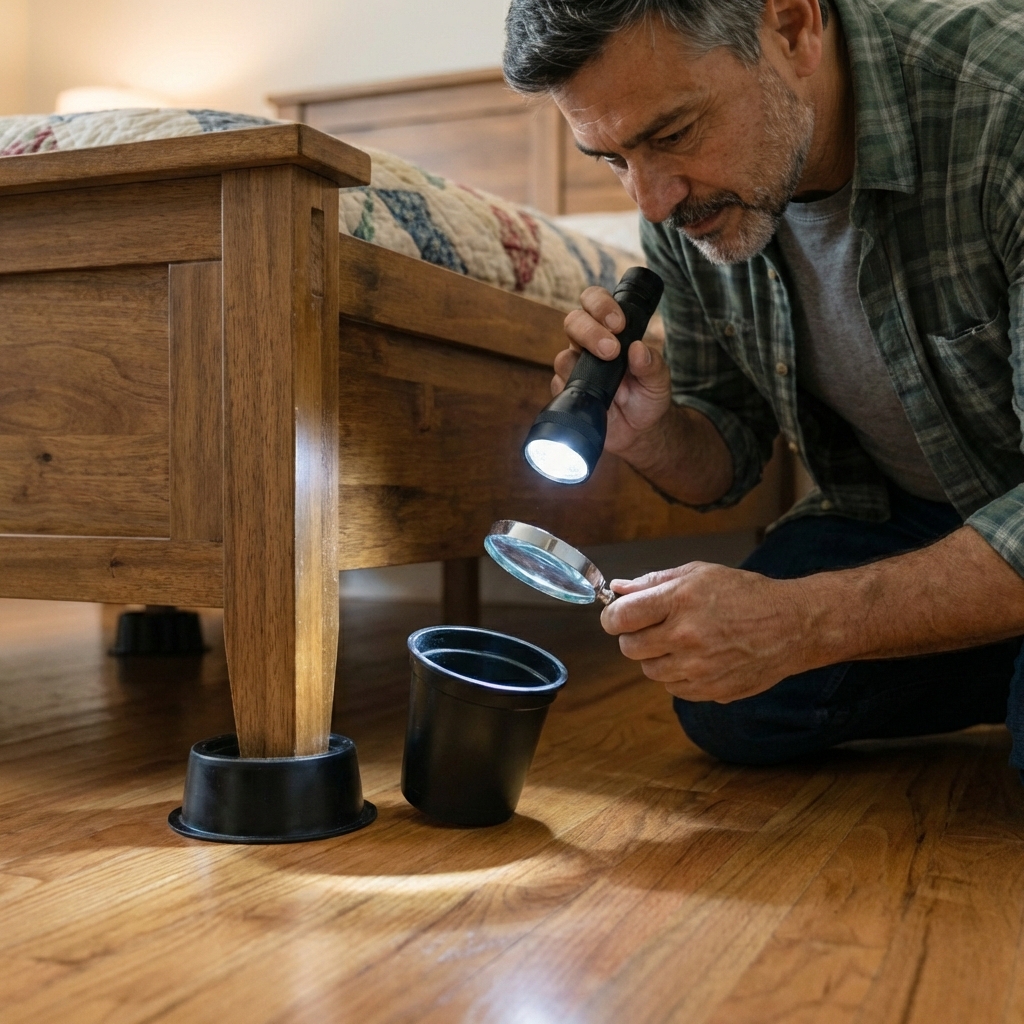
- Set monitors: place interceptor cups under bed legs if possible.
If you find signs on the bed, assume nearby furniture also needs attention.
Quick ID tip: If you catch a bug, seal it in a bag or a small container and compare it to reputable bed bug photos, or show it to a licensed pest professional or local extension office for confirmation.
Low-tox ways to flush them out and confirm activity
With bed bugs, “natural” mostly means physical control and low-tox dusts, not plant sprays that smell nice but do not solve the problem. Here are options that help you confirm where they are hiding and reduce numbers fast.
Interceptor traps (monitoring and control)
Bed leg interceptors help you figure out if bugs are climbing up or down. They also catch some. Keep bedding from touching the floor so the bed is easier to isolate.
Heat and hot laundering
- Dryer: Use high heat. Timing varies by dryer, load size, and thickness of items. Many public health sources suggest about 30 minutes on high heat for dry items, but thicker or damp loads can take longer. When in doubt, run an extra cycle.
- Bag it first: Bag clothes and bedding before moving through the house to avoid dropping hitchhikers.
Vacuuming with a plan
Vacuum seams, cracks, and edges. Use a crevice tool. Immediately empty the canister into a bag, seal it, and take it outside. If you use a vacuum bag, remove and seal the bag right after.
Steam for seams and cracks
Steam can kill bed bugs on contact if it reaches them at lethal temperatures. Go slow along mattress seams, bed frame joints, and baseboards. A steamer that produces low-vapor or “dry” steam can help reduce excess moisture. Do not soak surfaces, and avoid overdoing it in areas that could trap moisture and lead to mold.
Amorphous silica dust or diatomaceous earth (use carefully)
These dusts work by drying insects out. They are not instant, but they can be effective when applied correctly.
- Look for pest-control grade amorphous silica dust (not the silica gel beads from packaging) or an EPA-registered diatomaceous earth product labeled for indoor insect control.
- Avoid pool grade diatomaceous earth and any product not intended for indoor pest control.
- Use a light, barely visible dusting in cracks and voids, not piles.
- Follow the label exactly. Avoid breathing dust. Keep kids and pets away from treated areas until settled.
Skip the risky “quick fixes”: Essential oil sprays rarely solve infestations, and rubbing alcohol is a serious fire hazard.
Common mistakes that keep bed bugs hiding
- Foggers and bug bombs: They often fail to reach hiding spots and may push bed bugs deeper into walls and furniture.
- Moving to another room: Sleeping elsewhere often spreads them and makes the original area harder to treat.
- Throwing out the mattress too soon: If the rest of the room is not treated, you can still have bed bugs. Encasements plus targeted control are often smarter.
- Heavy sprays in random places: Focus on cracks, seams, and known activity areas. Random spraying wastes time and can scatter bugs.
Quick containment steps while you figure it out
If you suspect bed bugs but are not ready for a full treatment plan yet, do these today to slow spread.
- Put bedding through the dryer on high heat and store in clean bags or bins.
- Reduce bedside clutter and bag what you cannot wash yet.
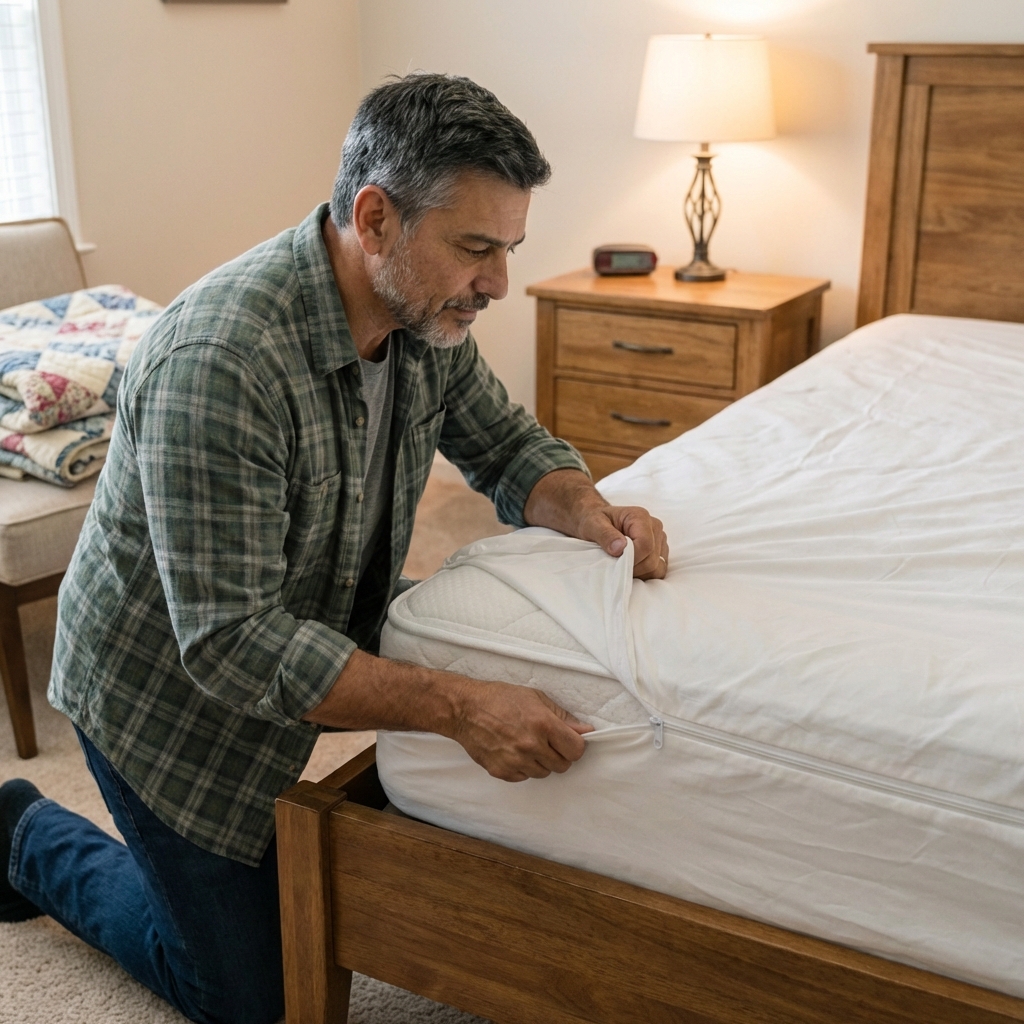
- Install mattress and box spring encasements designed for bed bugs, and keep them on long-term (often up to a year) so trapped bugs cannot escape and survivors inside eventually die.
- Isolate the bed: interceptors under legs, pull the bed a few inches from the wall, keep blankets off the floor.
- Keep a simple log: dates, bites, trap counts, and where you found spots.
When to call a pro
If you are finding bed bugs in multiple rooms, seeing them in daylight, or you have tried heat, steam, vacuuming, and dusting but activity keeps returning, it is time to bring in a licensed pest professional. Ask about integrated pest management (IPM), targeted treatments, and whether they offer heat treatment or low-tox options as part of the plan.
If you live in an apartment or multi-unit building: notify your landlord or property manager early. Bed bugs can move between units, and coordinated treatment is often the difference between getting rid of them and getting them back.
Quick recap
- Start with mattress seams, box spring underside (and inside), frame joints, and the headboard.
- Then check nightstands, baseboards, carpet edges, and upholstered furniture.
- Use interceptors, heat, vacuuming, and steam for low-tox control.
- Use amorphous silica dust or indoor-labeled diatomaceous earth lightly in cracks, following the label.
If you want, share what room you are seeing bites or spotting, plus whether you have carpet or hardwood. We can help you narrow down the most likely hiding spots in your setup.

Jose Brito
I’m Jose Britto, the writer behind The Country Store Farm Website. I share practical, down-to-earth gardening advice for home growers—whether you’re starting your first raised bed, troubleshooting pests, improving soil, or figuring out what to plant next. My focus is simple: clear tips you can actually use, realistic expectations, and methods that work in real backyards (not just in perfect conditions). If you like straightforward guidance and learning as you go, you’re in the right place.