Fungus gnats are one of those pests that make you feel like your houseplants are secretly running a bug nursery. The truth is simpler. Fungus gnats thrive wherever there is moist growing media plus organic matter. They often start when eggs or larvae hitchhike in on potting mix or a new plant, or when a few adult gnats find a consistently damp pot and decide it is the perfect nursery.
If you understand where they come from, you can fix the root cause instead of swatting a few adults and wondering why they keep coming back.
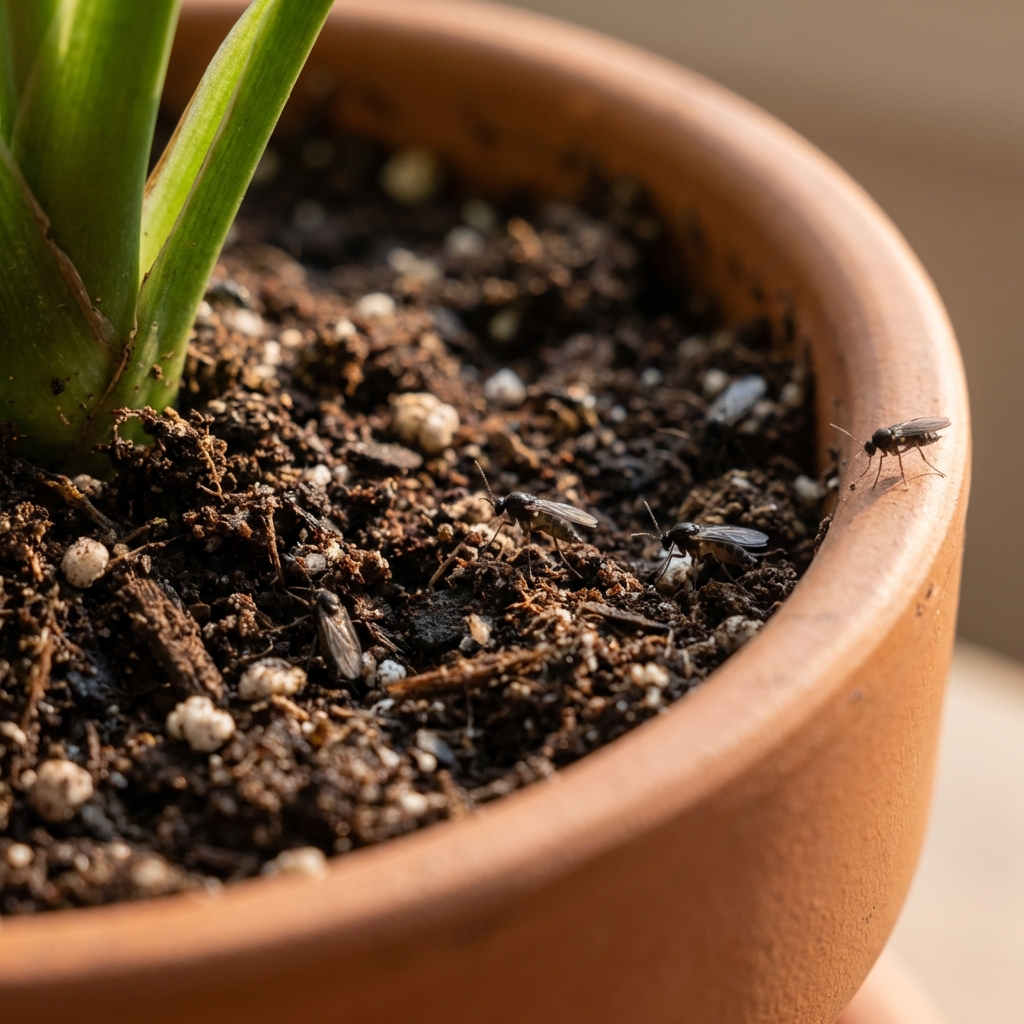
The quick answer
Most fungus gnat problems start from one (or more) of these sources:
- Bagged potting mix that can contain eggs or larvae, or becomes a breeding site once it stays damp after opening.
- New plants brought home from a nursery with infested soil.
- Consistently damp houseplants where the top layer of soil rarely dries.
- Standing water and decaying organic matter like soggy trays, wet leaves, or algae growth.
- Open windows and doors that allow adults to fly in, especially in warm months.
What fungus gnats are doing in your soil
Adult fungus gnats look like tiny mosquitoes. The adults are mostly a nuisance, but the larvae live in the top layer of soil where it stays moist. They feed on fungi, algae, and decaying plant material. When the population gets high, larvae can also chew on fine roots and tender seedlings.
This is why fungus gnats are so common in indoor containers. Pots hold moisture longer than garden beds, and many popular mixes contain peat, coco coir, compost, or bark that provides plenty of food as it breaks down.
Common sources (and the real reason)
1) Bagged potting soil and potting mix
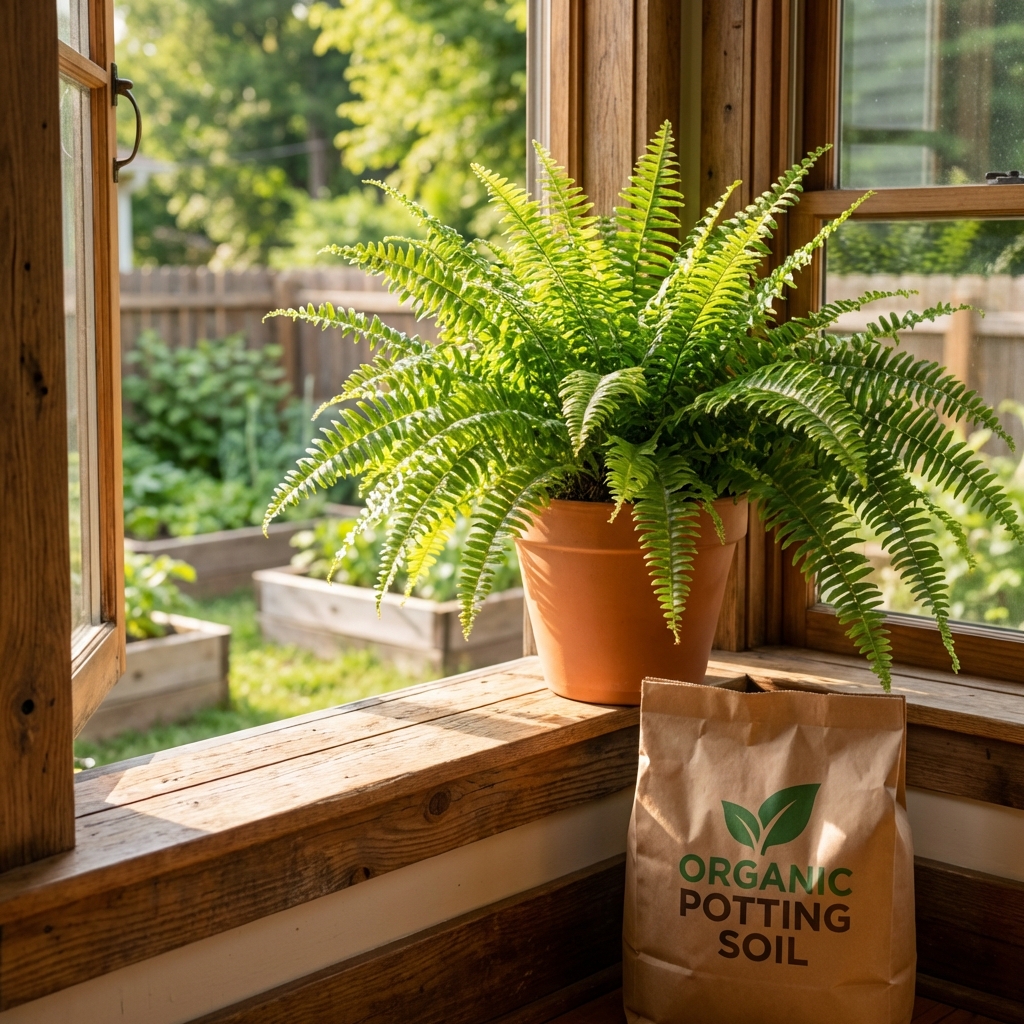
Fungus gnats can come from a fresh bag of potting mix. Eggs and larvae are tiny and can slip through unnoticed. Also, even a mix that starts out relatively “clean” can become a breeding site once the bag is opened and kept damp.
What makes it worse: storing an opened bag where it can stay humid or get wet. If the bag sits on a cool surface, moisture can collect and keep the mix damp, which is exactly what gnats like.
2) New houseplants from stores and nurseries
This is one of the most common sources. Many retail plants are kept constantly moist so they look fresh. That moisture plus organic potting media is a fungus gnat magnet. Adults may be flying around the greenhouse, laying eggs in multiple pots.
Practical tip: isolate new plants for 1 to 2 weeks and watch for gnats before placing them with the rest of your collection.
3) Overwatering and consistently damp soil
If you already have a few gnats in the house, wet soil is what turns “a few” into “a lot”. The top of the pot is where eggs are laid and larvae hatch. If that surface never dries, the life cycle keeps rolling.
Common causes of constantly wet pots:
- Watering on a schedule instead of checking soil moisture
- Pots without drainage holes
- Saucers that stay full of runoff
- Dense, compacted mix that drains slowly
- Low light or cool temps that slow evaporation
4) Drainage trays, self-watering reservoirs, and standing water
Saucers and reservoirs can grow algae and stay humid around the base of the plant. Even if larvae are mainly in soil, these wet zones help adults survive and hang around longer.
5) Compost, worm bins, and organic debris nearby
Indoor compost containers, worm bins, and even a forgotten bag of damp leaves can support fungus gnats. If adults are breeding there, they can easily move to your plants.
6) Outdoors and then indoors
Fungus gnats exist naturally outdoors in soil and mulch. When you bring plants inside for winter, repot on the patio, or leave a window open near potted herbs, adults can come in and start the cycle.
Why they show up in “clean” homes
Fungus gnats are not a cleanliness issue. They are a moisture and biology issue. You can have a spotless home and still end up with gnats if your potting mix stays wet and has organic matter breaking down.
Also, adults do not need much time to lay eggs. A small number of gnats can turn into a noticeable infestation in a couple of weeks if conditions stay moist.
The life cycle (timing matters)
Knowing the timing helps you plan control methods.
- Eggs are laid in moist topsoil.
- Larvae hatch and feed in the top layer of mix.
- Pupae develop in the soil.
- Adults emerge, fly, and lay more eggs.
Indoors, the full life cycle is often about 2 to 4 weeks, depending on temperature and moisture (many homes land around 3 to 4 weeks). That is why quick fixes (like only using sticky traps) reduce adults but do not always solve the problem.
How to confirm it is fungus gnats
Before you treat, make sure you are not dealing with fruit flies or drain flies.
- Fungus gnats hang around pots and windows, look like tiny dark mosquitoes, and run across soil when disturbed.
- Fruit flies hover around ripening fruit, trash, and recycling, with a more tan or light brown look.
- Drain flies look fuzzy and moth-like, and stick to sinks and drains.
Simple test: gently tap the pot or the rim. If a few tiny gnats pop up from the soil surface, you have your answer.
Stop the source: reliable fixes
To get real control, you need to hit two things: larvae in the soil and adults laying eggs.
Step 1: Let the soil surface dry
This is the big one. For many plants, allowing the top 1 to 2 inches of soil to dry between waterings dramatically reduces egg laying and larval survival.
Quick caveat: not every plant loves a dry top layer. If you are growing moisture-loving plants, adjust the goal. Aim for “not constantly wet” and lean harder on larva controls (BTi or nematodes), airflow, and better drainage.
- Water deeply, then wait longer.
- Empty saucers after 10 to 20 minutes.
- Increase light and airflow if possible.
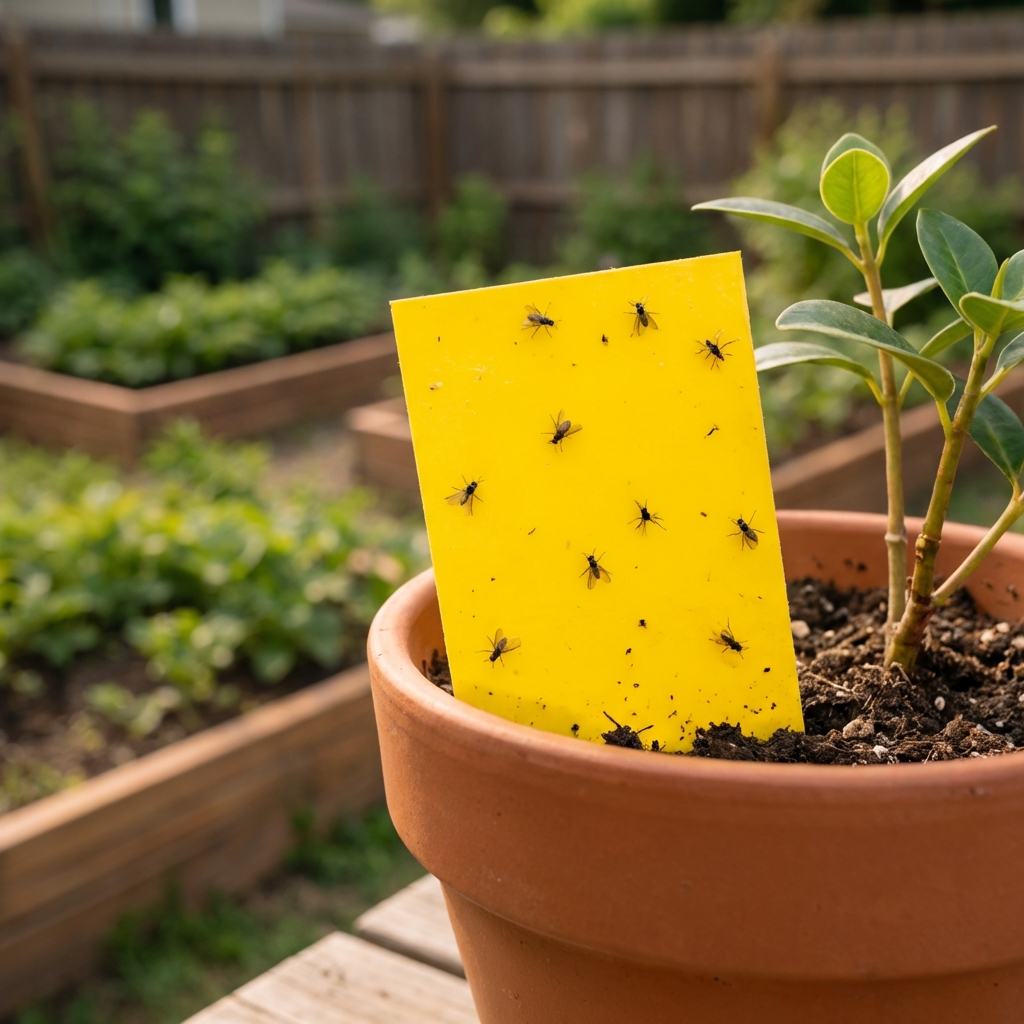
Step 2: Use yellow sticky traps
Sticky traps reduce the adult population and help you monitor progress. Place them close to the soil surface, not across the room. Replace them when they are covered with gnats, dusty, or no longer sticky.
Step 3: Treat the larvae (choose one)
- BTi (Bacillus thuringiensis israelensis): Often sold as mosquito bits or dunks. Soak in water and use the strained water to drench soil. Repeat per label, and plan to keep at it through a full life cycle (often weekly for a few weeks) so new hatchlings do not reset the problem.
- Beneficial nematodes (Steinernema feltiae): A biological control that hunts larvae in the soil. Great when you have lots of plants, but follow storage and application directions closely.
- Top dressing (optional): A 1 to 2 inch layer of coarse material like horticultural grit can make it harder for adults to reach moist soil. Skip very fine sand, which can compact and trap moisture underneath. Treat this as a helper, not the main solution.
Step 4: Clean up the wet extras
- Scrub algae off trays and cachepots
- Remove dead leaves on the soil surface
- Fix slow drainage and compacted mix
- Check nearby compost or worm bins
What to expect
You will often see fewer adults within a few days (thanks, traps). The soil side of the problem takes longer. Give your plan 2 to 4 weeks of consistency to fully break the cycle.
Prevention that works
- Quarantine new plants and inspect the soil before they join the rest.
- Do not store open potting mix wet. Keep it sealed and dry.
- Use pots with drainage holes and do not let water sit in saucers.
- Bottom water carefully. It can help keep the surface drier, but do not let the pot sit in water for hours.
- Repot problem plants if the mix is old, broken down, or staying swampy.
FAQ
Do fungus gnats come from drains?
Usually no. Drain flies come from drains. Fungus gnats most often come from potting soil and moist organic matter. That said, a damp, algae-coated area near a sink can keep gnats alive longer and make them feel more “everywhere.”
Can fungus gnats harm my plants?
Adult gnats are mostly annoying. Larvae can damage roots, especially in seedlings, cuttings, and stressed plants. Most established houseplants tolerate small numbers, but heavy infestations can slow growth.
Why do I keep getting fungus gnats after I treat?
Usually because the soil surface stays moist or only the adults were addressed. You need consistent moisture control plus a larva-targeting treatment long enough to cover the full life cycle.
Bottom line
Fungus gnats come from a simple combo: moisture plus organic growing media. They often get introduced through potting mix or new plants, then multiply fast when soil stays damp. The long-term fix is not fancy. Dry the surface (as your plant allows), reduce standing water, trap the adults, and treat the larvae. Stick with it for 2 to 4 weeks and they stop “mysteriously” coming back.

Jose Brito
I’m Jose Britto, the writer behind The Country Store Farm Website. I share practical, down-to-earth gardening advice for home growers—whether you’re starting your first raised bed, troubleshooting pests, improving soil, or figuring out what to plant next. My focus is simple: clear tips you can actually use, realistic expectations, and methods that work in real backyards (not just in perfect conditions). If you like straightforward guidance and learning as you go, you’re in the right place.