If you woke up to mushrooms popping up in the grass, you are not alone. They can appear overnight after rain, irrigation, or humid weather and disappear just as fast, sometimes after a sunny day or a mow. The good news is that mushrooms are usually a sign of an active soil ecosystem, not a failing lawn.
That said, mushrooms can be annoying. They can worry pet owners. And in a few cases they can point to buried wood or drainage issues worth fixing. Let’s break down why they show up and what you can do about them.
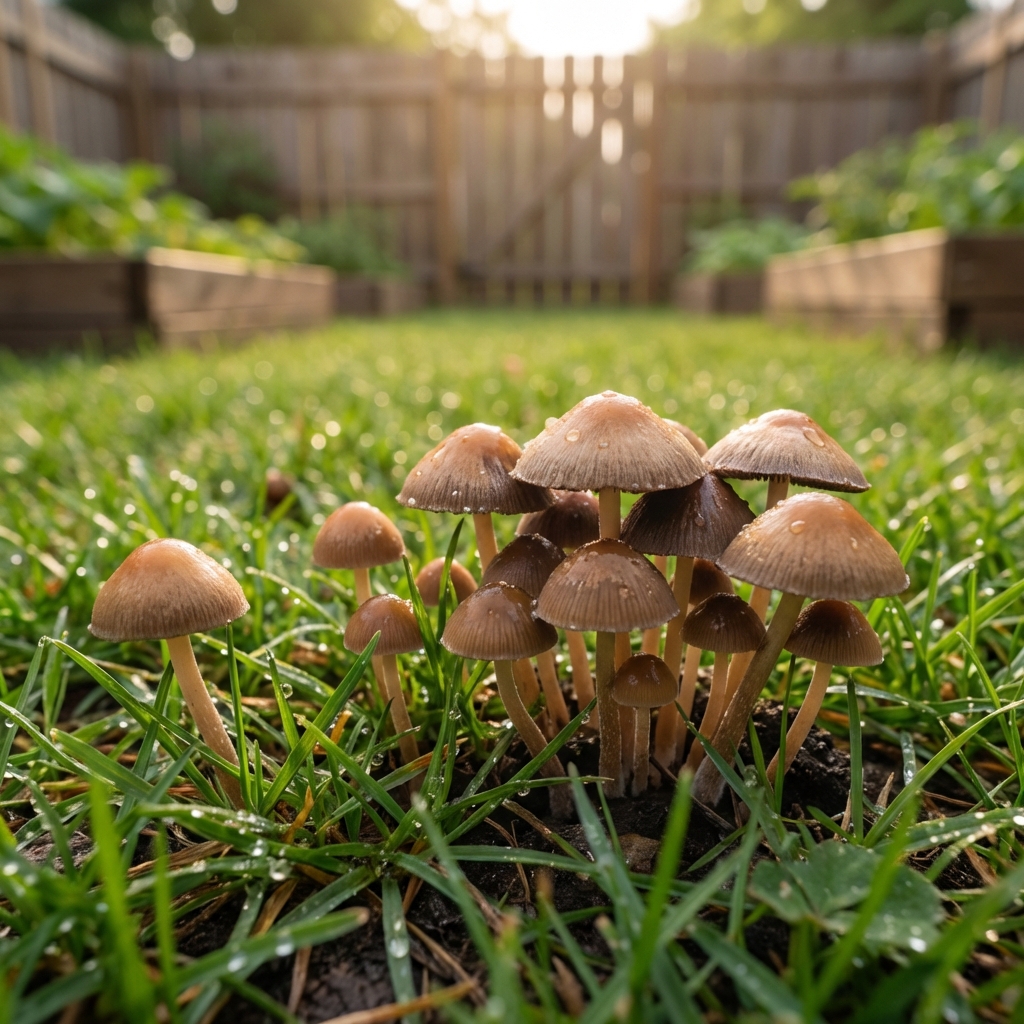
Quick answer: why are they there?
Mushrooms are the visible part of a fungus. The main body of the fungus (called mycelium) lives in the soil, feeding on organic material like old roots, fallen leaves, wood chips, buried lumber, or even a dead tree root you forgot was there.
When conditions are right, the fungus sends up mushrooms to release spores. Those conditions are typically:
- Moisture (rain, heavy irrigation, poor drainage, thick thatch)
- Moderate temperatures (often spring and fall, sometimes cool summer stretches)
- A food source (decaying organic matter in or on the soil)
Common causes of mushrooms in a yard
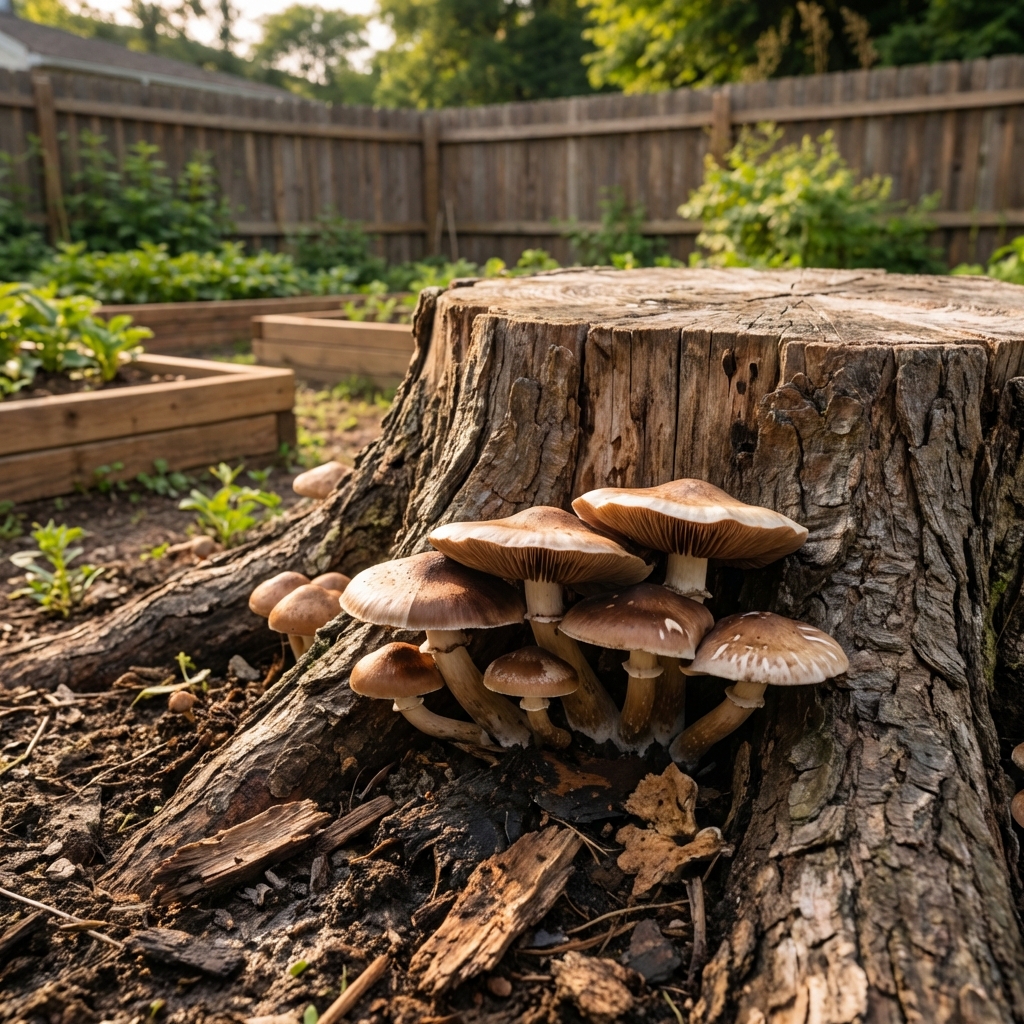
1) Decaying roots, stumps, or buried wood
This is a big one, especially in newer yards, recently renovated landscapes, or areas where a tree used to be. Builders sometimes bury wood scraps, old roots slowly rot, and fungi move in.
Clue: Mushrooms keep returning in the same spot, year after year, even if you change watering.
2) Overwatering or frequent irrigation
Lawns that stay consistently damp create a perfect environment for fungal growth. This does not automatically mean your lawn has a turf disease. It often just means the surface stays wet long enough for mushrooms to form.
Clue: Mushrooms appear soon after watering, especially in shaded areas or low spots.
3) Thick thatch and matted clippings
Thatch is the layer of dead stems and roots that builds up between grass and soil. A little is normal, but a thick layer holds moisture and provides extra organic material for fungi.
Clue: The lawn feels spongy, and mushrooms appear across a wider area rather than a single spot.
4) Shady areas with poor airflow
Shade slows evaporation. If a spot stays damp and cool, mushrooms can pop up even when the rest of your yard looks dry.
Clue: Mushrooms mostly appear under trees, near hedges, or along the north side of buildings.
5) Mulch and wood chips
If you spread fresh mulch, especially hardwood, it is common to see mushrooms or other fungal growth. This is usually harmless and part of the mulch breaking down.
Clue: Mushrooms are in beds or along mulched edges and not throughout the turf.
Is it bad to have mushrooms in your yard?
Most of the time, mushrooms are not bad for your yard. Fungi help break down organic matter into nutrients that plants can use. Many lawns with occasional mushrooms are otherwise healthy.
Where mushrooms can be a problem:
- Pets and kids: Some mushrooms are toxic. If you have curious pets or toddlers, treat all wild mushrooms as unsafe.
- Hidden decay: Repeated mushrooms in one spot can suggest a buried stump, dead roots, or old lumber.
- Drainage issues: Constant mushrooms alongside soggy ground can mean compacted soil or a low area holding water.
What to do right now
Pick and dispose of them
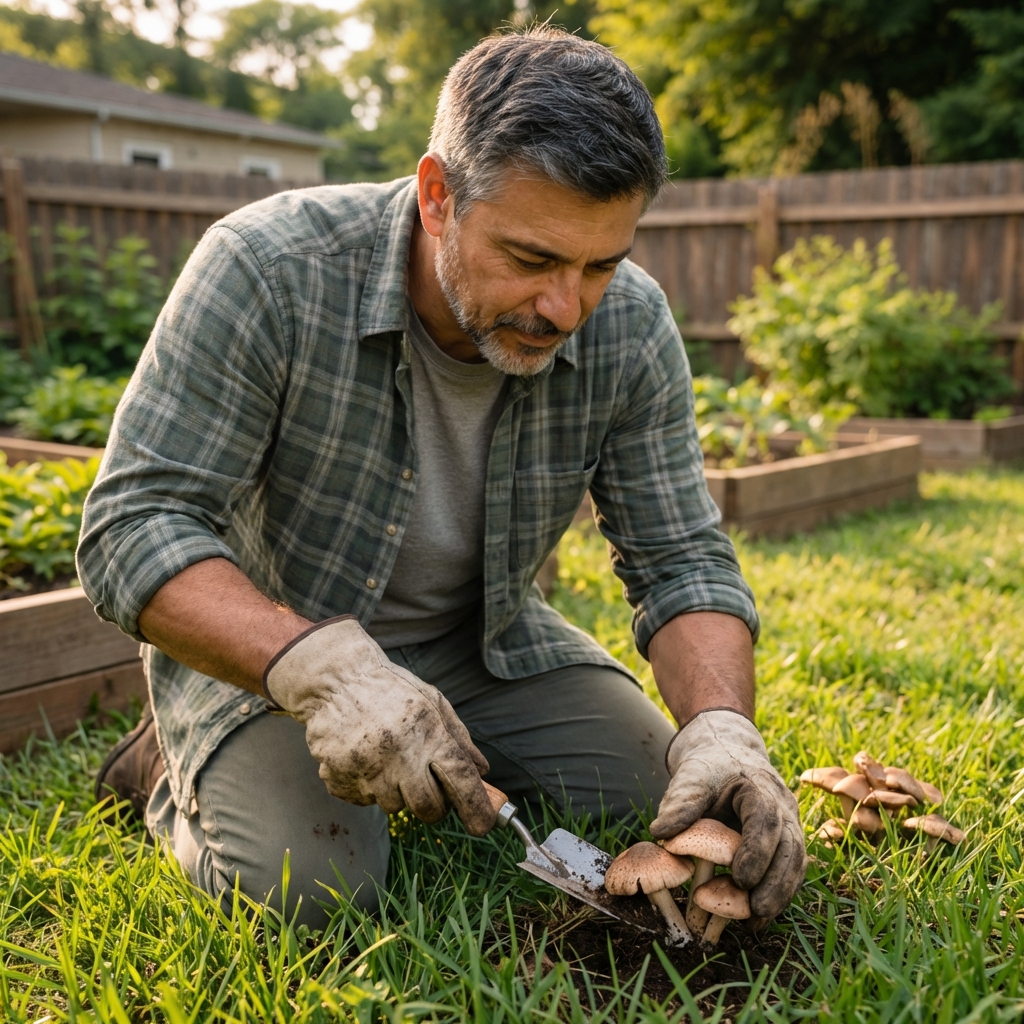
If mushrooms are popping up, the simplest short-term fix is to remove them for tidiness and to reduce pet and kid exposure. They may still return as long as the underground fungus and conditions remain.
- Wear gloves or use a small shovel.
- Bag and discard them, or place them in a sealed container. Composting is not inherently dangerous, but many people choose not to compost unknown mushrooms as a simple precaution.
- Rake up any slimy pieces so they do not smear into the turf.
Mow as usual (with a couple caveats)
Mowing over mushrooms is usually fine. It often knocks them down quickly.
- If you have pets or small kids, consider picking mushrooms first.
- If mushrooms are heavy, bagging clippings can reduce the mess and keep pieces from scattering.
Adjust watering
If you irrigate often, switch to deep, less frequent watering so the surface dries between cycles.
- Water early morning so the lawn dries faster.
- Avoid nightly watering.
- If you have sprinklers, check for a stuck head that is soaking one spot.
Improve airflow and sunlight
Trim low tree branches or thin dense shrubs if possible. Even a little more light and airflow can reduce how long the grass stays damp.
Reduce thatch and compaction
If the lawn is thick with thatch or the soil is compacted, the surface tends to stay moist.
- Aerate compacted lawns (core aeration works best).
- Dethatch if thatch is heavy (often more than about 1/2 inch).
- Rake or mulch clippings properly so they do not mat up in damp weather.
Fix drainage in low spots
If water pools, mushrooms are a symptom, not the main issue.
- Top-dress low areas with a soil and compost mix to gently regrade.
- Redirect downspouts away from turf.
- Consider a French drain or dry creek bed for persistent puddling.
Should you use a fungicide?
In most home yards, fungicide is not the best solution for random lawn mushrooms. Here’s why:
- The mushroom is just the fruiting body. The fungus lives in the soil and can keep fruiting when conditions are favorable.
- Many products are not labeled or consistently effective for eliminating “yard mushrooms,” and they do not solve the underlying moisture and organic matter that feed the fungus.
If you suspect an actual turf disease, identify the disease first and then choose a treatment based on label directions and local recommendations. Many turf diseases show up as patches or thinning grass without obvious mushrooms (for example, brown patch or dollar spot).
Fairy rings
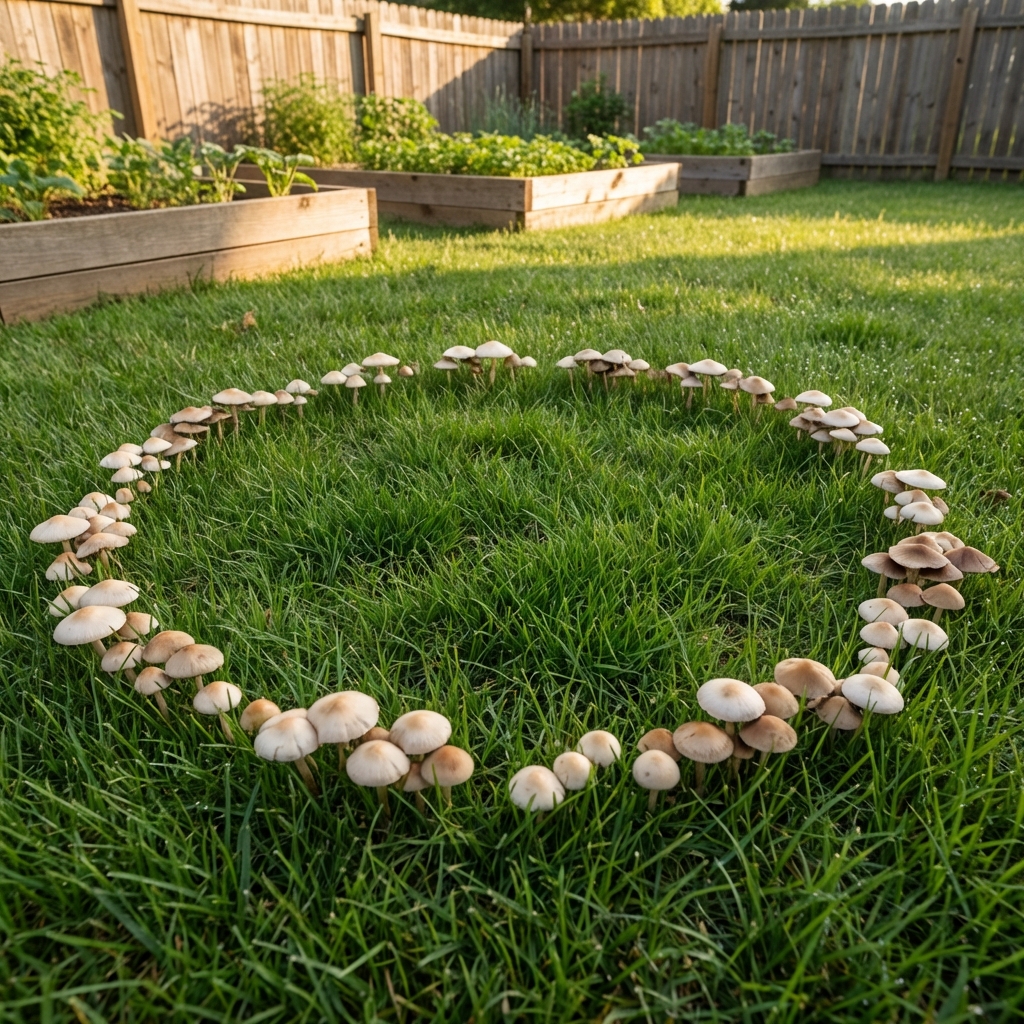
If you see mushrooms forming a circle or arc, or the grass makes a dark green ring, you may be dealing with a fairy ring. It is caused by expanding fungal growth underground.
Fairy rings can be mostly cosmetic, but some types can create a water-repellent (hydrophobic) layer in the soil that makes it hard for water to soak in and can stress grass.
What helps:
- Aerate the ring area to open the soil.
- Water deeply, but know that severely hydrophobic soil may shed water until you aerate and, in some cases, use a wetting agent.
- Apply a wetting agent if the soil is resisting water.
- Remove mushrooms as they appear.
- In severe cases, you may need to remove affected turf and amend the soil, but try aeration and moisture management first.
Safety tips
- Do not eat yard mushrooms. Many edible species have toxic look-alikes, and identification from a quick glance is unreliable.
- Remove mushrooms promptly if pets are prone to snacking.
- Call your vet right away if you suspect a pet ate a mushroom. If possible, bring a sample or a clear photo of the mushroom from multiple angles.
- Wash hands after handling unknown mushrooms.
When to investigate more
Occasional mushrooms after rain are normal. Look closer if you notice:
- The same heavy flush in one spot repeatedly
- Soft, sinking ground that suggests rotting buried wood
- Constant sogginess or standing water
- Mushrooms paired with turf decline that is not explained by heat, drought, or foot traffic
If you suspect buried wood, you can carefully dig a small test hole in the center of the mushroom patch. If you find old roots, lumber, or a decaying stump, removing as much as practical can reduce future outbreaks. Sometimes the best realistic option is to let it decompose over time while you manage moisture.
When to call a pro
Consider getting local help if:
- You need help identifying a potentially poisonous mushroom
- Fairy rings are widespread or the turf is thinning badly
- Drainage or grading issues are chronic
- You have recurring turf damage and are not sure whether it is insects, disease, watering, or soil compaction
Your local cooperative extension office (or a trusted lawn care pro) can help with region-specific identification and advice.
Bottom line
Mushrooms in your yard usually come down to moisture plus organic matter, not a crisis. If you want fewer mushrooms, focus on drying the surface between waterings, improving drainage and airflow, and reducing thick thatch. And if you have pets or kids, treat every wild mushroom as potentially toxic and remove them quickly.

Jose Brito
I’m Jose Britto, the writer behind The Country Store Farm Website. I share practical, down-to-earth gardening advice for home growers—whether you’re starting your first raised bed, troubleshooting pests, improving soil, or figuring out what to plant next. My focus is simple: clear tips you can actually use, realistic expectations, and methods that work in real backyards (not just in perfect conditions). If you like straightforward guidance and learning as you go, you’re in the right place.