People love vinegar because it is cheap, easy to find, and it feels like the kind of simple fix that should work. When it comes to fleas though, the honest answer is this: vinegar can help a little, but it usually will not kill fleas well enough to end an infestation.
Also important: if you have pets, treating the pet is usually the cornerstone. Home and yard work breaks the life cycle, but if fleas can keep feeding on an untreated pet, they keep reproducing. If you are unsure what is safe for your animal (especially kittens, puppies, pregnant pets, or pets with dermatitis), call your veterinarian.
Quick start (for skimmers):
- Treat the pet with a vet-approved flea control and use a flea comb daily.
- Vacuum hard (floors, edges, furniture) and empty the vacuum outside.
- Wash and heat-dry pet bedding and blankets weekly.
Fleas are a life cycle problem. Adults are only part of the population. The rest are eggs, larvae, and pupae tucked into carpet fibers, pet bedding, couch seams, and shady outdoor spots. The most effective organic approach is not one magic spray. It is a repeatable routine that hits fleas where they live and breaks the cycle.
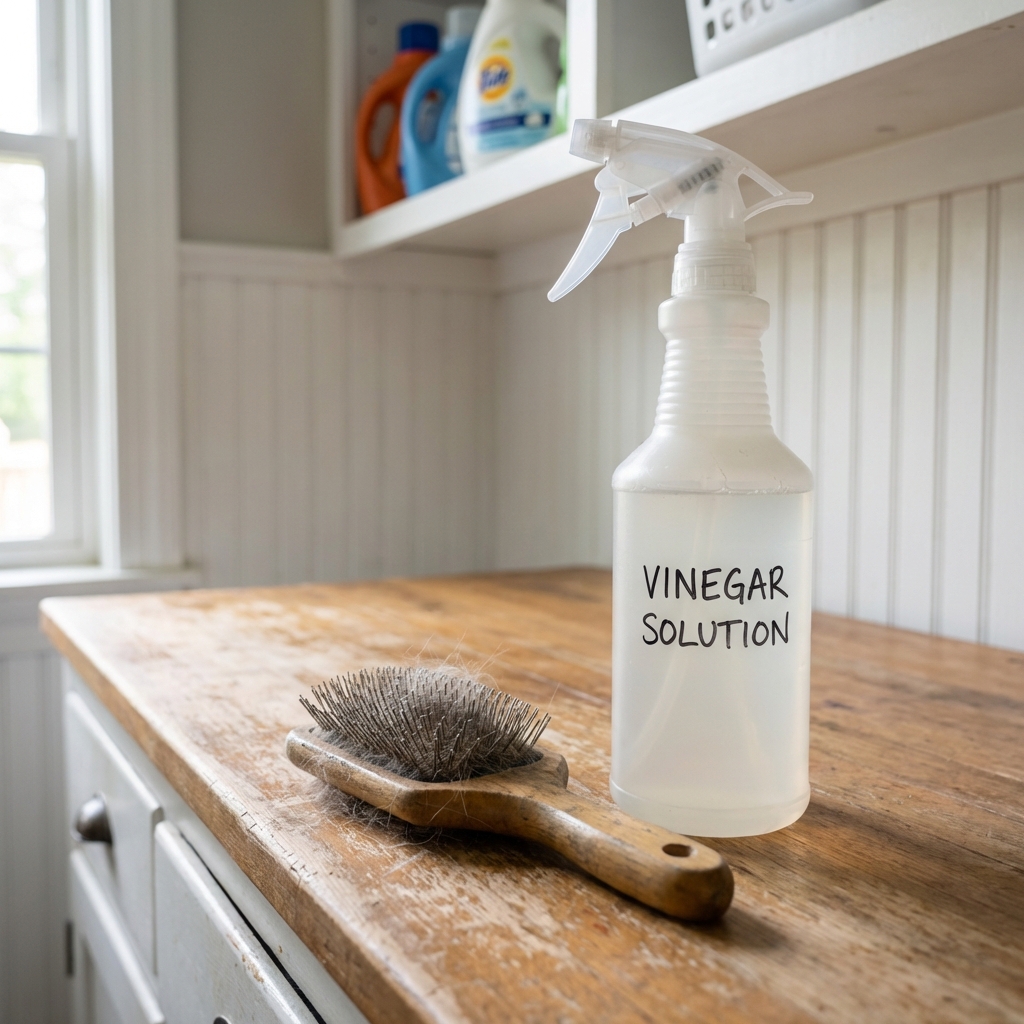
Does vinegar kill fleas or repel them?
Most of the time, vinegar is more of a mild repellent and cleaning helper than a killer. Fleas may avoid strong odors on some surfaces, and a vinegar wipe-down can help remove some fleas and flea dirt from fur or fabrics.
But here is the catch: fleas are built to survive. Household vinegar is not a reliable adulticide, and it does not penetrate the protective casing of flea eggs. Evidence for strong repellency is mixed, and any effect tends to be limited and temporary. That means you can spray vinegar regularly and still have fleas emerging from pupae for weeks.
So why do people think vinegar works?
- It can dislodge and remove some fleas when paired with combing and bathing.
- It can reduce odor and residue on floors and fabrics, which supports your overall cleaning routine.
- It helps you stay consistent because it is easy, and consistency is what actually wins against fleas.
Apple cider vs white vinegar
Both can be used for cleaning and light repellent sprays, but they are not equal for every job.
- White vinegar is usually best for household cleaning because it has a clearer scent and less staining risk on light fabrics.
- Apple cider vinegar (ACV) is commonly used in DIY pet sprays because it is seen as gentler, but it can still irritate skin and it can stain some coats and fabrics.
If you try vinegar at all, keep expectations realistic: it is a supporting tool, not the solution.
How to use vinegar safely
For floors and washable surfaces
Vinegar is useful here because you are not trying to kill fleas with chemistry. You are cleaning up the environment and removing debris where eggs and larvae hide.
- Mix 1 part white vinegar to 1 part water in a spray bottle or bucket.
- Use on tile, sealed wood, laminate, and other vinegar-safe surfaces.
- Do not use vinegar on natural stone (marble, granite, limestone) because it can etch and dull the finish.
For carpets and upholstery (spot test first)
Vinegar can help with odor and light residue, but do not soak fabrics. Excess moisture can cause mildew and lingering smells. Fleas also tend to do better in humid environments, so the goal is to keep soft surfaces clean and dry.
- Lightly mist, do not drench.
- Let it dry fully.
- Follow with thorough vacuuming.
For pets (use caution)
Direct vinegar sprays on pets are risky if your pet has sensitive skin, allergies, open scratches, hot spots, or recent flea bites. Acid can sting and trigger more itching.
If your vet says your pet can tolerate it, the safer approach is using vinegar as a light wipe on a cloth, avoiding eyes, nose, mouth, genitals, and any irritated skin. Even then, vinegar alone will not solve fleas on a pet.
Skip vinegar entirely for cats unless your veterinarian approves. Cats are more sensitive to many substances, and stress from strong odors is not worth it.
Extra caution: avoid DIY topicals on very young pets, seniors, pregnant or nursing animals, or pets with skin disease unless a veterinarian has guided you.
Organic options that reduce fleas
Here is what works best in real homes when you want to stay as natural as possible, without relying on harsh chemical foggers.
1) Vacuum like it is your job
Vacuuming is one of the most effective non-toxic flea controls because it physically removes adults, eggs, larvae, and the organic crumbs larvae feed on.
- Vacuum daily for 10 to 14 days in active infestations, then keep going as needed.
- Use the crevice tool along baseboards and under furniture, and vacuum pet hangout zones first.
- Do cushions too: remove them, vacuum seams, and get into couch cracks.
- Empty the canister outside immediately, or seal the vacuum bag in a trash bag and take it out.
- Check and clean the brush roll and filters so suction stays strong.
2) Wash and heat-dry pet fabrics
Fleas love bedding. Heat is your friend.
- Wash pet beds, blankets, and slipcovers in hot water if fabric allows.
- Dry on high heat for at least 30 to 40 minutes.
- Repeat weekly until you are confident the cycle is broken.
3) Use food-grade diatomaceous earth indoors (carefully)
Food-grade diatomaceous earth (DE) can help in dry areas by damaging the waxy coating of fleas, leading to dehydration. It is not instant, and effectiveness depends on it staying dry.
- Choose food-grade, not pool-grade.
- Apply a very light dusting in cracks, along baseboards, under furniture, and in dry carpet areas.
- Avoid breathing the dust. Even food-grade DE can irritate lungs for humans and pets. A mask is smart, and keep pets and kids away during application.
- Vacuum up after 24 to 48 hours, then repeat as needed.
4) Consider beneficial nematodes outdoors
If fleas are coming from the yard, you can fight them where they develop. Beneficial nematodes are microscopic organisms that can reduce flea larvae in soil. Products commonly use species such as Steinernema feltiae or Steinernema carpocapsae, and results vary based on moisture, temperature, and application timing.
- Apply to shady, moist areas where pets rest: under decks, along fences, under shrubs.
- Water the area before and after application as directed, and keep the soil lightly moist for the recommended window.
- Best timing is often spring through early fall, depending on your climate.

5) Botanical sprays: useful, but read labels
Some plant-based flea sprays use ingredients like cedar oil, clove oil, peppermint oil, or eugenol. These can help, but they can also irritate pets, and some essential oils are dangerous for cats and small animals.
Look for products that are clearly labeled for your specific pet type, follow directions exactly, and do not mix your own essential oil sprays unless a veterinarian has guided you. Natural is not automatically safe.
6) Reduce clutter and control humidity
Fleas do better when there is plenty of protected debris and humidity. Keeping pet areas tidy, washing throws, and running a dehumidifier in damp spaces can support your main plan.
A simple flea plan (2 weeks)
If you want an organic approach that is actually doable, follow this routine. The goal is to outlast the hatch cycles. Some homes see improvement quickly, but 2 to 4+ weeks is common for full control, especially with heavy infestations.
Days 1 to 3: hit the hotspots
- Treat the pet with a vet-approved flea product if recommended, and comb daily with a flea comb.
- Vacuum floors, rugs, and furniture thoroughly.
- Wash and heat-dry pet bedding.
- Drop anything you catch in the comb into soapy water to trap and kill fleas.
Days 4 to 10: stay consistent
- Vacuum daily or every other day.
- Repeat laundry cycle for bedding at least once this week.
- If using DE indoors, apply lightly in targeted dry areas, then vacuum up within 24 to 48 hours.
Days 11 to 14: finish strong
- Continue combing and vacuuming.
- Re-check pet resting areas and under furniture.
- If the yard is involved, treat with beneficial nematodes and keep shaded zones from becoming flea nurseries.
Important: If your pet is heavily infested or has flea allergy dermatitis, anemia risk (especially puppies and kittens), or open sores, call your veterinarian. Sometimes the most humane choice is a vet-approved flea treatment for the animal while you keep the home routine as low-tox as possible.
Common DIY mistakes
- Only treating the pet and ignoring carpets and bedding.
- Only treating the house while pets keep feeding fleas.
- Over-wetting carpets, which can create odor and moisture issues.
- Stopping too soon. Flea pupae can keep emerging for weeks, even after you think you have won.
- Using essential oils on cats or sensitive pets.
FAQ
Will a vinegar bath kill fleas on a dog?
It may remove some fleas during the bath, but vinegar alone is not a reliable kill method. A flea comb plus thorough cleaning of bedding and floors will make a bigger difference. If your dog has irritated skin, ask your vet before trying any vinegar bath or rinse.
Can I spray vinegar on my couch and carpet?
You can lightly mist a diluted solution if the fabric tolerates it, but spot test first and avoid soaking. Vacuuming remains the main tool for carpets and upholstery.
What kills flea eggs naturally?
Most natural sprays do not kill eggs well. Physical removal and heat are the best options: vacuuming, laundering, and high-heat drying. Outdoors, beneficial nematodes can reduce immature stages in soil.
How long until fleas are gone?
With consistent cleaning, you may notice improvement in 1 to 2 weeks, but 2 to 4+ weeks is common because pupae can keep hatching over time. Stick with the routine, and make sure pets are on an effective flea control plan.
Bottom line
Vinegar is fine as a helper, especially for cleaning and mild, short-lived repellent use. But if you are serious about getting fleas under control, focus on the boring stuff that works: treating the pet, vacuuming, heat-washing, combing, and treating the yard when needed. That is how you break the flea life cycle without turning your home into a chemical zone.

Jose Brito
I’m Jose Britto, the writer behind The Country Store Farm Website. I share practical, down-to-earth gardening advice for home growers—whether you’re starting your first raised bed, troubleshooting pests, improving soil, or figuring out what to plant next. My focus is simple: clear tips you can actually use, realistic expectations, and methods that work in real backyards (not just in perfect conditions). If you like straightforward guidance and learning as you go, you’re in the right place.