Yellow leaves on roses can look alarming, but most of the time it is a stress signal, not a death sentence. The trick is to slow down and read the pattern. In rose terms, “pattern” means: old leaves vs new leaves, green veins vs all-over yellow, and whether you see spots, pests, or leaf distortion.
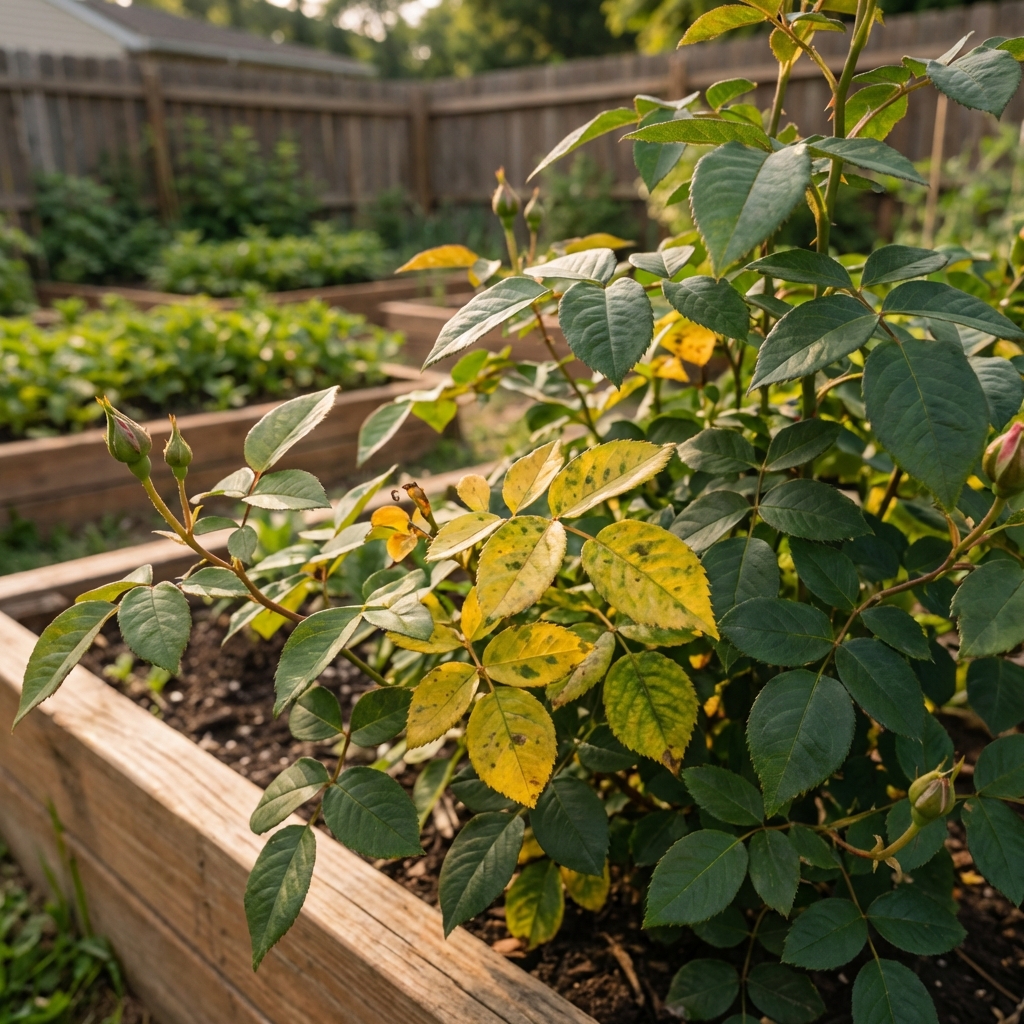
Start with a 60-second check
Before you fertilize or spray anything, do these quick checks. They prevent a lot of guesswork.
- How wet is the soil? Stick a finger 2 to 3 inches down. Soggy or bone-dry both cause yellowing.
- Which leaves are yellow? Older leaves near the bottom, new leaves at the tips, or random leaves throughout?
- Are the veins still green? Green veins with yellow tissue in between is a big clue.
- Any spots, dust, stippling, or webbing? Spots suggest disease. Fine webbing and tiny speckles suggest mites.
- Any distortion? Twisted new growth or odd mottling can point to virus issues or herbicide drift.
- Is it recent weather stress? Heat waves, cold snaps, heavy rain, or transplanting can trigger temporary yellowing.
If this keeps happening: A simple soil test can save time and money, especially before you add sulfur or keep feeding.
Common causes (and the easy fixes)
1) Watering issues: too much or too little
This is the most common reason I see in home gardens. Roses want deep, consistent moisture, not constant wet feet and not long dry spells.
- Signs of overwatering: Yellowing starts on older leaves, leaves may drop easily, soil stays damp for days, sometimes a musty smell.
- Signs of underwatering: Yellowing with crispy edges, wilting during the hottest part of the day, dry soil a few inches down.
Fix: Water deeply at the base when the top 2 inches of soil are dry. Aim for morning watering. As a rough guideline, many in-ground roses do well with about 1 to 2 inches of water per week during active growth, adjusted for heat, wind, soil type, and rainfall.
About drainage: Light surface loosening can help water soak in, but it will not fix true drainage problems on its own. If water sits or the area stays soggy, focus on improving soil structure with compost, correcting compaction, and if needed raising the bed or regrading so water moves away from the crown.
2) Nitrogen deficiency (pale yellow older leaves)
If older leaves turn pale green to yellow and the plant looks generally washed out, nitrogen is often the issue. This is common in sandy soils or after heavy rain.
Fix: Feed with a balanced rose fertilizer or an organic option like composted manure or alfalfa meal. Water it in well. Expect improvement in new growth first, not instant re-greening of old leaves.
3) Magnesium deficiency (older leaves with green veins)
Magnesium deficiency can look like interveinal chlorosis on older leaves, meaning the tissue between veins yellows while veins stay greener. It is easy to confuse with other nutrient issues, especially when plants are stressed.
Fix: Start with the basics: steady watering and a light top-dress of compost. If symptoms persist, a soil test is the cleanest way to confirm. If you are sure magnesium is low, use a labeled magnesium supplement at label rates and avoid stacking multiple fertilizers “just in case.”
4) Iron chlorosis (new leaves yellow with green veins)
When new leaves come in yellow but the veins stay green, think iron availability, not necessarily lack of iron in the soil. High soil pH and waterlogged roots can lock iron up.
- Most likely in: alkaline soils, areas with hard irrigation water, compacted or poorly draining beds.
Fix: First correct drainage and watering. Then consider applying chelated iron as a short-term help. Long-term, work compost into the soil and check your soil pH with a soil test.
About sulfur: Elemental sulfur can help lower pH over time, but changes are slow and depend on soil type and microbial activity. Overapplication can stress roots. If you are not sure where your pH sits, test first and follow label rates carefully.
5) Black spot and other fungal diseases
Yellow leaves plus dark spots is classic black spot. The leaf often yellows around the spots, then drops. Humidity, crowded plants, wet foliage, and shade make it worse. Morning sun is especially helpful because it dries leaves quickly.
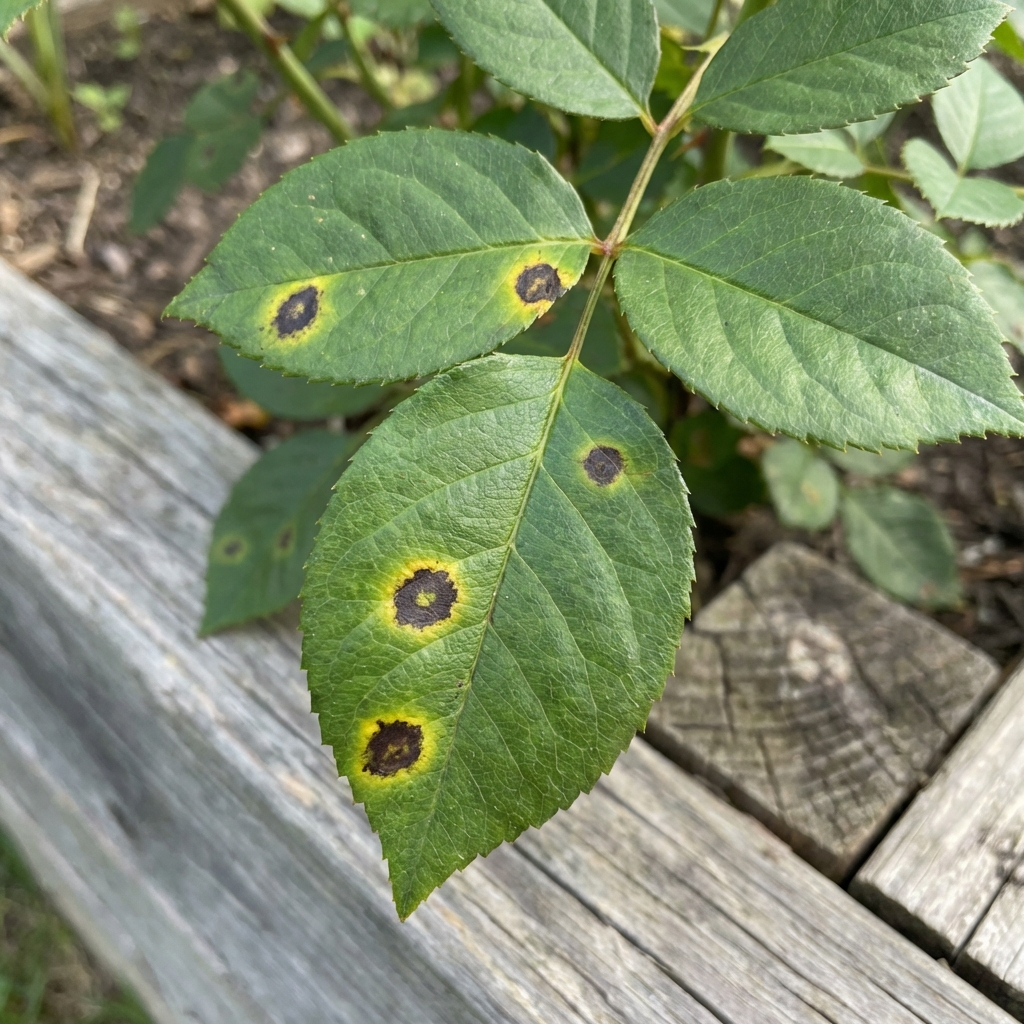
Fix:
- Remove and trash infected leaves on the plant and on the ground. Avoid home composting unless your pile reliably heats hot enough to kill disease spores.
- Water at the soil line, not overhead.
- Prune for airflow and keep roses spaced so leaves dry quickly.
- If the problem repeats yearly, use a labeled fungicide preventatively, starting early in the season, and reapply as directed.
6) Pests that cause yellowing
Several common pests can lead to yellowing by sucking sap or stressing leaves.
- Spider mites: tiny speckles, yellowing, and fine webbing, especially in hot, dry weather.
- Aphids: clustered on soft tips, sticky honeydew, distorted new growth.
- Rose sawfly larvae: “windowpane” damage or skeletonized leaves.
Fix: Start with a strong spray of water on the undersides of leaves. If needed, use insecticidal soap or horticultural oil, following label directions. Coverage matters, especially on the undersides, and repeat applications are often needed. Do not spray oils or soaps during high heat or in full sun, and test on a small section first if your rose variety seems sensitive.
7) Container issues (dry swings, salt buildup, rootbound plants)
Potted roses yellow faster because containers heat up, dry out quickly, and collect salts from fertilizer and hard water.
- Clues: soil drying out within a day, white crust on soil or pot rim, yellow leaves with crispy tips, weak growth even with watering.
Fix: Water until it runs out the drainage holes, then water again when the top inch or two dries. Every few weeks, flush the pot with plain water to wash out salts. If roots are circling tightly, repot into a slightly larger container with fresh mix.
8) Herbicide drift or rose mosaic virus (less common)
If you see strange mottling, streaking, or distorted new growth that does not match the usual watering or nutrient patterns, consider herbicide drift (from lawn weed killers or spraying on a windy day) or rose mosaic virus.
Fix: For suspected drift, rinse foliage with water if exposure was recent and avoid spraying nearby products. For persistent mosaic-like patterns, focus on steady care and consider replacing severely affected plants if performance stays poor. When in doubt, take photos and ask your local extension office or a trusted nursery for help identifying the pattern.
9) Normal seasonal leaf drop
Sometimes roses yellow and drop some older leaves during spring push, after a big bloom cycle, or during extreme heat. If the plant is otherwise growing and budding well, it may be normal housekeeping.
Fix: Keep care consistent. Remove yellow leaves, maintain mulch, and avoid overcorrecting with heavy fertilizer or constant watering.
Use the pattern to diagnose fast
If you only remember one section, make it this one.
- Older bottom leaves yellow first, plant looks pale: often nitrogen or watering inconsistency.
- Older leaves yellow between veins, veins stay greener: possible magnesium deficiency (confirm with a soil test if it persists).
- New leaves yellow with green veins: iron chlorosis tied to pH or wet roots.
- Yellow with dark spots: fungal disease like black spot.
- Yellow with stippling or webbing: spider mites.
- Yellow with crispy edges: drought stress, heat stress, or salt buildup from over-fertilizing, especially in pots.
- Yellowing plus twisted or oddly mottled new growth: possible herbicide drift or virus issues.
Quick rescue plan for yellow rose leaves
If you are not sure what the cause is, this step-by-step approach is safe and usually effective.
- Check moisture 2 to 3 inches down and adjust watering first.
- Clean up yellow leaves and any fallen leaves around the base.
- Inspect undersides for pests and treat with water spray or soap if needed.
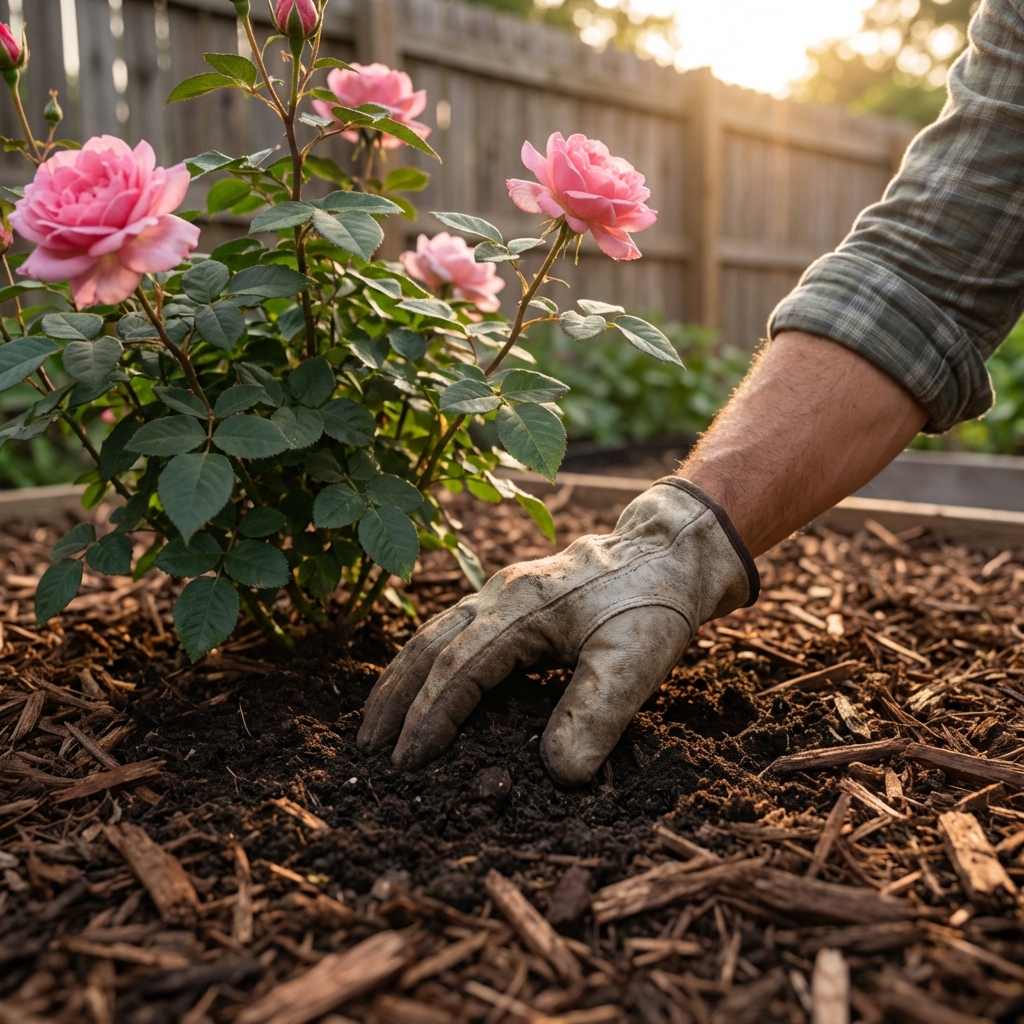
- Add compost as a 1 to 2 inch top-dress (keep it a couple inches away from the canes).
- Feed lightly with a balanced fertilizer if you have not fed in 6 to 8 weeks and the plant is actively growing.
- Consider a soil test if yellowing keeps returning or you are tempted to add sulfur or multiple nutrient products.
When yellow leaves mean a bigger problem
Most yellowing is fixable, but a few situations call for closer attention.
- Yellowing plus black, mushy stems: possible root rot from saturated soil.
- Sudden widespread yellowing after fertilizing: fertilizer burn or salt stress, especially in containers.
- Leaves yellowing with severe stunting and poor blooms all season: soil issues, chronic disease pressure, or a site that does not get enough sun.
What to do: Improve drainage, flush containers with plain water if you suspect salt buildup, and consider a soil test if the problem keeps returning.
Prevention that actually works
- Sun: 6+ hours of direct sun helps roses resist disease. Morning sun is a bonus for drying leaves.
- Watering: deep and occasional, aimed at the soil line.
- Mulch: 2 to 3 inches to keep moisture steady and reduce stress.
- Soil: compost once or twice a year beats constant “quick fix” products.
- Spacing and pruning: airflow matters more than people think for yellow-leaf problems tied to fungus.
- Feed reasonably: too much nitrogen can cause lush, weak growth that attracts pests and disease.
FAQ
Will yellow rose leaves turn green again?
Sometimes, but often the yellow leaf will not fully recover. The real win is getting new growth to come in healthy and green once the cause is fixed.
Should I remove yellow leaves?
Yes. Snip or pull off yellowing leaves gently. If you see spots or suspect disease, bag and trash them to reduce spread.
What is the fastest fix for yellow leaves on roses?
Correct watering first. Then inspect for pests. Fertilizer helps only when nutrients are the real cause, and it is easy to overdo if you guess. When you are stuck, a soil test is often faster than experimenting.

Jose Brito
I’m Jose Britto, the writer behind The Country Store Farm Website. I share practical, down-to-earth gardening advice for home growers—whether you’re starting your first raised bed, troubleshooting pests, improving soil, or figuring out what to plant next. My focus is simple: clear tips you can actually use, realistic expectations, and methods that work in real backyards (not just in perfect conditions). If you like straightforward guidance and learning as you go, you’re in the right place.